Suya: The Nigerian Peanut-Crusted Skewer
The Hausa street skewer that turns peanuts into fire and dust
Contents
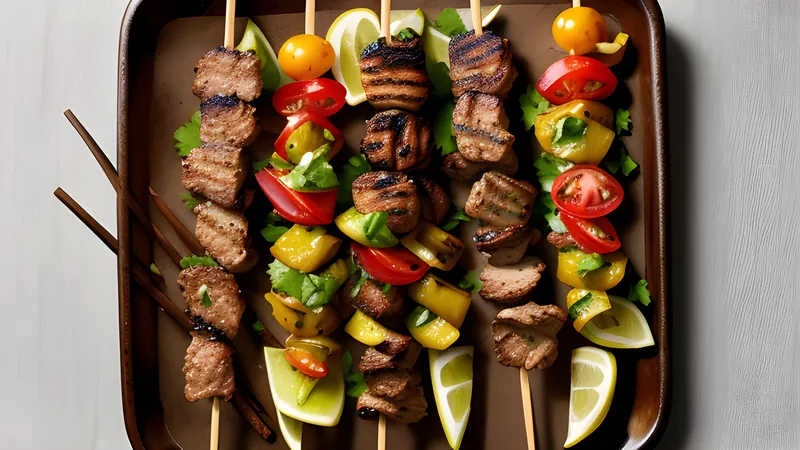
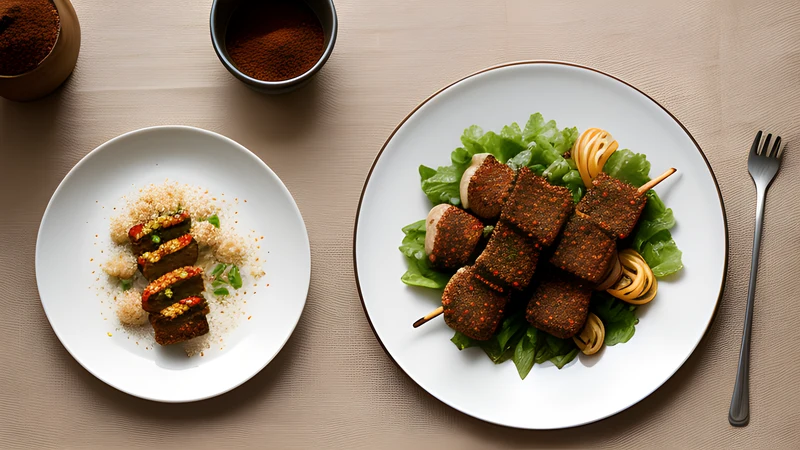
↓ Jump to recipeSuya is a smell before it is a food. Walk past a mai suya — the man at the grill — anywhere in northern Nigeria after dark and the air is thick with charring beef and roasted peanut, a warm, dusty, chilli-edged smoke that pulls you across the road. He fans the coals, flips the skewers, and hands you the meat wrapped in newspaper with a fistful of raw onion and a shake of extra spice. It is one of the great street foods of the world, and the whole thing turns on a single powder: yaji.
Suya: The Nigerian Peanut-Crusted Skewer
Ingredients
- 800 g beef sirloin or rump, well marbled
- 150 g roasted unsalted peanuts
- 1 tbsp hot chilli powder or cayenne, to taste
- 1 tbsp sweet paprika
- 2 tsp ground ginger
- 1 tsp garlic powder
- 1 tsp onion powder
- 1 stock cube, crumbled (Maggi or similar)
- half tsp ground cloves
- 1 tsp salt
- 3 tbsp groundnut (peanut) oil, for brushing
- 1 large red onion, thinly sliced, to serve
- 1 tomato, sliced, to serve
- wooden skewers, soaked 30 minutes
Method
- Freeze the beef for 30 to 40 minutes until firm at the edges, then slice against the grain into thin strips about 3 mm thick and 8 cm long.
- Make the yaji: pulse the peanuts in a food processor to a coarse powder, stopping before they turn to butter. Tip into a bowl and mix with chilli, paprika, ginger, garlic powder, onion powder, crumbled stock cube, cloves and salt.
- Set aside a third of the yaji in a serving bowl. Toss the beef strips with the oil, then coat each strip thoroughly in the remaining yaji, pressing it on. Rest 20 minutes.
- Thread the strips onto soaked skewers, weaving them so they lie flat and stay put.
- Grill over high direct heat or under a very hot grill, 2 to 3 minutes per side, until the edges char and the crust darkens. Do not overcook; thin beef dries fast.
- Dust the hot skewers with a little of the reserved yaji. Serve with sliced raw onion, tomato and the extra yaji for dipping.
The Hausa skewer and its spice
Suya is the food of the Hausa people of northern Nigeria, Niger and neighbouring parts of the Sahel, and the grillers who cook it, the mai suya, are its custodians. The name comes from the Hausa word for the grilled meat itself. It spread south across Nigeria in the twentieth century until it became a national obsession, eaten in Lagos and London and everywhere the diaspora went, but its heartland is the north, where cattle herding and the open charcoal grill have always gone together.
The magic is yaji, sometimes called suya spice: a dry rub built on ground roasted peanuts. This is the same groundnut that thickens a Senegalese mafé, but here it is used dry, toasted and pulverised, so its oil binds the chilli and ginger and cloves into a crust that clings to the meat and chars on the fire. The peanut gives suya its unmistakable savoury, faintly sweet depth; the chilli brings the heat; ginger and cloves give it that warm, almost medicinal lift you cannot quite place until someone tells you.
Getting the beef right
Suya is cut thin. The traditional cut is beaten flat, but the home version I trust starts with firming the beef in the freezer for half an hour so you can slice it cleanly into thin strips against the grain. Thin means it cooks in minutes and takes on maximum crust; against the grain means it stays tender rather than chewing like rope.
Choose a cut with some marbling. Sirloin or rump both work; the fat bastes the meat over the fierce heat and keeps it from drying to leather. Very lean cuts turn to jerky under a hot grill, and suya moves fast, so there is little room to correct.
The one twist: hold back a third of the yaji
The change I make to the standard method is to divide the spice into two jobs. Most of it coats the raw meat before grilling, where the peanut oil binds it to the surface and the heat toasts it further. But I always reserve a third of the yaji uncooked, and use it two ways: a fresh dusting over the skewers the moment they come off the fire, and a little bowl on the side for dipping. Cooked yaji is deep and roasted; raw yaji is brighter and sharper, and the contrast between the two on the same skewer is what makes homemade suya taste like the real thing rather than a marinade. It costs nothing and takes ten seconds.
One caution when you make the yaji: pulse the peanuts, do not blend them. The moment nuts turn to butter, the powder clumps into a paste and will steam rather than crust on the grill. You want a coarse, sandy meal that still smells of roast nut. If you can find dry roasted peanuts without oil or salt, they grind cleanest.
Yaji, ingredient by ingredient
The yaji is worth understanding rather than just measuring, because once you know what each part does you can tune it to your own taste. The roasted peanut is the base and the body, ground to a coarse meal that carries everything else and toasts into a crust on the fire. Ginger, dried and ground, gives the warm, slightly floral heat that people notice without being able to name it. Cloves, used sparingly, add a deep, almost medicinal note that is the secret signature of a good yaji; a heavy hand turns it soapy, so keep to the small measure. Chilli and paprika split the work of heat and colour between them, the chilli bringing the fire and the paprika the sweet red hue and a gentler warmth. Garlic and onion powder round it out with savour, and the crumbled stock cube supplies the salt and the glutamate-rich, moreish depth that makes street suya so hard to stop eating.
Regional versions vary. Some grillers add ground kanwa or a whisper of ground cloves and cinnamon; others lean harder on the chilli for a fiercer northern style. What stays constant is the peanut and the balance of savoury, hot and aromatic. Make a batch, taste it off your finger, and adjust before it ever touches the meat: the yaji should taste bold and complete on its own, because the beef will dilute it.
A note on the peanuts themselves. Fresh, well-roasted nuts make all the difference; stale ones taste flat and slightly rancid and no amount of spice will rescue them. If you are roasting raw peanuts yourself, take them to a deep, even gold in a dry pan or a low oven and let them cool completely before grinding, or the residual warmth will turn them to paste in the processor.
Fire, and how to manage it
Suya wants real heat and direct contact. Charcoal is best — the smoke is part of the flavour — but a screaming-hot grill pan or an overhead grill turned to maximum will do a respectable job indoors. Two to three minutes a side is plenty. You are after dark char on the edges of the crust while the inside stays just cooked and juicy. The most common home mistake is timidity: a lukewarm grill steams the meat grey and the peanut crust never crisps. Get it properly hot first.
Soak the wooden skewers for at least thirty minutes so they do not catch fire, and weave the strips on flat rather than bunched, so every surface meets the heat. If a strip is long, thread it in an S so it holds.
How to serve it
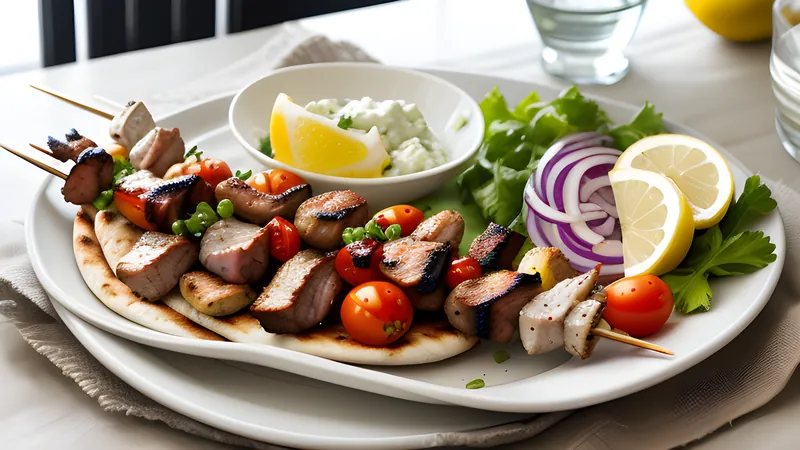
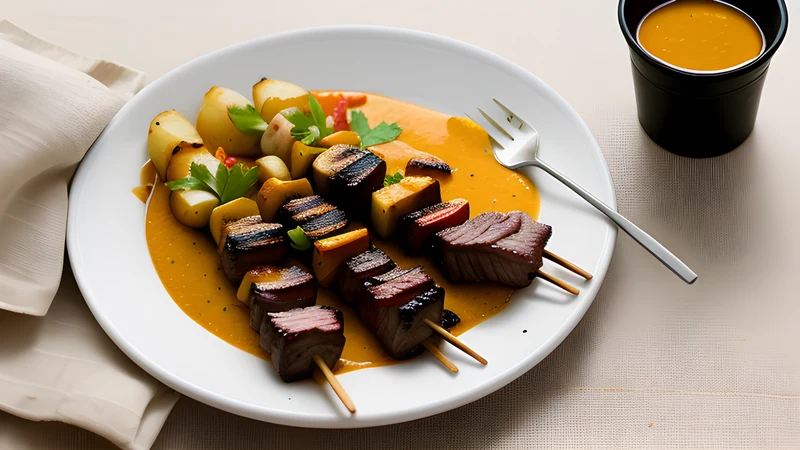
Suya is street food and it is served like street food: piled hot with a heap of raw red onion sliced thin, a few rounds of tomato, and the bowl of extra yaji for dipping. The raw onion earns its keep: its sharp, cool crunch cuts the richness of the spiced meat and resets your mouth between bites. Some grillers add shredded cabbage or fresh chilli. A wedge of lime, a modern touch, brings an acidity I love against the peanut.
Traditionally it comes wrapped in newspaper, which does more than keep your hands clean: the warm paper holds the steam and lets the residual heat finish the meat on the walk home, so the last skewer is as good as the first. At home a warmed plate under a loose foil tent does the same job.
It stands alone as a snack with cold beer, or you can build it into a meal. It sits happily on a table of Nigerian classics — a plate of jollof rice and a bowl of egusi soup with pounded yam turn suya from a bite into a feast. If you want to keep the frying going for something sweet afterwards, the crunchy little cubes of chin chin are the natural Nigerian full stop to the meal.
If you are cooking over charcoal, let the coals burn down until they are covered in grey ash and glowing rather than flaming; live flame scorches the peanut crust black before the inside cooks. Bank the coals to one side so you have a hot zone for the char and a cooler zone to move skewers to if they colour too fast, and keep a corner of the grill free for warming the finished skewers while the next batch cooks.
Variations and other proteins
Suya is not only beef. Ram and goat are common, cut and cooked the same way. Suya made from offal — liver, kidney, tripe — is prized in the north and cooks even faster. Chicken suya, using boneless thigh in strips, is a milder crowd-pleaser and takes the spice beautifully; give it a minute longer per side. The yaji itself keeps for a month in a sealed jar away from light, so it is worth making a double batch and having it on hand to season roast chicken, popcorn, chips, or grilled halloumi. Once you have yaji in the cupboard you will find excuses.
Tips, faults and fixes
If the crust falls off on the grill, the meat was too wet or the yaji too fine and pasty. Pat the strips before coating, use a coarser grind, and press the spice on firmly.
If it tastes flat despite the chilli, it needs the stock cube and salt — that savoury MSG-rich hit is authentic and is what rounds the peanut and makes it moreish. Season the yaji until it tastes bold on its own; the meat will dilute it.
If it is too hot, cut the chilli and lean on the paprika for colour and gentle warmth. Different chilli powders vary wildly, so taste your yaji before you commit the whole batch.
If the meat is tough, you either cut with the grain or overcooked it. Thin strips across the grain, high heat, short time — that is the entire discipline.
Storage
Yaji keeps for a month in an airtight jar; make extra. Grilled suya is best straight off the fire while the crust is crisp, but leftovers reheat acceptably in a hot dry pan for a minute — avoid the microwave, which softens the crust to paste. Raw coated strips can sit in the fridge for a day before grilling and only improve as the spice sinks in.
Suya asks for very little: good beef, a jar of peanuts, a hot fire, and the confidence to char it properly. Do that and you will understand why the smell of the mai suya’s grill pulls people across the road.
Related Content