Suqaar: Cubed Beef Fried Fast
A hot pan, small cubes, minutes to the table
Contents
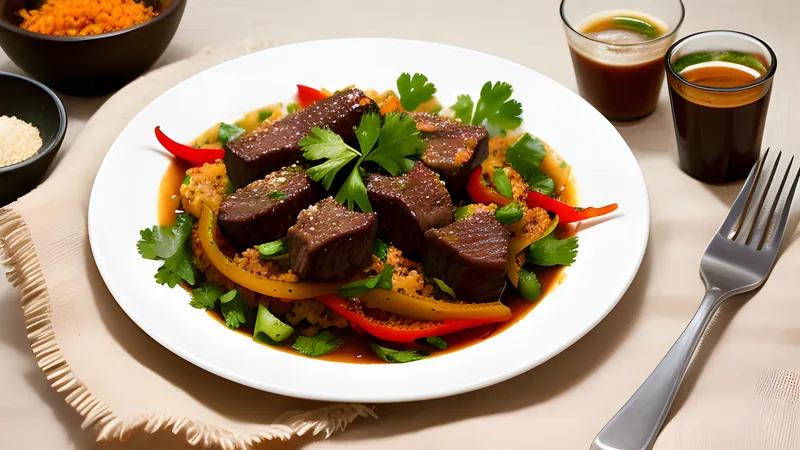
↓ Jump to recipeSuqaar is Somali cooking at its fastest and most direct: small cubes of beef, seared hard in a hot pan, tossed with onion, pepper, garlic and a warm spice blend, and eaten within twenty minutes of the meat first hitting the oil. Where a Somali stew might simmer for an hour or more, suqaar is built for speed and a properly hot pan, closer in spirit to a stir-fry than a braise, and it turns up on breakfast, lunch and dinner tables alike, spooned over rice, scooped up with flatbread, or eaten straight from the pan with nothing else at all. My small addition, a dash of vinegar stirred in right at the end, sharpens the whole dish and cuts through the richness of the seared beef fat.
Suqaar: Cubed Beef Fried Fast
Ingredients
- 700g beef sirloin or rump, cut into 1.5cm cubes
- 3 tbsp vegetable oil
- 1 large onion, finely diced
- 1 green pepper, finely diced
- 1 red pepper, finely diced
- 4 garlic cloves, crushed
- 2cm piece ginger, grated
- 1 tsp ground cumin
- 1 tsp xawaash or mixed warm spice
- 0.5 tsp ground turmeric
- 1 green chilli, finely chopped, or to taste
- 2 tomatoes, deseeded and diced
- 1.5 tsp fine salt, plus more to taste
- 1 tbsp tomato puree
- 1 tsp cider vinegar, to finish (the twist)
- Fresh coriander, chopped, to serve
Method
- Pat the beef cubes very dry with kitchen paper.
- Heat 2 tbsp oil in a wide frying pan or wok over high heat until just smoking.
- Fry the beef in two batches, 2-3 minutes per batch, until well browned on all sides, then set aside.
- Add the remaining oil and fry the onion and peppers over medium-high heat for 5 minutes until softened at the edges.
- Add the garlic, ginger, cumin, xawaash, turmeric and chilli, and fry for 1 minute until fragrant.
- Stir in the tomato puree and diced tomatoes and cook for 3 minutes until the tomatoes break down slightly.
- Return the beef to the pan with the salt and toss everything over high heat for 2-3 minutes until well combined and the beef is just cooked through.
- Stir in the vinegar off the heat, scatter with coriander and serve immediately.
Why the technique works
Everything about suqaar depends on real, sustained high heat, which is the opposite instinct from a slow-braised stew. Patting the beef properly dry before it goes anywhere near the pan is not a fussy extra step; wet meat steams rather than sears the instant it hits hot oil, and a steamed cube of beef turns grey and tough well before it browns. Dry meat, dropped into oil that is genuinely close to smoking, sears fast and forms a proper crust in two to three minutes, sealing in juice rather than leaching it into the pan.
Cutting the beef small, into roughly 1.5cm cubes, and frying in batches rather than crowding the pan matters just as much. A crowded pan drops in temperature the second the meat goes in, and the beef ends up boiling in its own released liquid rather than browning; two batches with the pan reheated between them keeps the heat high enough throughout. The tomatoes go in only after the aromatics have had their minute in the hot fat, since tomato’s water content would otherwise cool the pan and stop the spices from toasting properly, and the beef only returns to the pan at the very end, briefly, so it never overcooks past the medium doneness that keeps sirloin tender.
Method
- Pat the beef cubes very dry with kitchen paper. This step matters more than it looks like it should.
- Heat 2 tablespoons of oil in a wide frying pan or wok over high heat until it is just starting to smoke.
- Fry the beef in two batches, without crowding the pan, for 2-3 minutes per batch, until well browned on all sides. Set the seared beef aside on a plate.
- Add the remaining tablespoon of oil to the same pan and fry the onion and peppers over medium-high heat for 5 minutes, until softened and lightly coloured at the edges.
- Add the garlic, ginger, cumin, xawaash, turmeric and chilli, and fry for 1 minute, stirring constantly, until fragrant.
- Stir in the tomato puree and diced tomatoes, and cook for 3 minutes, until the tomatoes break down into a loose sauce.
- Return the seared beef to the pan along with the salt. Toss everything together over high heat for 2-3 minutes, until well combined and the beef is just cooked through, still juicy at the centre.
- Remove from the heat and stir in the vinegar. Scatter with fresh coriander and serve immediately, while the pan is still hot.
Tips and Substitutions
Sirloin or rump both work well because they are tender enough to cook fast without turning chewy; avoid stewing cuts like chuck or shin here, which need long, slow cooking to break down and will stay tough in the short time suqaar spends in the pan. If you only have a tougher cut, marinate it for at least an hour in a little oil, garlic and vinegar first, which helps tenderise it before it hits the heat.
Goat, lamb neck fillet or venison all take well to the same method if you want to move away from beef; adjust the frying time slightly for thinner cuts, since they cook through faster. For a liver version, use lamb’s or calf’s liver cut into similar cubes, and reduce the initial searing time to about 90 seconds per batch, since liver overcooks and turns grainy quickly.
If your suqaar tastes flat, the most common culprit is under-salting the beef itself before searing rather than only salting at the end; season the cubes lightly before they go into the pan as well as adding salt with the vegetables. If the pan looks watery rather than glossy once everything is combined, the heat likely dropped too low at some point; finish the last minute over the highest heat you have to drive off the excess liquid.
Variations
Adding a diced potato, parboiled for 5 minutes before it joins the pan at the pepper stage, turns suqaar into a heartier one-pan meal that needs nothing more than bread alongside it. Some cooks finish with a squeeze of lime instead of, or alongside, the vinegar, which brightens the dish in a slightly different direction; both are legitimate, and the choice mostly comes down to what is in the kitchen. A version with extra chilli and no tomato at all, closer to a dry-fried suqaar, is popular in some households for breakfast, served directly with flatbread rather than rice.
A wok or a wide, heavy-based frying pan both work, but avoid a non-stick pan with a thin base if you can help it; thin pans lose heat the moment cold meat hits them, which is exactly the crowding problem the recipe is designed to avoid. Cast iron or carbon steel holds its temperature best through the batch-searing stage and is worth the investment if suqaar becomes a regular weeknight dish, which for a lot of Somali households it eventually does.
Storage and Serving
Suqaar is best eaten immediately, straight from the pan while the beef is still juicy and the peppers hold some bite, but leftovers keep well in an airtight container in the fridge for up to 3 days. Reheat gently in a hot pan for a minute or two rather than the microwave, which tends to overcook the beef further and turn it tough. It is not a dish that freezes especially well, since the quick-seared beef loses its texture on thawing, so it is best cooked fresh and eaten within a few days.
Serve suqaar spooned over a plate of bariis iskukaris for the classic Somali pairing, or alongside Kenyan chapati for scooping straight from the pan, which is exactly how it is most often eaten at home.
Related Content