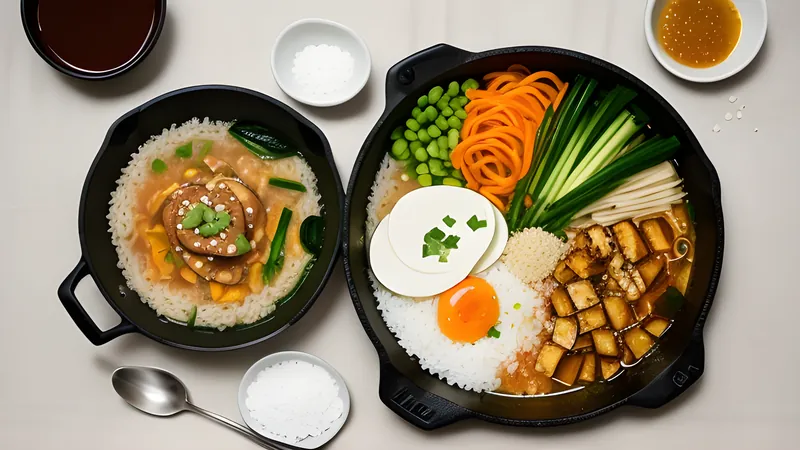
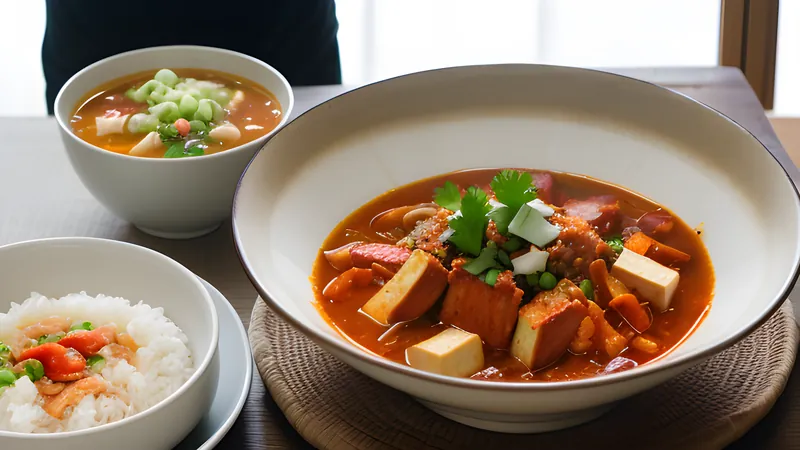
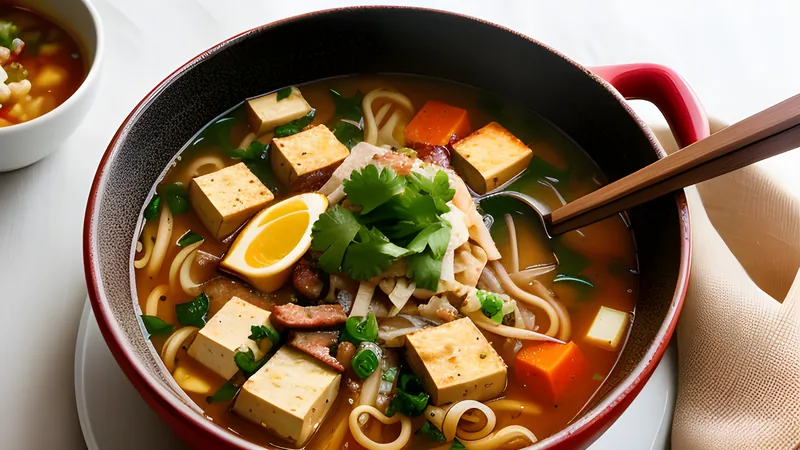
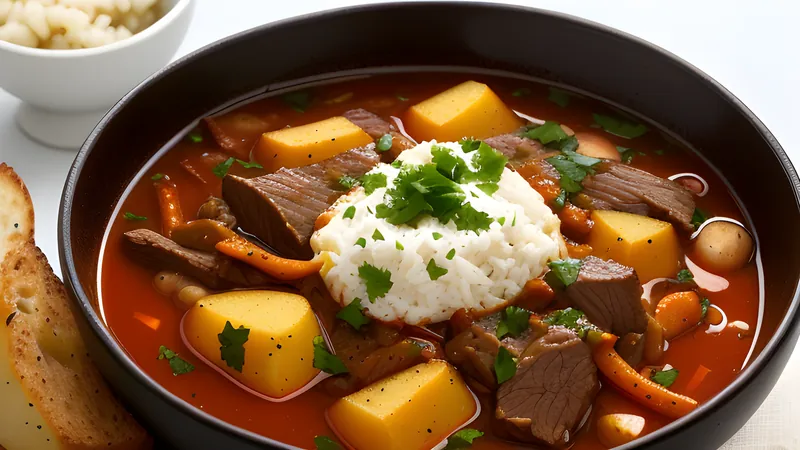
Sundubu Jjigae: Silken Tofu Stew With Chilli
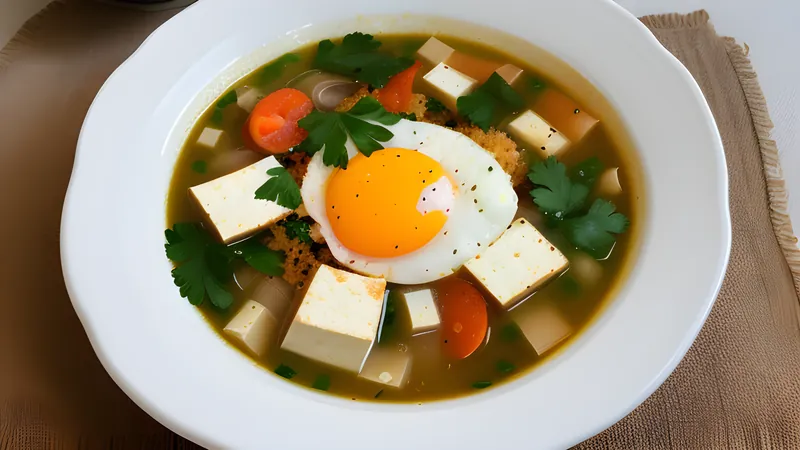
A bubbling, bright-red stew built around impossibly soft tofu and a raw egg
Contents
↓ Jump to recipeSundubu Jjigae: Silken Tofu Stew With Chilli
Ingredients
- 2 tbsp neutral oil
- 2 tbsp gochugaru (Korean chilli flakes)
- 1 tbsp gochujang
- 4 garlic cloves, minced
- 1 tsp minced fresh ginger
- 100g pork belly or streaky bacon, thinly sliced (or 100g diced kimchi for a vegetarian base, oil-fried)
- 1/2 small onion, sliced
- 1 tbsp Korean fermented soy sauce (guk-ganjang) or light soy sauce
- 500ml anchovy or vegetable stock
- 2 x 300g tubes silken tofu (sundubu), undrained
- 2 spring onions, sliced
- 2 large eggs
- Sesame oil, to finish
Method
- Heat the neutral oil in a heavy pot or clay ttukbaegi over medium heat.
- Add the gochugaru and gochujang and stir constantly for 30-45 seconds until the oil turns a deep red and smells toasted, not burnt.
- Add the garlic and ginger and stir for 30 seconds until fragrant.
- Add the pork belly (or kimchi) and onion, and stir-fry for 3-4 minutes until the pork is no longer pink at the edges.
- Pour in the soy sauce and stock, bring to a simmer, and cook for 5 minutes to let the flavours combine.
- Squeeze each tube of silken tofu directly into the pot in large, rough curds straight from the packet; do not press, drain or cut it into neat cubes.
- Simmer gently for 3-4 minutes, just enough to heat the tofu through without letting it break down further or the stew reduce too hard.
- Scatter over the spring onions and crack the eggs directly on top of the still-bubbling stew.
- Cover and remove from the heat immediately, letting residual heat set the egg white while the yolk stays soft, about 1-2 minutes.
- Finish with a few drops of sesame oil and serve immediately, still bubbling, with a bowl of steamed rice on the side.
The tofu the whole dish is named for
Sundubu is the specific Korean word for uncurdled, extra-soft tofu — softer than the silken tofu most Western cooks already know, with a texture closer to a very thick, barely set custard than anything that could be diced neatly with a knife. It’s sold in Korean grocers in sealed plastic tubes rather than blocks, precisely because it’s too soft to hold a cube shape at all outside its packaging. Jjigae is the general Korean word for a thick, hearty stew, denser and generally spicier than guk (a lighter soup), and sundubu jjigae is built entirely around showcasing that specific tofu texture rather than treating tofu as one ingredient among several — it’s the reason the dish exists in the first place, and every other choice in the recipe serves that texture.
That’s the reasoning behind squeezing the tofu straight from its tube into the pot in rough curds rather than draining it, pressing it, or cutting it into cubes the way you would firm tofu. Sundubu has no structural integrity to cut cleanly — trying to dice it collapses the curds into a smooth paste and destroys the exact texture the dish depends on. Squeezing it in as-is, in irregular soft curds of varying size, preserves pockets of that custard-soft texture throughout the stew, some larger and some smaller, which is what makes each spoonful feel different from the last.
Building the chilli base without burning it
The order of operations at the start — oil first, then gochugaru and gochujang bloomed briefly in the hot oil before anything else goes in — is where most of the stew’s colour and background flavour comes from, and it’s also the step most likely to go wrong if rushed. Gochugaru’s red pigment and much of its flavour compounds are fat-soluble, meaning they dissolve into hot oil far more effectively than into water, which is why the chilli goes into oil first rather than being added later to the stock directly; a stew where the gochugaru only ever touches liquid stock tastes flatter and looks a duller orange-red rather than the deep, glossy red of a properly bloomed base.
That bloom needs watching closely though, because gochugaru scorches fast in hot oil — 30 to 45 seconds is the real window, and it’s a smell change you’re listening for as much as a colour one: it should go from a raw, dusty chilli smell to a toasted, slightly nutty one. Past that point it turns bitter and acrid, a flavour that doesn’t cook out later no matter how long the stew simmers afterwards. If in doubt, pull the pot off the heat a few seconds early rather than risk it.
Coarse versus fine gochugaru, and why it matters here
Gochugaru is sold in at least two distinct grinds, and using the wrong one changes both the stew’s texture and how it behaves in the hot oil at the start. Coarse gochugaru, the flaky variety most commonly used for kimchi, gives a rustic, visibly speckled look to the finished broth and blooms a little more slowly in oil, which forgives a slightly longer bloom time before it scorches. Fine gochugaru, closer to a powder, dissolves into the oil almost completely and gives a smoother, more uniformly red base, but because it’s so finely ground it also scorches faster — the 30-to-45-second bloom window in this recipe assumes coarse flakes, and fine gochugaru needs watching even more closely, closer to 20-30 seconds before it needs to come off the heat or have liquid added.
Pork, kimchi, or neither
Pork belly, thinly sliced and stir-fried until the fat renders slightly, is the most common base protein and contributes real body to the finished broth from its rendered fat, but sundubu jjigae is genuinely flexible on this point — diced kimchi, fried in the same oil in place of or alongside the pork, brings its own fermented sourness and a different kind of depth, and seafood versions using clams, prawns or a mix are just as traditional and common on Korean menus as the pork version. Whatever protein you choose, it goes in and cooks through before the tofu is added, since the tofu itself only needs a few minutes of gentle heat and would overcook and turn rubbery-tough if it sat in the pot as long as raw pork needs to cook through.
The egg, and why timing it matters more than any other step
Cracking a raw egg directly onto the surface of the still-bubbling stew, then covering and pulling the pot off the heat immediately, is the step where most home versions of this dish go wrong in one of two directions. Leave the pot on the heat too long after adding the egg and the white turns to hard, rubbery lace and the yolk sets fully, losing the soft, barely-set richness that’s meant to melt into the broth as you eat. Pull it too early, before the white has had any chance to firm at all, and the egg stays a loose puddle of raw white on top rather than integrating into the stew. The one to two minutes off the heat, lid on, uses residual heat and trapped steam to firm the white just enough while the yolk stays soft and runny at the centre — check by nudging the white gently with a spoon; it should look opaque and just set, not glassy and translucent.
Serving the stew still audibly bubbling, straight from a stone or clay pot rather than transferred to a serving bowl, isn’t just presentation — the retained heat in a thick clay ttukbaegi keeps the stew actively cooking for a couple of minutes at the table, which is part of why the egg goes in right before serving rather than earlier in the kitchen; by the time it reaches the table and a diner takes their first spoonful, the egg has finished setting to exactly the right point.
A milder, brothier version: mul-sundubu
Mul-sundubu, sometimes translated as “water sundubu,” is a lighter, less spicy variation that drops or drastically reduces the gochugaru and gochujang, relying instead on the natural sweetness of the tofu and a savoury stock, occasionally with a little sliced chilli added at the end for colour rather than heat. It’s a good version to know for anyone cooking for someone with a low tolerance for chilli, or for a lighter lunch rather than a committed, sinus-clearing dinner — the tofu-in-broth technique and the raw-egg-on-top finish stay exactly the same, only the aromatics at the base change.
Why the stone bowl isn’t just tradition
Ttukbaegi, the thick, unglazed stone or clay pots sundubu jjigae is traditionally cooked and served in, hold heat far longer than a thin metal saucepan because of their sheer mass and low thermal conductivity — once properly heated through, they release that stored heat slowly, which is exactly why the stew keeps visibly bubbling for several minutes after leaving the stove. That extended residual heat isn’t incidental to the dish; it’s what finishes cooking the raw egg cracked on top at the table, and it’s why restaurant versions almost always arrive still audibly bubbling rather than merely warm. A heavy cast-iron pot is the closest home substitute if a ttukbaegi isn’t available; a thin stainless steel saucepan will cool too quickly to have the same effect on the egg once served.
Seafood sundubu, and the timing it needs
A seafood-based version, using a mix of clams, mussels and prawns in place of or alongside the pork, is just as common on Korean menus and follows a slightly different order of operations worth knowing before you improvise it. Clams and mussels go into the simmering stock before the tofu, since they need a few minutes at a rolling simmer to open and release their own briny liquid into the broth, which becomes a genuine part of the seasoning rather than an optional garnish. Prawns, by contrast, go in at the same point the tofu does, since they need only a couple of minutes to cook through and turn tough and rubbery well before the tofu is ready if added any earlier. Discard any shellfish that haven’t opened after a few minutes at a simmer, the same rule that applies to any shellfish cookery.
What to serve alongside, and what not to add
Sundubu jjigae is traditionally eaten with plain steamed rice served separately rather than stirred in, so the rice stays a neutral, cooling contrast to the stew’s heat rather than absorbing and diluting it. A side of kimchi is standard, doubling down on the fermented, spicy character of the meal rather than trying to offer a cooling counterpoint — sundubu jjigae isn’t a dish that asks for balance against its own heat the way some spicy dishes do; the whole point is committed spiciness against the cooling, custard-soft tofu itself, which does the textural balancing work rather than a side dish needing to.
Adjusting heat without losing the base
Because this stew’s heat comes almost entirely from the gochugaru and gochujang bloomed at the very start, adjusting spice level after the fact is harder than it is with dishes where chilli is added throughout cooking. If you want a genuinely milder stew, the cleanest approach is to reduce the gochugaru itself rather than trying to dilute a fully-bloomed hot base with extra stock afterwards, which mutes the whole dish’s flavour along with its heat rather than just the spiciness. Conversely, if you want more heat than the base recipe gives, a few slices of fresh Korean green chilli added with the spring onions towards the end adds a brighter, more immediate heat that layers on top of the base’s warmth rather than replacing it.
Sundubu jjigae sits well alongside kimchi jjigae with pork and tofu, the other great Korean chilli-based stew, and yukgaejang, spicy shredded beef soup for a lighter, broth-forward contrast on the same table. Budae jjigae, Korean army base stew shares the same gochugaru-bloomed base but goes in a very different direction with its ingredients, and samgyetang, whole chicken ginseng soup is worth knowing as the calm, unspiced counterpart on the opposite end of Korean soup cookery.
Related Content