Sukuma Wiki: Collards for Stretching the Week
A name that's a survival instruction as much as a recipe
Contents
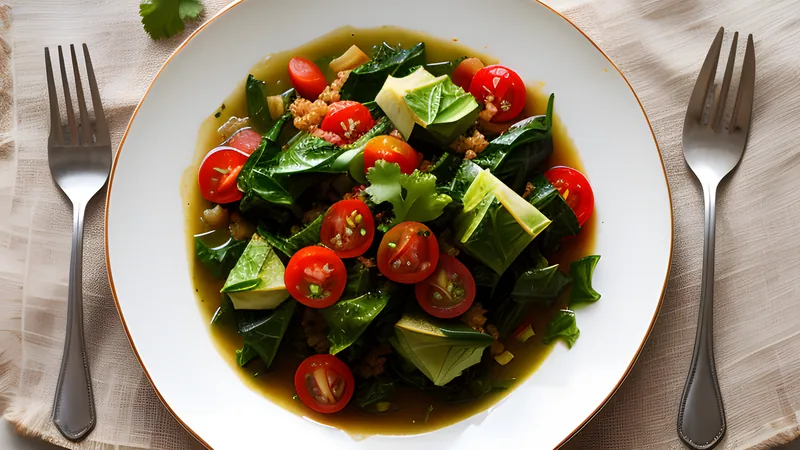
↓ Jump to recipeThe name gives the whole dish away before you’ve even tasted it: sukuma wiki means, roughly, “to push” or “to stretch the week” in Swahili — a description of the dish’s economic role in a Kenyan household as much as a recipe title. Collard greens are cheap, they’re everywhere, and a pot of them sautéed with onion and tomato can extend a small amount of meat, or no meat at all, across several meals in a way that keeps a family fed when money is tight toward the end of the month. That the dish also happens to be genuinely good is almost a bonus on top of its actual job.
Sukuma Wiki: Collards for Stretching the Week
Ingredients
- 1kg collard greens (sukuma wiki) or kale, stems removed, leaves finely shredded
- 3 tablespoons vegetable oil
- 1 large onion, finely sliced
- 2 garlic cloves, minced
- 1 large tomato, diced
- 1 teaspoon fine salt, plus more to taste
- 1/2 teaspoon ground black pepper
- 200g minced beef (optional)
- 100ml water
Method
- Wash the shredded greens thoroughly in cold water and drain well, shaking off as much excess water as you can.
- Heat the oil in a large, wide pan or pot over medium heat and soften the onion for 5 minutes, until translucent.
- Add the garlic and cook for 1 minute until fragrant.
- If using minced beef, add it now and cook, breaking it apart with a spoon, until browned, about 6 minutes.
- Add the diced tomato and cook for 3 minutes, until it starts to break down.
- Add the shredded greens in batches, stirring each batch down as it wilts before adding the next, along with the water.
- Season with the salt and pepper, cover, and cook for 8-10 minutes, stirring occasionally, until the greens are tender but still bright green.
- Taste and adjust salt. Serve hot alongside ugali or rice.
The economics built into the name
Sukuma wiki’s name is unusual among the dishes in this collection because it names a financial strategy rather than a place, an ingredient or a technique. It’s a dish explicitly associated with getting through lean stretches — cooked heavily toward the end of the month, when wages from earlier in the month have mostly gone, and greens plus a little oil and onion cost a fraction of what meat does. This isn’t a hidden or embarrassing association in Kenya; it’s spoken about openly, and sukuma wiki’s reputation as budget food hasn’t stopped it from being one of the most consistently cooked dishes in the country, eaten by households across the income spectrum regardless of whether money is actually tight that particular week.
That dual identity — survival food and beloved staple at once — is worth sitting with rather than smoothing over. Plenty of cuisines have a dish exactly like this: cheap, humble, genuinely delicious, cooked by people who need it to stretch a budget and by people who just like eating it. Sukuma wiki is Kenya’s clearest example, and it’s cooked in almost every household in the country on a near-weekly basis.
Collards or kale, and why the greens matter
“Sukuma wiki” in Kenya most commonly refers to collard greens specifically, though the term gets used loosely for a range of dark leafy brassicas including kale, and both work well in this preparation — the technique doesn’t change meaningfully between them. What matters more than the exact variety is how the greens are shredded: fine ribbons, not rough chopped pieces, so they wilt down quickly and evenly in the pan and cook through in the same eight to ten minutes as the tomato and onion base, rather than needing an extended simmer that would turn them grey and limp.
Washing the shredded greens thoroughly before cooking is worth doing carefully rather than rushing — collards and kale, grown close to the ground, can carry a fair amount of grit, and nothing undermines an otherwise well-cooked pot of sukuma wiki faster than a gritty bite partway through the meal.
Meat is optional, and that’s the whole point
The recipe here includes minced beef as an option rather than a requirement, and that flexibility is core to what sukuma wiki actually is in practice. A version with beef, or offal, or even just a spoonful of leftover stew meat stirred in, is a slightly more substantial dish for a week when there’s a bit more to spend. A version with no meat at all — just onion, tomato, oil and greens — is exactly as legitimate, exactly as commonly cooked, and loses very little in terms of satisfaction, since the dish was never really about the meat to begin with.
When meat is included, it goes in early, browned before the tomato, so it has time to develop flavour that then carries through the rest of the dish — added at the very end, raw meat would neither cook properly nor season the greens the way browned meat and its rendered fat do.
The technique that keeps it from turning grey
The single biggest risk with any braised leafy green is overcooking it into a dull, army-green mush that’s lost both its colour and most of its nutritional value. Sukuma wiki avoids this by keeping the actual cook time for the greens themselves short — eight to ten minutes covered, not the twenty or thirty minutes some other greens-based stews call for — and by adding the shredded leaves in batches rather than all at once, letting each batch wilt down before the next goes in so the pan never gets so overloaded that the bottom layer overcooks while waiting for the top layer to catch up.
The greens are done when they’re tender enough to eat comfortably but still visibly bright green rather than dulled to grey-green — pull them off the heat right at that point rather than a few minutes past it, since carryover heat in a covered pot continues cooking for a minute or two even after the heat is off.
Serving it
Sukuma wiki is a side dish in the sense that it’s rarely the only thing on the plate, but it’s treated with real weight rather than as an afterthought — piled generously next to ugali (the stiff maize porridge that’s Kenya’s default starch) and torn pieces of the porridge used to scoop greens and any accompanying stew or meat together. It’s also a standard pairing alongside nyama choma, providing a cheap, fresh, vegetable counterpoint to a meal that’s otherwise entirely grilled meat.
Rice is an increasingly common substitute for ugali as the starch of choice, particularly in urban households, though ugali remains the more traditional pairing and the one most associated with sukuma wiki specifically, the two dishes having been cooked together in Kenyan households for generations.
Variations
Some households add a spoonful of curry powder or a pinch of turmeric to the onion base for extra colour and warmth, a variation more common along the coast where spice trade influence runs deeper than in the highlands. Coconut milk stirred in at the end, in place of some of the water, turns sukuma wiki into a richer, slightly sweeter dish more associated with coastal Swahili cooking than with the plain, everyday inland version described here — both are legitimate, and the choice mostly comes down to region and what’s in the kitchen.
A version using offal — liver or kidney, chopped small and browned the same way the minced beef is here — is a traditional way to stretch a small amount of a cheaper cut of meat across a full pot of greens, common in households where a small offcut is more affordable than a proper cut of beef. However it’s dressed up or stripped back, the core method stays remarkably stable: soften the aromatics, break down the tomato, wilt the greens fast, and never let the pan sit long enough for the colour to dull.
Substitutions
Spring greens, spinach or even shredded cabbage all work reasonably well in place of collards or kale, though cabbage needs a shorter cook time given its higher water content and will release more liquid into the pan, so reduce the added water accordingly. Diced bell pepper is a common addition alongside the tomato in some households, adding sweetness and colour without changing the core technique.
For a vegan or vegetarian version, simply omit the beef — no other adjustment is needed, since the dish is built to work with or without meat from the outset rather than needing meat as a structural ingredient the way some stews do.
Storage
Sukuma wiki keeps for up to three days refrigerated, though the texture softens somewhat on reheating — this is generally considered acceptable rather than a flaw, since leftover sukuma wiki reheated the next morning alongside breakfast is itself a common way to eat it. Reheat gently in a covered pan with a small splash of water rather than the microwave, which can dry the edges out unevenly. It doesn’t freeze particularly well, since the greens lose their texture noticeably on thawing.
Common mistakes
Overloading the pan with all the shredded greens at once is the most common error, since a home stove rarely has the burner power to wilt a full kilo of leaves in one go without the bottom layer scorching against the pan while the top sits raw and unwilted. Adding the greens in two or three batches, letting each wilt down to make room, takes an extra couple of minutes but produces a far more evenly cooked result.
Under-seasoning is the second issue, and it comes from treating sukuma wiki as a plain vegetable side rather than a dish in its own right. A single teaspoon of salt across a full kilo of greens needs to be tasted and adjusted at the end, since greens vary in how much salt they absorb during cooking — don’t be afraid to add more than the recipe specifies if the finished dish tastes flat.
Cooking the tomato too briefly is the third: it needs a genuine three minutes to break down and release its liquid into the pan before the greens go in, since that liquid is what helps steam and wilt the leaves rather than leaving them to fry dry against the hot pan.
Where it comes from
Collard and kale varieties of brassica have been grown across East Africa for generations, but the specific dish and its name are closely tied to twentieth-century Kenya’s urbanisation, as rural migrants moved into Nairobi and other growing cities and needed cheap, quick, filling food that could be cooked on a single burner with minimal equipment. Sukuma wiki fit that need precisely: fast to prepare, requiring only a knife, a pan and a handful of ingredients, and cheap enough to buy fresh in small quantities from a roadside vegetable seller (mama mboga, a term for the women who run these informal vegetable stalls across Kenyan towns and remain the primary source of fresh sukuma wiki for most households) rather than needing a big weekly shop.
Related on the site
Sukuma wiki’s most natural pairing is nyama choma, Kenya’s charcoal-grilled goat, the cheap-greens-and-grilled-meat combination that anchors countless Kenyan meals. For the rice-based side of Kenyan and wider East African cooking, pilau, Zanzibar’s spiced rice with beef, shows a very different, more elaborate approach to a staple starch. And for the coastal Swahili soup tradition that shares many of the same aromatics, urojo, the Zanzibar mix soup, is worth exploring alongside sukuma wiki as another everyday East African staple built for stretching modest ingredients into a full meal.
Related Content