Sukiyaki: Sweet Soy Beef Cooked at the Table
Beef, sugar and soy in a shallow iron pan, finished with raw egg
Contents
↓ Jump to recipeSukiyaki is the one Japanese hotpot most people outside Japan have actually heard of, usually because of the raw egg. That detail tends to overshadow the rest of the dish, which is a shame, because the interesting part happens before the egg ever comes out: beef seared directly in sugar, in a dry pan, until it’s coated in a dark, faintly caramelised glaze, before any liquid touches it at all.
Sukiyaki: Sweet Soy Beef Cooked at the Table
Ingredients
- 600g beef ribeye or sirloin, sliced paper-thin (freeze for 30 minutes first to make slicing easier)
- 2 tbsp beef fat or neutral oil
- 4 tbsp caster sugar
- 120ml soy sauce
- 120ml mirin
- 60ml sake
- 200ml dashi (or water in a pinch)
- 2 leeks (negi), sliced diagonally into 3cm pieces
- 300g shiitake mushrooms, stems trimmed, scored with a cross
- 300g firm tofu, cut into thick slices
- 200g shirataki or ito konnyaku noodles, drained and rinsed
- 1 bunch shungiku (chrysanthemum greens) or spinach, trimmed
- 4 very fresh eggs, one cracked into each dipping bowl
- Cooked short-grain rice, to serve
Method
- Slice the beef as thin as you can manage; 30 minutes in the freezer firms it up enough to get clean, near-transparent slices with a sharp knife.
- Heat the fat in a wide, shallow pan over medium-high heat. Add the sugar directly to the hot fat and let it dissolve and just start to darken at the edges.
- Lay in enough beef to cover the base of the pan in one layer, without crowding. Sear for 20-30 seconds a side until glazed and lightly caramelised, not cooked through.
- Push the seared beef to one side. Pour in the soy sauce, mirin and sake, then the dashi, and bring to a gentle simmer.
- Add the leeks and shiitake first and simmer 3-4 minutes, then add the tofu and shirataki and simmer a further 3-4 minutes.
- Add the shungiku last and let it wilt for under a minute, pulling it before it collapses.
- Crack one very fresh egg into each diner's bowl and beat lightly. Diners dip each piece as it's fished from the pan.
- As the pan empties, add more raw beef and vegetables directly to the simmering broth and repeat, refilling the pan in batches through the meal. Serve with rice alongside.
A plough blade and a banned meat
The name literally means “grilled on a suki” — a plough blade — and the story usually told is that farmers, working outdoors with no proper cookware to hand, would grill meat on the metal ploughshare over an open fire. Whether or not that’s the literal origin, it points at something true: beef eating was suppressed in Japan for over a millennium under Buddhist-influenced dietary law, and dishes built around it only became mainstream after the Meiji Restoration in 1868, when the new government began actively encouraging meat consumption as part of a wider push toward Western-style modernisation. Beef hotpots — first gyunabe in Yokohama, then sukiyaki more broadly — became one of the clearest signals of a country deliberately changing its own habits, and they spread fast enough that by the early twentieth century sukiyaki was already the dish foreigners were served as “authentic” Japanese food, a reputation it never quite shook.
Two regional methods survive, and they’re genuinely different rather than just variations in seasoning. In the Kansai method — Osaka and Kyoto — the beef goes into a dry, hot pan first, seared directly with sugar until glazed, and only then is it built up with soy sauce, sake and other ingredients added gradually as the pan needs them. In the Kanto method, more common around Tokyo, a pre-mixed sauce called warishita (soy sauce, mirin, sugar and dashi combined in advance) is poured over everything at once. Kansai’s method gives you more control and, done right, a deeper savoury edge on the beef itself; Kanto’s is faster and more forgiving for a first attempt. This recipe follows the Kansai order, because the sequence is where the flavour actually gets built.
The pot itself matters
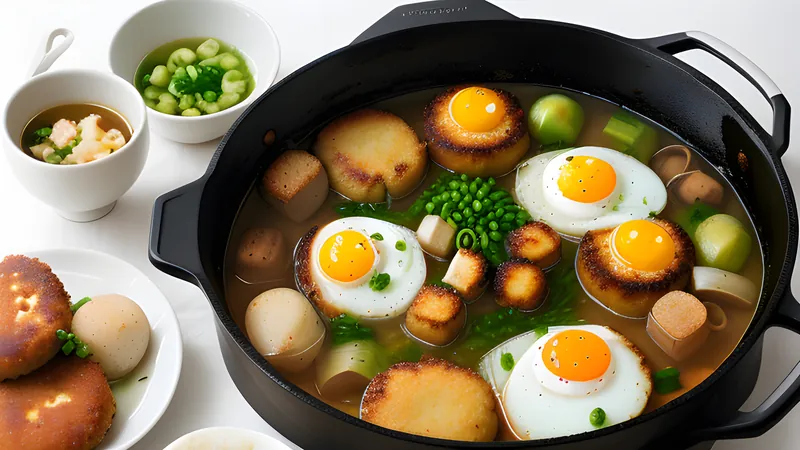
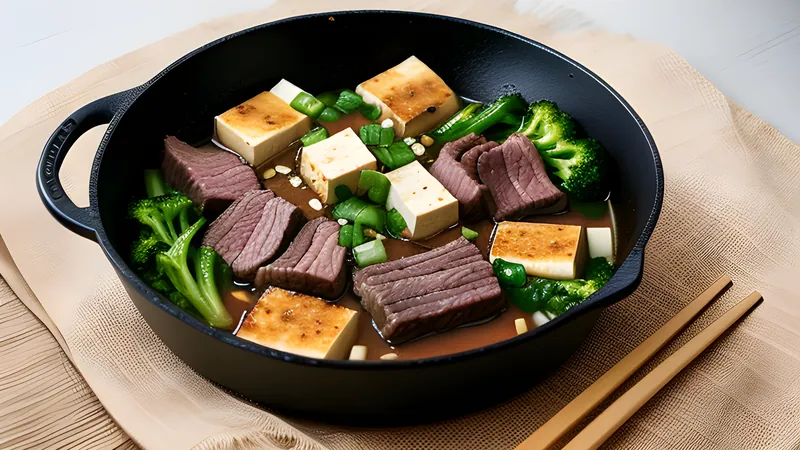
A dedicated sukiyaki-nabe — a shallow, heavy cast-iron pan, usually with a wooden handle on one side so it can go straight from a portable gas burner to the table — isn’t just tradition for its own sake. The shallow depth means the beef sears in direct contact with the hot surface rather than steaming under a pile of other ingredients, and the heavy base holds heat steadily enough that the pan doesn’t cool sharply every time cold raw beef goes in. A wide cast-iron skillet is the closest substitute most kitchens already own; avoid anything non-stick, since the sugar needs to catch slightly against the metal to caramelise properly, and a slick surface won’t let that happen.
Building the pan in the right order
Heat the fat in a wide, shallow pan — a cast-iron skillet does the job if you don’t have a sukiyaki-nabe — until it shimmers, then add the sugar directly to the dry fat. Let it dissolve and just begin to darken at the edges before laying in a portion of the beef, enough to cover the base of the pan in a single layer without crowding. Sear it for no more than 30 seconds a side; you want the surface glazed and slightly caramelised, not cooked through, because it will finish in the liquid. Push the seared beef to one side of the pan and pour in the soy sauce, mirin and sake, followed by the dashi. Bring this to a gentle simmer, then start adding the vegetables — leeks and shiitake first, since they take longest, then tofu and shirataki, then shungiku last, since it wilts in under a minute.
The whole thing is meant to be eaten as it cooks, not plated all at once. Diners fish out whatever’s ready, dip it in the raw egg, and the empty pan gets refilled with more raw beef and vegetables as the meal goes on, the broth growing more concentrated with every batch.
What the sauce ratio actually does
The ratio between soy sauce, mirin, sake and sugar in either method is not arbitrary — it’s built to shift over the course of the meal. Early in the sear, sugar and soy dominate, giving the first batches of beef a sharper, saltier glaze. As the pan fills with rendered fat and juices from successive rounds of vegetables and beef, the broth mellows and rounds out, which is why sukiyaki is often described as tasting better toward the end of a sitting than at the start. If you’re cooking for a smaller group and expect the pan to run for a couple of hours, it’s worth holding back a small measure of the raw soy-mirin-sake mixture to add partway through, since the balance drifts sweeter as the sugar continues to concentrate through evaporation.
The raw egg, and why it works
The egg isn’t there for richness alone — it’s there to cool the just-off-the-pan food enough to eat immediately without burning your mouth, while coating it in something silky that mutes the sweetness of the sauce. Use the freshest, best-quality eggs you can find, since they’re eaten essentially raw; if that’s a genuine concern, a very brief pasteurised egg product works, though the texture is never quite the same.
Why it became the dish foreigners were served
Sukiyaki’s reputation as an ambassador dish is not an accident of marketing. When Japan opened to Western trade and travel in the late nineteenth century, meat-eating was one of the most visible cultural changes on offer, and a tableside hotpot cooked and narrated in front of a guest was an easy thing to stage for a visitor who couldn’t read a menu. Restaurants in Yokohama and Tokyo catering to foreign traders leaned into it, and the dish’s theatre — the sizzle of sugar in a hot pan, the raw egg, the communal pot — did a lot of work that a plated dish never could. That history is worth knowing not because it makes the dish less authentic, but because it explains why sukiyaki still gets treated, sometimes unfairly, as more of a performance than a technique. It’s both. The performance only works if the sear underneath it is done properly.
Choosing the beef
Sukiyaki lives or dies on the cut and the slice. Ribeye and sirloin both carry enough fat to stay tender through a quick sear and a short simmer; leaner cuts like topside dry out and turn stringy well before the broth has had time to season them. Thickness matters just as much as the cut — slices need to be close to see-through, thin enough that a 20-second sear cooks them through at the edges while leaving the centre barely set. Most butchers won’t slice beef this thin to order, which is why the freezer trick matters: 30 minutes firms the meat just enough to run a sharp knife through it in clean, even sheets. If you can find a Japanese or Korean grocer that sells pre-sliced hot-pot beef, it saves the step entirely and is usually cut to almost exactly the right thickness.
What can go wrong
The most common mistake is skipping the dry sear and going straight to a wet braise — you lose the caramelised edge on the beef that gives sukiyaki its particular savoury-sweet character, and everything ends up tasting more like a standard beef hotpot. Don’t crowd the beef in the pan either; if it steams instead of searing, it turns grey rather than glazed.
Watery, thin-tasting broth almost always comes from adding the dashi too soon or in too great a quantity relative to the soy and mirin. The Kansai method depends on the beef fat and caramelised sugar forming a base before any liquid arrives; if you pour in dashi at the same time as the soy sauce rather than letting the pan reduce briefly first, you dilute the very thing you were trying to build. Add liquid in stages, tasting as you go, rather than committing all of it at once.
Oversweetening is the other common error, usually from adding all the sugar at once rather than letting the first batch caramelise before diluting it with liquid. Taste the broth partway through and adjust with a splash more soy sauce if it’s tipped too far toward dessert.
Shirataki noodles carry a faint smell straight from the packet; rinse them under cold running water for a full minute and, if you have time, blanch them for 60 seconds before they go into the pan — this also stops an enzyme in the noodles from toughening any beef they touch directly.
Serving it at the table
Sukiyaki is one of the few Japanese dishes genuinely built around communal, unhurried eating rather than individually plated courses, and it’s worth resisting the urge to cook it all in the kitchen and bring out finished bowls. Half the point is the pan staying on a portable burner at the table, with someone — traditionally whoever is hosting — tending it, searing the next batch of beef and calling out when the shungiku is ready. Rice is served in individual bowls alongside, not mixed into the pot; diners alternate between the pan and their rice, using the rice to cut the sweetness of the broth between bites. A pot of hot green tea afterwards does the same job the raw egg does mid-meal — resetting the palate against all that soy and sugar.
Substitutions, leftovers and what to pair it with
Pork works in place of beef for a lighter, cheaper version sometimes called butaniku sukiyaki, though the sugar-sear step still applies. Any sturdy green stands in for shungiku if you can’t find it — spinach or even shredded Chinese leaf both work, added at the very end. Chicken thigh, cut into bite-sized pieces, makes a lighter version still built on the same sear-then-simmer order, though it needs slightly longer in the broth to cook through fully. Napa cabbage is a common addition alongside or instead of leeks in home versions, particularly in winter when it’s cheap and in season, and it soaks up the sweet broth well over a longer simmer than the quick-wilting shungiku can manage.
Firm tofu can be swapped for grilled atsuage (thick fried tofu) if you want a slightly chewier texture that holds its shape better through repeated reheating of the pan — this matters more than it sounds, since a proper sukiyaki dinner runs for an hour or more with the pan constantly being emptied and refilled, and plain tofu can start to break down toward the end of a long sitting.
Leftover sukiyaki broth, thick with rendered fat and reduced soy, is worth keeping — poured over rice with a fresh egg cracked on top the next day, it becomes something close to a one-bowl meal on its own, not far off gyudon in spirit. If you want to stay in the same sweet-soy register but move toward a slower, less showy dish, nikujaga uses almost the same seasoning base built around potatoes instead of a tableside pan.
Related Content