Su Böreği: The Layered Turkish Cheese Pastry
Boiled pastry sheets stacked with brown butter and white cheese, baked until the top shatters
Contents
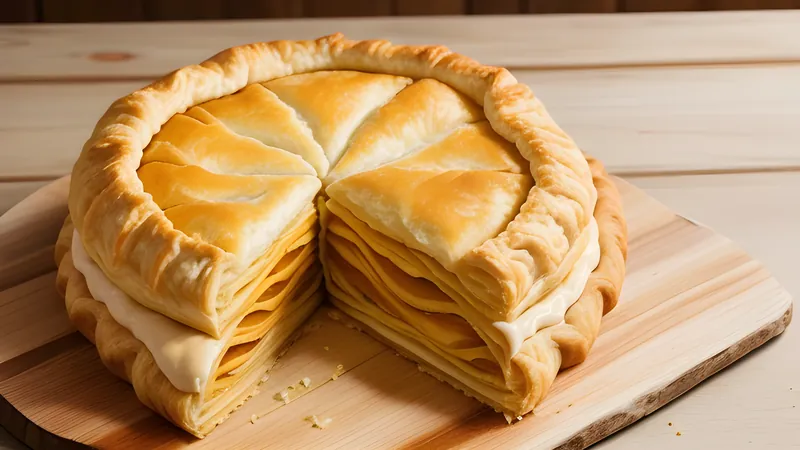
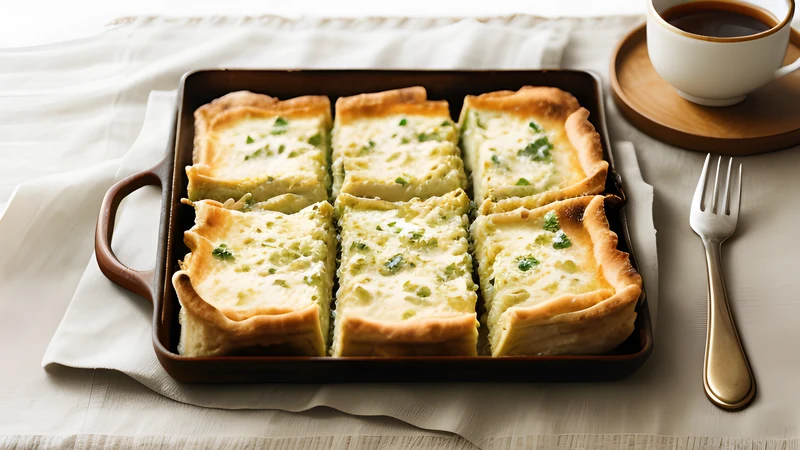
↓ Jump to recipeBöreks come in dozens of shapes and one of them is strange enough to need explaining. Su means water, and su böreği is the börek you boil. The pastry sheets go into a pan of salted water, thirty seconds each, come out limp as wet paper, get shocked in ice, laid flat, buttered, stacked with cheese, and baked. What emerges has a crackling gold lid, a base like a biscuit, and, in between, layers so soft and yielding that the closest comparison is a very good lasagne where the pasta has been replaced by something better.
Su Böreği: The Layered Turkish Cheese Pastry
Ingredients
- 10 sheets fresh yufka (about 500g), each roughly 40cm across, or 500g thick filo
- 200g unsalted butter
- 60ml sunflower oil
- 400g beyaz peynir (Turkish white cheese) or a firm feta, crumbled
- 60g flat-leaf parsley, finely chopped
- 1/2 tsp coarsely ground black pepper
- 4 litres water, for boiling
- 1 tbsp fine salt, for the boiling water
- 2 litres cold water plus a tray of ice, for shocking
- 2 large eggs
- 150ml whole milk
- 100ml plain full-fat yoghurt
- 1 tsp nigella seeds (optional)
Method
- Melt the butter in a small pan over a medium heat. Keep it foaming for 5-7 minutes, swirling, until the milk solids at the base turn deep hazelnut brown and it smells of toasted nuts. Pour immediately into a heatproof bowl to stop the cooking. Whisk in the sunflower oil. Set aside.
- Whisk the eggs, milk and yoghurt together in a jug. Whisk 4 tbsp of the brown butter into it.
- Mix the crumbled cheese with the parsley and black pepper.
- Bring the 4 litres of water to a rolling boil with 1 tbsp salt. Set a large bowl of cold water and ice beside the hob, and lay two clean tea towels flat on the worktop.
- Brush a 30 x 22cm baking dish generously with brown butter. Lay one sheet of yufka in it unboiled, letting it overhang the sides. Brush with brown butter. This is the base and it stays raw so it crisps.
- Boil the yufka sheets one at a time: slide a sheet into the water for 40-60 seconds, until it turns floppy and slightly translucent. Lift out with a slotted spoon or tongs, plunge straight into the iced water for 20 seconds, then lift out and spread flat on a tea towel. Pat the top dry.
- Lay a boiled sheet into the dish over the base. Brush with brown butter and spoon over 3 tbsp of the egg-milk mixture, spreading it thinly. Repeat with 4 more boiled sheets, buttering and spooning between each.
- Spread all the cheese and parsley evenly over the fifth boiled sheet.
- Layer the remaining 4 boiled sheets on top, buttering and spooning egg-milk between each as before. Fold the overhanging base sheet in over the top.
- Finish with the last unboiled yufka sheet, tucked in at the edges. Brush the top generously with the remaining brown butter and scatter with nigella seeds.
- Score the top into 12 squares with a sharp knife, cutting through only the top two layers. Bake at 180C fan for 40-45 minutes, until the top is deep gold and crisp and the edges have pulled away from the dish.
- Rest for 20 minutes before cutting through the scored lines. Serve warm.
Yufka, and a very long tradition
Börek is old, and it came west. The technique of stretching dough into thin sheets belongs to the Turkic peoples of Central Asia, and it travelled with them through Persia into Anatolia. The word yufka is attested in Mahmud al-Kashgari’s Dīwān Lughāt al-Turk, the Turkic dictionary compiled in the 1070s, where it describes thin flatbread. By the Ottoman period the börek had become a serious business — the palace kitchens at Topkapı ran specialists, and börekçi guilds worked in the cities, which is roughly where the modern proliferation of shapes comes from.
The family is large. Sigara böreği is the cigar, rolled and fried, the one you meet at every meze table. Kol böreği is the arm, a coiled rope. Talaş böreği is the flaky, laminated one. Gül böreği is the rose. Su böreği is the most laborious of the lot and the one Turkish cooks talk about with a certain reverence, because it takes an afternoon and a great deal of boiling water, and because it is what a grandmother makes.
Once you have made one, the family resemblance to everything from strudel to the sheets in a pistachio baklava becomes obvious. They are all answers to the same question: what happens if you make the dough thin enough.
Why boiling the pastry works
This is the bit that sounds mad and is the entire point.
Yufka is a dry, unleavened sheet of flour and water. Baked dry with butter between the layers, it does what filo does: the water in each sheet flashes to steam, the layers separate, and you get shattering crispness all the way through. That is a strudel, or a baklava.
Boil the sheets first and you change the material completely. The starch granules in the flour absorb water and gelatinise — they swell, burst and turn from hard crystalline packets into a soft gel. The sheet goes from paper to something closer to fresh pasta. Stack thirty of those with butter and a milk-and-egg custard between them, and the layers no longer separate into flakes. They fuse into a single soft, layered, faintly custardy mass that still shows every individual sheet when you cut into it.
The two unboiled sheets, top and bottom, are doing the opposite job on purpose. They stay dry, they bake, and they give you the crisp lid and the biscuit base that make the soft middle worth eating. A su böreği that is soft all the way through has failed.
Brown butter, which is my own addition
Turkish cooks use plain melted butter, and there is nothing wrong with it. I brown mine.
Butter is roughly 80% fat, 16% water and 4% milk solids. Heat it and the water boils off, the foam subsides, and the milk solids — protein and lactose — fall to the base and start to Maillard, going from white to gold to hazelnut brown while throwing off nutty, caramel aromatics. The technical name for what you end up with is beurre noisette, and it tastes about four times as much of butter as butter does.
Against beyaz peynir, which is salty, lactic and slightly sharp, browned butter is a genuine improvement — it supplies a toasted, nutty depth that the cheese has none of, and 200g of it distributed through ten layers means every bite gets some. Watch it, though: from perfect to burnt is about forty seconds. Pour it out of the hot pan the moment it smells of hazelnuts.
The sunflower oil whisked in afterwards is practical. Pure butter sets solid as it cools and drags at the fragile boiled sheets when you brush it; the oil keeps it fluid and brushable at room temperature.
The cheese
Beyaz peynir is the Turkish white cheese, brined, made from sheep’s, cow’s or goat’s milk, and it is what belongs here. It is firmer and less crumbly than most Greek feta, and milder — clean, salty, lactic. Turkish grocers sell it in blocks in brine.
Feta works, and it is saltier, so taste before you add any salt to the mixture (there is none in the ingredient list for exactly this reason). If your feta is very sharp, soak it in milk for twenty minutes and drain.
Parsley, and a lot of it. Sixty grams sounds like a garnish gone wrong and it is correct — the cheese layer is otherwise unrelenting, and the parsley gives it a green, faintly bitter freshness that stops the whole thing being a slab of dairy.
The egg, milk and yoghurt between the layers
Turkish cooks call this the terbiye, and it is the reason su böreği tastes custardy rather than merely soft. Two eggs, milk and yoghurt, whisked together with a few spoons of the brown butter, spooned thinly between every boiled sheet.
Each component earns its place. The eggs set in the oven and glue the stack into one coherent thing, so a cut square holds together on the plate instead of sliding into ten separate sheets. The milk keeps the boiled starch hydrated through forty-five minutes of baking, which is what stops the middle drying out. The yoghurt brings lactic acid, and acid does two useful things here: it sharpens the whole thing against the fat, and it slightly tenderises the gluten in the sheets.
Three tablespoons per layer, spread thin with the back of the spoon. This is a wash rather than a pour. Ladle it on and the middle of the börek turns to a wet, savoury bread-and-butter pudding — pleasant enough, and a different dish.
Distribute the cheese in one layer in the middle rather than spreading it through the stack. A single dense seam of cheese at the centre gives you a börek with a clear structure: crisp, soft, salty, soft, crisp. Cheese scattered between every sheet gives you a uniform, monotonous slab.
Cutting, and why you score first
Score the top through only the upper two layers before the tray goes into the oven, marking out your twelve squares.
There is a practical reason. That top sheet bakes into a genuinely brittle lid, and a knife dragged across a brittle lid after baking shatters it and sends shards across the table, taking the good crisp surface with it. Scoring it raw means the lid bakes with the cuts already in place, and each square lifts out cleanly with its own intact crackling top.
The score lines also let steam escape from the layers below. Without them the top sheet domes up, separates from the stack, and comes away as a single sheet the moment you touch it.
Cut through only the top two layers, and no deeper. A full-depth cut before baking lets the egg-milk run out through the channels and pool at the base of the dish, where it turns the bottom sheet to a wet mat.
Then rest for twenty minutes. Straight out of the oven the custard is still liquid and the whole thing collapses under a knife.
The boiling, in practice
This is a two-hands, no-distractions operation, and the sheets are fragile once they are wet.
One sheet at a time. Forty to sixty seconds is enough — the sheet goes floppy and slightly translucent and that is the signal. Ninety seconds and it starts to disintegrate in the water and will tear as you lift it.
The iced water is doing more than cooling. It stops the starch cooking any further, and it firms the gel enough that the sheet can be lifted without tearing. Skip it and you will lose sheets.
Then flat on a tea towel and patted dry. A sheet carrying free water will steam its neighbours instead of fusing with them, and the finished börek goes gluey.
Sheets will tear. This is fine and everyone’s do. Patch them: lay the pieces overlapping in the dish and brush butter over the join, and after forty-five minutes in the oven nobody will find the seam.
What can go wrong
A gluey, wet middle. Sheets went in wet, or the egg-milk was laid on too thickly. Three tablespoons per layer, spread thin.
A pale, greasy top. The oven was too low, or the top sheet was boiled. Keep the top sheet dry, and bake at 180C fan.
A soggy base. Same cause — the base sheet must go in unboiled, and the dish must be properly buttered.
Sheets disintegrating in the pan. Boiled too long, or the water was at a violent rolling boil. Keep it at a firm simmer and pull them at 40 seconds.
It falls apart when cut. Cut too soon. Twenty minutes of resting lets the custard set.
Filo, make-ahead and the table
Fresh yufka from a Turkish grocer is the right material and comes in 40cm rounds, soft and pliable. Failing that, use the thickest filo you can find and treat it gently — filo is thinner and tears more readily, so drop the boil to 30 seconds and expect to patch. Use two filo sheets per yufka layer if yours are the standard supermarket rectangles.
Assemble it up to a day ahead, cover and refrigerate, and bake from cold with an extra eight minutes. Baked, it keeps three days and reheats well at 170C fan for twelve minutes, which brings the top back to crisp. It freezes baked, and comes back from frozen at 170C in half an hour.
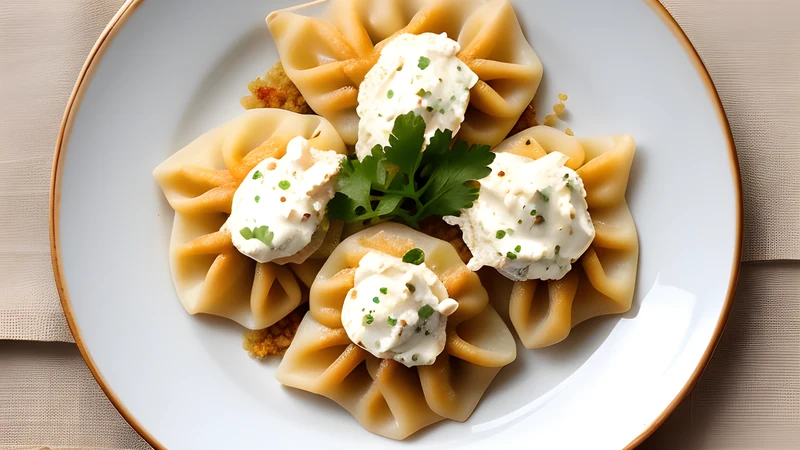
Su böreği is breakfast food, tea food, and the centre of a table. Turkish breakfast would put it alongside olives, tomatoes, cucumber and a lot of tea. A simit on the same table is the traditional double-carb move and nobody will stop you. Coming from the other direction, Turkish manti with garlic yoghurt shows the same dough handled the opposite way — cut small, boiled properly, and drowned — and between the two of them you have most of what Anatolian cooks do with flour and water.
Related Content