Stifado: Greece's Onion-Heavy Braise With Cinnamon
A kilo of small onions, vinegar, and three hours of quiet
Contents
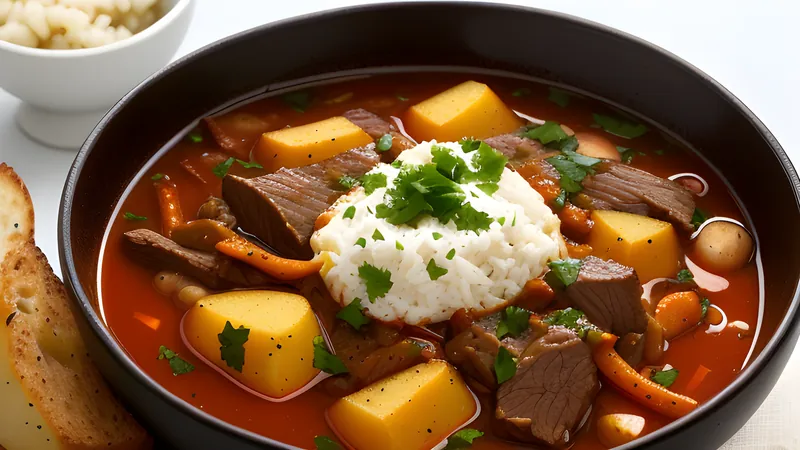
↓ Jump to recipeA kilo of beef and a kilo of onions. That ratio is the dish, and if it sounds like a mistake it is because most restaurant stifado has quietly reduced the onions to a garnish. Done properly, stifado is an onion stew that happens to contain meat, and the onions go in whole, stay whole, and end up translucent and sweet and structurally intact in a sauce that is almost black.
The name gives away where it came from. Stifado derives from the Venetian stufado, a stew, and the Venetians held Crete from 1204 until 1669 and the Ionian islands for much longer. What they brought was the tomato, eventually, and the technique of a long covered braise. What Greece already had was the vinegar, the cinnamon and the whole-onion habit, which trace back through Byzantium to the eastern Mediterranean. The dish is a joint venture.
In the villages it is still made with rabbit — kouneli stifado — and with hare, and on Corfu with beef. Octopus stifado is a coastal thing and genuinely good. The beef version is what most people mean now.
Stifado: Greece's Onion-Heavy Braise With Cinnamon
Ingredients
- 1kg beef shin or chuck, cut into 5cm chunks
- 1kg small pickling or baby onions, peeled and left whole
- 5 tbsp olive oil
- 6 garlic cloves, peeled and left whole
- 2 tbsp tomato purée
- 400g tinned chopped tomatoes
- 150ml red wine vinegar
- 200ml dry red wine
- 1 cinnamon stick
- 4 whole cloves
- 3 bay leaves
- 8 allspice berries
- 1 tbsp dried Greek oregano
- 1 strip of orange peel, pared with a knife
- 10g dark chocolate, 70% cocoa
- 1.5 tsp fine sea salt
- 1/2 tsp freshly ground black pepper
- 300ml water or beef stock
Method
- Peel the onions: cover them with boiling water for 2 minutes, drain, and the skins slip off. Trim the root end but leave the base intact so the onions hold together.
- Pat the beef completely dry and season with 1 tsp of the salt. Heat 3 tbsp olive oil in a heavy casserole over a high heat.
- Brown the beef in three batches, 3-4 minutes a side, until deeply crusted. Do not crowd the pan. Set the meat aside.
- Drop the heat to medium, add the remaining 2 tbsp oil and the whole onions. Cook for 12-15 minutes, rolling them around, until they are patched with brown on several sides. Add the whole garlic cloves for the last 3 minutes. Lift the onions and garlic out and set aside separately.
- Add the tomato purée to the pan and cook for 1 minute until it darkens. Pour in the vinegar and let it bubble hard for 2 minutes, scraping every brown scrap off the base.
- Add the wine, tinned tomatoes, water, cinnamon stick, cloves, bay, allspice, oregano, orange peel, the remaining 1/2 tsp salt and the pepper. Return the beef and any juices.
- Bring to a simmer, cover, and cook at the barest bubble — 150C in the oven or the lowest hob flame — for 2 hours.
- Return the onions and garlic to the pot, tucking them into the liquid. Cover and cook for a further 45-60 minutes, until the beef pulls apart under a fork and the onions are translucent but still whole.
- Lift the lid, raise the heat, and reduce for 10-15 minutes until the sauce coats a spoon and the oil beads on the surface.
- Off the heat, stir in the dark chocolate until it melts and disappears. Fish out the cinnamon stick, bay and orange peel.
- Rest for 15 minutes before serving. Taste and add salt if it needs it.
The onions are the work
Peeling a kilo of pickling onions by hand is miserable and there is a better way. Cover them with boiling water, wait two minutes, drain, and the skins slide off between finger and thumb. It takes eight minutes for the lot.
Trim the root end conservatively. The base plate is what holds the layers together — cut too deep and the onion falls into rings in the pot, which is the standard failure and the reason people end up with a mush.
Brown them separately from the beef, over a medium heat, rolling them so they patch unevenly. Stop well short of a full caramelisation: you want colour on some faces and none on others, because that unevenness is what gives the finished stew its variety.
And then take them out. This is the part almost every recipe gets wrong. If the onions go in with the beef at the start, three hours later they have dissolved. Beef shin needs two hours before it starts giving up. Onions need forty-five minutes to become translucent and about seventy to collapse. So the beef goes in first, alone, and the onions join it for the last hour. They arrive at the finish line together.
Vinegar, and how much
A hundred and fifty millilitres of red wine vinegar in a stew for four people is a lot. It is meant to be. Stifado sits in the sour end of Greek cooking, related to savoro and the whole Byzantine tradition of vinegar-preserved dishes, and the sourness is the reason it works against all that onion sugar.
The important thing is to bubble it hard for two minutes before anything else joins it. Vinegar is roughly 6% acetic acid and 94% water; boiling it drives off the harsh volatile edge and leaves the acidity, which then has three hours to fold into the sauce. Add it late or add it off the boil and the whole stew tastes like a chip shop.
Vinegar also does something structural: acid helps break down collagen, which is why shin — the most collagen-rich cut on the animal — is the right choice here and why it goes gelatinous rather than stringy. The same logic that makes the carbonade flamande work with beer and the zuurvlees work with vinegar and gingerbread.
The spice, and restraint
One cinnamon stick, four cloves, eight allspice berries, three bay. Whole, all of it, and fished out at the end. Ground spice in a three-hour braise goes muddy and slightly gritty; whole spice releases slowly and you can remove it when it has said enough.
Cinnamon in a savoury Greek braise confuses people who have only met it in buns. It belongs. It is all over Greek and Turkish meat cooking — pastitsio uses it in the mince, kleftiko leans on oregano and lemon instead but the family resemblance is there. What it does is sit under the tomato and the vinegar and make the whole thing read as warm rather than sharp.
One stick. Two makes a pudding.
The chocolate
Ten grams of 70% dark chocolate, stirred in off the heat at the very end. This is a borrowed idea — Mexican mole, Italian cinghiale in dolceforte, and a few Corfu households that do it and will not admit it — and it earns its place.
Chocolate brings cocoa’s bitter compounds and a small amount of fat. In a sauce this sweet with onion and this sharp with vinegar, the bitterness is the missing third leg. It closes the gap between the two extremes and gives the sauce a darker colour and a slightly heavier body. You will not taste chocolate. If you can taste chocolate, you used too much or you used something with milk in it.
Off the heat, always. Boiled chocolate seizes and goes grainy.
Getting the texture right
The braise wants the barest possible bubble — 150C in the oven is the reliable way, because a hob flame low enough is hard to hold. A stew that boils shreds the meat fibres and clouds the sauce.
At the end, lid off and reduce for ten to fifteen minutes. The sauce should coat the back of a spoon and you should see olive oil beading on the surface, which is the Greek sign that a braise is done — they call it ladera logic, and it means the water has gone.
Rest it fifteen minutes before serving. Better still, make it the day before. Overnight in the fridge, the gelatin sets, the vinegar mellows and the spice distributes. It is a measurably better dish on day two, and it keeps five days.
Choosing the onions
Small pickling onions, sometimes sold as baby onions or silverskins, around 2-3cm across. Shallots are the substitute everyone reaches for and they are a compromise: they are sweeter, they cook faster, and they have a tendency to slump. If shallots are all you can get, use the round Dutch type rather than the long banana ones, and give them fifteen minutes in the pot rather than an hour.
What you cannot do is quarter a large onion and call it done. The whole small onion holds its layers under pressure precisely because it is intact and small, and the finished dish depends on encountering entire soft onions rather than fragments.
Frozen baby onions exist and they are a legitimate shortcut. They have been blanched, so they have lost some structure and they need only forty minutes in the pot. They also cannot be browned properly, since they release water — so brown them in a very hot dry pan first, in two batches, and accept a slightly paler result.
Browning, and why the pan matters
Three batches for the beef, and the reason is thermal. A kilo of meat dropped into a pan at once drops the pan temperature below the point at which water evaporates, so the surface never gets past 100C and the meat steams grey in its own juice. The Maillard reaction needs a dry surface and around 140C. Dry the beef with kitchen paper, salt it, and give each batch space and four minutes a side without moving it.
The fond — the brown glue on the base of the pan — is where a third of this dish’s flavour lives, and the vinegar deglaze is what recovers it. Pour the vinegar in while the pan is hot and scrape hard with a wooden spoon until the base is clean and the liquid is brown.
Use a heavy casserole with a tight lid. A thin pan scorches the sugars in the onion and tomato over three hours, and a loose lid lets the liquid evaporate so the top of the meat dries out.
What can go wrong
The onions dissolved. They went in at the start. They belong in the last hour.
It tastes brutally sour. The vinegar was added off the boil or not reduced. It needs two minutes of hard bubbling.
The meat is dry and stringy. The braise boiled, or you used a lean cut. Shin and chuck, and 150C.
The sauce is thin. You skipped the uncovered reduction at the end. Fifteen minutes, lid off, until the oil beads.
It tastes like a hot cross bun. Two cinnamon sticks, or ground cinnamon instead of whole. One stick, whole, removed at the end.
Making it the day before
I mean this seriously: cook it on Saturday, eat it on Sunday. Three things happen overnight. The gelatin dissolved out of the shin sets, so the sauce goes from liquid to a soft jelly and reheats with real body. The vinegar’s remaining sharpness redistributes and softens, because acid keeps reacting with the sugars and proteins around it. And the whole-spice compounds, which are fat-soluble, continue diffusing through the olive oil.
Cool it uncovered until it stops steaming, then refrigerate covered. Reheat gently on the hob, lid on, for twenty minutes, adding a splash of water if it has set too tight. Never boil it on the reheat — the onions have nothing left to give and they will fall apart at the last moment.
Five days in the fridge, three months in the freezer. It freezes better than most braises because the onions have already surrendered their structure to the point where ice crystals cannot do much more damage.
Serving and variations
Bread, and plenty of it, is the traditional partner — this is a sauce that demands mopping. Rice works. Chips work, in a way that Greek tavernas understand and nobody else admits.
For rabbit stifado, cut the braise to 90 minutes total and add the onions after 40. Octopus stifado needs the octopus simmered for 45 minutes on its own first, then 30 minutes with the onions and sauce.
Feta crumbled over is not traditional and is very good. A sharp green salad — the watermelon Greek salad in summer — cuts through it properly.
Related Content