Sticky Toffee Pudding
Dark, date-sweet sponge in a pool of toffee
Contents
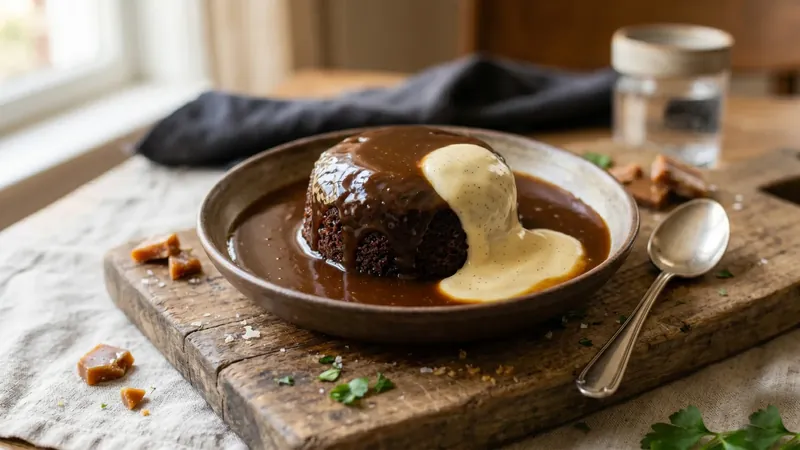
↓ Jump to recipeSticky toffee pudding is the pudding that wins over even the most committed dessert-sceptic, and its secret is dates: soaked and softened into the batter, they melt away to leave a deep, fudgy sponge with no fruity flavour, only richness. Crowned with a buttery dark-muscovado toffee sauce that seeps right into the crumb, it is warming, indulgent and gloriously easy to make. A pinch of sea salt in the sauce keeps all that sweetness in balance, and it is the single change that turns a good version into one you will be asked to make again.
Sticky Toffee Pudding
Ingredients
- 200g pitted dates, chopped
- 250ml boiling water
- 1 tsp bicarbonate of soda
- 75g unsalted butter, softened
- 150g dark muscovado sugar
- 2 large eggs
- 175g self-raising flour
- 1 tsp vanilla extract
- For the toffee sauce: 100g unsalted butter
- 150g dark muscovado sugar
- 200ml double cream
- Pinch of sea salt
Method
- Heat the oven to 180C/160C fan/gas 4 and butter a 20cm square baking tin.
- Put the chopped dates in a bowl, pour over the boiling water and stir in the bicarbonate of soda, then leave to soften for 10 minutes.
- Beat the softened butter and muscovado sugar until light, then beat in the eggs one at a time.
- Fold in the flour and vanilla, then stir through the dates and their soaking liquid to make a loose batter.
- Pour into the prepared tin and bake for 30-35 minutes until risen and springy to the touch.
- For the sauce, melt the butter and sugar together in a pan over a low heat.
- Pour in the cream, add the salt, and simmer gently for 3-4 minutes until smooth and glossy.
- Prick the warm sponge all over and pour a third of the sauce over it, letting it soak in for 5 minutes.
- Cut into squares and serve warm with the remaining toffee sauce and cream or vanilla ice cream.
The story: newer than you think
Sticky toffee pudding has become a defining symbol of British pudding cookery, yet by the standards of the country’s puddings it is a relative newcomer. It rose to fame in the second half of the twentieth century and is most strongly associated with the Lake District, where the chef and hotelier Francis Coulson served a celebrated version at Sharrow Bay on Ullswater in the 1970s that did much to spread its reputation. Coulson, who bought Sharrow Bay in 1948 and ran it until his death in 1998, was not shy about where the recipe came from. He told the food writer Simon Hopkinson that he had it from a Patricia Martin of Claughton in Lancashire, and Martin’s son in turn said she had picked it up from two Canadian air force officers billeted at her hotel during the Second World War.
So the pudding that feels quintessentially British may well have a transatlantic thread running through it, which is fitting for a dish built on dates and muscovado, neither of which grows anywhere near the Lake District. The precise origins are genuinely debated, with some crediting a landlady in the East Riding of Yorkshire earlier still. What is not in doubt is that it was through Cumbrian hotels and restaurants that the dish travelled out to the rest of the country and eventually around the world.
Why the date trick works
The genius of the recipe is the humble date. Soaking chopped dried dates in boiling water with a little bicarbonate of soda breaks them down into a soft pulp that all but dissolves into the batter. They contribute almost no recognisable fruitiness; instead they bring moisture, a natural caramel-like sweetness and that characteristic dense, sticky crumb that no amount of plain sugar could replicate. Use Medjool dates if you can, which are fleshy and soft, but any pitted dried date works so long as you give it the full ten minutes to soften.
The bicarbonate of soda is doing more than you might think. It is mildly alkaline, and it both softens the dates faster by breaking down their cell walls and reacts with the acidic muscovado sugar to help the sponge rise and set with an open, tender crumb. The alkalinity also encourages browning reactions during baking, which is part of why the finished sponge is so much darker than a plain sponge cake. Do not be tempted to add more than the teaspoon specified, though, as too much bicarb leaves a soapy, metallic aftertaste.
The muscovado, and the salt
Dark muscovado sugar is the other key player, used in both the sponge and the sauce. Unlike refined white sugar, it retains a generous proportion of molasses, lending a treacly, almost smoky depth and a faint bitterness that stops the pudding cloying. This is what gives a good sticky toffee pudding its grown-up character rather than mere sweetness. Light muscovado will do at a push, but the pudding will be paler and milder; ordinary soft brown sugar, which is often just white sugar with a little molasses added back, gives a noticeably thinner flavour.
The toffee sauce is deceptively simple, made by melting butter and sugar together over a low heat before enriching it with double cream until smooth and pourable. The one thing to watch is the heat: keep it gentle and stir steadily, because muscovado can catch and turn bitter if the pan gets too hot before the cream goes in. Adding a pinch of sea salt is the small, modern refinement that lifts the whole thing, sharpening the toffee and balancing its richness. Salt suppresses our perception of sweetness and heightens everything else, which is why a pinch makes the sauce taste more of toffee and less of plain sugar.
Pouring some of the warm sauce over the sponge while it is still hot, and pricking the surface all over first, lets it soak right down into the crumb so that every forkful is saturated. The rest is served alongside in a warm jug, ready to be poured liberally, with cream or vanilla ice cream.
Individual puddings, and steaming
The version here is baked as a single tray and cut into squares, which is the easy, generous, feed-a-crowd approach. If you would rather serve elegant individual puddings, divide the batter between six buttered dariole moulds or a muffin tin, filling each about two-thirds full, and reduce the baking time to around 20 to 22 minutes; test with a skewer, as smaller puddings set faster and are easy to overbake. Run a knife around each and turn them out warm, then spoon sauce over so it pools around the base.
Some cooks steam their sticky toffee pudding rather than baking it, covering the basin with pleated foil and setting it over simmering water for around an hour and a half. Steaming gives an even softer, more open crumb and a paler colour, closer to a traditional British steamed pud, and it is well worth trying if you like your puddings especially moist. Baking, which is what I do most often, gives a slightly firmer sponge with a little more colour and takes half the time, so choose according to your patience and the occasion.
What can go wrong
A dry, tight sponge almost always means it was over-baked or the batter was over-mixed, so fold the flour in just until it disappears and pull the pudding out the moment a skewer comes out with a few moist crumbs clinging to it rather than wet batter. A sponge that sinks in the middle usually went in before the oven was fully up to temperature, or the tin was too deep for the batter. A sauce that turns grainy or splits has almost always been boiled too hard; if it does split, take it off the heat and beat in a tablespoon of cold cream to bring it back.
Make-ahead, storage and serving
This is a forgiving pudding to prepare in advance, which is part of why it earns its place at dinner parties. Bake the sponge and make the sauce up to two days ahead, keep both covered in the fridge, then reheat portions of sponge with a spoonful of sauce in a low oven or the microwave until piping hot, pouring over fresh warm sauce to serve. It also freezes well: freeze the sponge and sauce separately for up to three months and thaw overnight before reheating.
If you have a soft spot for old-fashioned British puddings built on soaked dried fruit and a generous pour of something creamy, you will find the same spirit in my bread and butter pudding. And for a gentler, spiced pudding at the other end of the register, my saffron and cardamom rice pudding (firni) is the fragrant, elegant counterpoint to this one’s dark, treacly richness. Whichever you reach for, serve it warm, and make more sauce than you think you need.
Related Content