Spiced Carrot and Ginger Soup with Coconut Cream
Bright, warming and ready in half an hour
Contents
↓ Jump to recipeCarrot soup has a bit of an image problem. For a lot of people it conjures memories of something thin, sweet and faintly dull, the default option on a sad pub menu. I am here to make the case for the opposite: a carrot soup so bright, warming and silky that it converts the sceptics. The secret is to stop treating the carrot as the whole story and start treating it as a sweet, sunny canvas for ginger, warm spices and a generous slug of coconut milk.
Spiced Carrot and Ginger Soup with Coconut Cream
Ingredients
- 1 tbsp coconut oil or olive oil
- 1 onion, chopped
- 1 large thumb of fresh ginger, peeled and grated
- 3 garlic cloves, crushed
- 1 tsp ground cumin
- 1 tsp ground coriander
- ½ tsp ground turmeric
- Pinch of chilli flakes (optional)
- 700g carrots, peeled and chopped
- 1 medium potato, peeled and diced (for body)
- 900ml vegetable stock
- 1 x 400ml tin full-fat coconut milk
- Juice of 1 lime
- Salt and black pepper, to taste
- Coconut cream, toasted seeds and coriander, to serve
Method
- Heat the oil in a large pot and cook the onion gently for 6 to 8 minutes until soft and golden.
- Add the grated ginger and garlic and cook for 2 minutes, then stir in the cumin, coriander, turmeric and chilli flakes and toast for 1 minute until fragrant.
- Add the carrots and potato and stir to coat in the spices.
- Pour in the stock and most of the coconut milk, reserving a little to swirl on top. Bring to a simmer.
- Cover and cook for 20 to 25 minutes until the carrots are completely soft.
- Blend until silky smooth, using a stick blender or a jug blender, adding a splash of water if too thick.
- Stir in the lime juice, then taste and season well with salt and pepper.
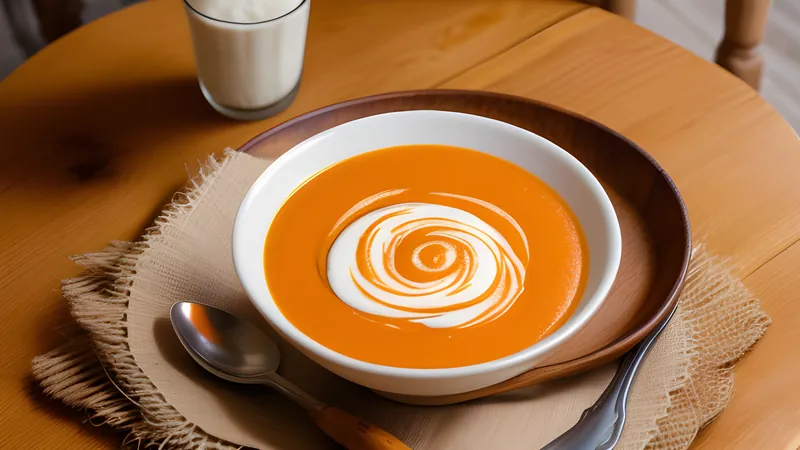
- Serve in warm bowls with a swirl of the reserved coconut milk or coconut cream, a scatter of toasted seeds and a few coriander leaves.
A soup that borrowed its personality from elsewhere
Pureed vegetable soups of this kind owe a great deal to French kitchen technique, where a velouté or potage is built on the same logic used here: sweat the aromatics gently, simmer the vegetable until soft, blend until smooth, then adjust the seasoning at the very end. What turns this particular version away from the classic cream-enriched French style and towards something more modern is the ginger and the tin of coconut milk, an influence that arrived by way of Thai and South Indian cooking, where coconut and root ginger have anchored curries and soups for generations.
The dish sits, then, at a genuinely useful crossroads. It takes the smooth, dignified texture of a European pureed soup and swaps out the dairy and the flour for coconut and a single potato, which is what makes it accidentally vegan and, to my mind, better. If you like the idea of coconut doing the heavy lifting in a soup bowl, it is worth reading how far you can push that in the direction of a proper aromatic broth in my Thai tom kha coconut soup, which leans on lemongrass and galangal where this one leans on ground spices.
Why carrot and ginger belong together
Carrot and ginger is one of those classic pairings that works because of contrast. Carrots are earthy and sweet, and on their own that sweetness can become cloying over a whole bowl. Ginger cuts straight through it with its clean, peppery heat and that distinctive zing that wakes the whole soup up. The two balance each other so neatly that the fire of the ginger keeps the sugar of the carrot honest, which is exactly why the combination turns up so often in juices, cakes and soups alike.
I use a genuinely large amount of fresh ginger here, a big thumb’s worth, grated so it melts invisibly into the soup. Fresh is essential; the dried ground stuff is a completely different, dustier flavour and will not give you that fresh, lively kick. Don’t bother peeling it too fussily either; a scrape with the edge of a teaspoon takes the skin off in seconds and wastes almost none of it.
The clever twist: coconut milk and a final hit of lime
The move that lifts this above an ordinary carrot soup is finishing it with a full tin of coconut milk and the juice of a whole lime. The coconut milk does two things at once. It makes the soup luxuriously silky and rich without any dairy, so it happens to be vegan, and its gentle, tropical sweetness rounds out the spices into something that tastes far more considered than the short ingredient list suggests. It turns a humble vegetable soup into something that would not look out of place as a starter at a dinner party.
Use full-fat tinned coconut milk, not the reduced-fat cartons sold for cereal, or the texture will be thin and the flavour weak. Give the tin a good shake before opening; the solid cream and the thinner liquid separate as it stands, and you want them recombined.
The lime is the part people forget, and it is the part that makes the whole thing sing. Carrots, coconut and root spices are all soft, warm, rounded flavours, and without acid the soup tastes a touch heavy and one-dimensional. A whole lime’s worth of juice, stirred in right at the end off the heat, lifts everything, throws the spices into sharp relief, and stops the bowl feeling sleepy. Add it last, taste, and add more if it still feels flat; the difference is dramatic. Off the heat matters, incidentally: boiling citrus juice hard drives off the bright top notes you added it for.
Spices and body
A trio of cumin, coriander and turmeric gives the soup its warm, faintly curried character without tipping it into being an actual curry. The key, as always with ground spices, is to toast them briefly in the oil with the ginger and garlic before any liquid goes in, just sixty seconds or so, which wakes up their aromatic oils and deepens their flavour. Watch the turmeric, which scorches easily and turns bitter if it does, and add a pinch of chilli flakes if you like a little background heat. And yes, there is garlic; three cloves, because even a sweet soup like this benefits from a savoury foundation, and I have never met a pot that was improved by leaving the garlic out.
I sneak a single small potato into the pot, which is my quiet trick for body. Blended in, it gives the soup a velvety, substantial texture so it feels like a proper meal rather than coloured water, without any cream or flour. You will never taste it as potato; you will just notice the soup is thicker and more satisfying. The starch it releases is what stabilises the blend and stops the soup separating into a watery layer and a solid one as it stands.
Then it all gets blitzed completely smooth, because the appeal of this soup is its silky, almost glossy texture. A stick blender will do the job, but for true velvet a jug blender wins, since its faster blade and enclosed jug break the fibres down more thoroughly. If you use a jug blender, let the soup cool for a few minutes first and never fill the jug more than two-thirds, or the trapped steam can blow the lid off. Blend in batches if you must, and hold a folded tea towel over the lid.
Choosing and preparing the carrots
The carrots matter more than you might assume for something that gets blended to oblivion. Older, larger carrots have a woodier core and a more muted sweetness, while smaller, younger ones are sweeter and cleaner in flavour, so if you have a choice, reach for the smaller ones. There is no need to buy anything fancy: ordinary supermarket carrots make an excellent soup. Peel them, since the skin can carry a faintly bitter, earthy note that comes through in a blended soup even when it would go unnoticed in a roast, and chop them into rough 2cm pieces so they cook evenly in the time given. Uniform pieces are the difference between carrots that are all perfectly soft and a pan where some are collapsing while others are still firm at the centre and refuse to blend smooth.
What can go wrong
The two most common faults are both easily avoided. A soup that tastes flat and heavy has almost always been under-seasoned or under-acidified; go back in with more salt and more lime before you assume the recipe is at fault, because a sweet vegetable soup needs a surprising amount of both to taste bright rather than bland. A soup that tastes harsh or slightly bitter, on the other hand, usually means the spices or the garlic caught and burned in the pan, so keep the heat gentle while they toast.
If the finished soup is thicker than you like, loosen it with a splash of hot water or stock rather than more coconut milk, which will dull the spicing. If it is too thin, simmer it uncovered for a few more minutes to drive off water and concentrate the flavour.
Serving and variations
Presentation makes this look far fancier than the effort deserves. Reserve a little of the coconut milk, or use a spoonful of thick coconut cream from the top of the tin, and swirl it across the surface of each bowl. A scatter of toasted pumpkin or sunflower seeds adds welcome crunch against the smooth soup, and a few coriander leaves bring freshness and colour. A drizzle of chilli oil over the top, if you have it, looks beautiful and adds gentle heat.
It is endlessly adaptable. Swap in butternut squash or sweet potato for a third of the carrots for an autumnal version, or stir in a heaped teaspoon of red Thai curry paste with the spices for something punchier and more assertive. For a heartier, protein-rich meal you can take the same warm-spiced, coconut-backed flavours further, as in my red lentil and coconut dal, which uses the identical trick of toasting ground spices before the liquid goes in.
It freezes beautifully, so I often make a double batch and keep half. Cool it fully, freeze in portions for up to three months, and reheat gently, adding the lime fresh after reheating rather than before freezing, since the acidity fades in the freezer. Bright orange, warming and quietly sophisticated, this is the soup that finally makes carrot soup worth getting excited about.
Related Content