Spiced Brown Butter Madeleines
Little shell cakes with a nutty, fragrant lift
Contents
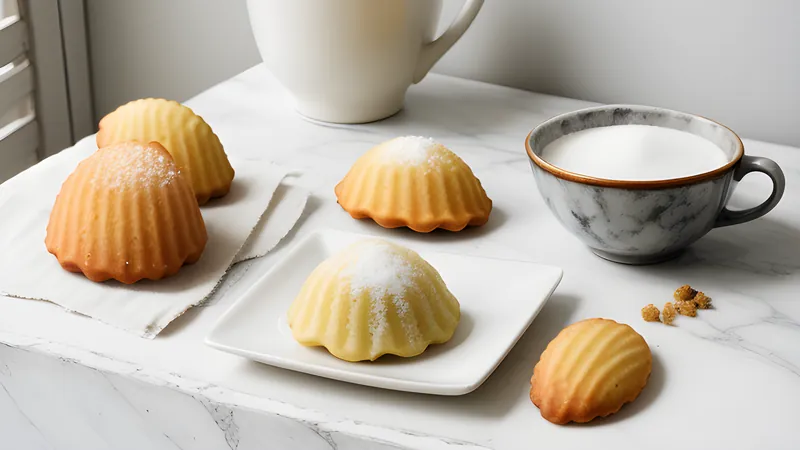
↓ Jump to recipeA madeleine is a small thing to get worked up about, and yet people do, myself included. These little shell-shaped sponge cakes, crisp at the edges and tender in the middle, are one of those bakes that look fiddly and turn out to be among the easiest and most reliable things you can make. The famous feature is the domed bump on the back, the badge of a properly made madeleine, and it comes from a trick of temperature rather than skill. My twist is to lean into warmth and fragrance: brown butter for depth, and a quiet trio of cinnamon, cardamom and ginger that makes them taste like the most comforting cup of tea you have ever had.
Spiced Brown Butter Madeleines
Ingredients
- 100g unsalted butter, plus extra for the tin
- 100g plain flour, plus extra for the tin
- 2 large eggs
- 90g caster sugar
- 1 tbsp honey
- 0.5 tsp baking powder
- 0.5 tsp ground cinnamon
- 0.25 tsp ground cardamom
- 0.25 tsp ground ginger
- 1 pinch of fine salt
- Zest of 0.5 a lemon
Method
- Melt the butter in a small pan and cook over a medium heat until it foams, smells nutty and the milk solids turn deep golden brown. Pour into a bowl, leaving the very darkest sediment behind, and cool to lukewarm.
- Whisk the eggs, sugar and honey together until pale, thick and doubled in volume.
- Sift the flour, baking powder, cinnamon, cardamom, ginger and salt over the eggs and fold in gently with the lemon zest.
- Fold in the lukewarm brown butter until you have a smooth, glossy batter.
- Cover and chill the batter for at least 1 hour, or overnight.
- Brush a 12-hole madeleine tin generously with soft butter, dust with flour and tap out the excess, then chill the tin.
- Heat the oven to 200C fan. Spoon the cold batter into the moulds, filling each about three-quarters full; do not spread it.
- Bake for 10 to 12 minutes until risen with a domed bump and golden at the edges.
- Turn out immediately onto a rack and eat warm, dusted with icing sugar if you like.
The cake that launched a thousand essays
No small cake carries more literary baggage than the madeleine. Marcel Proust gave them immortality in his novel In Search of Lost Time, where the narrator dips one in a spoonful of lime-blossom tea and is flooded with involuntary childhood memory, an episode so famous it gave us the phrase “a Proustian moment”. Ever since, the humble madeleine has been freighted with nostalgia far beyond its size.
The cakes themselves are older than Proust, traditionally associated with the town of Commercy in the Lorraine region of northeastern France, where competing legends credit various women named Madeleine with the invention. The most repeated of these attaches the cake to Commercy in the eighteenth century, though the documentary trail is thin and the stories are best treated as pleasant folklore rather than fact. Whatever the truth, they became a regional speciality sold in distinctive oval boxes to travellers passing through, and have since spread to every patisserie and supermarket in France. They are essentially a génoise sponge baked in a shell mould, designed to be eaten fresh and warm, ideally within an hour or two of leaving the oven, which is part of their charm and the best reason to make your own.
The shell shape is not just decoration. Scallop moulds give a thin, crisp shell on one face and let the batter dome dramatically on the other, so each cake has two quite different textures: a fine, almost biscuity edge and a soft, cakey middle. It is a lot of character for something you can eat in two bites, and it is why a good home-baked madeleine, warm from the tin, beats almost any shop-bought one — those have usually sat in a packet long enough to lose the crisp edge entirely.
Method, and the secret of the bump
The batter could not be simpler: eggs and sugar whisked to a pale foam, flour folded in, and butter to enrich. Browning that butter first adds a nutty, toffee-like depth that lifts the whole thing, and the spices and lemon zest do the rest. Take the butter only to deep gold and pull it off before it burns, since the gap between nutty and acrid is a matter of seconds.
If you have not browned butter before, it is the single technique most worth learning, and it turns up across the baking I love most — from almond financiers to brown butter chocolate chip cookies. Melt the butter in a pale-bottomed pan so you can see the colour change. It will foam, then quieten, then the milk solids sitting at the bottom will turn from cream to hazelnut and throw off a smell like toasted nuts and toffee. That is your cue. Pour it straight into a cold bowl to stop the cooking, and leave the very darkest gritty sediment behind in the pan — those are the solids that tip over from nutty into bitter if they carry on cooking in the residual heat.
The genuinely important step is chilling. The batter must rest in the fridge, ideally overnight, until it is properly cold. And the tin, generously buttered and floured, should be cold too. When you put cold batter into a hot 200C oven, the sudden burst of heat causes a rapid rise that produces the signature domed hump on the back. Skip the chilling and you get flat, ordinary little sponges. It really is that simple, and that non-negotiable.
Fill the moulds only about three-quarters full and resist the urge to spread the batter out; it will find its own way as it bakes. They cook in 10 to 12 minutes, and you want to catch them just as the edges turn golden.
Why the bump happens
It is worth understanding the science, because once you do the recipe stops feeling like luck. The bump — French bakers call it la bosse — is thermal shock, pure and simple. Cold, thick batter meets a fiercely hot oven. The outside of each little cake sets almost instantly, forming a crust. The batter trapped underneath keeps expanding as the air whipped into the eggs heats and the baking powder releases its gas, and with nowhere else to go it forces its way up through the one point that is still soft: the centre. Out pops the dome.
Everything that helps the bump is about maximising that temperature difference. Chilling the batter for at least an hour, and preferably overnight, does two things: it makes the batter cold, and it lets the flour hydrate fully so the crumb bakes tender rather than tough. Chilling the buttered tin adds another few degrees of contrast. A properly hot oven — 200°C fan, no lower — supplies the shock from above. Skip any one of these and you will still get a perfectly nice small cake, just a flat-backed one that has forfeited its badge of honour.
The batter also benefits from resting in a subtler way. Freshly mixed génoise batter is full of large, unstable air bubbles from the whisking; a spell in the cold lets them settle into a finer, more even network, which is why rested batter rises more reliably and domes more emphatically than batter baked straight away.
Tips, twists and timing
Eat them fast. Madeleines are at their glorious best within minutes of baking, when the edges are crisp and the centre is warm and springy. They go from sublime to merely fine within a couple of hours and are frankly dull by the next day, so bake them to order if you can. The good news is the batter keeps in the fridge for up to three days, so you can scoop and bake a few at a time, fresh whenever you fancy.
If you do not have a madeleine tin, all is not quite lost: a shallow bun tin will give you the right texture even without the shells, though you sacrifice the looks. A non-stick madeleine tin still needs buttering and flouring properly, or you will lose the delicate ridges to the pan.
Play with the flavour freely. Swap the warm spices for a teaspoon of matcha, the seeds of a vanilla pod, or a tablespoon of cocoa. Dip the cooled shells in dark chocolate for something more indulgent, or brush them with a lemon glaze while still warm so it soaks in. A spoonful of finely chopped candied orange or stem ginger folded into the batter is lovely too, as is a pinch of orange-blossom water for a more floral note. The warm spices here are deliberately restrained so they read as a background hum rather than a spice cake; if you want them more forward, push the cinnamon to a full teaspoon, but keep the cardamom light, as it turns soapy in excess. A little brown butter goes a long way, so resist doubling it in the hope of more flavour — too much fat weighs the batter down and flattens the rise.
Storage and make-ahead
The batter is the thing to make ahead, not the cakes. Mixed and chilled, it holds happily in the fridge for up to three days in a covered bowl, and it bakes better cold than fresh, so this is one recipe where planning genuinely improves the result. Butter and flour the tin, keep it in the fridge, and you can produce a warm half-dozen at ten minutes’ notice whenever someone drops in. Baked madeleines do not keep — that is simply the nature of the cake — but if you must, store them airtight for a day and revive them for a few seconds in a warm oven to bring back a little of the crisp edge. They also freeze reasonably well once cooled: bag them, freeze, and warm from frozen in a 160°C fan oven for five minutes.
What goes wrong
If your madeleines stick to the tin, the usual culprit is skimping on the butter-and-flour lining, so be generous and get right into the ridges. If they come out flat rather than domed, your batter or your tin simply was not cold enough, or the oven was not hot enough when they went in; chill both harder and preheat fully next time. And if they taste flat despite the spices, check your brown butter — under-browned butter tastes of nothing much, so let it reach a proper deep hazelnut colour before you pull it off the heat. Try the spiced brown-butter version first, with a strong cup of tea, and see whether you do not have your own small Proustian moment.
Related Content