Spaghetti Puttanesca
Bold, briny and ready in twenty minutes
Contents
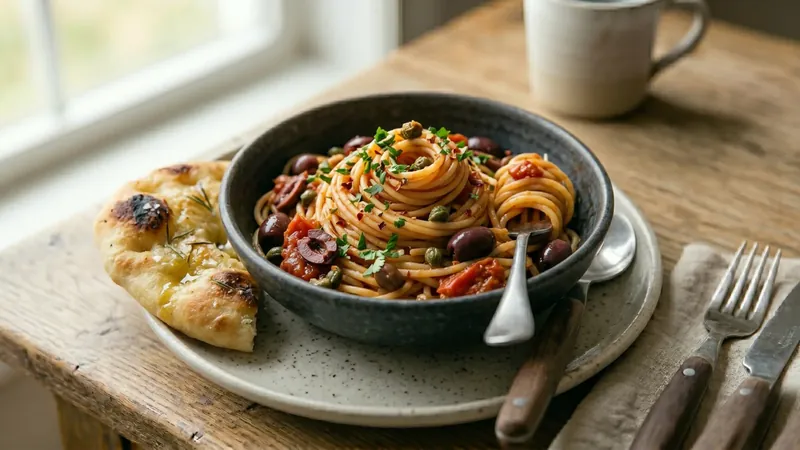
↓ Jump to recipePuttanesca is the pasta sauce for nights when the cupboard looks bare but the appetite is loud. The twist that defines it is the trio of pantry strong-arms — black olives, capers and anchovy — melted with garlic and chilli into a tomato sauce that punches far above its humble ingredients. The anchovies dissolve completely, leaving no fishiness, only a deep savoury hum. No browning of meat, no long simmer; from cold pan to plate in about twenty minutes.
I make it more often than almost any other pasta, precisely because it demands nothing fresh. If there is a tin of tomatoes and a jar of anchovies in the house, dinner is twenty minutes away. It sits at the assertive end of the pasta spectrum — where carbonara is rich and eggy, puttanesca is salty, sharp and unapologetic. The two make a good pair to have in your repertoire: one for when you want comfort, the other for when you want a jolt.
Spaghetti Puttanesca
Ingredients
- 400g spaghetti
- 4 tbsp extra-virgin olive oil
- 4 garlic cloves, thinly sliced
- 6 anchovy fillets in oil
- 0.5 tsp dried chilli flakes
- 2 tbsp capers, drained
- 100g pitted black olives, roughly chopped
- 400g tin chopped tomatoes
- Small bunch flat-leaf parsley, chopped
- Salt and black pepper, to taste
Method
- Bring a large pan of well-salted water to the boil and cook the spaghetti until just shy of al dente.
- Meanwhile, warm the olive oil in a wide frying pan over a medium-low heat.
- Add the sliced garlic, anchovies and chilli flakes, and cook gently, stirring, until the anchovies melt into the oil and the garlic turns pale gold.
- Stir in the capers and olives and cook for 1 minute to warm through.
- Pour in the chopped tomatoes, season with black pepper, and simmer for 8-10 minutes until thickened and glossy.
- Drain the spaghetti, reserving a mugful of pasta water.
- Add the spaghetti to the sauce with a splash of the reserved water and toss vigorously over the heat for 1-2 minutes until coated.
- Stir through most of the parsley, check the seasoning, and serve with the remaining parsley scattered over.
The Story
Spaghetti alla puttanesca is a relatively modern classic of southern Italian cooking, strongly associated with Naples and also claimed by the island of Ischia in the Bay of Naples. Most accounts place its rise in the mid-twentieth century, and while it feels timeless, it does not appear in the Italian record nearly as far back as many older regional dishes. The name is famously earthy — puttana is a coarse Italian word for a prostitute — and several colourful stories attach themselves to it, though none can be reliably confirmed and they are best treated as folklore.
What is not in doubt is the character of the dish. Puttanesca belongs to the southern Italian tradition of cucina povera, cooking born of thrift and the store cupboard. Its strength is that almost everything in it keeps for months: tinned tomatoes, olives, capers, anchovies, dried chilli and garlic. There is no need for fresh meat or a long-simmered ragù; the bold, salty, piquant flavours come entirely from preserved ingredients, which is precisely why it can be thrown together at a moment’s notice.
The three key flavourings each pull their weight. Olives, typically the small, dark, oil-cured varieties of the south, bring a meaty saltiness. Capers, the pickled or salt-packed flower buds of the caper bush that grows wild around the Mediterranean, add sharp, floral bursts. Anchovies are the secret engine: cooked gently in oil they dissolve entirely, leaving no recognisable fishiness but a profound savoury depth, the same umami trick that underpins many Italian sauces. A pinch of chilli lifts the whole thing.
The version most people cook is the marinara style with tomatoes, the one associated with Naples. Rome has its own leaner take, sometimes made without tomatoes at all, leaning harder on the oil, garlic and salted anchovy. Both are legitimate; this recipe is the tomato-based Neapolitan one, which is the more forgiving of the two and the better introduction. The name notwithstanding, there is nothing coarse about the cooking — it is a precise little sauce that rewards attention to heat and timing far more than it rewards fancy ingredients.
One reason it has travelled so well is that it is genuinely a store-cupboard dish in the truest sense. Tinned anchovies keep for a year or more; capers and olives in brine last months; a tin of good tomatoes needs no fridge. Keep those four things in and you are never more than twenty minutes from a proper dinner, which is exactly the kind of insurance a working kitchen wants. It is the pasta I fall back on when the shopping has not happened and I still want to eat something with real character.
A few points of technique make the difference. Cooking the garlic and anchovies low and slow lets the anchovies melt and the garlic sweeten without burning into bitterness. Finishing the pasta in the pan with a splash of starchy cooking water emulsifies the sauce so it clings to every strand rather than sliding off. And the dish needs little or no added salt — between the olives, capers and anchovies, it brings plenty of its own. Cheese is traditionally left off; the sauce is assertive enough to stand alone.
What goes wrong, and why
The two failures I see most often are bitterness and a watery sauce. Bitterness comes from the garlic. Sliced thinly and dropped into oil that is already hot, it scorches in seconds and turns acrid, and no amount of tomato will hide it. Start the garlic in cool oil over a medium-low heat and let it come up gently; you want it soft and pale gold, never brown. The anchovies go in at the same time so they have time to break down — poke them with a wooden spoon and they will collapse into the oil within a couple of minutes.
A watery sauce means you drained the pasta too early or did not simmer the tomatoes long enough. The 8 to 10 minutes of simmering is not optional: it drives off the raw, tinny edge of the tomatoes and reduces them to something glossy and thick that coats the back of a spoon. When you add the spaghetti, keep the pan over a lively heat and toss hard for a minute or two so the starch in the reserved water binds the oil and tomato into a proper emulsion. If it looks dry, add water a splash at a time; if it looks loose, keep tossing over the heat until it tightens.
Substitutions and variations
Green olives work in place of black at a pinch, though they are milder and less resinous; taste and you may want an extra anchovy to compensate. Salt-packed capers, rinsed well, have a firmer texture and cleaner flavour than the vinegar-brined sort, but either is fine. If you cannot eat anchovy, a teaspoon of white miso stirred into the oil gives a comparable savoury depth without the fish — not authentic, but honest. For a puttanesca bianca, leave out the tomatoes altogether and finish the sauce with a little extra oil and pasta water for a sharper, oilier version. A handful of cherry tomatoes halved and added with the tinned tomatoes brings a fresher note in summer.
Storage and make-ahead
The sauce itself keeps in the fridge for up to three days and, if anything, deepens in flavour overnight, so it is worth making a double batch of sauce alone and dressing fresh pasta as you go. Reheat it gently with a splash of water to loosen. I would not dress the pasta ahead — cooked spaghetti sitting in sauce turns soft and claggy — so cook the strands to order. Leftover dressed pasta is still perfectly good the next day, eaten cold or fried in a little oil into a crisp-edged tangle, but it will never be quite as lively as the first serving.
Serve it with nothing more than bread to mop the pan, or alongside a plate of patatas bravas if you are cooking a spread for friends and want another bold, garlicky thing on the table.
Getting the pasta right
One last word on the spaghetti itself, because the sauce can only do so much. Salt the water properly — it should taste of the sea, roughly a tablespoon per litre — and cook the pasta a minute short of the packet time, so it finishes cooking in the sauce and picks up flavour as it goes. Reserve the water before you drain, every time; that cloudy, starchy liquid is what turns oil and tomato into a sauce that clings rather than pooling at the bottom of the bowl. Use a wide pan so the drained spaghetti has room to be tossed rather than stirred, and get it to the table the moment it is coated. Puttanesca waits for no one, and it does not need to — it is ready almost before you are.
Related Content