Sourdough Discard Crackers with Sesame and Nigella Seeds
the thriftiest, snappiest use for that jar of leftover starter
Contents
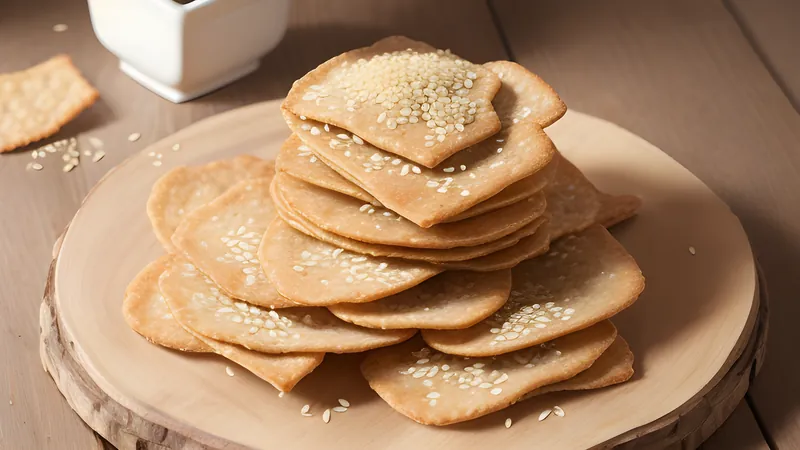
↓ Jump to recipeEvery sourdough baker keeps a small jar of guilt in the fridge. It is the discard, the portion of starter you pour off before each feed, and for the longest time I treated it like a chore: tip it down the sink, rinse, repeat, feel vaguely wasteful. Then I started turning it into crackers, and now I almost look forward to discard day. These are thin, shatteringly crisp, freckled with sesame and nigella, and they cost essentially nothing because the main ingredient was destined for the bin.
Sourdough Discard Crackers with Sesame and Nigella Seeds
Ingredients
- 200 g (about 1 cup) sourdough discard, unfed
- 100 g (¾ cup) plain flour
- 40 g (3 tbsp) unsalted butter, melted and cooled
- ½ tsp fine salt
- 1 tbsp sesame seeds, plus extra to finish
- 1 tbsp nigella seeds, plus extra to finish
- 1 tbsp olive oil, for brushing
- Flaky sea salt, to finish
Method
- Mix the discard, flour, melted butter, fine salt, sesame and nigella seeds into a soft, slightly sticky dough.
- Knead briefly until smooth, then rest covered for 30 minutes to relax the gluten.
- Divide in two. Roll each piece directly on a sheet of baking paper as thin as you can, ideally under 2 mm.
- Brush with olive oil and scatter with extra seeds and flaky salt, pressing them in gently.
- Score into squares or shards with a knife or pizza wheel so they snap apart cleanly later.
- Slide each paper onto a baking tray and prick all over with a fork to stop bubbling.
- Bake at 180°C (160°C fan) for 20–25 minutes until evenly golden and crisp, rotating halfway.
- Cool completely on the tray, then break along the scored lines.
The case for discard
If you keep a sourdough starter, you know the routine. To keep it lively you feed it fresh flour and water and remove some of the old culture first, or your jar grows to alarming proportions. That removed portion is the discard. It is not spent or useless; it is simply unfed, slightly more sour, and not bubbly enough to leaven a loaf. But it is full of flavour, and flavour is exactly what you want in a cracker.
The beauty is that crackers do not need rise. You are not asking the discard to lift anything, only to bring its tang and a bit of body to the dough. That makes this the most forgiving recipe in the whole sourdough universe. Discard that is a week old, two weeks old, hooch on top and all, works perfectly. Stir the dark liquid back in and carry on. There is no proving, no shaping, no banneton, no anxiety.
It also solves the problem every home baker eventually faces. Once you have a productive starter and a loaf of roasted garlic and rosemary sourdough on the go, the discard piles up faster than you can use it. There are plenty of good homes for it — sourdough discard banana muffins among them — but crackers are the one I come back to, because they are the least fussy and keep the longest. A jar of discard becomes a tin of snacks with about fifteen minutes of hands-on work.
What discard actually is
A little background helps you trust the process. A sourdough starter is a living culture of wild yeast and lactic-acid bacteria kept alive on flour and water. The yeast produces the gas that lifts a loaf; the bacteria produce lactic and acetic acids, which are what give sourdough its tang. When you feed a starter, you throw out most of it first so the fresh flour is not overwhelmed by an ever-growing population — that thrown-out portion is the discard. It has slightly more acid than freshly fed starter and less gas-producing vigour, which is exactly why it is no good for leavening but excellent for flavour. The hooch, the grey liquid that sometimes forms on top, is simply alcohol and water the yeast has produced when hungry; it is harmless, and stirring it back in only deepens the sour note.
The twist: sesame and nigella
A plain discard cracker is pleasant but a little anonymous, so I lean hard on two seeds that earn their place. Sesame brings a gentle, toasty nuttiness and that satisfying scatter of texture. Nigella, the small black seeds you often see on naan and Turkish breads, brings a warm, slightly oniony, almost peppery note that makes people pause and ask what the flavour is. Together they turn a thrifty snack into something that genuinely tastes designed.
Nigella has nothing to do with black onion or black cumin despite the common nicknames; it is the seed of Nigella sativa, a flowering plant of the buttercup family grown across South and West Asia, and it has been used as a spice and folk remedy for a very long time. On a cracker it reads as gently oniony and peppery, and it is the flavour that makes people ask what is in these.
I work seeds both into the dough and onto the surface. The ones inside flavour every bite; the ones on top toast in the oven and add crunch and good looks. A final shower of flaky salt pressed into the oiled surface seals the deal. This is one of those rare recipes where the cheap version and the impressive version are the same version. If you want to go further down this road, seeded rye crackers with smoked salt use the same rolling and scoring method with a deeper, ryey base.
Rolling thin is the whole game
The single thing that determines whether your crackers are brittle and snappy or sad and chewy is how thin you roll them. Thin. Then thinner. I aim for under two millimetres, thin enough to almost see the bench through the dough. The easiest method by miles is to roll directly onto a sheet of baking paper, so you never have to transfer a fragile sheet of dough and tear it. Resting the dough for half an hour first lets the gluten relax, which means it rolls out willingly instead of springing back at you.
Score the rolled dough into squares or rough shards before baking. You are only cutting the surface so the crackers snap apart neatly once cool. And prick the whole thing all over with a fork, which stops large bubbles puffing up and gives that classic dimpled cracker look. Uneven thickness is the usual culprit behind crackers that are golden at the edges and pale in the middle, so take your time getting an even sheet.
Baking and keeping
Bake low and slow-ish, until everything is evenly golden, rotating the tray halfway so the back does not catch. They crisp fully as they cool, so do not panic if they feel slightly bendy straight from the oven. Let them cool completely on the tray, then break along your scored lines into a glorious pile of uneven shards.
Why 180°C rather than a fiercer heat? Crackers are all about drying out, not colouring. A moderate oven drives the moisture out steadily across the whole thickness, so they crisp through to the centre and colour evenly. Crank the heat higher and the outsides brown and even scorch before the middle has dried, leaving you with crackers that are bitter at the edges and disappointingly leathery within. If a batch looks golden but still bends when cool, it simply needs a few more minutes; return it to the oven and cool it again. The doneness test is texture, not colour: a properly baked cracker snaps cleanly and rings faintly when you tap it.
Stored in an airtight tin they stay crisp for a good week, though they rarely last that long here. They are brilliant with cheese, swiped through hummus or a soft labneh, or eaten by the handful while standing at the counter pretending you will save some.
Substitutions and variations
The recipe takes kindly to whatever you have. Swap the plain flour for wholemeal or spelt for a nuttier, more rustic cracker, though wholemeal drinks up more moisture so you may need a teaspoon or two of water to bring the dough together. The butter can become the same weight of olive oil for a firmer, snappier texture — butter gives a shorter, more shortbread-like bite. For the seeds, poppy, caraway, cumin, fennel or a spoonful of everything-bagel mix all work in place of the sesame and nigella; keep the total roughly the same at two tablespoons so the dough is not overwhelmed. A little finely grated hard cheese worked into the dough, or a scatter of chilli flakes and cracked pepper on top, turns them into something more savoury and moreish.
Storage, make-ahead and troubleshooting
The dough can be made a day ahead and kept covered in the fridge; let it come back to room temperature for twenty minutes before rolling, or it will fight you. Rolled and scored sheets can also be frozen flat on their paper and baked straight from frozen, adding a couple of minutes to the time. Once baked and fully cooled, an airtight tin keeps them crisp for a week or more; if they ever soften in humid weather, five minutes in a 150°C oven and a full cooling will crisp them right back up.
The two things that go wrong are both about evenness. Crackers that are dark at the edges and pale, chewy or bendy in the middle were rolled unevenly — take the time to get a genuinely thin, uniform sheet, under two millimetres, and rotate the tray halfway through. Crackers that puff into pillows rather than lying flat were not pricked enough; a thorough dotting all over with a fork lets the steam escape. And if they taste flat, your discard was probably young and mild — the older and more sour the discard, the more character the crackers have.
Once you taste what your discard can do, you will never tip it down the sink again, and your starter, and your conscience, will both be the better for it. Keep a lidded jar in the fridge to collect discard between feeds, and when it is full you have exactly the batch you need for a tray of these.
Related Content