Soupe au Pistou: The Basil and Bean Soup of Provence
Late-summer vegetables, fresh shell beans, and a pistou pounded with toasted hazelnuts
Contents
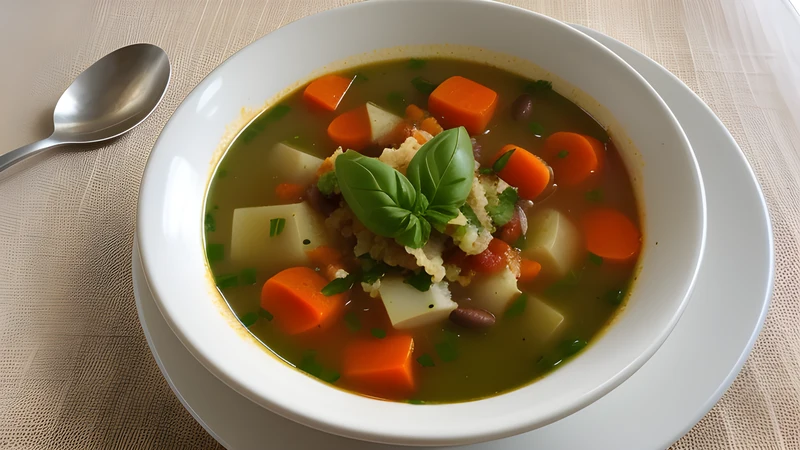
↓ Jump to recipeSoupe au pistou is a vegetable soup that arrives at the table unfinished. The pot goes down, and next to it a mortar full of pounded basil, garlic and oil, and each person spoons their own in and stirs. The smell that comes off the bowl at that moment is the reason the dish exists.
Soupe au Pistou: The Basil and Bean Soup of Provence
Ingredients
- 300g fresh coco beans or borlotti, podded (or 180g dried, soaked overnight)
- 200g fresh flageolet or haricot beans, podded (or 120g dried, soaked overnight)
- 1 onion, halved
- 1 bay leaf
- 3 tbsp olive oil
- 1 large onion, finely diced
- 2 carrots, diced 1cm
- 2 celery sticks, diced 1cm
- 2 courgettes, diced 1.5cm
- 200g green beans, topped and cut into 2cm lengths
- 3 ripe tomatoes, peeled, deseeded and chopped
- 300g waxy potatoes, diced 1.5cm
- 1 piece of Parmesan rind, about 8cm
- 1.8 litres water or light vegetable stock
- 10g fine salt, plus more to finish
- 80g small pasta: broken spaghetti, ditalini or vermicelli
- For the pistou: 60g basil leaves, from about 3 large bunches
- 40g blanched hazelnuts
- 4 fat garlic cloves, peeled, green germ removed
- 60g Parmesan or aged Gouda, finely grated
- 1 tsp coarse sea salt
- 120ml good olive oil
Method
- Cook the shell beans first. Put the podded beans in a pan with the halved onion, the bay leaf and cold water to cover by 4cm. Bring to a simmer and cook, uncovered, until tender — 25 to 35 minutes for fresh beans, 50 to 70 for soaked dried ones. Salt them only in the last 10 minutes. Drain, keeping the cooking liquid, and discard the onion and bay.
- Toast the hazelnuts for the pistou. Put them in a dry frying pan over medium heat and toss for 4 to 5 minutes until they smell nutty and are golden through when you cut one. Tip onto a plate and cool completely — warm nuts turn the pistou bitter and oily.
- Warm the 3 tbsp olive oil in a large pan over medium heat. Add the diced onion, carrot and celery with a pinch of salt and cook gently for 12 minutes until soft and sweet, without letting them colour.
- Add the tomatoes and cook 5 minutes until they break down. Add the potatoes, the Parmesan rind, the water or stock, the reserved bean liquid and the 10g of salt. Bring to a simmer and cook 15 minutes.
- Add the courgettes and green beans and simmer 10 minutes more, until everything is tender. Add the cooked shell beans and the pasta and simmer a final 8 to 10 minutes, until the pasta is done. Fish out the Parmesan rind.
- Make the pistou while the soup finishes. Pound the garlic and the coarse salt to a paste in a large mortar. Add the cooled hazelnuts and pound to a coarse rubble.
- Add the basil a large handful at a time, pounding and grinding against the sides of the mortar until each addition is a paste before adding the next. Work with a bruising, circular motion rather than a hammering one.
- Work in the grated cheese, then trickle in the olive oil in a thin stream, stirring with the pestle, until you have a loose, glossy, vividly green paste. Taste and add salt.
- Take the soup off the heat and let it settle for 5 minutes — it should be hot rather than boiling. Taste and adjust the salt; it will need more than you think.
- Serve the soup in warm bowls and the pistou in the mortar at the table, with a spoon. Everyone stirs their own in. Never boil the pistou into the pot.
Pistou, pesto, and a shared coastline
Pistou comes from the Provençal pistar, to pound, from the same Latin root that gives Italian pesto and English “pestle”. The words are cognates and so are the sauces. Provence and Liguria are 200km apart along the same coast, and Nice was Italian until 1860; the two cuisines are less separate than the border suggests.
The difference between pistou and pesto is small and worth knowing: classic pistou has no pine nuts. It is basil, garlic, oil and cheese, and that is all. Ligurian pesto adds pine nuts and usually pecorino alongside the parmesan. Some Niçois cooks add a crushed tomato. The nut-free version is the received wisdom, and it is exactly the received wisdom I am about to ignore.
The soup itself is a late-summer dish and rigidly seasonal in a way that most French classics are not. It arrives when the fresh shell beans come in — August into September, coco blanc and coco rouge piled in the markets in their pods — and it disappears when they go. There is no winter soupe au pistou. Every family in Provence has a version, arguments about whether the potato belongs in it are genuine, and it is eaten warm rather than hot, often at lunch, often outside.
The hazelnuts
So: 40g of toasted blanched hazelnuts, pounded into the pistou after the garlic and before the basil.
The case for breaking the rule is texture and staying power. A nut-free pistou is intensely fragrant and slightly thin, and it disperses into a bowl of soup within about a minute — the flavour goes everywhere and the sauce stops being a sauce. Ground nuts emulsify the oil and give the pistou body, so it sits in a soft green pool on the surface and gets stirred in gradually as you eat, which keeps the basil arriving fresh with every spoonful.
Hazelnuts specifically, rather than the Ligurian pine nut, because toasting develops roasted aromatics that read as warm and slightly sweet against basil’s sharp green top note, and because hazelnuts grow all over southern France. Toast them properly — four or five minutes in a dry pan until they are golden all the way through when you cut one open, and then let them cool completely before they go in the mortar. Warm nuts release their oil under the pestle and give you a greasy, faintly bitter paste.
The mortar, and why the blender loses
A food processor will make you something green in twenty seconds and it will be worse. There is a mechanism behind that claim, and it survives a blind tasting.
Blades cut. They slice basil cells open and release the enzyme polyphenol oxidase, which browns the leaf on contact with air — the same reaction that darkens a cut apple. They also spin fast enough to warm the paste, which drives off the volatile aromatics that are the entire point of the sauce. A blender pistou is duller and darker within minutes.
A pestle bruises and grinds instead, rupturing the cells more slowly and against a surface, keeping the paste cool and the colour bright. The salt is doing work here too: coarse crystals act as an abrasive against the garlic and the leaves.
Technique matters more than effort. Garlic and salt to a smooth paste first, always — garlic pounded last stays in chunks. Then the nuts to rubble. Then basil a handful at a time, ground in a circular motion against the wall of the mortar, each addition worked to a paste before the next goes in. Cheese, then oil in a thin trickle at the end. It takes about eight minutes and it is the most pleasant eight minutes of the recipe.
Take the green germ out of the garlic. In late summer garlic is old and the sprout inside is bitter and hot, and in a raw sauce with four cloves in it you will taste it.
If you truly have no mortar, chop the basil by hand with a sharp knife, pound the garlic under a knife blade with salt, grind the nuts, and stir everything together with the oil. Still better than the machine.
Basil, and how much
Sixty grams of leaves is three large bunches or most of a supermarket plant, and it looks like an absurd quantity heaped in the mortar. It reduces to about four tablespoons of paste. Under-basiling is the commonest fault in a home pistou, and it produces something that tastes mostly of garlic and oil.
Use the small-leaved Genovese or Provençal basil if you can get it. The large-leaved supermarket basil bred for sturdiness has less of the essential oil and more water, and the paste comes out wetter and blander. If a pot on the windowsill is what you have, strip it and use every leaf.
Leaves only. Stalks are fibrous and stringy under a pestle and they never break down, so you end up picking threads out of your teeth. Pick them off, and dry the leaves properly if you washed them — water in the mortar stops the emulsion forming and gives you a thin, separating sauce.
The soup underneath
The pistou gets the attention and the soup does the work. Some things about it are load-bearing.
Fresh shell beans are the soul of the dish and worth chasing in August. Coco beans, borlotti, flageolets — anything that comes in a pod and cooks in half an hour to a creamy, thin-skinned tenderness. They taste nothing like their dried selves: sweeter, softer, faintly grassy. Two varieties is traditional and gives the bowl some variation.
Cook them separately, and keep the water. That liquid is starchy and full of flavour and it goes into the soup; tipping it away is throwing out the best stock in the recipe. Salt them only near the end — salt early toughens the skins on shell beans, and on old dried ones it can stop them softening at all.
Dice everything to a similar size, around 1.5cm, and stage the additions. Carrot, celery and potato are dense and go early; courgette and green beans go in for the last ten minutes. A soup where everything went in at once is a soup where the courgettes have dissolved.
The Parmesan rind is free glutamate. It simmers away giving the broth a savoury depth that a vegetable soup otherwise struggles to reach, and it costs nothing because you were going to throw it away. Keep a bag of rinds in the freezer.
The pasta is a Niçois habit and it divides people. Broken spaghetti or small ditalini, in at the end, cooked in the soup so its starch thickens the broth slightly. Eight to ten minutes. Leave it out and the soup is lighter and the dish is still itself; put it in and the soup becomes lunch on its own.
The potato argument is real and I come down on the side of including it. Potato dissolving slightly at the edges gives the broth a body that a bean-and-water soup lacks, and it is the traditional Niçois practice even if plenty of families skip it. Use a waxy variety so it holds its dice, and accept that a little starch will leach out. That leaching is the point.
If you cannot get fresh shell beans
Most of the year, you cannot, and the honest answer is that dried beans make a different and still very good soup. Soak them overnight in plenty of cold water — 180g of coco or borlotti and 120g of haricot, which is roughly the dried equivalent of the fresh weights given. Cook them from soaked in unsalted water with the onion and bay for 50 to 70 minutes, salting only in the last ten.
The differences are worth naming so you can compensate. Dried beans are earthier and less sweet, their skins are tougher, and their cooking liquid is thicker and starchier, which actually helps the broth. What you lose is that grassy, almost fresh-pea quality that makes an August soupe au pistou taste like the month it is made in. Push the pistou a little harder — more basil, a touch more garlic — to make up the difference.
Tinned beans are the last resort and they work at a pinch: drain, rinse, and add them with the pasta, and use a light vegetable stock in place of the bean liquid you never made. The soup will be flatter and it will take four minutes.
Heat, seasoning and timing
Serve it warm rather than scalding — around 70C. This is deliberate and it is how it is eaten in Provence. Boiling soup destroys the pistou on contact, cooking off the aromatics you spent eight minutes protecting, and the dish tastes of cooked basil, which is to say of hay.
For the same reason, the pistou never goes into the pot. It goes into the bowl, at the table, off the heat.
Season the soup hard. A large volume of vegetables and water needs a genuinely surprising amount of salt to stop tasting of dishwater, and this is the most common thing wrong with home-made vegetable soup. Taste and add in stages until the vegetables taste of themselves.
The soup keeps three days and is arguably better on day two, though the pasta will drink liquid and swell — cook the pasta separately and add it per bowl if you are making it ahead. The pistou is best within a couple of hours; press cling film onto the surface and refrigerate for up to two days, and it will darken but still taste good. It freezes well in an ice-cube tray without the cheese, which you stir in on defrosting.
For the neighbours: minestrone is the same soup on the other side of the border and takes the identical shape, right down to the pasta and the parmesan rind, while Tuscan white bean and cavolo nero soup shows what the bean liquid does when you lean on it harder. Ratatouille uses the same August vegetables in the dry direction, and bouillabaisse is the other Provençal pot that gets finished at the table with a pounded sauce.
Related Content