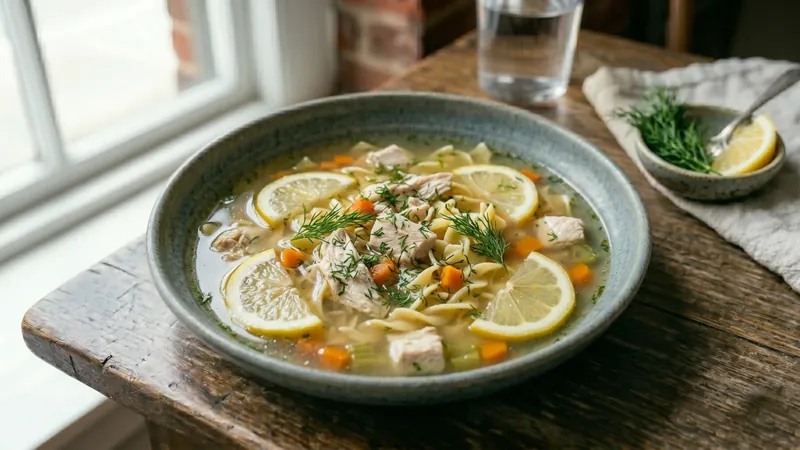
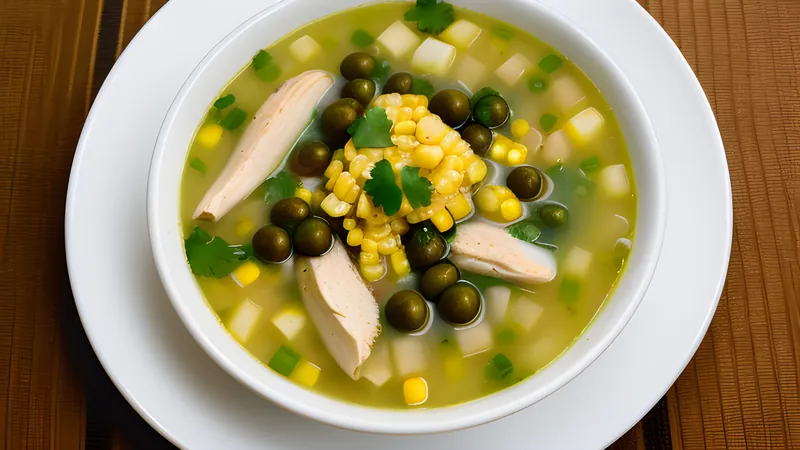
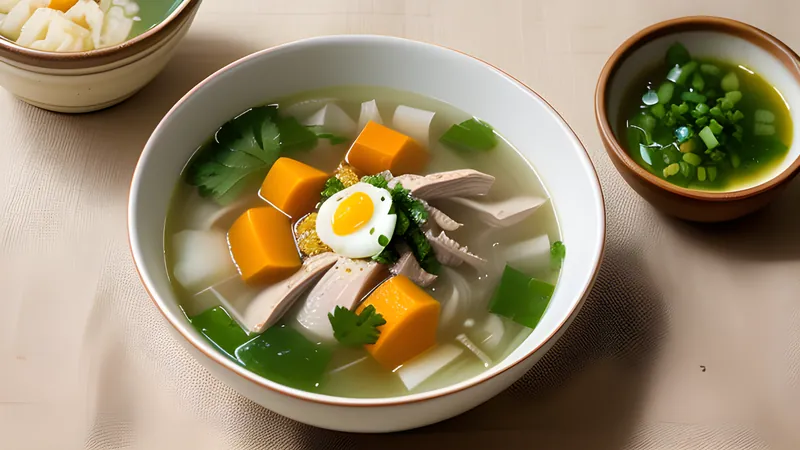
Soto Ayam: Turmeric Chicken Soup From Java
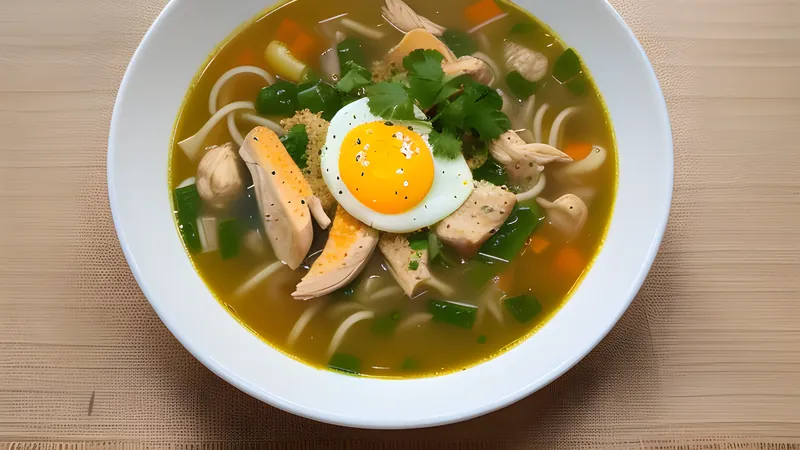
a golden, aromatic broth built on a fried spice paste, glass noodles, egg and a squeeze of lime
Contents
↓ Jump to recipeEvery region of Java has a soto, and every region insists its version is the correct one. Soto ayam is the broadest name for the family — turmeric-gold chicken soup, built on a fried spice paste and finished at the table with whatever a particular town considers essential. What unites all of them is the base: shallot, garlic, candlenut and turmeric, cooked in oil until the raw edge disappears, then loosened into a broth that has been simmering with chicken bones, lemongrass and lime leaf for the better part of an hour. Everything after that — the noodles, the toppings, the specific note of sourness at the end — is regional argument, and every stallholder in Java has an opinion about which version got it right.
Soto Ayam: Turmeric Chicken Soup From Java
Ingredients
- 1.4kg whole chicken, jointed, or 8 bone-in, skin-on chicken thighs
- 2.5 litres water
- 4 shallots, peeled
- 4 cloves garlic, peeled
- 4 candlenuts (or macadamias), toasted
- 30g fresh turmeric, peeled, or 1.5 tbsp ground turmeric
- 20g fresh galangal, peeled and bruised
- 2 stalks lemongrass, bruised and tied in a knot
- 4 kaffir lime leaves, torn
- 2 Indonesian bay leaves (daun salam) or ordinary bay leaves
- 1 tsp coriander seeds, toasted
- 0.5 tsp white peppercorns
- 3 tbsp vegetable oil
- 2 tsp salt, plus more to taste
- 1 tsp palm sugar, grated
- 100g dried glass noodles (soun), soaked in warm water
- 150g beansprouts, blanched 20 seconds
- 3 hard-boiled eggs, halved
- 4 tbsp fried shallots
- handful celery leaves and sliced spring onion, to finish
- lime wedges and sambal, to serve
Method
- Put the chicken in a large pot with the water, one bruised lemongrass stalk, half the kaffir lime leaves and the bay leaves. Bring to the boil, skim off any scum, then simmer 40 minutes until the chicken is cooked through.
- Lift out the chicken and set the broth aside. When cool enough to handle, shred the meat from the bone; discard the skin and bones, or return the bones to the pot to keep simmering for extra body.
- Blend the shallots, garlic, candlenuts, turmeric, galangal, coriander seeds and white peppercorns to a smooth paste, adding a splash of water if the blender stalls.
- Fry the paste in the oil over medium heat for 6-8 minutes, stirring often, until it darkens, smells fragrant rather than raw, and the oil separates slightly at the edge of the pan.
- Scrape the fried paste into the broth along with the remaining lemongrass and kaffir lime leaf, the salt and the palm sugar.
- Simmer the broth 20 minutes, then strain out the aromatics for a clear broth, or leave them in if you don't mind guests fishing them out.
- Return the shredded chicken to the pot and taste, adjusting salt and sugar until the broth is savoury with a clean turmeric edge rather than a flat one.
- Divide the drained glass noodles and blanched beansprouts between bowls, then ladle over the hot broth and chicken.
- Top each bowl with half a hard-boiled egg, fried shallots, celery leaf and spring onion.
- Serve with lime wedges and sambal alongside so everyone can season their own bowl.
A soup with a dozen regional identities
Soto Lamongan, from the East Java town of the same name, is known for koya: a dry, savoury dust of ground toasted prawn crackers and fried garlic, spooned over the finished bowl so it dissolves into a faintly funky richness as you eat. Soto Betawi, from Jakarta, swaps the clear turmeric broth for one enriched with coconut milk and sometimes evaporated milk, closer to a curry than the version here. Soto Banjar, from South Kalimantan, leans on a spice mix heavier on nutmeg and clove, a legacy of Banjarmasin’s long trading history with Dutch and Arab merchants passing warm spices through the port. Soto Kudus, from a small Central Java town with a large Buddhist and Chinese-Indonesian population, has traditionally used buffalo rather than chicken — a habit tracing back to a period when the town’s Hindu residents avoided beef, and cooks needed a protein everyone in a mixed community could eat without objection.
The version here sits closer to Soto Lamongan and Soto Ayam Kudus than to the coconut-heavy Betawi style: a clear, turmeric-forward broth without coconut milk, built to be topped generously at the table rather than enriched in the pot. It is the version most commonly sold from a cart or a small warung across Central and East Java, and the one most home cooks there make on an ordinary weeknight without needing a recipe at all.
Where the name itself comes from
Food historians trace “soto” back to Chinese immigrant cooks working the ports of coastal Java, particularly around Semarang, who adapted a Chinese-style meat soup — sometimes linked to the word “caudo” or “jao to” — to local ingredients over the nineteenth century. Turmeric, galangal and candlenut replaced whatever aromatics the original soup used, and the dish spread inland and south from the coast, picking up a different regional accent in every town it passed through. By the time it reached Yogyakarta and Surakarta in Central Java, it had turmeric as a defining ingredient; by the time it reached Kalimantan, it had picked up the nutmeg and clove that mark Soto Banjar today. Whether or not the etymology is exactly right, the pattern it describes — an imported technique reworked entirely in local spice — is visible in soto’s structure however you trace its history.
Why the paste gets fried before it meets the broth
The single step that separates a good soto from a flat one is frying the spice paste in oil before it touches any liquid. Raw shallot, garlic and turmeric have a sharp, slightly bitter edge going straight into water — the flavour reads thin and a little harsh, no matter how long you simmer it afterwards. Cooking the blended paste in oil for six to eight minutes changes its chemistry: the raw pungency of the alliums cooks off, the turmeric’s earthiness rounds out, and the candlenut releases enough natural oil and starch to give the finished broth a faint body it wouldn’t otherwise have. The paste is ready when it visibly darkens by a shade or two and the oil starts to separate slightly at the edge of the pan — the same cue you’d look for finishing a curry base, and proof the paste has actually cooked rather than merely warmed through.
Candlenut does more work here than its small quantity suggests. It carries almost no flavour of its own beyond a faint nuttiness, but it thickens very slightly as it cooks and helps the other spices’ flavour travel further into the broth — treat it as the paste’s binder rather than its seasoning. Macadamia is the standard substitute outside specialist shops, since candlenut is only sold cooked or toasted for food safety reasons and can be hard to find at all away from an Indonesian grocer.
What turmeric is actually doing in the bowl
Turmeric gives soto ayam its signature colour, but colour is the least interesting thing it contributes. Fresh turmeric, pounded or blended raw and then fried, has a sharper, slightly bitter, almost citrus-adjacent flavour that ground dried turmeric can’t fully replicate — dried turmeric loses some of its volatile aromatic compounds in processing and storage, which is why a soto made only with the dried spice tends to taste a shade flatter, even at a higher quantity to compensate. Fresh turmeric root, even frozen, gives a brighter colour and a cleaner, more distinct flavour than the dried version manages. Ground turmeric works as a substitute at roughly half the fresh weight, but expect to bring in slightly more white pepper and lime at the table to recover some of the brightness the fresh root would have given.
Toppings are the second half of the dish
A soto stall in Java rarely serves the broth without four or five separate toppings arranged around the bowl, and the reason is textural: the broth alone is thin and clean, so the bowl needs contrast to feel complete. Glass noodles add slither and bulk without competing with the broth’s flavour. Beansprouts, blanched only briefly so they keep a faint crunch, cut through the richness of the fried paste. A hard-boiled egg, halved so the yolk shows, adds a creaminess the broth doesn’t otherwise carry. Fried shallots — bought ready-made or fried yourself in batches and kept in an airtight jar — add a toasted, faintly sweet crunch that turns soggy within minutes, which is exactly why they go on at the very last moment.
If you want to borrow the Lamongan trick, make koya: toast a handful of raw, uncooked prawn crackers until crisp and pale gold, then pound them with two or three cloves of fried garlic into a coarse, oily dust. A spoonful stirred through a bowl of soto adds a savoury depth genuinely different from anything else in the dish, closer to a seasoning than a garnish, and it keeps in an airtight container for a couple of weeks if you make a larger batch. Many stalls also sell perkedel, a flattened potato fritter bound with egg and a little of the same spice paste, dropped whole into the bowl to soak up broth as you eat — worth making on the side if you want the full stall experience rather than the pared-back home version.
Getting the broth right, and fixing it if it isn’t
The most common mistake with soto ayam at home is under-salting the broth relative to how much cold noodle and beansprout are about to go into the bowl. Because the toppings are unseasoned, the broth itself needs to taste slightly stronger than pleasant on its own — season it so it reads a touch too savoury by the spoon, and it settles into balance once poured over the noodles, sprouts and egg. If a finished bowl tastes flat, the fix is rarely more salt; it’s usually lime. A squeeze at the table brightens the turmeric and cuts through the fried paste’s richness in a way salt alone can’t manage, which is why lime wedges are always served alongside rather than added to the pot itself.
Chicken thighs, kept on the bone through the initial simmer, give a more savoury broth than breast meat, which tends to turn stringy and dry over a forty-minute cook. If you only have breast, poach it separately for twenty minutes rather than the full forty, then add it back to the broth just before serving so it doesn’t overcook and turn woolly.
Rice, lontong or noodles — what actually goes in the bowl
Glass noodles are the default filling in most home kitchens, but they’re not the only option a stall will offer. Some regions serve soto over a small mound of plain steamed rice instead of noodles, ladling the broth directly over it so the rice slowly soaks up turmeric and fat as you eat — closer to a wet rice dish than a soup by the time you reach the bottom of the bowl. Others use lontong or ketupat, rice compressed and set inside a woven palm-leaf pouch or a banana-leaf log, sliced into dense cubes that hold their shape far better than loose rice does sitting in hot broth. If you want to try the rice version at home, use short-grain or jasmine rice cooked slightly wetter than usual, and add it to the bowl just before ladling over the broth so it doesn’t turn to mush by the time it’s served. Glass noodles remain the easiest option for a home cook without access to lontong, and they hold their texture for longer than either rice option once the hot broth hits them.
Storage, next-day soto and turning leftovers into something else
Soto ayam keeps well for up to three days refrigerated if you store the broth, shredded chicken and toppings separately — noodles and beansprouts turn soft and unpleasant left sitting in hot broth overnight, so assemble fresh bowls each time rather than storing the dish complete. The broth itself, on its own, freezes well for up to two months and is worth batching, since the fried paste is the only genuinely time-consuming part of the whole recipe.
Leftover broth makes an excellent base for a quick fried rice the next day, or a simple noodle soup with whatever vegetables need using up — a spoonful of the fried spice paste, kept back before it goes into the pot, does a similar job stirred into a bowl of chicken pho if you want to carry the technique across cuisines. For a milder, coconut-enriched relative of this same broth, built around a whole poached chicken rather than shredded meat and traditionally served for Eid, opor ayam uses much of the same spice base with coconut milk in place of the clear turmeric broth, and makes a good next dish to cook once the paste technique is second nature.
Related Content