Solyanka: The Sour, Salty Russian Soup
A thick, tangy soup built to use up the cured-meat drawer, sharpened with brine, olives and lemon
Contents
↓ Jump to recipeSolyanka is the soup you make when the fridge door is a museum of cured meat: the heel of a smoked sausage, three slices of ham going tacky at the edges, a wedge of salami nobody finished. It is thick, murky, deeply savoury and — the defining trait — sharply, appetisingly sour, from brined cucumbers, olives, capers and a slice of lemon dropped in at the end. On a dark December evening it is one of the most restorative bowls I know.
Solyanka: The Sour, Salty Russian Soup
Ingredients
- 1.8 litres good beef or chicken stock
- 300g mixed cured and cooked meats (smoked sausage, ham, boiled beef, a little salami), diced
- 2 onions, finely diced
- 3 tbsp tomato paste
- 4 medium salted/brined cucumbers (ogórki kiszone), diced, plus 100ml of their brine
- 100g pitted green olives, sliced
- 2 tbsp capers, drained
- 2 tbsp neutral oil or butter
- 1 bay leaf
- 6 black peppercorns
- 1 lemon, thinly sliced, to serve
- 1 large handful fresh dill, chopped
- 150g smetana (soured cream), to serve
- Salt, only if needed at the very end
Method
- Bring the stock to a gentle simmer with the bay leaf and peppercorns while you prepare everything else.
- In a large pan, soften the diced onion in the oil or butter over medium heat for 8–10 minutes until translucent but not coloured.
- Stir in the tomato paste and cook for 3–4 minutes until it darkens and smells sweet rather than raw — this deepens both colour and flavour.
- Add the diced brined cucumbers and cook for 5 minutes so they lose their raw crunch and release their tang into the base.
- Tip in all the diced meats and let them warm through and lightly caramelise at the edges for a few minutes.
- Pour in the hot stock, add the olives, capers and the reserved cucumber brine, and simmer gently for 20 minutes.
- Taste before adding any salt — the cured meats, brine, olives and capers are all salty. Adjust with more brine for sourness rather than reaching for the salt cellar.
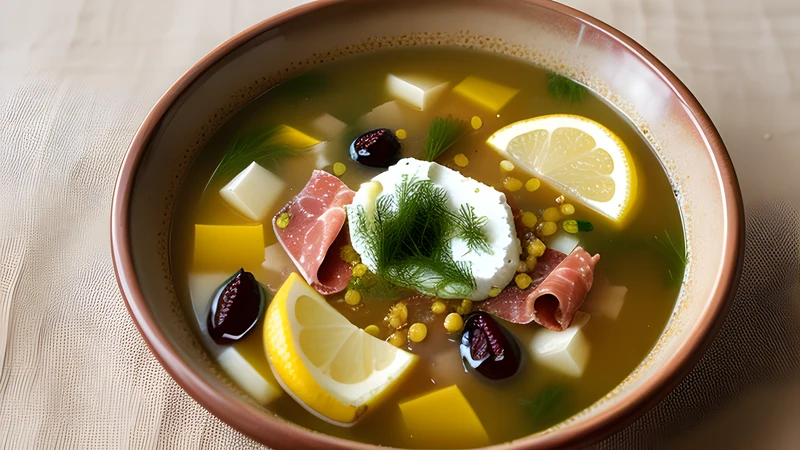
- Serve each bowl with a slice of lemon, a generous spoon of smetana and a shower of chopped dill.
A soup built on salt and thrift
The name comes from sol, the Russian word for salt, and everything about solyanka follows from that root. It began as a peasant and tavern soup — historically it was sometimes called selyanka, “villagers’ soup” — designed around whatever salty, preserved food a household had to hand through a long winter when fresh ingredients were scarce. Cured meats, salted cucumbers, brine and pickled things were the ordinary contents of a cold-climate larder rather than luxuries, and solyanka is the dish that turns that larder into dinner. By the nineteenth century it had climbed the social ladder into the restaurants and taverns of Moscow and St Petersburg, where it became a famous restorative, the thing a merchant ordered to settle himself after a heavy night, and it kept that reputation right through the Soviet years as a canteen and banquet staple.
There are three recognised branches: a meat solyanka (myasnaya), a fish solyanka (rybnaya), and a mushroom one (gribnaya) for fast days in the Orthodox calendar, when meat and fish were both off the table. The meat version is the one most people mean, and the one here. What links all three is the sour, briny backbone; the pickled note runs so deep that it becomes the whole identity of the soup rather than a mere accent laid over the top.
That love of sourness runs right through the region’s cooking, from the sour Romanian meatball soup ciorbă de perișoare to the fermented rye tang of the Polish żurek. Solyanka is Russia’s contribution to the great eastern European conviction that a soup should make you sit up and pay attention, and it belongs to the same soured-cream-and-dill world as the dumplings in pelmeni.
The meats: a licence to raid the fridge
There is no fixed recipe for the meat in a solyanka, and that is the point. The tradition is to use a mixture — the more varied, the better. A good spread might include smoked sausage for depth, boiled or roast beef for substance, ham for salt, and a little salami or frankfurter for the cured tang. Using four or five different meats is entirely authentic and even encouraged, because each one brings a different note and the interplay is the pleasure of the dish. Restaurants that make a serious solyanka are often using the trimmings and offcuts from everything else on the menu, which is exactly the spirit of the thing: it is a soup that was invented to rescue odds and ends and make them taste deliberate.
Dice everything into small, spoon-sized pieces so you get a little of several meats in each mouthful. Let them warm and lightly caramelise in the pan before the stock goes in — a few browned edges add a surprising amount of savour, and the smoked sausage in particular gives up an oil that carries its flavour right through the pot. If you happen to have a ham bone or the rind from a piece of bacon, drop it into the simmering stock for extra body and fish it out before serving.
The sour base, and the tomato step people rush
The flavour base is onion, tomato paste and brined cucumbers, and each needs a moment of proper attention.
Soften the onion slowly until sweet and translucent. Then fry the tomato paste on its own for a few minutes until it darkens a shade and smells jammy rather than sharp and tinny. This step, sometimes called pinçage, cooks off the raw acidity of the paste and builds a deeper, rounder tomato flavour and a richer colour. Skip it and the soup tastes thin and metallic, with a raw tomato edge that no amount of simmering quite removes.
The cucumbers must be properly brined, fermented ones — the cloudy, garlicky, salt-brined kind (ogórki kiszone in Polish, solyonye ogurtsy in Russian), rather than the sweet vinegar pickles from a jar. The difference matters enormously: brined cucumbers bring a lactic, savoury sourness that is the soul of the soup, while sweet pickles make it taste of vinegar and sugar. Dice them and cook them briefly in the base so they soften and give up their tang, and — crucially — save some of the brine. That cucumber brine, stirred in at the end, is how you dial the sourness up without over-salting. Some cooks add a spoon of the cucumbers’ brine and a little of the olive liquor together, tasting as they go, until the sourness sits exactly where they want it.
Olives, capers and the Mediterranean in a Russian pot
The first time you read a solyanka recipe, the olives and capers look like a mistake, imports from a warmer sea that have wandered into a soup of smoked sausage and rye bread. They earn their place. Both arrived in the grand restaurant kitchens of imperial Russia, where French and Mediterranean ingredients were fashionable, and they slotted straight into a dish already built on salt and sourness. Green olives bring a briny, faintly bitter fruitiness; capers add sharp little bursts of pickled intensity. Together they push the soup’s acid-and-salt character further and give it a complexity that the pickled cucumbers alone cannot. Slice the olives so their flavour spreads through the broth, and add them late so they keep their bite rather than going soft and dull.
A word on the smetana, since it is more than a garnish. Russian smetana is thicker and more sharply soured than most Western soured creams, closer to a set yoghurt in body, and its job is to soften the aggressive edges of the soup as you stir it in. If you can find a proper eastern-European smetana, use it; a full-fat crème fraîche is the best common substitute, and thick natural yoghurt will do at a pinch, though it lacks the richness. Serve it cold, in a generous spoonful, and let each person swirl it through their own bowl so the contrast of cold cream against hot sour broth stays sharp.
Balancing salt and sour without wrecking it
Here is the one rule that will save your solyanka: do not add salt until the very end, if at all. Every headline ingredient — cured meats, brine, olives, capers — is salty on its own. Combine them and the soup can tip into inedibly salty before you have added a single grain from the cellar. Build the soup, simmer it, then taste. If it needs lift, reach for more cucumber brine or a squeeze of lemon to push the sour up, which reads as brightness rather than salt. Only if it is genuinely under-seasoned should you add salt, and then just a pinch.
This is worth dwelling on because it is the fault that ruins most first attempts. The instinct to season a soup early, built into everything else we cook, works against you here, since the salt arrives from the ingredients themselves over the twenty minutes of simmering and only reveals its full force at the end. Trust the brine and the meats, hold the salt cellar back, and correct with acid. The olives, capers and lemon go in towards the end so they keep their punch. A thin slice of lemon dropped into each bowl at the table is traditional and transformative — its fresh acidity cuts through all that rich, salty depth and lifts the whole spoonful.
Finishing and serving
Solyanka wants three things at the table: a slice of lemon, a spoonful of cold smetana (soured cream), and a heap of chopped dill. The smetana softens and enriches the sour broth; the dill lifts it; the lemon sharpens it. Stir them in and the murky brown soup becomes something layered and alive, the sourness and the richness and the fresh herb all arriving at once.
Serve it with dark rye bread and, if you are being traditional, a very cold shot of something to go alongside. It is a soup that rewards being made a day ahead — like most brothy, meaty soups, the flavours knit together overnight and the second day is reliably better than the first.
Tips, swaps and troubleshooting
It is too salty. You salted too early, or your stock was already seasoned. Dilute with a little unsalted stock or water and rebalance the sourness with lemon.
It is not sour enough. Add more cucumber brine a splash at a time, then a squeeze of lemon. The sourness should be the loudest note.
No brined cucumbers. This is the one substitution I will not fully endorse, because sweet pickles change the character entirely. If you truly cannot find brined cucumbers, use sauerkraut and a splash of its juice instead, which keeps the fermented sourness intact.
Make it lighter. A fish solyanka made with salmon, white fish and a little smoked fish, but no meat, is elegant and quicker. Keep the olive-caper-brine framework and use a good fish stock in place of the beef.
Storage. Keeps 3 days in the fridge and improves overnight. Freezes acceptably, though the cucumbers soften. Add fresh lemon, dill and smetana only when serving, never before storing.
Solyanka is proof that thrift and deliciousness are the same skill. It costs almost nothing if you build it from odds and ends, it takes under an hour, and it tastes like it has been simmering in a tavern all day. Make it when the fridge is full of little salty ends and you want the soup that was invented precisely for that moment.
Related Content