Smash Burgers with Special Sauce
Thin, crispy-edged patties done right
Contents
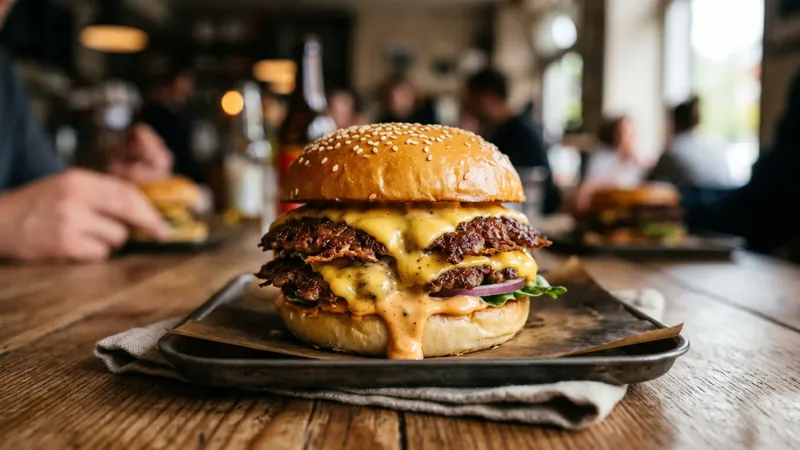
↓ Jump to recipeThe smash burger is proof that thin can beat thick. Pressing a loose ball of mince hard against a screaming-hot pan creates lacy, deeply browned edges and a savoury crust no thick patty can match. The twist is a two-fold one: the smash technique itself, which maximises that caramelised surface, and a tangy special sauce stirred together from store-cupboard staples. Stacked with melting cheese and sharp gherkins, it is a fast, deeply satisfying burger.
Smash Burgers with Special Sauce
Ingredients
- 500g beef mince, 20% fat
- 4 soft brioche burger buns
- 4 slices American or mild cheddar cheese
- 1 small onion, very thinly sliced
- Salt and pepper
- 1 tbsp vegetable oil
- Sliced gherkins, to serve
- 4 tbsp mayonnaise
- 2 tbsp tomato ketchup
- 1 tbsp finely chopped gherkin
- 1 tsp Dijon mustard
- 1 tsp white wine vinegar
- 1 pinch smoked paprika
Method
- Make the special sauce by stirring together the mayonnaise, ketchup, chopped gherkin, Dijon, vinegar and smoked paprika. Chill until needed.
- Divide the mince into 4 loose balls, about 125g each. Do not season or compress them yet.
- Lightly toast the cut sides of the buns in a dry pan, then set aside.
- Heat a heavy frying pan or flat griddle over a high heat until very hot. Add the oil.
- Place a ball of mince in the pan and immediately press it flat with a sturdy spatula, using a piece of baking paper between to stop sticking. Smash to about 1cm thick.
- Season with salt and pepper. Cook undisturbed for 2 minutes until a deep brown crust forms and the edges look lacy.
- Scatter a few onion slices on top, flip the patty, then lay on a slice of cheese. Cook for 1 minute more until the cheese melts.
- Build each burger: sauce on the base, the cheesy patty, gherkins, then the bun lid. Serve at once.
The story of the smash
The smash burger has become one of the most talked-about styles of burger of the past decade, but the technique is far older than its trendy reputation suggests. Diners and roadside griddles across the American Midwest were smashing balls of beef onto hot flat-tops for decades before it had a name, a practical method that cooked a patty quickly and, in leaner times, stretched a small amount of meat across a bun. The town of El Reno in Oklahoma has its own onion-fried version dating to the 1920s, in which shredded onion is smashed into the beef so it caramelises into the crust. What modern cooks rediscovered was not a new dish but the science behind why it tastes so good.
When a loose ball of mince meets a very hot surface and is pressed flat, far more of the beef makes direct contact with the metal. This drives the Maillard reaction, the cascade of browning chemistry between amino acids and sugars that produces hundreds of savoury, roasted, almost nutty flavour compounds. A thick patty cooked gently can only ever brown its outer face; a thin, smashed one turns nearly all of its surface into that dark, crisp, faintly lacy crust while cooking through in barely a couple of minutes. The trade-off is that smashing forces out some juices, which is exactly why a higher-fat mince, around 20 per cent fat, matters here. The rendered fat keeps the result moist and beefy despite the thinness; leaner mince gives you a dry, papery patty.
Getting the crust right
A few small rules make all the difference between a proper smash burger and a sad grey disc. The meat must not be packed, kneaded or seasoned before it hits the pan. Handle it as little as possible and keep the balls loose and craggy, because a compressed patty turns dense, bounces back against the spatula and loses those frilly edges. Salt draws moisture to the surface and starts dissolving proteins into a sausage-like bind, so it goes on only after the smash, once the crust is already setting.
The pan must be genuinely, alarmingly hot before the beef goes in, otherwise the patty steams in its own juices instead of searing. A heavy cast-iron pan or a flat steel griddle holds heat far better than thin non-stick, which will drop in temperature the moment cold meat lands on it. Smash hard and fast within the first few seconds while the ball is still cold and pliable; after that the proteins seize and it will not spread. Then leave it completely alone. The single most common mistake is fidgeting with the patty, lifting it to peek or pressing it again, which tears the forming crust off the meat. Smash once, walk away, and only move it to flip when the edges have gone deep brown and lacy.
Do not skip the baking paper between spatula and meat, either, or half your crust will lift away with the spatula. And flip only once: the second side needs just long enough to melt the cheese, since the patty is thin enough to be cooked through by the time the first crust has formed.
Ventilation matters more than people expect, because a properly hot pan searing beef will smoke, and generously so. Open a window, turn the extractor to full, and if your kitchen has a sensitive smoke alarm, be ready for it. This is one of the few dishes where a garden barbecue with a flat steel plate genuinely earns its keep, moving all that smoke outdoors while giving you the wide, unbroken hot surface a smash burger loves. Indoors, the heaviest cast-iron pan you own is the next best thing; a thin pan will buckle its temperature the instant the meat lands and you will steam rather than sear.
Choosing the beef is the other half of the battle. Chuck steak, minced at home or by a butcher to a 20 per cent fat content, has the deep, beefy flavour and the fat you need. Supermarket “lean” mince at 5 per cent will disappoint you every time. If you can, grind or ask for a coarse mince rather than a fine one, since coarser meat stays looser and craggier and grips the pan better. Salt it only at the smash, never in the bowl beforehand, for the reasons already covered.
The special sauce
Special sauce is the natural companion, and the idea has a long lineage in American fast food, where a creamy, tangy, lightly spiced sauce became the signature of more than one burger chain. The homemade version here is built on mayonnaise and ketchup, sharpened with Dijon, white wine vinegar and finely chopped gherkin, with a pinch of smoked paprika for warmth and colour. That acidity and gentle bite are not a garnish; they cut the richness of the browned beef and melting cheese and stop the whole thing feeling heavy. Make it at least ten minutes ahead so the flavours marry, and it keeps in the fridge for a week. If you love that tangy, savoury register, the same instinct runs through the special sauce approach to tahini, where balance and acidity turn a plain base into something you want on everything.
Building, variations and serving
The classic build keeps things restrained so the patty stays the star: sauce on the toasted base, the cheesy patty, a few sharp gherkins, and thinly sliced onion crisped under the patty if you like the El Reno style. American cheese is traditional not out of laziness but because its emulsifiers make it melt into a smooth, glossy drape rather than splitting into greasy pools; a mild cheddar works but will not flow quite as obligingly.
For a heartier portion, stack two thin patties rather than making one thick one, so you double the crust instead of losing it, with a slice of cheese between them to glue the stack together. Swap the beef for a mix of beef and lamb mince for something closer to a Middle Eastern kofta, or add a smear of chilli sauce and pickled jalapeños for heat. If you are cooking a spread, a burger sits happily alongside crisp herby falafel and plenty of pickles for a mixed griddle night.
The buns matter more than they get credit for, too. A soft brioche or potato bun, lightly toasted on the cut side, has enough structure to hold the juices without turning to paste, and its faint sweetness plays against the salty, savoury patty. Toast the cut sides in the beef fat left in the pan if you want to gild things. Serve with fries or crisps and eat immediately, while everything is hot and the cheese is still molten. A smash burger waits for no one; it is at its glorious best in the first few minutes off the pan, so get everyone to the table before you build the last one.
Related Content