Slow-Roasted Lamb Shoulder with Pomegranate and Sumac
Falling-apart lamb under a tangle of herbs and jewels
Contents
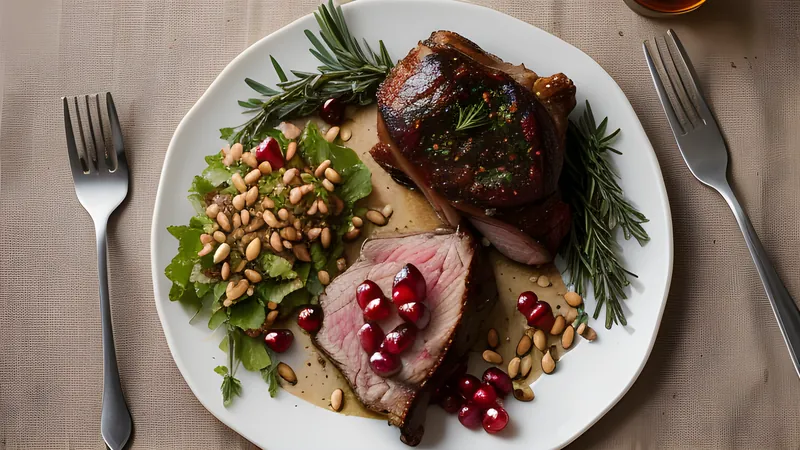
↓ Jump to recipeThere are roasts you stand over and roasts you simply trust, and lamb shoulder is firmly the second kind. Where a leg wants careful timing to stay pink, a shoulder asks only to be wrapped up and forgotten for an afternoon, at the end of which it surrenders into soft, dark, intensely savoury shreds. This version dresses that richness in the bright, sour flavours of the eastern Mediterranean: sumac, pomegranate molasses and a final shower of fresh herbs and ruby seeds. The clever twist is the contrast, taking something deeply rich and slow and cutting through it with sharp, almost zinging acidity so that every mouthful resets your appetite for the next.
Slow-Roasted Lamb Shoulder with Pomegranate and Sumac
Ingredients
- 1 bone-in lamb shoulder, about 2kg
- 4 garlic cloves, crushed
- 2 tbsp olive oil
- 2 tbsp sumac, plus extra to finish
- 1 tbsp ground cumin
- 1 tsp ground cinnamon
- 2 tsp flaky sea salt
- 1 tsp black pepper
- 2 red onions, thickly sliced
- 300ml chicken or lamb stock
- 2 tbsp pomegranate molasses
- Seeds of 1 pomegranate
- Small handful flat-leaf parsley, roughly chopped
- Small handful mint leaves, torn
- 2 tbsp toasted pine nuts or flaked almonds
Method
- Heat the oven to 160C fan. Pat the lamb dry and slash the skin a few times with a sharp knife.
- Mix the garlic, olive oil, sumac, cumin, cinnamon, salt and pepper into a paste and rub it all over the lamb, working it into the slashes.
- Scatter the sliced onions over the base of a deep roasting tin, sit the lamb on top and pour the stock around it.
- Cover the tin tightly with two layers of foil and roast for 4 hours, until the meat is very tender and pulls easily from the bone.
- Remove the foil, brush the lamb with the pomegranate molasses and turn the oven up to 200C fan.
- Roast uncovered for a further 25 to 30 minutes until the surface is burnished and sticky.
- Lift the lamb onto a board or platter and rest, loosely covered, for 15 minutes. Skim excess fat from the pan juices.
- Shred the lamb roughly with two forks and spoon over some of the strained pan juices.
- Scatter generously with pomegranate seeds, parsley, mint, toasted nuts and a final dusting of sumac before serving.
A dish of the Levant
Lamb is the meat of celebration across the Levant and the wider Middle East, and slow cooking a tough, well-worked cut until it falls from the bone is a technique with deep roots in the region’s communal cooking. From the Jordanian national dish of mansaf, where lamb is simmered in fermented dried yoghurt and heaped over rice and flatbread, to Palestinian and Lebanese home cooking, the principle recurs: cheaper, harder-working cuts transformed by time and gentle heat into something tender enough to eat with bread and fingers.
Sumac, the dried and ground berry of the Rhus coriaria shrub that grows wild across the region, was seasoning these tables long before lemons were cheap and plentiful, prized for a clean, tannic sourness that reddens whatever it touches. Pomegranate molasses, the thick tart syrup made by reducing pomegranate juice until it is dark and almost balsamic, plays a similar role, lending sharpness and a brooding sweet-sour depth. Both are foundations of the Levantine larder rather than modern flourishes, which is why they sit so naturally on lamb.
Bringing them together over a shoulder is not so much an invention as a return to type. This is food built for sharing from a single platter, the meat shredded and scattered with whatever is fresh and bright, designed to be scooped up with flatbread among people you like. If that appeals, it belongs in the same weekend repertoire as a Moroccan lamb tagine or a spiced, tomato-slicked lamb rogan josh, both of which coax the same tough cuts into tenderness by different routes.
How it comes together
The method could hardly be simpler. Rub the lamb all over with a spiced paste, sit it on a bed of onions that will sweeten and soften into the pan juices, pour in a little stock, then seal the tin tightly with foil. That foil traps steam and effectively braises the meat as it roasts, which is the secret to lamb that pulls apart rather than dries out. Four hours at 160C fan does the heavy lifting; you genuinely do not need to touch it in that time.
What is happening inside the foil is worth understanding, because it tells you why the low, slow approach is not optional. A shoulder is riddled with connective tissue, chiefly collagen, that is tough and rubbery at ordinary roasting temperatures. Held for hours at around 80 to 90C in the moist, steamy environment under the foil, that collagen slowly hydrolyses into gelatine, which is what gives the shredded meat its silky, lip-coating richness. Rush the shoulder at a high, dry heat and you drive the moisture out before the collagen has had time to convert, leaving you with meat that is simultaneously dry and chewy. Patience is the whole recipe.
The onions underneath are not just a trivet. As the lamb cooks, its rendered fat and juices drip down into them, and over four hours they collapse into a sweet, jammy, savoury base that becomes the foundation of the pan sauce. Do not slice them too thinly or they will disintegrate entirely; thick slices hold enough structure to catch some of the meat’s flavour without turning to mush. A whole head of garlic, halved across the equator and tucked among them, is a worthwhile addition, softening into a mellow paste you can squeeze out and stir through the juices.
The final flourish is where it earns its looks. Off comes the foil, on goes a brush of pomegranate molasses, and the heat goes up to 200C fan so the sugars in the molasses and the surface of the meat caramelise into something burnished and sticky. Watch it in these last minutes, because that same sugar will tip from glossy to scorched quickly, and a bitter, blackened crust is not what you want. Rest it for 15 minutes so the juices redistribute and the meat relaxes, shred it roughly with two forks, then bury it under pomegranate seeds, torn herbs and toasted nuts. The hot, soft, savoury lamb against cold, crunchy, sour pomegranate is the entire point, so be generous with the toppings.
A word on the spice paste, because it does more than season the surface. The sumac and cumin form a dry rub that, worked into the slashes in the skin, penetrates a little way into the meat as it cooks and perfumes the fat as it renders. Toasting your own cumin seeds and grinding them fresh, rather than reaching for a jar of stale pre-ground powder, makes a genuine difference to the depth of the finished dish; ground spices lose their volatile oils within months. The cinnamon is there in a supporting role, lending a faint warmth rather than announcing itself, so resist the urge to add more.
Tips and troubleshooting
Buy bone-in shoulder if you can, because the bone adds flavour and helps you judge doneness; when the meat slides off it and a fork twists freely in the flesh, you are there. If your shoulder is larger or smaller, adjust the covered cooking time by roughly an hour per kilo, always cooking to tenderness rather than the clock. A 2kg shoulder wants about four hours covered; a 2.5kg one closer to five. Do not be tempted to shortcut it at a higher temperature for the reasons above.
If the meat still feels firm and resistant when you check it, it is not done, no matter what the clock says. Put the foil back on and give it another 30 to 45 minutes; a shoulder is forgiving and will not suffer for extra time in the moist heat. If, on the other hand, the pan looks dry, add a splash more stock or water before resealing, so there is always liquid throwing up steam. And if your finished lamb tastes flat despite all that time, the culprit is almost always salt: season the shredded meat again at the end and taste before serving.
Make-ahead, storage and serving
This is a forgiving dish for entertaining. The lamb can be cooked through the long covered stage a day ahead, then cooled and refrigerated in its tin; reheat it covered at 160C fan for 30 to 40 minutes and do the molasses-glazing stage just before serving. The flavours, if anything, improve overnight. Cooking it ahead also lets the fat set so you can lift the solidified layer off cleanly, leaving the pan juices rich rather than greasy. Leftover shredded lamb keeps for three days in the fridge and is glorious folded into flatbread wraps with yoghurt, or crisped in a hot frying pan until the edges catch.
A note on seasoning, because lamb this rich needs a firm hand. Salt the meat properly at the start and taste the pan juices before you spoon them over; they should be savoury and well rounded, and a splash more pomegranate molasses or a squeeze of lemon will lift them if they taste dull. The herbs and pomegranate at the end are not a garnish to be skipped but part of the dish, providing the freshness and acidity that keep it from feeling heavy.
Serve it with warm flatbreads, a bowl of garlicky yoghurt, and something sharp like a parsley and red onion salad to echo the herbs. Buttery rice, jewelled with more pomegranate seeds, turns it into a proper feast, and a plate of harissa-roasted cauliflower with tahini and pomegranate on the side keeps everything in the same bright, spiced key. For a lighter finish, a green herb salad dressed with lemon and olive oil is all you need. Whatever you serve alongside, bring the lamb to the table on its platter and let everyone tear in with their hands.
A note on the pomegranate
Fresh pomegranate seeds are non-negotiable here; the dried or freeze-dried versions have neither the juicy pop nor the acidity that makes the finished dish sing. To seed a pomegranate without staining your kitchen red, halve it around its middle, hold a half cut-side down over a bowl, and whack the skin firmly with a wooden spoon so the seeds rain out. A quick pick-over removes any bitter white pith. If pomegranates are out of season, a handful of fresh redcurrants or even pockets of sharp diced apple will stand in for the burst of tart freshness, though nothing quite matches the jewelled look of the real thing scattered over dark, glistening lamb.
Related Content