Singapore Noodles with Prawns and Char Siu
Curried vermicelli, wok-tossed and vibrant
Contents
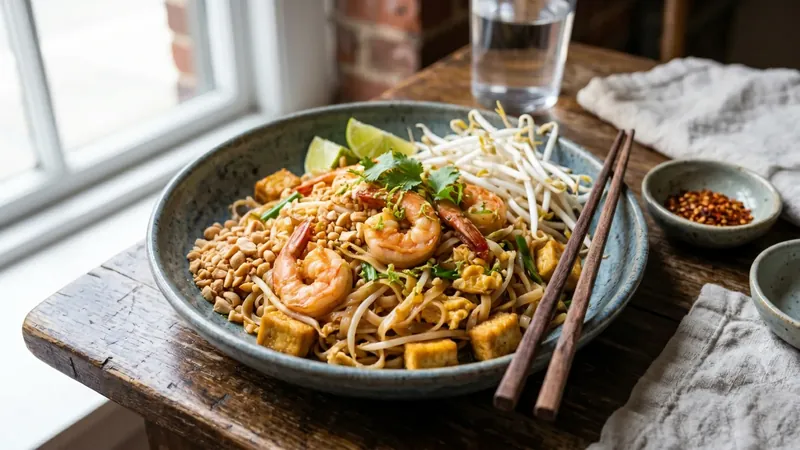
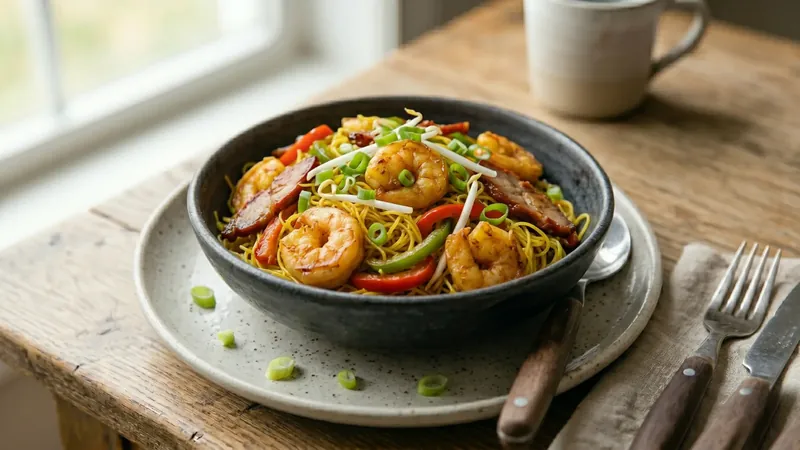
↓ Jump to recipeSingapore noodles are a takeaway favourite that rewards a confident wok: springy rice vermicelli stained gold with curry powder, studded with prawns, char siu and crunchy vegetables. The twist is treating the spice properly, toasting the curry powder and turmeric first so they bloom into something warm and rounded rather than dusty. Quick to cook once everything is prepped, this is a bright, vibrant plate of noodles with plenty going on in every forkful.
Singapore Noodles with Prawns and Char Siu
Ingredients
- 200g dried thin rice vermicelli
- 2 tbsp mild curry powder
- 1 tsp ground turmeric
- 3 tbsp neutral oil
- 2 eggs, beaten
- 200g raw king prawns, peeled
- 150g char siu (Chinese barbecue pork), thinly sliced
- 1 onion, thinly sliced
- 1 red pepper, thinly sliced
- 2 garlic cloves, finely chopped
- 1 tbsp grated fresh ginger
- 100g beansprouts
- 3 spring onions, cut into batons
- 2 tbsp soy sauce
- 1 tbsp Shaoxing wine
- 1 tsp caster sugar
- 1 tsp toasted sesame oil
Method
- Soak the rice vermicelli in just-boiled water for 3-4 minutes until pliable, then drain well and set aside.
- Toast the curry powder and turmeric in a dry wok over a low heat for 30 seconds until fragrant, then tip out and reserve.
- Heat 1 tbsp of the oil in the wok over a high heat, pour in the eggs, scramble lightly and remove.
- Add another tbsp of oil and stir-fry the prawns for 1-2 minutes until just pink, then remove.
- Add the last of the oil and stir-fry the onion, pepper, garlic and ginger for 2 minutes.
- Sprinkle in the toasted spices and stir for 30 seconds to coat the vegetables.
- Add the drained noodles, char siu, soy sauce, Shaoxing wine and sugar, tossing constantly to coat everything evenly.
- Return the eggs and prawns to the wok, add the beansprouts and spring onions and toss for 1 minute until hot through.
- Finish with the sesame oil and serve straight away.
Not actually from Singapore
Singapore noodles are one of those dishes whose name is more a flag of convenience than a statement of origin. Despite the title, they are not a staple of Singapore’s own hawker centres, where the local noodle dishes go by quite different names and the Cantonese version is largely unknown. The dish is a Hong Kong invention, developed by Cantonese chefs after the Second World War, most likely in the 1950s or 1960s, and it became a fixture of the cha chaan teng, the casual Hong Kong tea-diner. The “Singapore” label seems to have been chosen to lend a little exotic, South-East Asian panache to what is really a stir-fried rice-noodle dish, in much the same spirit as “Swiss” chicken wings, which have nothing to do with Switzerland.
The curry powder is the giveaway to how it came about. Hong Kong was a British colony and a busy trading port, and spice blends from British-ruled India were cheap and easy to come by, so Cantonese cooks folded curry powder into a repertoire that did not otherwise use it. When Cantonese cooks emigrated in large numbers from the 1980s onward, they carried the dish into the restaurants and takeaways they opened in Britain, North America and beyond, which is how it became a takeaway-menu regular far from where it was born.
Why toasting the spice matters
The curry powder gives the noodles their signature golden colour and gentle warmth, and toasting it before it hits the pan is the small refinement that lifts a home version above a flat, powdery one. Ground spices are full of volatile aromatic oils that are locked up until a little heat wakes them; a 30-second dry-toast in the wok over a low heat does exactly that, softening the raw edge and bringing out a deeper, rounder flavour. Watch it like a hawk, because ground spice has a large surface area and tips from fragrant to acrid and bitter in seconds. The moment it smells toasty, tip it out of the hot wok so it stops cooking.
The vermicelli are fine rice noodles, and they want soaking rather than hard boiling. Three to four minutes in just-boiled water leaves them pliable but still with a little bite; drain them well and let them sit, because sodden noodles clump and break when they hit the wok. If they stick together while they wait, a splash of the neutral oil tossed through keeps the strands separate.
Speed, heat and mise en place
Good Singapore noodles are about speed and high heat, so the single most important preparation happens before the wok ever gets hot: everything sliced, the noodles soaked and drained, the sauce measured, all lined up within arm’s reach. Once you start, the whole thing is a fast relay. Scramble the eggs and set them aside, sear the prawns for a minute or two until just pink and pull them out, then build the stir-fry so nothing overcooks. Cooking the prawns in stages like this stops them turning to rubber, since they only need to finish in the residual heat when everything comes back together.
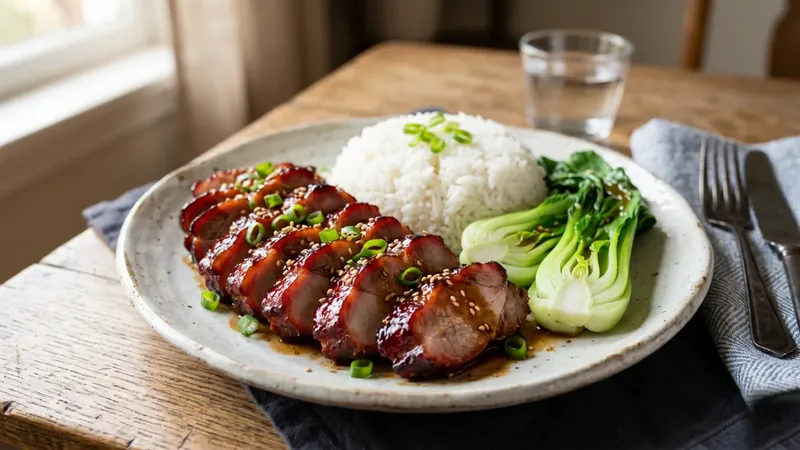
The classic ingredient line-up is part of the charm: prawns for sweetness, char siu, the lacquered Cantonese barbecue pork, for savoury richness, and a tangle of egg, onion, pepper and beansprouts for colour and crunch. If you keep beansprouts crisp, add them right at the end for only the last minute of tossing; any longer and they weep water and go limp. A well-seasoned wok and constant tossing keep the noodles light and separate, each strand stained with spice.
Seasoning and balance
The seasoning here is deliberately restrained, because the curry powder is the star and heavy sauce would drown the delicate rice noodles and mask the toasted spice. Two tablespoons of soy provide the salt and colour, a tablespoon of Shaoxing wine adds a mellow, slightly nutty depth as it hits the hot wok and its harsher alcohol edge burns off, and a teaspoon of sugar rounds everything and helps the noodles take on a faint gloss. The sesame oil goes in right at the end, off the heat or nearly so, because it is a finishing oil: its flavour is volatile and cooking it hard just makes it flat and slightly bitter. Taste before you serve and adjust with a little more soy if it needs salt; the dish should taste warm and spiced with a clean savoury edge, never gloopy.
A note on the noodle-tossing itself, which is where home cooks most often come unstuck. Rice vermicelli are fragile and break into stubby fragments if you stir them like spaghetti. Instead, use two implements, tongs or a pair of chopsticks and a spatula, and lift and fold the noodles up through the other ingredients rather than dragging them along the bottom of the pan. Keep the heat high so any moisture flashes off rather than steaming the strands soft, and work quickly. The whole toss should take a minute or two once the noodles go in.
Substitutions, storage and variations
Char siu is the traditional pork, but leftover roast pork, ham or even firm tofu slips in happily; a vegetarian version with tofu, extra egg and mushrooms holds up well. Swap the prawns for shredded chicken if you prefer, or leave them out entirely. If you cannot find Shaoxing wine, a dry sherry is the closest easy substitute; a splash of rice vinegar plus a pinch more sugar will do at a pinch. For more heat, add a sliced fresh chilli with the aromatics or a spoonful of chilli oil at the table.
A word on the curry powder itself, since it does so much of the work: use a mild, Chinese-style or standard Madras curry powder rather than an intense hot blend, because you want warmth and colour across the whole dish rather than searing heat in one note. Brands vary a lot, so if yours is timid, the turmeric alongside boosts the golden colour without adding heat, and a pinch of extra powder can go in with the noodles. If yours is fierce, dial back the chilli elsewhere. Old, stale curry powder is flat and dusty no matter how well you toast it, so a fresh tin genuinely tells in a dish this dependent on a single spice.
These noodles are best eaten straight from the wok, while the strands are separate and the beansprouts still snap. They keep for a day in the fridge but the vermicelli firm up and clump; loosen them with a tablespoon of water and reheat fast in a hot pan rather than the microwave, which steams them soggy. If the wok-tossed, high-heat approach appeals, a plate of egg fried rice works on exactly the same principles of prep and speed, and for another South-East Asian noodle classic built on the same balance of savoury, sweet and sour, the tamarind-sharp pad thai is well worth a go.
Related Content