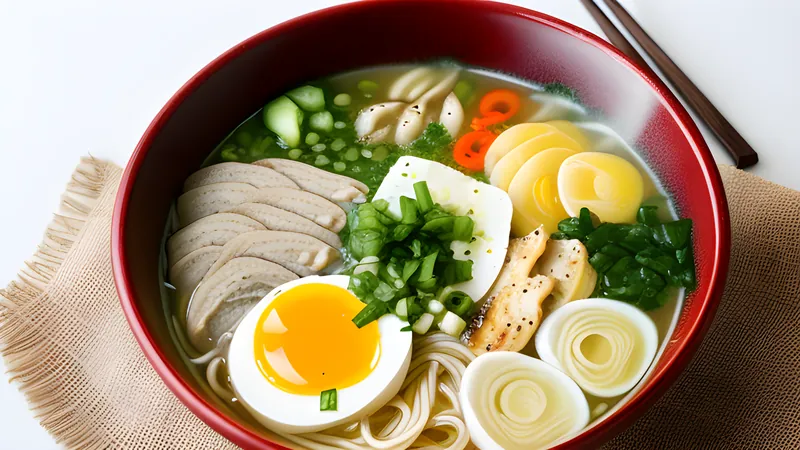
Shio Ramen: The Clear Salt Broth Bowl
Ramen's oldest style, seasoned with salt instead of soy or miso
Contents
↓ Jump to recipeShio Ramen: The Clear Salt Broth Bowl
Ingredients
- 1.2kg chicken carcasses and wings, rinsed
- 1 pig's trotter, halved (optional, for body)
- 2 litres cold water, plus more to top up
- 15g kombu, wiped not washed
- 10g dried niboshi (sardines), heads and guts removed
- 1 onion, halved, skin on
- 1 leek, green top only, split
- 50g fresh ginger, sliced
- 3 garlic cloves, crushed
- 80ml usukuchi (light) soy sauce, for the tare base
- 40g fine sea salt
- 20ml sake
- 20ml mirin
- 1 tsp MSG or dashi powder (optional but traditional)
- 4 portions fresh thin, straight ramen noodles
- 200g chashu pork, sliced thin
- 4 ajitama (soy-marinated soft eggs), halved
- 4 tbsp chicken or pork fat, warmed to liquid
- 2 spring onions, finely sliced
- menma (seasoned bamboo shoots), to serve
- nori sheets, cut into rectangles
Method
- Blanch the chicken bones and trotter in boiling water for 5 minutes, then drain and rinse off the scum under cold running water.
- Return the bones to a clean pot with 2 litres cold water, the onion, leek greens, ginger and garlic. Bring to a bare simmer and cook uncovered for 3 hours, skimming any foam every 20 minutes; do not let it boil hard.
- Off the heat in the final 20 minutes, add the kombu and niboshi to steep — do not boil kombu, as it turns bitter and cloudy.
- Strain the broth through a fine sieve lined with muslin. You should have a clear, pale gold liquid; discard the solids.
- Make the tare: combine the soy sauce, salt, sake, mirin and MSG in a small pan, warm gently until the salt dissolves, then set aside.
- To assemble, spoon 2 tablespoons of tare and 1 tablespoon of warmed chicken fat into each bowl.
- Bring the strained broth back to a simmer and ladle roughly 400ml into each bowl over the tare, stirring once to combine.
- Cook the noodles in a separate pan of rapidly boiling unsalted water for 60–90 seconds, until just past raw but still springy, then drain hard and shake off excess water.
- Lower the noodles into the broth, then top with chashu, half an ajitama, menma, nori and spring onions. Serve immediately.
The style that started it all
Shio ramen is the oldest of the three foundational ramen seasonings — shio (salt), shoyu (soy) and miso — and the bowl that gave the dish its name, since “ramen” itself likely comes from the Chinese lamian by way of Chinese cooks working the port towns of Hokkaido in the early twentieth century. Hakodate, on the southern tip of Hokkaido, is the city that claims it, and Hakodate shio ramen still looks different from anything you’ll find in Tokyo or Fukuoka: a broth so clear you can read the pattern on the bottom of the bowl through it, pale gold rather than brown, seasoned with nothing but salt, sake and a little soy for colour rather than flavour. It is the ramen equivalent of a consommé — the version of the dish with nowhere to hide a mistake, because there’s no thick miso or dark shoyu tare to mask a broth that’s gone cloudy or bitter.
That transparency is the entire point and also the entire difficulty. Tonkotsu ramen gets away with a slightly scorched note because the broth is opaque and the flavour is so aggressively porky that a little bitterness reads as depth. Shio ramen has nowhere to hide. If you boil the bones too hard, the broth turns milky and the delicate salt seasoning gets buried under fat and collagen that have no business being there. The technique below keeps the simmer at a bare tremble for exactly that reason — a rolling boil emulsifies fat into the water and turns an elegant consommé into a poor cousin of tonkotsu.
Hakodate’s version of the story dates the dish to a Chinese restaurant called Bairyu, which opened in the port district in the 1880s and is often credited with serving one of the first ramen bowls in Japan, well before Tokyo’s shoyu-based versions or the miso ramen that developed in Sapporo in the 1950s. The port-town setting matters: Hakodate had ready access to niboshi and kombu from Hokkaido’s cold fishing grounds, and a salt-forward broth suited a climate where a lighter, cleaner bowl appealed on humid summer days more than the heavier miso version further north did. Salt was also the cheapest and most stable seasoning available to a dockside kitchen serving sailors and labourers on tight margins, well before soy sauce breweries and miso producers had spread their supply chains as widely as they eventually did.
Understanding the shape of the bowl
Treat shio ramen less as a variant of “ramen” in the generic sense and more as its own dish with its own logic, the way a consommé and a thick brown stock share an origin but demand entirely different techniques from the cook. Every choice in the method above — the blanch, the gentle simmer, the late addition of kombu and niboshi, the pale tare — exists to protect that clarity. The clear broth is the achievement, and once that’s clear the rest of the dish reads as a set of decisions in service of one idea, which makes it easier to improvise confidently once you’ve made it a few times and know where the technique has give and where it doesn’t.
Building a broth you can see through
Two things keep shio ramen clear: blanching the bones first, and never letting the pot boil hard afterwards. The initial blanch does the unglamorous work of washing off the surface proteins and blood that would otherwise coagulate into scum and cloud the stock later. Skip it and you’ll spend the next three hours skimming instead of cooking. Rinse the bones under cold water after blanching until the water running off them looks genuinely clean rather than merely less dirty.
The second pot is where the actual flavour builds, at a lazy simmer where you can count individual bubbles breaking the surface rather than a boil. Chicken alone gives a broth with plenty of savoury depth but not much viscosity; the trotter, if you use one, contributes collagen that gives the broth a faint silkiness on the lip without turning it milky the way pork bones at a rolling boil would. Kombu and niboshi go in only at the very end, off the heat, steeped rather than simmered — kombu develops a slimy, bitter edge if it’s boiled for any length of time, and niboshi’s delicate, faintly bitter fish flavour turns harsh with prolonged heat. Fifteen to twenty minutes of steeping in broth that’s just come off a simmer extracts what you want without extracting what you don’t.
Water quality is worth a mention too, since so much of the broth’s final character is just water carrying flavour. Very hard tap water can leave a mineral edge that fights the delicate salt seasoning; if your local water tastes strongly of chlorine or minerals straight from the tap, filter it first. It’s a small thing in a dish built from big, slow investments of time, but shio ramen is exactly the kind of recipe where the small things end up noticeable, because there’s so little else masking them.
Shio-dare: the salt tare
The tare is what actually seasons the bowl — the broth itself should taste almost neutral, more like good stock than a finished soup, because all the assertive flavour is concentrated in two or three tablespoons of tare sitting in the bottom of the empty bowl before the broth ever touches it. Traditional shio-dare is built from salt, a small amount of light soy sauce for a whisper of umami and colour, sake for a rounder edge, and often a pinch of MSG or dashi powder, which Hokkaido ramen shops use unapologetically and without which the tare tastes flat rather than savoury. Skip it if you’d rather not, but understand you’re trading some of the traditional depth for it.
Light soy sauce (usukuchi) rather than regular dark soy is important here — it’s saltier and paler, built for seasoning without staining. Regular dark soy will nudge a careful pale-gold broth towards brown, which isn’t a disaster but does undercut the whole point of the style. If usukuchi isn’t available, use half the quantity of regular soy sauce and make up the difference in salt. Taste the tare on its own before you commit — it should taste aggressively, almost unpleasantly salty by itself, because it’s about to be diluted by 400ml of broth per bowl. A tare that tastes balanced on the spoon will taste washed out once it hits the bowl.
Cooking and building the bowl
Warmed chicken fat, ladled over the tare before the broth goes in, is what carries the aroma — fat holds and releases scent far more than water does, which is why a shio ramen without a fat cap tastes thinner even at identical seasoning. Skim it from the top of your finished broth as it cools slightly, or render extra chicken skin separately if you want more than the broth naturally yields.
The noodles matter more than home cooks usually credit. Shio ramen is traditionally served with thin, straight noodles rather than the thick curly ones associated with miso ramen — their lower surface area holds less broth per bite, which suits a delicate soup that would otherwise be diluted mouthful by mouthful. Cook them hard and fast in a large, vigorously boiling pot of unsalted water; ramen noodles are already alkaline from the kansui in the dough, which gives them their characteristic bounce, and adding salt to the cooking water does nothing useful. Ninety seconds is usually enough for fresh thin noodles — pull one out and bite it if you’re unsure; you want a firm, springy core with no raw flour taste, not the soft give of overcooked spaghetti.
Once the noodles are in the bowl, work quickly. Chashu should be sliced thin enough to warm through from the broth’s residual heat rather than laid on cold and heavy; a soy-marinated egg (ajitama) with a jammy, barely-set yolk is the traditional topping and worth making the day before, since the marinade needs several hours to penetrate past the white. Menma — fermented, salted bamboo shoots — brings a mildly funky crunch that cuts through the fat, and a rectangle of nori tucked against the bowl’s rim softens slowly into the broth as you eat, which is deliberate; Japanese ramen etiquette treats the softening nori as part of the eating experience rather than a flaw.
Troubleshooting and variations
If your broth comes out cloudy despite a careful blanch, the culprit is almost always a boil that crept up past a simmer at some point in the three hours — check it more often than feels necessary, especially in the first hour when it’s easiest to lose track. A broth that tastes thin rather than delicate usually needs another blanched chicken carcass added rather than more salt; salt without underlying savoury depth just tastes salty. Conversely, if the tare is too aggressive and the broth tastes like brine rather than a seasoned consommé, dilute the tare with a spoonful more sake before adding it to the bowl rather than diluting the broth itself, which throws off the whole balance built over three hours.
Seafood-forward versions swap the niboshi for a heavier hand of dried scallops or extra kombu and skip the pork trotter entirely for a broth that leans towards a light seafood consommé — good with prawns or a few clams simmered briefly in the finished broth just before serving. For a version closer to what actually gets served in Hakodate, add a few slices of naruto (the pink-swirled fish cake) alongside the standard toppings; it’s decorative rather than essential but genuinely traditional to the region. A vegetarian take is possible too — a kombu and dried shiitake broth, simmered gently rather than boiled, with a tare built from the mushroom soaking liquid, salt and a touch of soy, gets close to the same clean, savoury character without any meat at all.
Leftover broth keeps for up to three days refrigerated in an airtight container, though it will set into a light jelly from the collagen — reheat gently rather than boiling, which would cloud it after the fact just as surely as boiling it the first time would have. Freeze it in individual portions if you want ramen on a weeknight without the three-hour lead time; the tare keeps for weeks in the fridge on its own and is worth batching in double quantities whenever you make it. Keep noodles, broth and toppings stored separately if you’re planning ahead — cooked noodles left sitting in broth overnight turn soft and bloated by morning, having absorbed liquid they were never meant to hold for that long.
For a heavier, richer bowl on a colder night, my tonkotsu ramen goes the opposite direction entirely, built cloudy and thick where this one stays clear. And if you’d rather taste a very similar broth technique served cold for dipping instead of hot for sipping, tsukemen concentrates the same principles into a broth strong enough to coat noodles dunked bite by bite.
Related Content