Shio Koji: The All-Purpose Japanese Seasoning
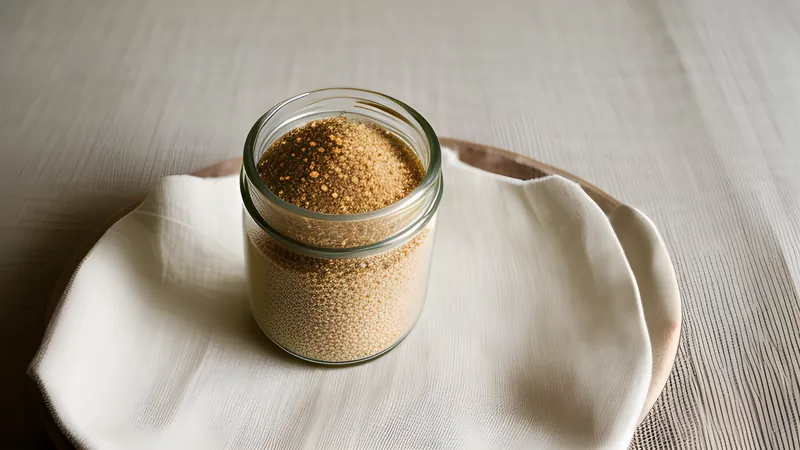
Fermented rice and salt that tenderises meat and seasons everything else
Contents
↓ Jump to recipeShio Koji: The All-Purpose Japanese Seasoning
Ingredients
- 200g dried rice koji (kome koji)
- 60g fine sea salt
- 260ml water, plus more as needed
Method
- Break up the dried rice koji grains with clean hands in a large bowl, separating any clumps.
- Mix in the salt thoroughly until every grain is coated.
- Add the water and stir well; the mixture should look like a loose, wet porridge, not a dry paste.
- Transfer to a clean jar, cover loosely with a lid or cloth (not airtight, since it needs to breathe) and leave at room temperature.
- Stir once a day with a clean spoon for 7-10 days; the koji grains should soften and the mixture should thicken and turn slightly translucent and sweet-smelling.
- Taste a little each day after day 5; it's ready when it tastes mildly sweet, salty and savoury with no raw, starchy grittiness left.
- Once ready, blend roughly a third of the mixture with a stick blender for a smoother, more spreadable texture if preferred, then stir back through the rest, or leave it whole-grain.
- Transfer to the fridge, where it keeps for several months, continuing to mellow slowly; stir occasionally and top up with a splash of water if it thickens too much over time.
A living seasoning, not a sauce
Shio koji is salt (shio) and koji, the mould-inoculated rice that’s the foundation of miso, soy sauce, sake and rice vinegar — all of Japan’s major fermented staples trace back to the same organism, Aspergillus oryzae, grown on steamed rice until it’s thoroughly colonised and full of enzymes. Shio koji is the simplest, fastest thing to make from that base ingredient: no lengthy ageing, no pressing, no separate brewing step, just koji, salt and water left to sit and develop for about a week. What comes out the other end is a thick, pale, faintly sweet paste that functions as a marinade, a brine and a seasoning all at once, and it’s become one of the most useful things in a Japanese kitchen specifically because it does all three jobs with one ingredient rather than three.
Rice koji itself isn’t something most home cooks make from scratch — inoculating steamed rice with Aspergillus oryzae spores and controlling temperature and humidity over several days is a genuinely demanding process, traditionally the domain of dedicated koji makers (kojiya) who supply breweries and miso producers. Dried rice koji, sold in Japanese grocers and increasingly online, is the reliable starting point for shio koji at home, and it keeps in the freezer for months if you want to buy in bulk.
Why it tenderises meat and fish
The enzymatic activity that makes shio koji distinctive comes directly from the koji mould, which produces a suite of enzymes as it grows — amylases that break starch down into simpler sugars (this is where the mild sweetness in finished shio koji comes from, with no added sugar at all) and proteases that break down proteins into smaller peptides and free amino acids. When shio koji is rubbed onto meat or fish and left to marinate, those protease enzymes keep working on the surface proteins of whatever it’s touching, breaking down tough muscle fibre and connective tissue in a way that’s genuinely different from an acid marinade. An acid like vinegar or citrus denatures proteins on contact, which can make meat surface texture mushy if left too long; koji’s enzymatic tenderising works more gradually and specifically, breaking peptide bonds rather than just denaturing, which is why a shio koji-marinated piece of chicken or fish stays tender and moist through cooking rather than turning soft and pasty.
That same protein breakdown produces free glutamate and other amino acids as a byproduct, which is exactly the family of compounds responsible for umami taste. This is why shio koji-marinated food tastes more savoury and rounded than a plain salt brine achieves at an equivalent salt level — the seasoning isn’t just salt, it’s salt plus a slow-motion head start on the amino acid breakdown that would otherwise only happen during cooking or ageing.
Reading the ferment day by day
Unlike a vegetable ferment, where you’re mostly watching for bubbles and smell, shio koji’s progress is best tracked by texture and taste together. In the first couple of days the mixture still looks like wet, separate grains sitting in cloudy liquid. By day four or five the grains have started to soften and the liquid has thickened and turned faintly opaque-white rather than clear, and a small taste should show the first hint of sweetness developing as the amylase enzymes start converting starch to sugar. By day seven to ten, properly finished shio koji tastes rounded — sweet, salty and savoury together, with the individual grains soft enough to mash easily between two fingers and no raw, chalky rice taste left.
Room temperature matters more for shio koji than for most ferments; the enzymes work fastest in a warm kitchen (around 25-30C) and can take noticeably longer in a cold one. In a cool room a batch might need the full ten days or slightly longer to reach the same point a warm kitchen hits in seven — taste rather than trust a fixed number of days, since kitchen temperature varies so much between homes and seasons.
How shio koji relates to miso and soy sauce
All three of Japan’s major fermented seasonings — miso, soy sauce, shio koji — start from the same koji mould grown on rice, soybeans or a mix, but they diverge sharply in how long they’re aged and what else is added. Miso adds cooked soybeans and salt to koji and ferments the mixture for anywhere from a few months to several years, developing a much deeper, more complex flavour through that extended ageing. Soy sauce ferments a soybean-and-wheat koji in brine for months as well, then presses the solids out to leave a clear liquid. Shio koji skips almost all of that ageing time, using rice koji alone with just salt and water over a single week, which is exactly why it tastes brighter, sweeter and less complex than either — it’s the youngest member of the family, and that youth is the point, since it’s used fresh as a seasoning and marinade rather than aged as a standalone condiment.
Using it without overdoing the salt
Shio koji’s saltiness varies slightly batch to batch depending on exactly how much liquid the koji has absorbed, so it’s worth tasting a fresh batch and adjusting how much you use accordingly rather than following a fixed measurement across every recipe. As a rule of thumb, replacing roughly 10% of a piece of meat or fish’s weight in shio koji, rubbed on and left to marinate for anywhere from 30 minutes (thin fish fillets) to overnight (a whole chicken thigh or a pork shoulder), gives a well-seasoned result without tasting overtly of the ferment itself. Wipe off excess shio koji before cooking at high heat — because of its sugar content it browns and can scorch faster than a plain marinade, so a hot grill or pan needs slightly more attention to avoid burning the surface before the inside cooks through.
Beyond meat and fish, a spoonful of shio koji stirred into vegetable stir-fries in place of some or all of the salt, whisked into a simple vinaigrette, or used as the seasoning base for a quick vegetable pickle all work well — anywhere a recipe calls for salt and would benefit from a little extra roundness and sweetness, shio koji is worth trying as a substitute, tasting and adjusting quantity as you go since it’s noticeably less purely salty than table salt by volume.
Shoyu koji, a close relative worth trying next
Once a shio koji habit is established, shoyu koji — the same rice koji fermented with soy sauce in place of salt and water — is a natural next batch to make, using a roughly one-to-one ratio of koji to soy sauce by weight, left to ferment the same 7-10 days with daily stirring. It brings a deeper, saltier, more umami-forward seasoning than shio koji, closer in character to a good soy sauce with the added sweetness and enzymatic tenderising koji provides. It’s particularly good stirred into a dipping sauce for grilled meat or brushed onto vegetables before roasting, where shio koji’s milder salinity sometimes needs a heavier hand to get the same seasoning impact.
A modern rediscovery rather than an old staple
Shio koji’s current popularity, both in Japan and increasingly outside it, is a genuinely recent development rather than an unbroken tradition — it fell out of everyday use for much of the twentieth century as commercial seasonings like MSG and bottled sauces became cheap and convenient, and its revival among home cooks and restaurants from the 2010s onward owes a lot to a renewed interest in fermented, minimally processed pantry staples generally. That recent history is worth knowing because it explains why shio koji recipes and ratios vary more between sources than a centuries-stable technique like miso-making does — cooks are still actively experimenting with it, rather than following one settled, inherited method.
Keeping it going
Shio koji keeps in the fridge for several months, and unlike a live vegetable ferment it doesn’t need daily attention once it’s reached its finished state — an occasional stir every week or two, and topping up with a splash of water if it firms up more than you’d like, is all the maintenance it needs. It will continue to mellow and deepen in flavour slowly over that time, in the same gentle way a good miso does, so a jar made in autumn will taste noticeably rounder by midwinter than it did the week it was finished.
Freezing a batch to make it last longer
Because a batch takes a full week to develop, it’s worth making a larger amount than you’ll use in the next month or two and freezing the surplus in small portions — an ice cube tray works well, giving roughly one-tablespoon portions that thaw quickly for a single marinade. Freezing halts the enzymatic activity almost completely rather than just slowing it the way the fridge does, so a frozen portion tastes essentially the same the day you use it as it did the day you froze it, without the slow continued mellowing a fridge-stored jar goes through. This matters if you’ve found a batch you’re particularly happy with and want to preserve that exact flavour rather than letting it keep changing.
Shio koji pairs naturally with the same slow-fermentation logic behind nukazuke rice bran pickles and umeboshi, and it’s the marinade base worth trying under miso black cod (saikyo yaki) or teriyaki salmon if you want to taste the enzymatic tenderising directly against a fillet of fish — swap in shio koji for the marinade’s salt component and give it the extra time the enzymes need to work. Salt-grilled mackerel (saba shioyaki) is another good test case, since a plain salt-grilled fish makes an easy side-by-side comparison against one rubbed first with shio koji.
Related Content