Shepherd's Pie with a Cheddar-Mustard Mash Crust
The ultimate comfort, with a sharp golden top
Contents
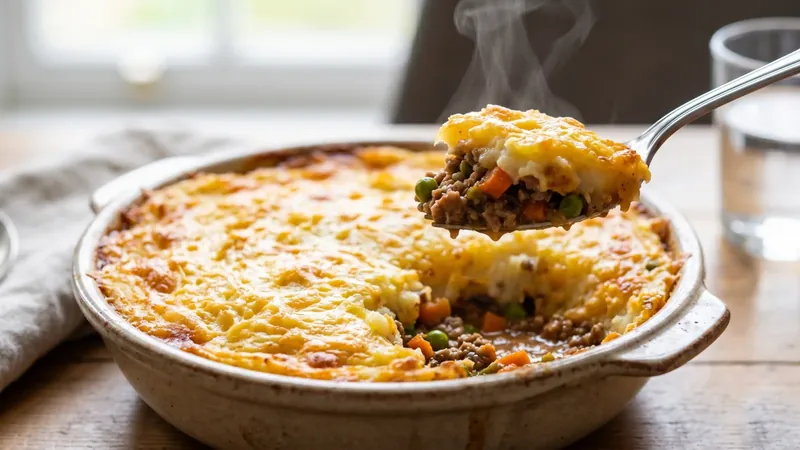
↓ Jump to recipeShepherd’s pie is comfort cooking at its plainest, which is precisely why a little sharpness on top works such magic. Mature cheddar and a generous spoonful of English mustard are beaten through the mash, then more cheese is scattered over before baking, so the crust turns golden, crisp and gently fiery. Underneath sits a proper rich lamb filling. It is the same familiar dish, given a sharp, savoury lift.
Shepherd's Pie with a Cheddar-Mustard Mash Crust
Ingredients
- 2 tbsp olive oil
- 1 kg lamb mince
- 2 onions, finely chopped
- 3 carrots, diced
- 3 garlic cloves, crushed
- 2 tbsp tomato purée
- 1 tbsp plain flour
- 2 tsp Worcestershire sauce
- 2 sprigs fresh thyme
- 1 bay leaf
- 400ml lamb or beef stock
- 150g frozen peas
- 1.2kg floury potatoes (Maris Piper), peeled and chunked
- 75g butter
- 100ml whole milk
- 150g mature cheddar, grated
- 1.5 tbsp English mustard
- Salt and black pepper, to taste
Method
- Heat the oil in a large pan and brown the lamb mince over a high heat, then drain off excess fat and set the meat aside.
- Lower the heat, add the onions and carrots, and cook for 10 minutes until softened. Stir in the garlic for 1 minute.
- Stir in the tomato purée and flour and cook for 1 minute, then return the lamb to the pan.
- Add the Worcestershire sauce, thyme, bay leaf and stock. Simmer gently for 25-30 minutes until thickened, then stir in the peas and season. Discard the bay and thyme stalks.
- Meanwhile, boil the potatoes in salted water for 15-18 minutes until tender, then drain well and leave to steam-dry for a few minutes.
- Mash with the butter and milk until smooth, then beat in two-thirds of the cheddar and the English mustard. Season.
- Heat the oven to 200C (180C fan). Spoon the lamb into a large baking dish.
- Top with the mash, spreading to the edges, and rough up the surface with a fork. Scatter over the remaining cheddar.
- Bake for 30 minutes until the top is golden and crisp and the filling bubbles at the edges. Rest for 5 minutes before serving.
The Story
Shepherd’s pie belongs to a thrifty British tradition of using up leftover roast meat beneath a comforting blanket of mashed potato. The dish rose to prominence in the late eighteenth and nineteenth centuries, a period when the potato had become firmly established as a staple across Britain and Ireland and home cooks were looking for economical ways to stretch a Sunday joint through the week.
There is a genuine distinction worth keeping. Strictly speaking, a shepherd’s pie is made with lamb or mutton, the meat a shepherd would have to hand, while the near-identical cottage pie is made with beef. The two names were once used more loosely, but the lamb-versus-beef rule has hardened into convention, and using lamb here, as this recipe does, keeps faith with the name on the tin.
The hero of the dish is really the potato topping. Floury varieties such as Maris Piper or King Edward are the right choice, because they break down into a light, fluffy mash that crisps beautifully rather than turning gluey. Drying the drained potatoes briefly over a low heat or letting them steam off in the colander drives away excess water, which makes for a better mash and a crisper crust.
The twist plays to that crust’s strengths. Cheese and potato are old friends, and mature cheddar, with its firm, savoury sharpness, melts into the mash while the scattering on top blisters and browns in the oven. English mustard adds a quiet heat that you notice more as warmth than as fire, lifting the richness of both cheese and lamb. The pairing of cheddar and mustard is a thoroughly British one, familiar from Welsh rarebit and a good ploughman’s, so it sits naturally on a dish this rooted in the British table.
A few details lift the whole pie. Brown the mince hard, in batches if your pan is small, so it actually catches and colours instead of stewing in its own liquid; that browning is where the savoury depth comes from. Drain off the rendered lamb fat afterwards so the filling does not turn greasy. Let the filling thicken properly before it goes under the mash, or the topping will slide and sink into a wet layer. And roughing up the surface with a fork creates ridges and peaks that catch the heat and crisp, giving you that golden, craggy top that is the best part of any shepherd’s pie.
Getting the mash right
The mash is doing double duty here: it is both the topping and the twist, so it needs to be right. Boil the potatoes in well-salted water until a knife slides in with no resistance, 15 to 18 minutes for chunks that size, then drain and let them steam-dry in the colander for a few minutes. Skipping this step is the commonest fault, because wet potato makes a slack, gluey mash that will not crisp. Mash while hot, add the 75g butter first and let it melt in, then the 100ml warm milk. Adding cold milk to hot potato seizes the starch and can turn the mash claggy, so warm it if you have the patience.
Beat in two-thirds of the cheddar and the mustard while the mash is still hot enough to melt the cheese, then taste and season. Keep the last third of the cheddar for scattering over the top, where it browns into savoury little crusts. Resist the urge to over-work the mash once the cheese is in: floury potato turns sticky if you beat it too hard, and a stiff, over-worked topping will not fork up into the peaks you want.
The filling: depth without a wet base
The filling wants to be rich, savoury and thick enough to hold a fork-mark, not a loose stew. The tomato purée and tablespoon of flour do the work here: frying the purée for a minute takes away its raw, tinny edge and deepens the colour, while the flour thickens the stock as it simmers so the gravy clings to the meat rather than pooling. Worcestershire sauce brings a fermented, umami tang that reads as depth rather than as itself; a teaspoon of Marmite or a splash of soy achieves something similar if you want to push it further. Let the filling simmer for a full 25 to 30 minutes until it is glossy and thick, then check it holds a channel when you drag a spoon through. If it is at all soupy, keep reducing, because a wet filling is what makes a mash topping slide and sink. Fish out the bay leaf and the bare thyme stalks before it goes in the dish, and let it cool a little so it is not molten when the mash goes on top, which makes spreading far easier.
Substitutions, make-ahead and variations
For a cottage pie, swap the lamb for beef mince and the rest of the method holds; a splash of red wine reduced into the filling suits beef particularly well. A vegetarian version works with green or brown lentils and a mix of mushrooms and root vegetables, using vegetable stock and a good glug of Worcestershire-style sauce (check the label, as classic Worcestershire contains anchovy). English mustard gives the sharpest heat; Dijon is milder and rounder if you prefer. A layer of sliced sautéed leeks or a spoonful of Marmite stirred into the gravy both deepen the savoury base. Some cooks pipe the mash on in ridged lines with a star nozzle for even more crisp surface area, and a light brush of melted butter or an egg wash over the top before baking gives a deeper, more even golden colour if you want it to look its best. A handful of grated Parmesan mixed into the last of the cheddar sharpens the crust further still.
Serve it as it is, or with a simple green vegetable to cut the richness: buttered peas, wilted greens, or a sharp watercress salad all work, and a spoonful of tangy chutney or pickled red cabbage on the side is no bad thing. Good gravy is not strictly necessary given how saucy the filling is, but no one will refuse a jug.
Shepherd’s pie is a genuinely good make-ahead dish. Assemble it fully, cool, cover and refrigerate for up to two days, then bake from cold, adding 10 to 15 minutes to the oven time and checking the centre is piping hot. It also freezes well, assembled and unbaked, for up to three months; defrost overnight in the fridge before baking. Leftovers reheat happily the next day, when the flavours have settled and deepened. If you like this sort of homely, oven-baked comfort, the same crowd-pleasing spirit runs through a proper macaroni cheese, and for another British pie with a golden top, try a blackberry and apple pie to follow.
Related Content