Semolina and Coconut Cake (Namoura) with Orange Blossom Syrup
A syrup-soaked Levantine semolina cake with a coconut lift
Contents
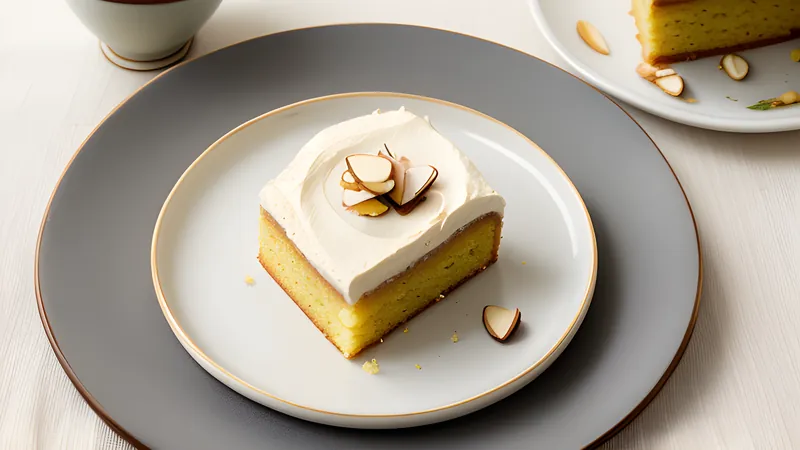
↓ Jump to recipeSome cakes are about lightness; this one is unapologetically about soak. Namoura is a Levantine semolina cake, dense and golden, cut into neat diamonds and drenched in fragrant syrup the moment it leaves the oven. The contrast between the hot, sturdy crumb and the cool, perfumed syrup is the whole magic, and the cake drinks in the liquid until each piece is moist, tender and glistening. My small twist is a handful of desiccated coconut folded through the batter, which adds a gentle chew and a background sweetness that flatters the orange blossom beautifully.
Semolina and Coconut Cake (Namoura) with Orange Blossom Syrup
Ingredients
- 300g coarse semolina
- 100g fine semolina
- 50g desiccated coconut
- 150g caster sugar
- 1.5 tsp baking powder
- 0.25 tsp fine salt
- 120g unsalted butter, melted
- 200ml plain yoghurt
- 60ml milk, plus a little more if needed
- Blanched almonds, to decorate
- 300g caster sugar (for the syrup)
- 250ml water (for the syrup)
- 1 tbsp lemon juice
- 1.5 tsp orange blossom water
Method
- Make the syrup first: bring the sugar, water and lemon juice to a gentle boil, simmer for 8 minutes until slightly thickened, stir in the orange blossom water and leave to cool completely.
- Heat the oven to 180C fan and grease a 20cm square tin.
- In a bowl, combine the coarse and fine semolina, coconut, sugar, baking powder and salt.
- Stir in the melted butter, yoghurt and milk to form a thick, spoonable batter, adding a splash more milk if it is too stiff.
- Spread the batter evenly into the tin and smooth the top, then rest for 15 minutes.
- Score the surface into diamonds and press a blanched almond into the centre of each.
- Bake for 35 to 40 minutes until deep golden and firm.
- As soon as it comes out of the oven, pour the cooled syrup evenly over the hot cake.
- Leave to soak and cool completely, then cut along the scored lines to serve.
One cake, many names
Walk through bakeries in Lebanon, Syria, Egypt and beyond and you will meet this cake under a string of different names: namoura in Lebanon, basbousa in Egypt, hareesa or harissa across the Levant (no relation to the chilli paste of the same name), and revani in Turkey and Greece. The details shift from kitchen to kitchen, but the bones are the same: semolina bound with yoghurt and butter, baked until firm, then soaked in a sugar syrup scented with orange blossom or rose water. The Egyptian basbousa often folds in shredded coconut, which is exactly the direction this version leans.
The name itself carries a small history. The Syrian food historian Khayr al-Din al-Asadi traced basbousa to the Arabic verb bas, meaning to mix, and namoura to namr, meaning tiger, for the tawny, striped colour of the baked top. The Oxford Companion to Food suggests the whole family may descend from ma’mounia, a sweet of the 9th-century Abbasid court in which rice was cooked in fat and syrup; over time the rice gave way to semolina and the method inverted, so the batter is baked first and the syrup added after. That is the honest shape of the story: no single inventor or date, but a clear line back through medieval Arab confectionery.
It is a cake of celebration and of everyday hospitality alike, the sort of thing kept under a domed cover on the counter and offered with small cups of coffee to anyone who drops in. The diamond shape is traditional, scored before baking so the pieces cut cleanly, with a single blanched almond pressed into the centre of each. That little almond is not just decoration; it marks the portions and gives a pleasing nutty bite against the soft crumb. Because the recipe is so often handed down rather than written, each cook tweaks the ratio of semolina to yoghurt, the depth of golden colour on top, or the exact perfume of the syrup, and there is no single correct version to live up to.
Getting the texture right
The texture of namoura depends almost entirely on the semolina and the soak. I like a blend of coarse and fine semolina: the coarse grains give the cake its characteristic slightly grainy, satisfying bite, while the fine semolina helps everything hold together so the squares do not crumble. Yoghurt brings tang and tenderness, and melted butter carries flavour and richness through the crumb.
The single most important rule is the temperature contrast, and it is worth understanding why it works rather than just following it. Make your syrup first and let it cool completely. When cool syrup meets a piping-hot crumb, the heat of the cake thins the syrup on contact so it runs freely into the open, still-steaming structure and is pulled deep inside as the cake cools and contracts. Pour hot syrup onto a hot cake and both stay thin, the syrup runs straight through and pools underneath, and the crumb turns gummy. Pour cool syrup onto a cold cake and it sits on the surface, thick and reluctant, leaving the middle dry. The contrast is the whole mechanism, so it is the one step never to rush. Pour it slowly, a ladleful at a time over the whole surface, and let the cake sit undisturbed while it drinks. Do not be tempted to cut it early, because the syrup needs time to travel from the cut lines inward.
The syrup consistency matters too. Simmered for around eight minutes it thickens just enough to coat a spoon lightly but still pours freely; boil it much further and it sets too thick to soak in, while under-cooking leaves it thin and watery so the cake floods rather than absorbs. The tablespoon of lemon juice is not only for flavour: the acid helps stop the sugar crystallising as the syrup cools and sits, keeping it smooth and clear.
Why the coconut works
The desiccated coconut is the small twist, and it earns its place for texture as much as flavour. Semolina and coconut share a similar dry, slightly granular character, so the coconut blends in seamlessly rather than sitting apart, adding a faint chew and a gentle background sweetness that flatters the orange blossom rather than fighting it. It also drinks up a little of the syrup itself, which helps keep the crumb moist right through. Use unsweetened desiccated coconut rather than sweetened flakes, or the finished cake tips over into cloying. If you toast the coconut lightly in a dry pan first, you get a deeper, nuttier note, though you lose a touch of the pale colour under the tiger-striped top.
Tips, make-ahead and variations
Resting the batter before baking lets the semolina hydrate, which gives a more even, tender crumb, so do not skip the 15-minute pause; you will feel the batter stiffen slightly as the grains drink up the liquid, which is exactly what you want. Scoring the diamonds before baking, then cutting again along the same lines after the cake has soaked and cooled, gives you clean pieces without dragging the syrup-soaked crumb around. Use a small, sharp knife and press straight down rather than sawing, so you cut through cleanly and keep the neat diamond edges. A well-greased tin, or one lined with a strip of parchment across the base, means the soaked pieces lift out without sticking to the bottom.
Namoura is one of those rare puddings that genuinely improves with time. Made a day ahead and left covered at room temperature, the syrup distributes more evenly and the flavour of the orange blossom deepens as it mellows into the crumb. It keeps happily for three or four days and needs no refrigeration, which makes it a generous thing to have around over a holiday; in fact the fridge does it no favours, firming the butter in the crumb and dulling the fragrance, so keep it under a domed cover on the counter as it is traditionally stored. It does not freeze well once soaked, as the crumb turns wet on thawing, so if you want to get ahead, bake and freeze the unsoaked cake and add the syrup fresh on the day.
For variations, swap the orange blossom water for rose water, or use a mix of both. A pinch of ground mahleb or a little lemon zest in the batter adds another layer of fragrance, and some cooks like to spread a thin layer of clotted cream or thick kashta between two thin sheets of batter for a richer version. If you cannot find coarse semolina, fine semolina alone will work, though you lose a little of that signature bite. Serve it as it is with strong coffee or mint tea, in the traditional way, or alongside a spoonful of thick yoghurt or clotted cream to cut the sweetness, with a scattering of chopped pistachios for colour and crunch if you are feeling generous. Just go easy on the orange blossom water itself, because it is potent and a heavy hand turns a perfumed cake into something that tastes of soap rather than blossom; start with the 1.5 teaspoons and add more only once you have tasted the cooled syrup.
Troubleshooting the soak
Two faults account for most disappointing namoura. The first is a cake that stays wet and heavy in the middle: this usually means the batter was too loose going in, so keep it thick and spoonable rather than pourable, and rest it the full 15 minutes so the semolina drinks up some of the liquid before baking. The second is syrup that pools at the bottom instead of soaking through, which happens when the cake is underbaked and gummy, or when the syrup goes on too fast. Bake until the top is properly firm and deep golden, then pour the cool syrup slowly and evenly over the whole surface, a ladleful at a time, letting each addition sink before the next. You should hear it hiss faintly as it meets the hot crumb; that is the sound of it being drawn in.
Namoura sits comfortably in the company of other syrup- and citrus-scented bakes. If the orange-blossom perfume is what draws you, the same note runs through an almond, olive oil and orange blossom cake, while an olive oil and blood orange polenta cake shares the dense, semolina-adjacent crumb and citrus glow. Both make natural follow-ups once you have a feel for this style of moist, fragrant cake.
Related Content