Sellou: Toasted Flour, Almonds and Sesame for Ramadan
no oven, no baking — just toasting done right
Contents
↓ Jump to recipeSellou looks nothing like most of the desserts on this site, because it is not baked, chilled or set in any conventional sense — it is a mound of toasted flour, ground almonds and sesame, bound with butter and sugar into something closer to a dense, spiced paste than a cake or a biscuit. It appears across Morocco during Ramadan, mounded on a plate in the middle of the table for anyone to take a spoonful of at any point during the evening, and it’s also a well-known postpartum food, given to new mothers for its density and calorie load in the same tradition that gives rise to rfissa, Morocco’s fenugreek chicken. Two very different occasions, one shared logic: sellou is built to give a tired or fasting body a genuinely substantial hit of energy in a small amount of food.
Sellou: Toasted Flour, Almonds and Sesame for Ramadan
Ingredients
- 500g plain flour
- 200g blanched almonds
- 100g sesame seeds
- 200g unsalted butter, melted
- 150g icing sugar, plus extra for dusting
- 2 tsp ground cinnamon
- 1/2 tsp ground anise seed
- 1/4 tsp ground ginger
- 1/4 tsp salt
- vegetable oil, for toasting the almonds
Method
- Toast the flour in a large, dry, heavy-based pan over low-medium heat, stirring constantly with a wooden spoon, for 20-25 minutes, until it turns a deep golden-tan colour and smells distinctly nutty and cooked rather than raw.
- Tip the toasted flour into a large bowl and leave to cool slightly while you prepare the almonds and sesame.
- Toast the sesame seeds in the same dry pan over medium heat for 3-4 minutes, stirring constantly, until golden and fragrant, then tip into a separate bowl.
- Heat a thin film of vegetable oil in the pan and fry the almonds over medium heat for 3-4 minutes, stirring constantly, until golden brown, then drain on kitchen paper.
- Once the almonds are cool, blitz them in a food processor with half the toasted sesame seeds until finely ground but not turned to a paste.
- Grind the remaining sesame seeds separately until coarsely broken, for texture.
- Combine the toasted flour, ground almond-sesame mixture, coarse sesame seeds, cinnamon, anise, ginger and salt in a large bowl and mix thoroughly.
- Stir in the icing sugar, then gradually work in the melted butter with your hands or a spoon until the mixture comes together into a soft, slightly crumbly, mouldable paste.
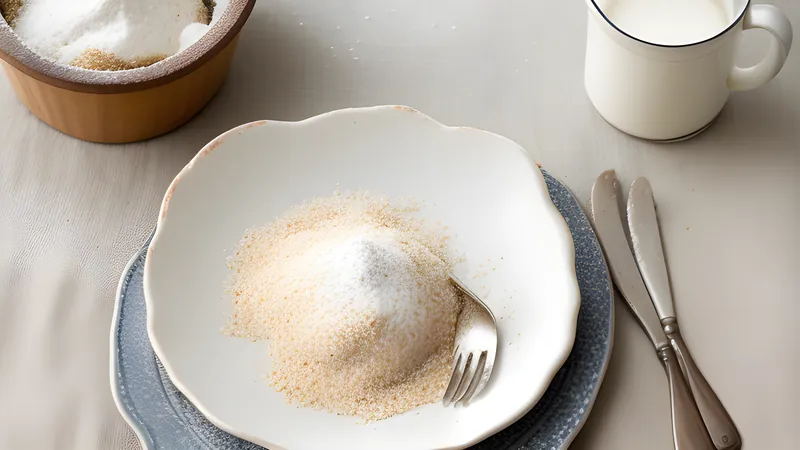
- Mound the mixture into a cone or dome shape on a serving plate, smoothing the surface with your hands.
- Dust generously with extra icing sugar and traced lines of cinnamon, and serve at room temperature by the spoonful.
A dessert that predates the concept of dessert
Sellou, also known as sfouf or zamita depending on the region, isn’t really thought of as a dessert course the way a Western sweet course is — it doesn’t follow a meal, and it isn’t portioned onto individual plates. Instead it sits on a low table through the evening during Ramadan, available for anyone to take a spoonful of between prayers or during the long stretch between iftar and suhoor, the pre-dawn meal before the fast resumes. That grazing pattern explains a lot about the dish’s construction: it’s calorie-dense by design, built from toasted flour, nuts and butter specifically because it needs to sustain someone through hours without food, in a way that a lighter, more conventional sweet couldn’t manage. The same density and nutritional logic is what makes it a traditional food for new mothers too, alongside dishes like rfissa — both are, in their own way, food built for a body under real physical demand rather than food built purely for pleasure, even though sellou is, undeniably, also a pleasure to eat.
No oven required
The most unusual thing about sellou to anyone coming to it fresh is that raw flour is a genuine ingredient here, not just a thickener stirred into something else — and raw flour is not safe to eat. It carries bacteria from milling and handling that are normally killed off during baking, so the entire dish depends on toasting the flour thoroughly in a dry pan before it goes anywhere near the other ingredients. This isn’t a quick five-minute job; properly toasting five hundred grams of flour to a safe, fully cooked, deep golden colour takes a genuine twenty to twenty-five minutes of near-constant stirring over gentle heat, and rushing it with higher heat is one of the most common ways to ruin a batch, because the outside of the flour scorches and turns bitter while the inside remains pale and under-toasted.
Stir constantly and keep the heat at low-medium rather than reaching for higher heat to speed things along. You’re looking for an even, deep tan colour throughout the pan and a smell that has shifted from raw and dusty to distinctly toasted and nutty, similar to the smell of good wholemeal bread crust. If you’re ever unsure whether the flour has toasted enough, err on the side of longer — a slightly darker, more deeply toasted flour tastes better in the finished dish than an under-toasted one, and the food-safety margin is much wider that way too.
Two textures of sesame
Sellou uses sesame seeds twice, in two different textures, and both matter to how the finished dish eats. Half the toasted sesame gets ground together with the fried almonds into a fine, slightly oily meal that forms the bulk of the dish’s body — this is where most of the richness comes from, since sesame seeds are around fifty per cent oil by weight, and grinding them releases that oil into the mixture the way grinding nuts for a nut butter does. The other half stays coarser, broken but not pulverised, giving the finished sellou small pockets of texture and a more pronounced toasted-sesame flavour that the fully ground portion alone doesn’t deliver. Skipping this split and grinding everything to the same fineness gives you a duller, more uniform result — one of those small technique choices that looks unnecessary until you taste the difference side by side.
Frying the almonds properly
The almonds are fried rather than dry-toasted, in a thin film of vegetable oil rather than a dry pan, which gives them a more even, deeper golden colour and a slightly different, richer flavour than dry-toasting alone produces. Watch them closely once they start colouring — almonds go from golden to burnt in under a minute once they get going, and a scorched batch will taste bitter enough to throw off the whole dish, since you’re using a substantial two hundred grams of them. Drain them well on kitchen paper before grinding to remove excess oil, otherwise the finished paste can turn greasy rather than just rich.
Bringing it together
Once the flour, almond-sesame mixture, spices and sugar are combined dry, the butter goes in last, worked through gradually with your hands rather than dumped in all at once. You’re aiming for a texture that holds together when pressed but still has some crumb to it — think of the texture of a very dense, damp crumble mixture rather than a smooth dough. If it feels too dry and won’t hold together when you press a spoonful in your palm, melt and add a little more butter, a tablespoon at a time; if it feels greasy and slick rather than just rich, you’ve likely overdone the oil somewhere upstream, either in frying the almonds or in the butter itself, and a little extra toasted flour worked in will help balance it back out.
The mound, and why it’s shaped that way
Sellou is traditionally piled into a cone or dome shape on a serving plate rather than portioned out individually, and the shape isn’t just presentation — it’s practical. Because it’s not baked or set into a firm structure, sellou needs to be moist enough to compress into a mound that holds its shape, which is a useful visual check that you’ve got the butter-to-dry-ingredient ratio right. If your mixture won’t hold a dome shape and keeps collapsing or crumbling apart, it needs a little more butter worked through; if it holds together but feels greasy to the touch, it has too much.
The dusting of icing sugar and traced lines of cinnamon across the surface is the traditional finish, and it’s worth doing properly rather than a token sprinkle — a generous, even dusting is part of what makes a mound of sellou look genuinely appetising rather than just brown and lumpy.
Serving
Sellou is eaten by the spoonful, straight from the mound, rather than plated or portioned in advance — set the whole dish in the middle of the table with a serving spoon and let people help themselves through the evening, which is exactly how it’s served in Moroccan homes during Ramadan. It pairs naturally with mint tea, the sweetness and density of the sellou balanced by the tea’s bitterness and heat, and a small glass alongside a couple of spoonfuls is a genuinely satisfying way to end an iftar meal without needing anything heavier.
Common mistakes
Beyond under-toasting the flour, the second most common problem is grinding the almonds and sesame into too fine a paste, past the point of a coarse meal and into something closer to almond butter. Once nuts release too much of their oil under prolonged grinding, the resulting mixture turns greasy and dense rather than light and slightly crumbly, and it throws off the whole butter ratio in the final mix since you’ve effectively added extra fat without meaning to. Pulse your food processor in short bursts and check the texture often rather than running it continuously — you want a fine, sandy meal, not a paste that clumps against the sides of the bowl. The third common issue is adding all the butter at once rather than gradually; sellou’s texture is easiest to judge and correct if you build it up in stages, checking after each addition whether the mixture holds together when pressed.
Storage
Sellou’s whole point, historically, is that it keeps extremely well without refrigeration — the combination of toasted flour, ground nuts, sugar and a generous amount of butter creates a low-moisture environment that resists spoiling for weeks. Stored in an airtight container at room temperature, away from direct heat or sunlight, it keeps for up to a month, and many families make a large batch at the start of Ramadan specifically because it doesn’t need daily attention. It doesn’t freeze particularly well and doesn’t need to — room temperature storage is genuinely the better option here.
Variations
Some families add toasted whole anise seeds rather than ground, left whole through the mixture for little bursts of liquorice-like flavour as you eat. Others substitute a portion of the almonds with walnuts or hazelnuts for a different, earthier nut flavour, though almonds remain the standard and, in my opinion, the best texture for grinding into the smooth base. A few Fez households add a small amount of gum arabic, a traditional binder, for an even firmer, more compact mound — not necessary for a home version, but worth knowing if you come across it in an older written recipe and wonder what it’s for. If you’re building a full Ramadan-season spread, sellou alongside baghrir at iftar covers both ends of the table: one soft and honeyed, one dense and spiced, both built to refuel a body that’s gone all day without food.
Sellou rewards care at exactly the stage most people are tempted to hurry through — toasting the flour — and once that stage is done properly, everything after it is simply mixing and shaping. It is, in the end, one of the more forgiving Moroccan sweets to make at home, provided you respect the one non-negotiable step, and it has the considerable advantage of needing no oven, no specialist equipment and no last-minute attention on a night when you’re likely to have plenty else on the stove already.
Related Content