Sel Roti: Nepali Fermented Rice Ring
A ring doughnut leavened by nothing but rice and time
Contents
↓ Jump to recipeIn Kathmandu, the smell of frying sel roti announces Tihar before the marigold garlands do. Every kitchen with a wok on the boil is turning out rings of fermented rice batter, dropped into hot ghee a spoonful at a time, and every household has an aunt who insists her batter, her ratio of banana to sugar, her exact fermentation window, is the only correct one. Sel roti isn’t complicated to make. It’s exacting in the way that fermentation always is - you’re not following a recipe so much as reading a batter and knowing when it’s ready.
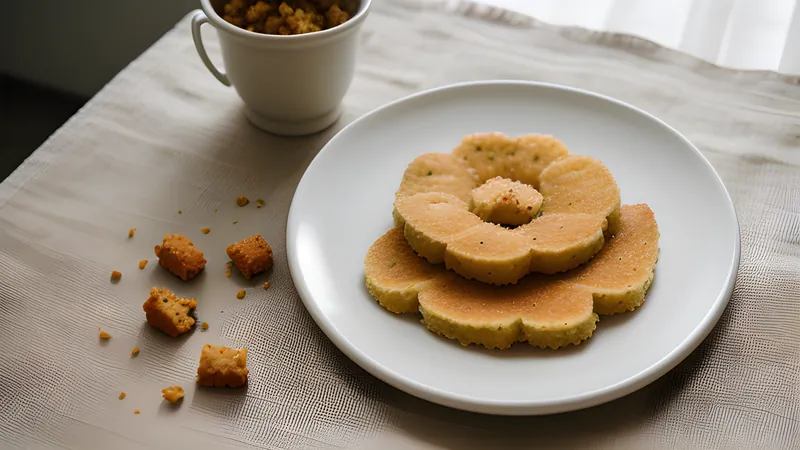
The shape matters as much as the taste. A sel roti is a ring, piped freehand into oil with no mould, no cutter, nothing but a steady hand and a hole punched in the base of a piping bag or a coconut shell with the top sliced off, which is how it was done for generations before piping bags existed. The ring cooks evenly because there’s no thick centre to stay raw while the edges burn. It’s also, practically, easier to thread onto a string and hang to dry for later, which rural households did before refrigeration made that unnecessary.
Sel Roti: Nepali Fermented Rice Ring
Ingredients
- 400g short-grain rice, soaked 6 hours and drained
- 250-300ml whole milk, divided, plus more to loosen
- 2 tbsp natural yoghurt (to kick-start fermentation)
- 100g caster sugar
- 1 very ripe banana, mashed
- 2 tbsp ghee, melted, plus extra for frying
- 1 tsp ground cardamom
- 1/4 tsp fine salt
- 500ml neutral oil or ghee, for deep frying
Method
- Drain the soaked rice and blend with 200ml of the milk and the yoghurt to a smooth, thick batter, close to double cream.
- Scrape the batter into a bowl, cover loosely, and leave at room temperature for 8-12 hours, until visibly bubbled and faintly sour.
- Whisk the sugar, mashed banana, melted ghee, cardamom and salt into the fermented batter. Thin with the remaining milk until the batter falls from the whisk in a slow, unbroken ribbon.
- Heat the oil or ghee in a wok or kadai to 170C - a drop of batter should sizzle and rise within 3 seconds without browning instantly.
- Spoon the batter into a piping bag or a funnel with a thumb over the spout, and pipe a ring of batter directly into the hot oil, overlapping the ends slightly.
- Fry for 2-3 minutes per side, turning once, until deep golden-bronze and firm enough to hold its ring shape when lifted.
- Lift onto a wire rack to drain and crisp. Repeat with the remaining batter, letting the oil temperature recover between rings.
- Cool for at least 10 minutes before eating - the crumb firms up as it cools, and the ring will crack cleanly rather than tear.
A Ring for the Gods and for Breakfast
Sel roti’s strongest association is with Tihar, the five-day festival of lights that falls in Nepal in October or November, when Kathmandu’s streets fill with oil lamps and marigold strings and every family fries several days’ worth of sel roti to eat, gift and offer. But treating it as festival-only food undersells how often it turns up on an ordinary Tuesday. It’s a standard breakfast item across Nepal and in Nepali communities in Darjeeling, Sikkim and Bhutan, sold from roadside stalls stacked in towers, eaten with a cup of milky tea or alongside a plate of aloo dum - spiced potatoes in a thin red gravy - which cuts through the sel roti’s sweetness.
During Tihar, sel roti carries weight beyond breakfast. It’s offered to Laxmi on the second day of the festival alongside sweets and lamps, and on Bhai Tika, the final day when sisters mark their brothers’ foreheads with a seven-coloured tika, a plate of sel roti is part of the ritual exchange - sisters fry it in the morning specifically for the occasion, and the size of the stack a household produces is, half-jokingly, a point of quiet pride among neighbours. Nepali migrants abroad, in the UK, the Gulf, Australia, treat sourcing rice and ghee for a Tihar batch of sel roti the way other diaspora communities treat sourcing the one ingredient that makes a festival table feel like home rather than an approximation of it.
The rice-and-fermentation base places it in a family with other South Asian fried and festival sweets, though the technique diverges sharply from most of them. Where gulab jamun soaks fried milk-solid dumplings in a cardamom-and-rose syrup for its sweetness, sel roti gets its sugar worked directly into the fermented batter, so the sweetness fries into the crumb itself rather than soaking in afterward - chewy at the centre, shatteringly crisp at the ring’s outer edge, with a faint tang from the overnight ferment that keeps the sugar from tasting flat. It shares that fried-dough, festival-food register with East African treats like mandazi, the cardamom and coconut doughnut eaten across Kenya and Tanzania - different continent, same instinct that a fried, lightly spiced dough belongs to celebration.
The Batter That Ferments Itself
Traditional sel roti starts with rice, not rice flour - short-grain rice soaked for several hours until it softens enough to blend to a genuinely smooth paste. This matters: a gritty batter fries into a gritty ring, no amount of sugar disguises it. Soak the rice for a full six hours if you can, longer if your kitchen runs cold, and blend it with milk rather than water. Milk’s fat and proteins round out the crumb and brown more readily in the fryer, giving the ring its characteristic mahogany colour rather than a pale straw one.
The fermentation is the part cooks get anxious about and needn’t. Rice batter left covered at room temperature will ferment on its own within 12 to 24 hours thanks to wild yeasts and lactic acid bacteria already present on the grain, the same organisms that leaven idli and dosa batter. A spoonful of natural yoghurt speeds things along reliably and is worth including if your kitchen is cool or you’re impatient - it introduces a working culture rather than waiting on ambient ones. You’re looking for two signs: small bubbles breaking the surface when you tap the bowl, and a smell that’s shifted from raw and starchy to faintly sour, like natural yoghurt itself. Under-fermented batter fries dense and gummy in the centre. Over-fermented batter turns aggressively sour and the rings collapse rather than hold their shape in the oil - if it smells sharp or alcoholic, it’s gone too far; start again rather than trying to sweeten your way out of it.
Once fermented, the batter needs sugar, mashed banana, melted ghee, ground cardamom and salt whisked through - not blended, which would knock the air out you’ve just spent half a day building. Ripe banana isn’t a modern addition; it’s traditional, and does real work, adding natural sugars that caramelise faster than the added sugar and a moisture that keeps the crumb from drying out during the long fry. Use a banana that’s properly spotted and soft. A firm one won’t mash smoothly and leaves fibrous streaks in the batter.
Choosing Your Frying Fat
Ghee is the classic frying medium and it’s worth using for at least part of the fry, even if you cut it with a neutral oil to keep costs down - ghee’s higher smoke point and nutty, slightly caramel flavour work their way into the crust in a way a purely neutral oil can’t replicate. A 50/50 blend of ghee and a neutral oil like sunflower or groundnut gives you enough volume to properly submerge the rings without the expense of an all-ghee fry, while keeping real depth of flavour.
Whichever fat you choose, don’t reuse it more than once or twice for sel roti specifically - it picks up sugar residue from the batter quickly, and that sugar starts to scorch and darken the oil, which then makes every subsequent batch taste faintly burnt regardless of how carefully you control the temperature. Strain it through a fine sieve after each session if you’re keeping it for other frying, and discard it once it darkens past a light amber.
Piping and Frying
Consistency is the single variable that decides whether your rings hold their shape or dissolve into a formless tangle in the oil. The batter should run off a whisk in a slow, continuous ribbon - thicker than pancake batter, thinner than cake batter. Too thick and the ring won’t spread or crisp properly; too thin and it won’t hold together as it fries. Test with a small spoonful in the hot oil before committing the whole batch: it should hold a rough shape and rise to the surface within a few seconds.
Piping the ring is the part that takes practice and nobody gets pretty on the first attempt, which is fine - a rustic, slightly uneven ring is entirely traditional. Fill a piping bag (a sturdy freezer bag with a corner snipped off works) and, holding it a few centimetres above the oil, pipe a continuous ring directly into the fat, overlapping the two ends so they fuse as they cook. Work quickly but don’t panic; the batter firms almost immediately in 170C oil.
Oil temperature is the other lever. Too hot and the outside scorches before the centre sets, leaving a raw ring under a burnt crust. Too cool and the ring absorbs oil and turns heavy and greasy rather than crisp. A cooking thermometer takes the guesswork out, but if you’re working by feel, a small ball of batter dropped in should sink slightly, then rise and start bubbling steadily within three seconds - if it stays down and cooks slowly, the oil’s too cool; if it colours instantly, pull it back off the heat for a minute.
Getting the Crunch Right
The texture people love in a good sel roti - crisp shell, chewy interior, not a trace of raw batter at the ring’s thickest point - comes down to three controllable things: batter consistency, oil temperature, and ring thickness. Pipe your rings on the thinner side, no wider than a finger, especially on your first attempts; a thick ring is far more likely to brown outside while staying gummy within. Fry in smaller batches so the oil temperature doesn’t crash when you add cold batter, and let it recover between rings rather than crowding the pan.
If your first batch comes out pale and soft rather than deeply browned and crisp, the oil was probably too cool, or the batter under-fermented and lacking the sugars that drive proper caramelisation. If the rings scorch on the outside while the centre stays raw, drop the oil temperature by ten degrees and fry a touch longer at that lower heat rather than trying to rescue a hot pan mid-batch.
Resist the urge to eat one straight from the fryer. Sel roti actually improves in the first ten minutes off the heat as the crumb sets and the crust properly crisps; eaten too hot, it tastes doughy even when it’s cooked through. Cooled sel roti keeps at room temperature in an airtight tin for three or four days without turning stale, which is exactly why it suited festival cooking in the first place - you can fry a large batch two days before Tihar peaks and it’ll still be good.
Variations and Serving
Some households add a spoonful of semolina to the batter for extra structure, or swap cardamom for a pinch of nutmeg. Others skip the banana entirely and lean harder on sugar, which produces a paler, less complex ring - I’d encourage keeping the banana if you can get a properly ripe one. A few families work in a little grated coconut for texture, closer to the coconut-rich sweets found across the wider region.
Sel roti is traditionally eaten plain with tea, particularly masala chai, the version worth actually getting up for, its warm spice mirroring the cardamom in the dough. For a savoury contrast, serve alongside a simple potato curry - the sel roti’s sweetness against a sharp, chilli-forward gravy is the pairing you’ll find at any Tihar table in Kathmandu.
Leftover rings freeze well for up to a month; reheat briefly in a low oven rather than a microwave to bring the crust back rather than turning it soft. It’s one of the few fried doughs that genuinely rewards making ahead, which is worth remembering the next time a festival, or simply a free Sunday afternoon, gives you the excuse.
Related Content