Seadas: The Fried Cheese Pastry of Sardinia
Molten sheep's cheese in a semolina shell, under bitter honey
Contents
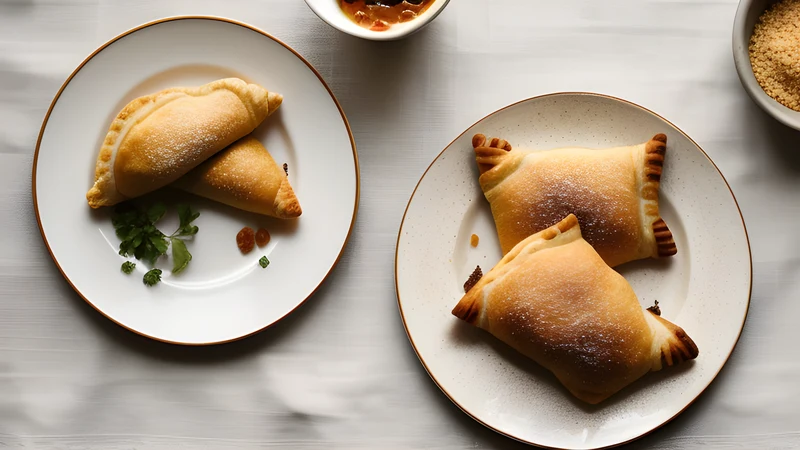
↓ Jump to recipeA seada is a disc of fresh sheep’s cheese, sealed inside a shell of semolina pastry the thickness of a beer mat, fried until it blisters, and drowned in bitter honey. It is the best thing Sardinia makes and it takes about ninety seconds to go from perfect to a puddle, which is why it is served the instant it leaves the oil and eaten standing up if necessary.
The honey has to be bitter. This is the part outsiders resist and the part that makes the dish.
Seadas: The Fried Cheese Pastry of Sardinia
Ingredients
- 300g semola rimacinata di grano duro
- 60g lard, or unsalted butter, at room temperature
- 130ml water at 45°C
- 4g fine sea salt
- 400g fresh pecorino or primo sale, young and mild, coarsely grated
- 2 tbsp water, for the cheese
- finely grated zest of 1 unwaxed lemon
- 1 tbsp semolina, for the filling
- 800ml sunflower oil, for frying
- 150g corbezzolo honey, or another strong, slightly bitter honey
- 1 fresh bay leaf
- 1/4 tsp flaky sea salt
Method
- Put the grated cheese and the 2 tbsp of water in a small heavy pan over the lowest heat. Stir constantly with a wooden spoon for 6 to 8 minutes, until it melts and gathers into one smooth, stretchy mass that pulls away from the sides.
- Take the pan off the heat and beat in the lemon zest and the 1 tbsp of semolina. Tip the mass onto a sheet of baking paper, press it out to 1cm thick, and chill for 45 minutes until firm.
- Rub the lard into the semola and the 4g of salt with your fingertips until it looks like damp sand. Add the warm water and knead for 8 minutes into a smooth, tight, waxy dough. Wrap and rest for 30 minutes.
- Cut the chilled cheese into eight 7cm discs with a cutter. Re-press and chill the offcuts if you need to.
- Roll the dough 1mm thick and cut sixteen 12cm discs, keeping the ones you are not using under a cloth.
- Lay a cheese disc in the centre of a pastry disc. Brush a 2cm border of the pastry with water, lay a second disc on top, and press from the cheese outward to drive out all the air. Seal the border firmly, then trim to a neat 10cm round with a fluted cutter.
- Repeat with the rest. Prick each seada once on each side with the tip of a knife, well away from the cheese.
- Warm the honey with the bay leaf in a small pan to 50°C — warm to the finger, never simmering — and hold it there for 10 minutes. Remove the leaf.
- Heat the oil in a deep pan to 175°C. Fry two seadas at a time for 90 seconds a side, spooning hot oil over the tops, until blistered and deep gold.
- Drain for 20 seconds on a rack, put each on a warm plate, spoon the bay honey over, and scatter with the flaky salt. Eat immediately.
The dish that used to be a main course
Seadas — sebadas, sevadas, spelled a different way in each valley — come from the interior: Barbagia, Ogliastra, the Gennargentu villages where the economy was sheep and nothing else. The name most likely traces to the Latin sebum, meaning fat or tallow, through the Sardinian seu, which is what you fry them in when you have no oil.
They started out as a main course. A shepherd’s household had cheese, semolina, lard and honey, and a seada is those four things arranged so that the cheese is hot. It appeared as a second course, on the same plate as the meat or instead of it, and the honey was seasoning in the way that mostarda is seasoning next to a boiled meat. The move to dessert is a twentieth-century restaurant decision, and it has quietly damaged the dish — a seada served after a pudding-shaped meal, sweetened with sugar and stripped of salt, loses the savoury argument it was making.
The cheese was casu axedu, a fresh curd left to sour for a day or three, sharp and lactic and stretchy. It is a farmhouse product and it barely exists commercially off the island. What you can buy that works is a genuinely young pecorino, sold as primo sale or simply as fresh pecorino, aged for a couple of weeks at most. Anything mature will split when you melt it.
The honey is miele di corbezzolo, from the strawberry tree, Arbutus unedo, which flowers in Sardinia in late autumn when almost nothing else does. Bees work it in November and produce a honey that is genuinely, unapologetically bitter — amber, resinous, closer to a bitter orange marmalade than to anything you would put on toast. It is one of the most expensive honeys in Europe and small producers around Nuoro will tell you why: a bad autumn means no crop at all. Asphodel honey, the other Sardinian classic, is milder and also correct.
There is a nice detail in the older accounts: seadas were made for guests and for feast days because frying used a lot of fat, and fat was money. A household that produced a plate of seadas was making a statement about its year. In the villages around Fonni they turn up at Carnival, and the Ogliastra habit of eating them at the end of a long lunch on a saint’s day is the closest the dish has come to being a dessert on its own terms.
Why bitter
Four hundred grams of melted sheep’s cheese is a wall of fat and salt. Sweet honey on top of that gives you two loud things shouting at each other and a plate you cannot finish. Corbezzolo honey has the bitterness to cut through the fat and the aromatic resin to sit underneath it, and the result reads as balanced rather than as sweet.
If you cannot find it — and it is genuinely hard to find outside Sardinia — reach for chestnut honey, which is bitter, tannic and widely sold. Buckwheat honey works, dark and malty and slightly barnyard. Heather honey is a reasonable third. Acacia, clover or any pale supermarket blend will produce a sweet, cloying plate, and at that point you may as well have made a doughnut.
The bay leaf
Here is my one change. I warm the honey to 50°C with a fresh bay leaf in it and hold it there for ten minutes before straining the leaf out.
Bay grows all over the Sardinian interior and turns up in the island’s savoury cooking constantly. Its aroma comes largely from eucalyptol and linalool, both of which are fat-soluble and volatile, and both of which infuse readily into warm honey. What it adds is a cool, faintly camphorous top note that lands directly on the resin already in the corbezzolo and pushes the whole thing further from pudding.
Fifty degrees is the ceiling. Honey heated above about 60°C loses its own volatile aromatics fast and starts to taste like sugar syrup, which defeats the purpose of buying an expensive honey. Warm to the finger, ten minutes, leaf out. If you overshoot and it simmers, throw it away and start again; there is no undoing it.
The flaky salt at the end works with the same logic. A pinch on top of a fried, honeyed, salty-cheese object sounds like too much and it is the thing that makes people go quiet.
Melting the cheese, and the pastry
Melting cheese into a coherent, sliceable mass is the technical heart of this. Low heat, constant stirring, and patience. What you are doing is letting the casein network contract and expel some water and fat while staying elastic — the same thing that happens in a mozzarella pull. Sheep’s cheese does this beautifully when it is young and acidic, and refuses when it is aged, because ageing breaks the casein into fragments that will not form a network. An aged pecorino melted this way gives you an oil slick and a rubbery lump, and no amount of stirring brings it back.
Rush it with high heat and you get the same failure. Six to eight minutes on the lowest flame your hob does.
The tablespoon of semolina beaten in at the end absorbs free moisture and gives the disc enough firmness to handle from a chilled tray. Skip it and the disc slumps while you are trying to wrap it.
The pastry is semola, lard and water, and it is the same family as the culurgione dough with fat in it. Lard makes it shorter and blister better in the oil; butter is a close second and slightly less authentic. It must be rolled to a millimetre — thicker and you have a fried pasty with cheese in it, and the whole delicate business of a shell that shatters is gone.
Drive the air out. An air pocket inside a seada expands in 175°C oil and bursts the seal, which sends molten cheese into the fryer and produces a mess and a genuine burn risk. Press from the cheese outward with your palm, seal the border hard, and prick each side once through the pastry only.
Cut the discs with a cutter rather than freehand. A 7cm cheese disc inside a 12cm pastry disc leaves a 2.5cm border all the way round, which is enough to seal and enough to trim back to a neat 10cm. Freehand cutting gives you a border that is 4cm on one side and 1cm on the other, and the thin side is where it bursts.
Frying, and eating
One hundred and seventy-five degrees, measured. Below 165 the pastry drinks oil and goes leaden; above 185 the outside browns before the cheese inside melts, and a seada with a cold centre is a sad object. Two at a time, ninety seconds a side, and spoon oil over the top so it blisters evenly.
Twenty seconds on a rack, then straight to a warm plate. Do not drain them on paper — the underside steams and softens. Do not stack them. Do not, under any circumstances, make them ahead and reheat them; the cheese has already set by then and the second melt splits it.
The cheese inside is around 90°C when it hits the plate. Warn people. This is the one real hazard in the recipe and everybody learns it the hard way exactly once.
What goes wrong
The cheese split into oil and rubber. Too old a cheese, or too much heat. Young, acidic sheep’s cheese melts into a stretchy mass; anything with more than a few weeks on it will break. If the shop only has mature pecorino, buy mozzarella-adjacent primo sale instead and accept a milder seada.
It burst in the oil. Trapped air, or a weak seal. Press from the centre outwards, seal the full 2cm border with wet fingers, and check the rim by eye before the seada goes anywhere near the pan.
The pastry is thick and chewy. One millimetre. If you can read newsprint through it you are close.
It is greasy. The oil was under 165°C. Use a thermometer and let the temperature recover between pairs; two seadas dropped into 175°C oil pull it down by 15 degrees or so on a domestic hob.
The centre is cold. The oil was too hot and the outside got there first, or the cheese disc came straight from the fridge into an already-too-hot pan. Let the discs sit at room temperature for ten minutes before assembling.
It tastes like a sugary doughnut. Wrong honey. This is the failure that ruins more seadas than any technique.
The pastry is tough. Over-kneaded, or under-rested. Durum dough needs the full thirty minutes to relax; roll it early and it will fight back and shrink on the board.
Storage and neighbours
Assembled, unfried seadas keep for a day in the fridge in a single layer, uncovered, and they freeze well for a month on a tray, then bagged. Fry from frozen at 170°C for two and a half minutes a side. That is the only make-ahead route that works.
For the same instinct — fresh sheep’s or cow’s curd cheese, fried pastry, a sweet finish handled carefully — cannoli with ricotta and candied peel is the Sicilian answer and a useful contrast, since it keeps the cheese cold and fries only the shell. Sfogliatella, the layered Neapolitan shell takes the pastry in the other direction entirely. And if bitter honey against dairy is the idea that interests you, honey and ricotta phyllo cups with walnuts does it without the deep-fat fryer.
Lemon zest is the only aromatic inside, and it is there for the same reason the honey is bitter — sheep’s cheese is rich and needs something to lift it. Use an unwaxed lemon and take only the yellow; the white pith is bitter in the wrong way and does not cook out.
Make eight. Fry them in pairs while everyone stands in the kitchen. Nobody has ever sat down for these.
Related Content