Sate Lilit: Balinese Fish Satay on Lemongrass
minced fish and coconut moulded onto lemongrass stalks and grilled over charcoal
Contents
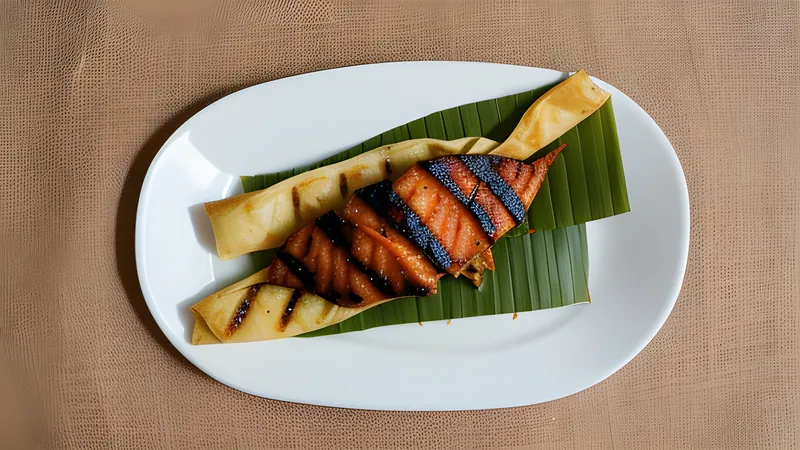
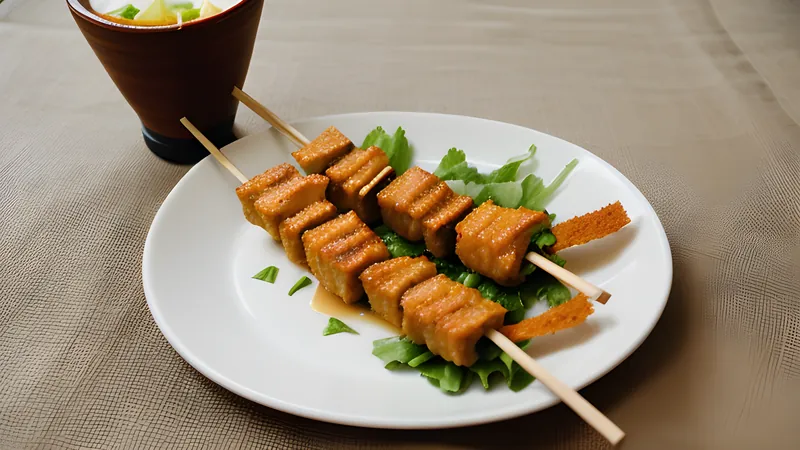
↓ Jump to recipeSate lilit takes its name from the Balinese verb for “to wind” or “to coil” — lilit — because the fish mixture is wound directly onto a lemongrass stalk rather than threaded as chunks the way most satay is made elsewhere in Indonesia. There’s no meat cube here at all: minced fish, grated coconut and a full measure of Balinese spice paste are worked together into something closer to a firm mousse, moulded by hand around the stalk, and grilled until the outside chars slightly and the lemongrass itself begins to scorch and perfume the fish from underneath. It’s one of the few satays in the archipelago where the skewer is as much an ingredient as a delivery method.
Sate Lilit: Balinese Fish Satay on Lemongrass
Ingredients
- 600g skinless white fish fillet (mackerel, snapper or tuna), roughly chopped
- 100g fresh grated coconut, or unsweetened desiccated coconut soaked in 3 tbsp warm water
- 6 shallots, peeled
- 4 cloves garlic, peeled
- 4 red chillies, deseeded
- 3 candlenuts, toasted
- 20g fresh turmeric, peeled, or 1 tsp ground turmeric
- 15g fresh galangal, peeled
- 1 stalk lemongrass, tender inner part only, finely chopped
- 4 kaffir lime leaves, very finely shredded
- 1 tbsp palm sugar, grated
- 1.5 tsp salt, plus more to taste
- 1 egg white
- 2 tbsp vegetable oil, plus more for frying the paste
- 16 lemongrass stalks, tough outer layers removed, or bamboo skewers if unavailable
- lime wedges and sambal matah, to serve
Method
- Blend the shallots, garlic, chillies, candlenuts, turmeric and galangal to a smooth paste, adding a splash of water only if the blender stalls.
- Fry two-thirds of the paste in 2 tbsp oil over medium heat for 5-6 minutes, stirring often, until fragrant and darkened. Leave the remaining third raw.
- Blitz the fish in a food processor with short pulses until finely minced but not yet a smooth paste — you want texture, not a puree.
- Mix the minced fish, fried paste, raw paste, grated coconut, chopped lemongrass, kaffir lime leaf, palm sugar and salt in a bowl, working it with your hands until it feels tacky and holds together.
- Mix in the egg white to bind the mixture further, then fry a small test patty in a little oil to check the seasoning, adjusting salt and chilli to taste.
- Take a small handful of the mixture and mould it firmly around the thick end of a lemongrass stalk, pressing it into an oval shape roughly 8cm long, leaving a few centimetres of bare stalk as a handle.
- Repeat with the remaining mixture, arranging the finished skewers on a tray as you go.
- Heat a grill, griddle pan or barbecue to medium-high, brush the moulded fish lightly with oil, and grill for 3-4 minutes a side, turning carefully, until firm, lightly charred at the edges and cooked through.
- Rest for 2 minutes before serving.
- Serve with lime wedges and sambal matah alongside.
Why lemongrass, and why it has to be real lemongrass
The stalk isn’t just a handle. As the fish mixture cooks over charcoal or a hot grill, the direct contact with lemongrass releases its citrus-and-herbal oils into the underside of the satay, in a way that a plain bamboo skewer never could. Turn a skewer over during grilling and you can usually see a faint darkening where the fish has been sitting against the stalk — that’s the lemongrass essentially basting the fish with its own aroma as both cook together. Bamboo skewers work as a substitute if lemongrass stalks aren’t available or are too thin to hold their shape, but the dish loses a genuine layer of flavour without them, and it’s worth seeking out thicker stalks specifically for this purpose rather than the thin ones sold pre-trimmed for tea or curry pastes.
Choose stalks with some real thickness at the base — thin, spindly lemongrass will bend or snap under the weight of the fish mixture once it goes on the grill. Trim away the tough, dry outer leaves but keep the stalk otherwise whole, since you want a rigid enough handle to mould the mixture around without it falling apart mid-grill.
Bumbu genep and the same spice base as Bali’s stuffed chicken
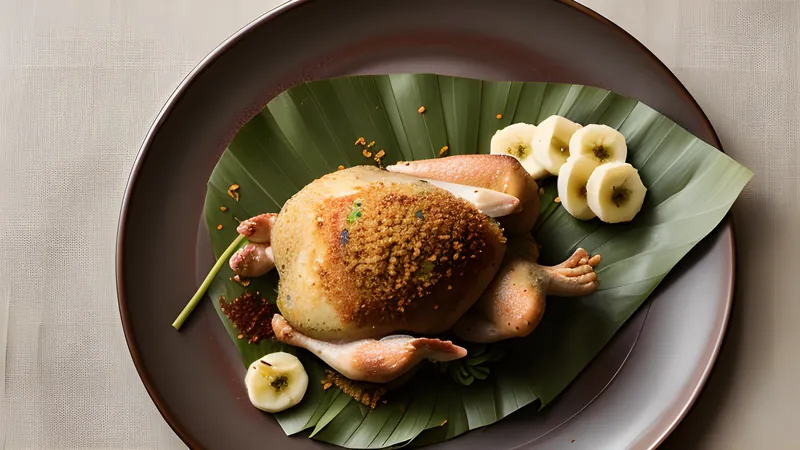
The spice paste here is a smaller-batch version of bumbu genep, the base paste that underpins an enormous share of Balinese cooking — shallot, garlic, chilli, candlenut, turmeric and galangal, blended raw and then partly fried to round off the sharper edges. The same paste, in a fuller-strength version packed into a whole bird rather than mixed through minced fish, is the foundation of ayam betutu, Bali’s slow-roasted spiced chicken — if you’ve made that dish before, the aroma of this paste frying in the pan will be immediately familiar, even though the finished results couldn’t look more different.
Splitting the paste, frying two-thirds and leaving a third raw, does the same job here it does in betutu: the fried portion loses its raw pungency and develops real depth, while the raw portion keeps a brighter, sharper top note that would otherwise cook out of the dish entirely if the whole batch went into the pan. Skipping the split and frying everything gives a rounder but flatter result; the contrast between fried and raw paste is what gives the finished satay its lift.
A ceremonial dish that also turns up on a Tuesday
Sate lilit is one of the dishes most closely tied to Balinese banten — temple offerings and ceremonial food — where large batches are moulded by hand by groups of women working together ahead of a temple anniversary or a wedding, often alongside ayam betutu and other slow-cooked dishes reserved for feeding a crowd. That communal, assembly-line style of cooking is baked into the dish’s method: moulding dozens of skewers by hand is far more efficient with several people working at once than it is solo, which is part of why sate lilit has historically been feast food as much as everyday food. It has since moved well beyond ceremonial contexts and turns up at ordinary warungs across Bali as a daily lunch item, usually sold a few skewers at a time alongside rice and a scoop of vegetables, but the dish still carries some of that communal, hands-in-the-mixture history even when you’re making a small batch alone in a home kitchen.
Fish isn’t the only version either. Balinese cooks make an equally common variant with minced pork or minced chicken in place of fish, using largely the same spice paste and coconut base, and a version built on minced duck turns up around ceremonial occasions specifically. The fish version remains the most widely known outside Bali and the one most commonly served at restaurants further afield, but it’s worth knowing the meat variations exist if fish isn’t an option in your kitchen — the ratio of paste to protein to coconut translates directly, and the moulding and grilling method doesn’t change at all between versions.
Getting the fish texture right
The fish needs a fine, even mince rather than a smooth puree. A food processor pulsed in short bursts, checking the texture every few pulses, gives you small, irregular flecks of fish that hold together once mixed with coconut and egg white but still read as fish rather than a smooth paste — over-processing turns the mixture gluey and dense, closer to the texture of a fish finger than the loose, slightly craggy texture a good sate lilit should have. Oily, firmer-fleshed fish work best here: mackerel is the traditional choice across much of Bali, prized for the extra richness its natural fat brings to a mixture that’s otherwise quite lean once mixed with coconut. Snapper or another firm white fish works well too, and tuna, chopped by hand rather than processed if you want to keep some visible texture, makes a leaner but still successful version.
Egg white is the binder that holds the whole mixture together on the stalk without turning it rubbery the way a whole egg or too much cornflour would. Mix it in only after the paste, coconut and seasoning are fully combined, and test the seasoning with a small fried patty before committing the whole batch to skewers — sate lilit is eaten without a dipping sauce dressing the fish itself, so the seasoning inside the mixture needs to be correct on its own.
Moulding the satay without it falling off the stalk
The mixture should feel distinctly tacky before you start moulding it — if it feels loose or wet, it will slide straight off the lemongrass the moment it hits the grill. Press firmly with damp hands (dampening your hands stops the mixture sticking to your fingers rather than to the stalk) and work it into a tight oval rather than a loose clump, leaving a bare section of stalk at one end as a handle to turn the skewer by. A well-moulded sate lilit holds its shape completely through grilling; if pieces are dropping off partway through cooking, the most likely cause is either a mixture that’s too wet, or too little egg white to bind it, rather than anything wrong with the grilling itself.
Grill over genuine charcoal if you have the option — the smoke it contributes is a real part of the traditional flavour, closer to how sate lilit is cooked at Balinese ceremonies and ocean-front warungs than a griddle pan can replicate indoors. A hot griddle pan or grill still gives a good result and is the more realistic option for most home kitchens outside Bali, but expect a slightly less smoky finish.
What goes wrong most often at home
The most common failure is a mixture that’s too wet to hold its shape, usually from fish that hasn’t been patted dry before mincing, or from using a very soft, high-fat fish like salmon (traditional in essentially no version of this dish) instead of a firmer, leaner one. If your first test patty spreads rather than holding a shape in the pan, work in a little extra desiccated coconut or a second egg white rather than pressing on regardless — the mixture should feel closer to a firm burger mix than to a loose fish paste before it goes anywhere near a stalk. The second common issue is over-charring the outside before the centre cooks through, usually from grilling over flames that are too fierce; medium-high heat, with the satay turned once partway rather than left untouched, gives an evenly cooked result with a charred exterior rather than a burnt outside and a raw middle.
Serving, and what belongs alongside it
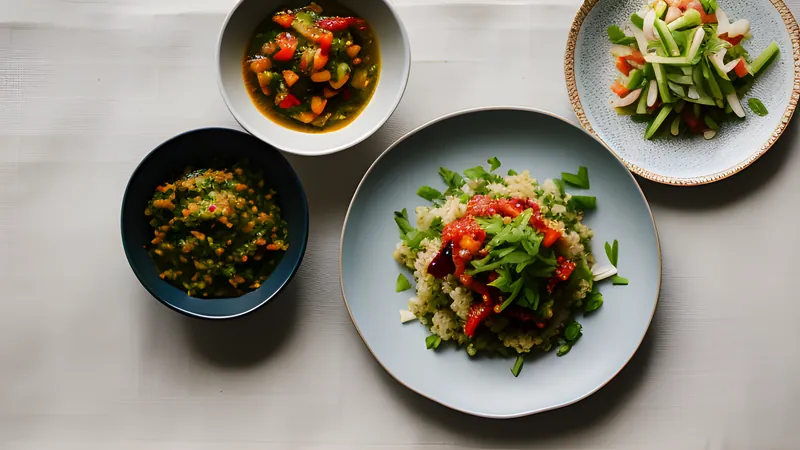
Sate lilit is traditionally served with sambal matah, Bali’s raw shallot and lemongrass relish, spooned over or alongside the hot skewers rather than used as a dip — the relish’s raw, sharp bite is a deliberate contrast to the fish’s cooked richness, and the two share enough ingredients (lemongrass, shallot, chilli) that they read as clearly related rather than randomly paired. Steamed rice, a few wedges of lime and a simple cucumber salad round the meal out; sate lilit is filling enough on its own that it rarely needs more than one other dish alongside it at a home meal, unlike a full Balinese ceremonial spread with a dozen components on the table at once.
Coconut’s job in a dish that isn’t a curry
It’s easy to assume coconut appears here mainly for flavour, but its role is partly textural. Fresh grated coconut folded through the minced fish adds a subtle sweetness and a slightly fibrous bite that keeps the finished satay from turning uniformly smooth and dense — without it, the fried and raw spice pastes alone would bind the fish into something closer to a fish cake than the looser, more textured mixture sate lilit is meant to have. Fresh coconut, grated from a whole coconut and used within a day, gives the best result; it has a natural moisture and sweetness that desiccated coconut can only partly recover once rehydrated in warm water. If fresh coconut genuinely isn’t available, unsweetened desiccated coconut soaked briefly is a fair substitute, though the flavour will read slightly flatter and less sweet than the version made with fresh.
Storage and reheating without drying the fish out
Uncooked, moulded sate lilit keeps for a day in the fridge, covered, and can be frozen for up to a month before grilling — freeze the moulded skewers flat on a tray until solid, then transfer to a bag, and grill from frozen with a couple of extra minutes on each side. Cooked leftovers keep for two days refrigerated but are genuinely best eaten the day they’re made; reheating fish this lean and delicately textured in a microwave or oven tends to dry it out and firm it up past the point of pleasant eating. If you do have cooked leftovers, flake the fish off the stalks and fold it through a bowl of warm rice with a squeeze of lime rather than trying to reheat the skewers whole.
Related Content