Sarson da Saag with Makki di Roti
Mustard greens cooked down for hours, eaten with butter and a cornmeal flatbread that only holds together warm
Contents
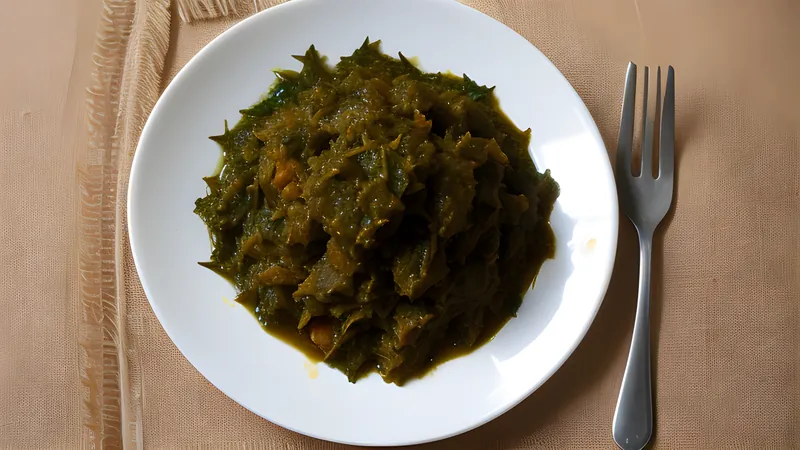
↓ Jump to recipeSarson da saag is a dish that resists being rushed at every stage: mustard greens that need close to an hour of simmering before they collapse into something spoonable, and a maize-flour roti dough with no gluten to speak of, which tears if you so much as look at it wrong and must be eaten within minutes of coming off the griddle or it turns leathery and stiff. Between the two sits a knob of white butter, unsalted and unadorned, melting into the dark green purée at the table — the one indulgence in a dish otherwise built entirely from patience.
Both halves of the meal belong to Punjab’s winter, a season the region takes seriously in a way its scorching summers make understandable. Mustard greens are a cold-weather crop, at their sweetest and least bitter after a proper frost, and the dish is strongly associated with Lohri, the January harvest festival marking the peak of winter and the point at which the mustard crop is ready. Families across rural Punjab, on both sides of the India-Pakistan border, still cook enormous batches of saag through the coldest months, when the greens are cheapest and best, rather than treating it as a year-round dish. Restaurants in Delhi and further afield now serve it in every season, but ask a Punjabi grandmother when saag is properly at its best and the answer is invariably some version of “January, and only January.”
Sarson da Saag with Makki di Roti
Ingredients
- 500 g mustard greens (sarson), washed and roughly chopped
- 200 g spinach, washed and roughly chopped
- 100 g bathua (chenopodium) leaves, or extra spinach
- 2 tbsp maize flour (makki atta), for thickening
- 3 tbsp ghee, plus more to serve
- 1 large onion, finely chopped
- 4 garlic cloves, finely chopped
- 2 cm piece fresh ginger, finely chopped
- 2 green chillies, finely chopped
- 1 tomato, finely chopped
- 1 tsp ground turmeric
- 1.5 tsp fine salt, to taste
- 200 ml water
- 300 g makki atta (fine maize flour), for the roti
- 1/2 tsp fine salt, for the roti dough
- 150-180 ml warm water, for the roti dough
- Extra makki atta, for dusting
- White butter or ghee, to serve
Method
- Boil the mustard greens, spinach and bathua in a large pot with 200 ml water, covered, for 35-40 minutes until completely soft and collapsed.
- Blend the cooked greens roughly, leaving some texture rather than a totally smooth purée. Whisk in the maize flour to thicken, then return to a low simmer for 10 minutes, stirring often to prevent catching.
- Heat the ghee in a separate pan and fry the onion for 8-10 minutes until golden. Add the garlic, ginger and chillies and cook for 2 minutes.
- Stir in the tomato and turmeric and cook for 5-6 minutes until the tomato breaks down and the oil separates at the edges.
- Pour the onion-tomato mixture into the greens, season with salt, and simmer together for a final 10 minutes, mashing lightly to combine. Adjust water if too thick.
- For the roti, mix the makki atta with the salt and gradually add warm water, kneading briefly to a soft, slightly crumbly dough. It will not be as elastic as a wheat dough.
- Divide into 8 balls. Pat or roll each between two sheets of greased baking paper into a thin round about 15 cm across, since the dough is too fragile to roll on a dry surface.
- Cook each roti on a hot dry griddle for 1-2 minutes per side, pressing gently with a cloth or spatula, until browned in spots and cooked through. Serve immediately with the saag, topped with a generous knob of butter.
Three greens, not one
“Sarson da saag” names the dish after its dominant green, but a proper version rarely uses mustard greens alone. Spinach and bathua — a leafy green related to lamb’s quarters or fat hen, sometimes translated loosely as “wild goosefoot” and available fresh or frozen from South Asian grocers, though ordinary spinach is a perfectly reasonable substitute if bathua is out of reach — both go in alongside the mustard leaves, and each contributes something specific. Mustard greens bring a sharp, peppery bitterness that would overwhelm the dish alone; spinach adds body and a gentler vegetal sweetness; bathua contributes a slightly tangy, mineral note and helps thin what would otherwise be an extremely thick, almost paste-like mixture.
The ratio between the three varies by household and by region, and this is worth treating as adjustable rather than fixed — some families lean heavily toward mustard for a sharper, more bitter saag; others favour spinach for a milder, greener result more approachable to unfamiliar palates. What every version agrees on is that mustard greens never appear entirely alone; the balance is the point of the dish’s name, not a contradiction of it.
Why maize flour, and how much
The maize flour stirred into the cooked, blended greens is doing real thickening work, since the greens alone, however long they cook, release enough liquid that the dish would otherwise stay looser and soupier than the thick, cling-to-a-roti consistency the dish is known for. It also lends a faint, distinct sweetness and a slightly grainy body that pairs deliberately with the makki roti served alongside — the same grain appearing in both halves of the meal is a deliberate part of how the whole plate is designed to work together.
Do not be tempted to add much more than the two tablespoons specified, even if the mixture still looks loose straight after blending: maize flour continues to thicken the saag as it simmers for those final ten minutes, and a batch that looks perfect the moment the flour goes in can turn stiff and pasty by the time it reaches the table if you have over-corrected early. Add the maize flour gradually and keep stirring, since it can clump if tipped in all at once against a hot, thick liquid; whisk it into a small amount of the greens’ own cooking liquid first if you are worried about lumps, then stir that slurry back into the main pot rather than adding the dry flour directly.
The roti that only behaves warm
Makki di roti is unlike almost any other Indian flatbread because maize flour contains no gluten at all, meaning the dough has no elastic network to hold it together the way a wheat-based chapati or paratha dough does. This is why the dough is patted or rolled between sheets of greased paper rather than on a floured board — lifting a rolled-out maize dough by hand almost always tears it — and why the finished roti, delicious hot off the griddle, turns genuinely stiff and crumbly within ten or fifteen minutes of cooling.
Warm water in the dough, rather than cold, helps the maize flour hydrate and bind slightly better, since starch in flour absorbs water more readily at a higher temperature; even so, expect a dough that behaves more like a thick, workable paste than a proper kneadable bread dough, and adjust the water in small increments until it just holds together when pressed rather than aiming for the springy texture you might expect from wheat flour.
Ghee tempering as a second layer of flavour
The onion-tomato-ginger-garlic base fried separately in ghee and stirred into the boiled, blended greens at the end is a technique worth understanding rather than treating as an incidental step: it is a form of tadka, the tempering method used across Indian cooking to bloom aromatics in hot fat and layer a second wave of flavour onto an already-cooked base, rather than cooking everything together from the start. Boiling the greens on their own first, with nothing but water, keeps their flavour clean and lets you judge exactly how much bitterness the mustard is bringing before any fat or aromatic is introduced; only then does the fried base go in, contributing sweetness from the slow-cooked onion and brightness from the tomato without ever having simmered long enough to lose its own distinct character.
Some households repeat this tempering step a second time at the table, frying a fresh, smaller batch of ghee, cumin seeds and dried red chilli and pouring it straight over individual bowls of saag just before eating, similar to how a dal might get a final tadka poured over just before serving. This second tempering is optional, though worth trying at least once if you want to taste what many Punjabi households consider the difference between a good saag and a memorable one.
Regional variations across Punjab
Saag recipes vary meaningfully between rural and urban Punjabi households, and between the Indian and Pakistani sides of the border, in ways worth knowing even if this recipe settles on one specific approach. Some versions add a spoonful of besan (gram flour) alongside or instead of maize flour for thickening, giving a slightly different, nuttier body to the finished dish. Others include a stronger hit of ginger and green chilli fried directly into the greens rather than reserved for the tempering stage, producing a sharper, more assertively spiced saag than the milder, butter-forward version most restaurants outside Punjab tend to serve. None of these variations are more correct than another; they reflect genuine differences in what individual families grew, had to hand, and preferred across generations of the same basic method.
What can go wrong
A saag that stays thin and soupy despite a long simmer is almost always short on maize flour or under-reduced; add a further spoonful of maize flour mixed with a little cooking liquid and simmer for another five minutes rather than reaching for a flour-and-water slurry of a different kind, which will muddy the flavour.
Torn, crumbling roti is the single most common frustration with this dish for anyone cooking it the first time, and it nearly always comes down to rolling on a dry surface or without enough water in the dough. Keep both hands and the paper very lightly oiled, work each roti gently rather than pressing hard, and accept a slightly thicker, rougher round over a paper-thin one that will not survive being lifted onto the griddle.
Serving, substitutions and storage
A note on sourcing mustard greens
Mustard greens are increasingly available fresh from South Asian and larger UK supermarkets, particularly through the autumn and winter months, sold either loose or in bunches labelled sarson or mustard leaf. Frozen mustard greens, pre-chopped and sold in blocks, are a genuinely good substitute out of season and are what many Punjabi households abroad actually cook with, since fresh bathua in particular is harder to find reliably. If you can only find mustard greens and no bathua at all, lean the ratio further toward spinach rather than trying to compensate with more mustard, since an all-mustard saag turns unpleasantly sharp and bitter without the other two greens to round it out.
The white butter — unsalted, uncultured, closer to fresh cream churned briefly than the salted, cultured butter more common in the UK — is a genuine component of the dish here, melting into both the saag and the hot roti and rounding out the greens’ bitterness with pure dairy fat. Regular unsalted butter is a fair substitute if white butter is unavailable. On a Punjabi winter table, this plate often sits alongside richer dishes such as dal makhani with butter and cream, and a jug of masala chai worth getting up for closes the meal the way it would in most Punjabi households.
Leftover saag keeps for up to four days in the fridge and, unusually for a vegetable dish, genuinely improves over that time as the greens continue to soften and the flavours settle further together; it also freezes well for up to two months. Makki roti, by contrast, does not keep at all in any appealing form — make only as many as will be eaten in one sitting, and treat any dough left over as tomorrow’s problem, best turned into fresh roti rather than stored raw for more than a day in the fridge. If you want a genuine make-ahead shortcut for a weeknight, cook the saag a day in advance and reheat it gently, but still mix and cook the roti fresh at the last minute; the ten minutes that costs is the difference between a roti worth eating and a stiff, cracked disc that only just qualifies as bread.
Related Content