Sarde in Saor: The Sweet-Sour Sardines of Venice
Fried sardines buried in soft onions, vinegar, sultanas and pine nuts
Contents
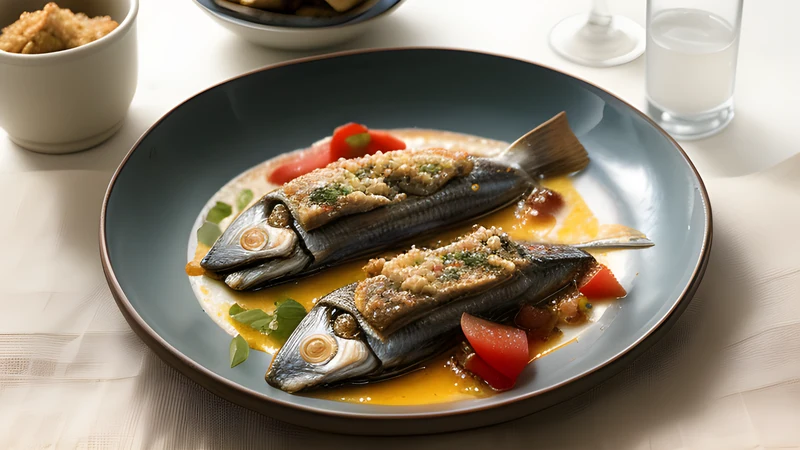
↓ Jump to recipeThere is a dish in every port city that exists because someone had to eat on a boat. Venice’s is a plate of small fried fish under a duvet of onions and vinegar, and it is one of the few preserved foods that improves so much in the keeping that nobody has ever bothered to make a fresh version.
Saor is Venetian dialect for sapore — flavour, in the sense of savour, the thing that hits you. The word is the whole recipe. Vinegar to stop the fish spoiling, onions to soften what the vinegar does, sugar from sultanas to round the corners, and enough time for those three arguments to settle into an agreement.
Sarde in Saor: The Sweet-Sour Sardines of Venice
Ingredients
- 500g fresh sardines, scaled, gutted, heads off (about 12 medium fish)
- 60g plain flour, for dusting
- 300ml sunflower or other neutral oil, for shallow frying
- 600g white onions, halved and sliced 3mm thick
- 5 tbsp extra-virgin olive oil
- 1 tsp fine sea salt, plus more for the fish
- 150ml white wine vinegar
- 50ml dry white wine
- 50g sultanas, soaked in warm water for 20 minutes
- 40g pine nuts
- 2 bay leaves
- 1 tsp black peppercorns, lightly cracked
- Finely pared zest of 1/2 orange, in wide strips
- 15g unsalted butter
Method
- Rinse the sardines and pat them completely dry inside and out with kitchen paper. Salt them lightly on both sides and leave on a rack while you start the onions.
- Put the sliced onions in a wide pan with the olive oil, the teaspoon of salt and 3 tablespoons of water. Cover and cook over low heat for 25 minutes, stirring every 5 minutes, until the onions are completely limp and translucent with no colour at all.
- Uncover, add the wine and let it steam off for 2 minutes. Pour in the vinegar, add the bay leaves, cracked peppercorns and orange zest strips, and simmer uncovered for 6 to 8 minutes until the liquid reduces to a loose syrup that coats the onions. Take off the heat.
- Melt the butter in a small dry frying pan over medium-low heat. Add the pine nuts and toast for 3 to 4 minutes, swirling constantly, until the butter smells nutty and the pine nuts are pale gold. Tip them into the onions along with the drained sultanas.
- Heat the neutral oil in a frying pan to 180C. Dust the sardines in flour, shake off every loose speck, and fry in batches for 90 seconds a side until crisp and golden. Drain on a rack, not on paper.
- In a shallow non-metal dish, spread a thin layer of onions. Lay half the sardines on top in a single layer, cover with half the remaining onions, then the rest of the fish, then the last of the onions and all the liquid. The top layer must be onions.
- Cover and refrigerate for at least 24 hours, ideally 48. Bring back to room temperature for 40 minutes before serving with grilled polenta or bread.
What the galley cooks knew
The technique is medieval and it is documented well before anyone romanticised it. Venetian galleys sailing the Adriatic and the eastern Mediterranean needed protein that would survive weeks without ice, and salt cod only goes so far. Onions did double duty: they carry a decent amount of vitamin C, which mattered on long hauls, and cooked down in vinegar they form a physical seal over the fish that keeps air off it. Acidity below roughly pH 4.5 is inhospitable to the bacteria that spoil oily fish, and a good saor sits well under that line.
The sultanas and pine nuts are the giveaway that Venice was a trading republic rather than just a fishing town. Both arrived through the eastern trade — dried grapes from the Levant, pine nuts from the Mediterranean shore — and both appear in the earliest recorded Venetian cooking alongside spices that would have cost a labourer a week’s wage. In the sailor’s version they were probably absent. In the version cooked on the Grand Canal they were the point, a way of signalling that your kitchen had access to things.
The dish belongs specifically to the Festa del Redentore in July, when Venice fills with boats and people eat on the water watching fireworks. Saor travels in a covered dish, needs no reheating and tastes better after four hours in a boat than it did at home. Very few festival foods are that honest about their logistics.
Sardines, and why they must be dry
Buy sardines that smell of the sea and nothing else, with clear eyes and firm flesh. Ask the fishmonger to scale and gut them; you can do it yourself under cold running water with a thumbnail, but it takes twenty minutes and a lot of scales end up on the ceiling.
The single most common failure is wet fish. Water on the skin turns to steam in the fryer, steam pushes the flour coating off, and the coating is what gives the fish enough structure to survive two days of vinegar without collapsing into paste. Dry them properly — inside the cavity too — and salt them fifteen minutes ahead so the surface tightens.
The flour should be a whisper. Dust, then shake, then shake again. A thick jacket goes gummy in the marinade. A thin one dissolves into the onions and quietly thickens the whole thing, which is exactly what you want.
Fry at 180C. Lower and the fish soak up oil and go greasy; higher and the outside darkens before the flesh sets. Ninety seconds a side is enough for a fish the length of your hand. Drain them on a wire rack so the underside stays crisp, since kitchen paper traps steam and undoes the frying you just did.
The onions are the actual recipe
Everyone concentrates on the sardines and then wonders why their saor tastes like a chip shop. The onions are where the dish lives, and they need a full twenty-five minutes under a lid on genuinely low heat.
You are aiming for stufato — steamed and slumped, with no browning whatsoever. Colour means Maillard flavours, which read as sweet and roasted and fight the clean sourness you are building. Add a splash of water at the start and keep the lid on; the onions will release their own liquid within five minutes and cook in it. If you see any gold at the edges, the heat is too high and a tablespoon of water will pull it back.
White onions have the mildest, most straightforward sugar. Red ones look pretty and bleed a purple-grey that makes the finished dish look bruised.
Then the vinegar. White wine vinegar at around 6% acidity is the standard; anything sharper needs cutting with water. Reduce it hard enough that the onions are glossy rather than swimming, because a wet saor never firms up and you end up spooning fish out of a puddle.
The orange, which is my liberty
The traditional aromatics are bay, black pepper and sometimes a scrape of cinnamon. I add three wide strips of orange zest to the vinegar and pull them out before serving. Orange oil is dominated by limonene, which reads as bright and slightly sweet and does something specific here: it sits in the gap between the vinegar’s sharpness and the sultanas’ sugar and stops that gap sounding hollow.
The other small change is toasting the pine nuts in butter rather than dry. Dry-toasted pine nuts taste of toast. Butter-toasted ones taste of butter and toast, and the milk solids that brown in the pan carry a savoury note through the marinade that survives two days of acid. It costs you fifteen grams of butter and four minutes of standing at the stove swirling a pan, and pine nuts burn from perfect to bin in about twenty seconds, so do the standing.
Building it, and the wait
Layer in a glass, ceramic or plastic dish. Metal reacts with vinegar and you will taste it. Onions on the bottom, fish, onions, fish, onions on top — the final layer must be onions and liquid, sealing the fish away from the air.
Then leave it alone. Twenty-four hours is the minimum for the vinegar to move into the flesh and the flesh to give something back to the onions. Forty-eight is better. At seventy-two hours the small bones have softened to the point of invisibility, which is the real reason Venetians eat sardines rather than something more prestigious: the skeleton disappears into the dish.
Serve at room temperature, never fridge-cold. Cold flattens vinegar and mutes the sultanas. Forty minutes on the counter brings everything back.
The vinegar question, answered properly
Recipes disagree wildly on the ratio, and most of the disagreement comes from people using different vinegars without saying so. The number that matters is total acidity, printed on the bottle. Standard white wine vinegar sits at 6%. Supermarket own-brand distilled malt vinegar can hit 5% but tastes of chip shop and has no business here. Apple cider vinegar at 5% is softer and gives a rounder saor that some Venetians would call soft in the head, though it is genuinely pleasant.
My ratio is 150ml vinegar to 600g onions, reduced hard. That sounds savage on paper and lands mild on the plate, because two things happen during the reduction. Acetic acid is volatile and a good proportion of it leaves the pan as steam — this is why the kitchen smells like a pickle factory for ten minutes and then stops. What stays behind is the wine vinegar’s fruit and the acidity that fell out of solution into the onions.
If you taste the onions straight off the heat and flinch, that is correct. Twenty-four hours in the fridge with the fish will pull the sharpness down by about a third as the flesh takes on acid and the sultanas leach sugar back out. Judging a saor by how the onions taste on day zero is the fastest way to overcorrect and end up with something sweet and dull.
One more thing about the pan: use stainless steel or enamel, never raw cast iron or aluminium. Vinegar strips the seasoning off cast iron and reacts with bare aluminium to give a distinctly metallic edge that no amount of resting will fix.
Getting the balance right by taste
There are four levers and they are worth understanding separately, because when a saor is wrong it is almost always wrong in exactly one direction.
Sour comes from the vinegar and is set at the reduction stage. Once the dish is assembled you cannot take acidity out, so under-reduce rather than over-reduce if you are unsure; you can always simmer the onions down again before layering.
Sweet comes from the sultanas and the onions themselves. Sultanas soaked in warm water plump and give up sugar slowly over the two days. If your saor tastes austere on day two, scatter a few extra soaked sultanas through the top layer and give it another night rather than reaching for sugar, which lands flat and syrupy.
Salt goes on the fish, before it ever meets the marinade. Salting the onions heavily makes them weep too fast and cook unevenly; the teaspoon in the pan is there to help them collapse, and the seasoning that matters is what you put on the sardines before they hit the flour.
Fat is the lever nobody thinks about. The olive oil in the onions and whatever the fried fish carries in are what stop the whole thing reading as a pickle. If your saor tastes thin and shrill despite correct ratios, it is short of fat: a final tablespoon of good olive oil poured over the top layer before it goes in the fridge does more than any adjustment to the vinegar.
Venetians will tell you the dish is ready when you can no longer identify which element you are tasting first. That is a real test and it is met somewhere around hour thirty.
Tips, swaps and what else works
Other fish. The technique works on any small oily fish. Fresh anchovies are excellent and need only 60 seconds a side. Mackerel fillets work if you cut them into 5cm pieces. Prawns take the marinade beautifully and need no flour at all, though Venetians would raise an eyebrow.
No fresh sardines? Do not use tinned. The texture is already collapsed and the marinade will finish the job. Frozen whole sardines, thawed slowly in the fridge overnight and dried aggressively, are a far better substitute.
Vegetarian saor. Slice courgettes 1cm thick, salt for 20 minutes, dry, fry hard and layer exactly as above. It is a real Venetian dish in its own right and wants an extra day.
Storage. Five days in the fridge, covered, and it is at its peak on days two and three. It does not freeze — the onions turn to water.
If it tastes flat, it needs salt rather than more vinegar; if it tastes harsh, it needs another day rather than sugar.
Eat it with grilled polenta or good bread, and follow it with something warm and unfussy. It sits well before a plate of pappardelle with beef shin ragù, and it belongs to the same family of fried-then-pickled fish as Jamaican escovitch, which arrived in the Caribbean by a route that also began with Iberian and Italian sailors solving exactly this problem. If you want the simpler, faster version of the sardine, sardines on toast with charred lemon is twelve minutes away.
Related Content