Sancocho: The Sunday Stew of the Caribbean
A big pot of meat, root vegetables and corn simmered until everyone comes running
Contents
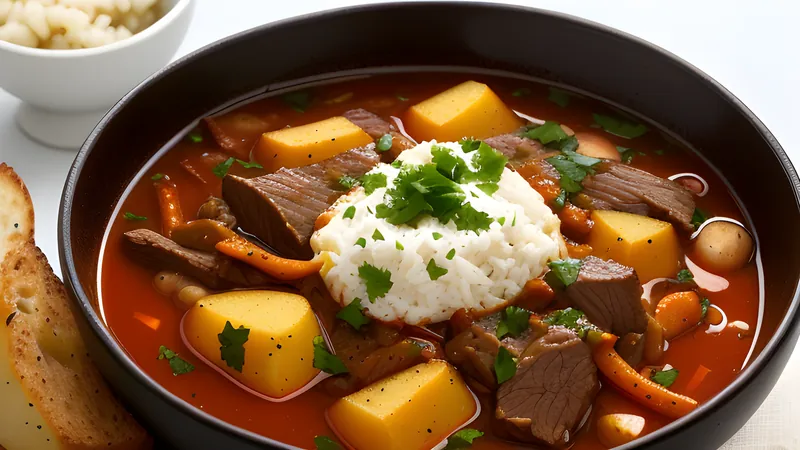
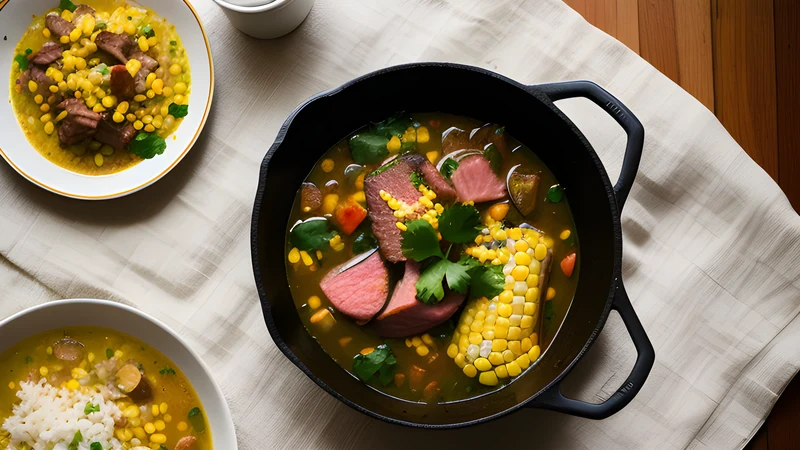
↓ Jump to recipeSancocho is the great communal pot of the Spanish-speaking Caribbean and beyond — a deep, golden stew of several meats, tropical root vegetables, corn and plantain, simmered until the whole thing is rich enough to stand a spoon in. It is Sunday food, party food, the-family-is-coming food, and the sort of dish where the pot is deliberately made too big so there is always enough for whoever turns up. Where I come to it as a home cook, its appeal is obvious: it is generous, forgiving, and built entirely on layering things into one pot at the right moments.
There is no single sancocho. Every island and country has its own, and within them every family has theirs. What they share is the method — brown the meats, build a broth, then add the roots and vegetables in order of how long they take — and the spirit of feeding a crowd. This is a Dominican-leaning version with several meats, but I will point you to the regional variations, because they are half the fun.
Sancocho: The Sunday Stew of the Caribbean
Ingredients
- 600 g beef shin or stewing beef, in large chunks
- 500 g bone-in pork ribs or a smoked ham hock
- 800 g bone-in chicken thighs and drumsticks
- 2 onions, chopped
- 1 green pepper, chopped
- 6 garlic cloves, minced
- 3 tbsp sofrito (or blended onion, pepper, garlic and coriander)
- 2 tbsp neutral oil
- 1 tbsp ground cumin
- 1 tsp dried oregano
- 3 litres water or stock
- 500 g yuca (cassava), peeled and in chunks
- 500 g yautía or taro, peeled and in chunks
- 2 green plantains, peeled and in thick rounds
- 500 g pumpkin or butternut squash (auyama), in chunks
- 2 corn cobs, cut into thick rounds
- 1 large bunch coriander, tied, plus more to serve
- Salt and black pepper
- To serve: white rice, lime wedges, avocado
Method
- Season the beef, pork and chicken with salt and pepper. Heat 2 tbsp oil in a very large pot and brown the beef and pork in batches until deeply coloured. Remove.
- Soften the onions, pepper and garlic in the same pot for 8 minutes. Stir in the sofrito, cumin and oregano and cook 2 minutes.
- Return the beef and pork, add 3 litres water or stock and the tied bunch of coriander. Bring to a boil, skim, then simmer gently, partly covered, for 1 hour.
- Add the chicken and simmer a further 30 minutes.
- Add the yuca, yautía and green plantain (the firmest roots first). Simmer 20 minutes.
- Add the pumpkin and corn and simmer a final 15 to 20 minutes, until all the vegetables are tender and the pumpkin has started to melt and thicken the broth.
- Remove the coriander bundle. Taste and season well with salt and pepper. The broth should be rich, golden and lightly thickened.
- Serve in deep bowls, each with a little white rice on the side, lime wedges and sliced avocado. Scatter over fresh coriander.
One pot, many countries
Sancocho descends from the Spanish cocido and olla podrida, the big boiled meat-and-vegetable pots of the Iberian peninsula, transplanted to the Americas and transformed by tropical ingredients — cassava, yautía, plantain, pumpkin, corn — and by African and Indigenous cooking. The result is a dish that belongs to the whole region and yet is fiercely local.
In the Dominican Republic, sancocho de siete carnes (seven-meat sancocho) is the celebratory grail, a pot built from beef, pork, chicken, goat, various sausages and cuts, cooked for a big occasion. In Colombia, sancocho is often lighter and cleaner, made with chicken (sancocho de gallina), beef or fish depending on the region, and served with rice, avocado and ají on the side. In Puerto Rico it overlaps with the region’s other hearty stews and roasts. In Panama, a simple, restorative chicken sancocho with yuca and culantro is treated almost as a national cure-all.
It sits in the same Caribbean tradition of feeding people generously as pernil with crackling skin and the garlicky plantain of mofongo with garlic and chicharrón, and it makes an ideal broth to serve alongside a mound of mofongo.
The meats and the broth
A good sancocho gets its depth from several meats and, ideally, from bones. The combination of beef, pork and chicken gives a broth with real body, and using bone-in cuts — beef shin, pork ribs or a ham hock, chicken thighs and drumsticks — means collagen and marrow enrich the liquid as it simmers. If you can get goat, a chunk of it is deeply traditional and delicious.
Brown the tougher meats first. Searing the beef and pork until deeply coloured before they go into the broth builds a savoury base through the browning of the meat’s surface, and it is worth the extra ten minutes. Then build a sofrito in the same pot to pick up all that flavour from the base.
The meats go in according to how long they take. Beef and pork need the longest simmer, an hour or more, to become tender. Chicken goes in later so it does not fall to pieces. Skim the broth in the early stages for a cleaner result. A tied bunch of coriander (or culantro, its stronger long-leaf cousin, if you can find it) simmering in the pot perfumes the whole thing and is lifted out at the end.
The roots, in the right order
The soul of sancocho is its viveres — the tropical root and starchy vegetables — and the single most important technique is adding them in stages so each is perfectly cooked and none is mush.
- Yuca (cassava) and yautía/taro are dense and take the longest, so they go in first among the vegetables. Peel yuca thickly (the skin and the woody core are inedible) and cut into chunks.
- Green plantain, firm and starchy, goes in with the roots. As it simmers it stays in tender pieces and helps thicken the broth.
- Pumpkin or squash (auyama) goes in near the end. This is a quiet secret of a good sancocho: some of the pumpkin melts into the broth, thickening it and giving it that golden colour and gentle sweetness, while the rest holds in soft chunks.
- Corn, cut into thick wheels on the cob, goes in last and adds sweetness and a bit of fun to eat.
If you cannot find yuca or yautía fresh, most are available frozen in Caribbean, African and Latin American shops, already peeled and chunked, which is a genuinely good shortcut. Add them straight from frozen at the same stage.
Timed this way, everything finishes together: the meats falling off the bone, the roots tender but intact, the pumpkin thickening a broth that is rich, golden and lightly clinging rather than thin and watery.
Knowing your viveres
If tropical roots are new to your kitchen, a little familiarity pays off, because each behaves differently in the pot and prepping them wrong is the usual stumbling block.
Yuca (cassava) has a thick, waxy brown skin and bright white flesh with a woody fibre running down its centre. Peel it generously — the skin does not come off like a potato’s; slit it lengthwise and lever it away — and cut out the tough central cord as you chop. Raw cassava must always be cooked (never eaten raw), and once simmered it turns soft, faintly sweet and slightly translucent, with a pleasant density.
Yautía (taro/malanga) is smaller and hairier, with flesh that can be white, cream or purplish. It cooks to a smooth, almost creamy softness and thickens the broth as it goes. Peel it under running water if you have sensitive skin, as the raw flesh can be slightly irritating to some hands.
Green plantain is peeled like the ones in mofongo — score the skin and prise it off — and holds its shape better than the roots, staying in firm, starchy pieces.
Auyama (West Indian pumpkin) is the thickening agent and the source of the broth’s colour. Any dense winter squash — butternut, kabocha — stands in well. Because it breaks down, you add it late and let just enough of it dissolve.
Buying these fresh is ideal, but the frozen, pre-peeled packs found in Caribbean, Latin and African grocers are honestly excellent and save the fiddliest part of the job. Keep a bag or two in the freezer and a sancocho becomes a far less daunting Sunday undertaking.
Getting the broth right
The finished broth is the measure of the dish, and it should be full-bodied, golden and lightly thickened — coating a spoon, not running off it like a thin soup, yet still brothy enough to eat with a spoon rather than a fork. Three things build that body: bones and collagen from the meats, starch leaching from the yuca and plantain, and the pumpkin melting in at the end. If your broth still seems thin when everything is tender, mash a few pieces of the cooked pumpkin and root against the side of the pot and stir them back in, then let it bubble uncovered for a few minutes to concentrate.
Season at the end and season properly. A pot this size holds a lot of liquid and swallows salt, and the starchy vegetables are bland until seasoned, so be braver than instinct suggests, tasting as you go. A final squeeze of lime in each bowl, rather than in the pot, keeps the flavour bright and lets everyone tune their own.
Serving and the sides
Sancocho is served in deep bowls, and the classic accompaniment is a little white rice on the side — you spoon the stew over it, or eat them alternately. Lime wedges to squeeze in, slices of ripe avocado, and a scatter of fresh coriander finish each bowl. A sharp ají or hot sauce for those who want it. That is the whole ceremony: a big pot in the middle, bowls and rice and lime and avocado around it, and everyone helping themselves.
- Sancocho de gallina. The Colombian-style chicken version: use a whole jointed chicken (a mature hen if you can get one, for flavour), fewer meats, and keep the broth cleaner and lighter.
- Seven meats. For a Dominican celebration pot, add goat, smoked sausage and extra cuts, adjusting the simmer so each meat is added in time to finish tender together.
- Fish sancocho. Coastal versions use firm fish and coconut; add the fish only in the last ten minutes so it does not break up.
- Make-ahead. Sancocho is even better the next day once the flavours settle and the broth thickens further. Cool it quickly and refrigerate up to three days; reheat gently, loosening with a little water or stock if it has set. It freezes well, though very starchy roots can soften on thawing.
Make the pot bigger than you think you need, add the roots in their proper order, and let it simmer down to something golden and rich. Sancocho is a stew designed to gather people, and the smell of it on the stove has a way of making them appear.
Related Content