Samsa: The Tandoor-Baked Uzbek Pastry
Flaky lamb-and-onion parcels, baked crisp with a sesame-seeded top
Contents
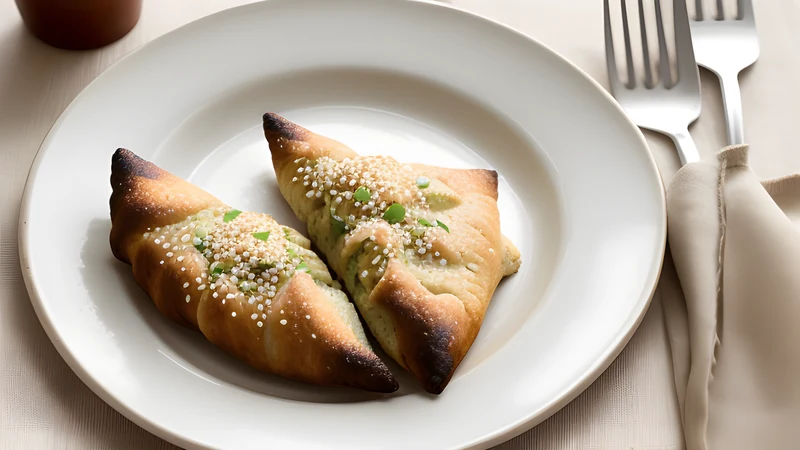
↓ Jump to recipeThere is a particular sound a good samsa makes when you bite it: a brittle crack of pastry, then the soft give of onion-slicked lamb underneath, and if you are lucky a small scald of juice that you should have waited longer to avoid. In the bazaars of Tashkent and Samarkand they come straight off the wall of a clay tandoor, slapped onto the searing inner surface where they bake and blister in minutes. Most of us do not have a tandoor. What we do have is a hot oven and a simple trick for making a rolled, laminated dough that shatters into flakes, which gets you startlingly close.
Samsa: The Tandoor-Baked Uzbek Pastry
Ingredients
- 400g plain flour, plus extra for dusting
- 220ml cold water
- 1 tsp fine salt (for the dough)
- 70g softened butter or lamb fat, for laminating
- 400g lamb shoulder, finely diced (not minced)
- 3 onions, finely diced
- 1 tsp ground cumin
- 1 tsp freshly ground black pepper
- 1 tsp fine salt (for the filling)
- 1/4 tsp ground coriander
- 1 egg yolk beaten with 1 tsp water, to glaze
- 2 tbsp sesame seeds, or nigella seeds
Method
- Make the dough: mix flour and 1 tsp salt, add the cold water and bring together, then knead 8 minutes to a firm, smooth dough. Wrap and rest 30 minutes.
- Laminate: roll the dough out as thin as you can into a large rectangle. Spread the softened butter or lamb fat evenly across the whole surface. Roll the dough up tightly into a long, snug log.
- Cut the log into 12 equal pieces. Stand each piece on a cut end and press down, then roll into a round, the spiral of butter inside creates the flaky layers. Chill the pieces 20 minutes while you make the filling.
- Make the filling: combine the finely diced lamb, onions, cumin, black pepper, salt and ground coriander. Mix well. The onion should roughly equal the meat by volume, it melts and keeps the filling moist.
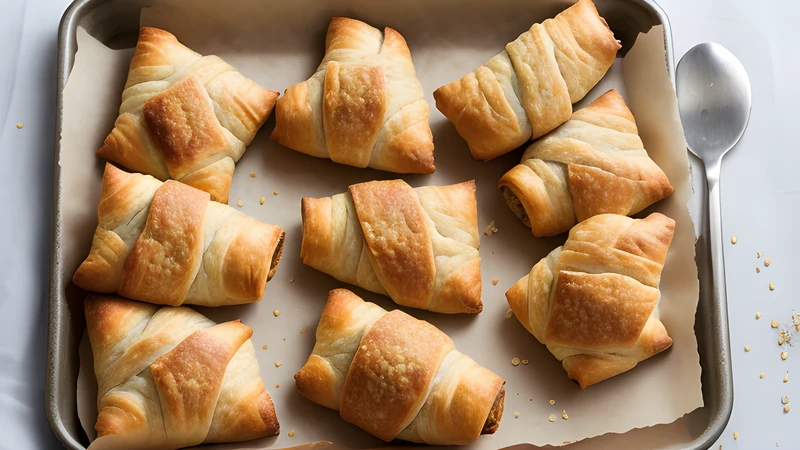
- Roll each chilled dough round into a 12cm circle. Place a heaped tablespoon of filling in the centre. Fold up three sides to meet in the middle, forming a triangle, and pinch the seams tightly shut.
- Set the samsa seam-side down on a lined baking tray. Brush the tops with egg-yolk glaze and scatter generously with sesame seeds.
- Bake at 220C (200C fan) for 30-35 minutes, until deep golden brown and crisp, the filling cooks in the steam trapped inside.
- Rest 5 minutes before eating, the filling is molten hot. Serve warm with sliced onions, vinegar and a little chilli.
The pastry of the Silk Road cities
Samsa, somsa in Uzbek, is the baked cousin of the enormous family of stuffed pastries that fans out across Asia: the Indian samosa, the Arab sambusak, the Central Asian samsa all share a name descended from the Persian sanbosag. What sets the Uzbek and Tajik version apart is that it is baked, traditionally slapped onto the inside wall of a tandoor. The heat of the clay puffs and crisps the pastry while the sealed parcel steams the filling in its own juices.
The classic filling is lamb and a great deal of onion, seasoned with cumin and black pepper, sometimes enriched with the fat-tailed sheep fat that runs through so much of this region’s cooking. Pumpkin samsa appear in autumn, made with the sweet, dense squash that stores through winter, and a version with wild greens shows up in spring. The lamb one is the everyday king, sold from stalls as a hand-held meal for workers and travellers. It is street food with real pedigree, the fuel of a caravan culture, portable, filling and made to be eaten standing up. Along the old Silk Road these pastries were the fast food of the trade routes, baked in the morning and carried for a day’s ride, and something of that practical, generous spirit survives in every tray of them.
It shares its whole flavour world with the steamed manti, which uses nearly the same filling in a completely different jacket, and it belongs on a table beside lagman and a rice dish like plov for a proper Uzbek spread.
Faking the tandoor: a rolled laminated dough
Real samsa pastry is a qatlama-style layered dough, and the way you build the flakiness at home is simple and satisfying. You make a firm dough, roll it out very thin, spread it all over with soft butter or lamb fat, then roll it up tightly into a log like a Swiss roll. Cutting that log into pieces and standing each one on its end gives you a spiral of fat and dough. Roll that spiral flat and you have created dozens of thin layers separated by fat, which is exactly what puff pastry does, only with far less fuss. In the oven the fat melts, releases steam, and pushes the layers apart into flakes.
Lamb fat gives the most authentic flavour and the crispest result, because it sets hard when cold and stays in distinct layers rather than blurring into the dough, but softened butter works beautifully and is easier to source. The one rule is that the fat must be soft and spreadable, warm enough to smear but not melted (melted fat soaks straight in) and not fridge-cold (cold fat tears the dough). Room temperature, the texture of thick paint, is what you are after. Roll the dough as thin as you dare before you spread the fat: the thinner the sheet, the more turns fit into the log, and the more layers you end up with.
A firm dough matters here too. This is not a soft, enriched bread dough but a lean, sturdy one that can be rolled thin without tearing and can hold its layers under a heavy filling. Knead it properly to develop the gluten, then rest it so it relaxes and stops fighting the rolling pin. A rushed, under-rested dough springs back and will not roll thin, and the layers suffer for it.
Getting the filling right
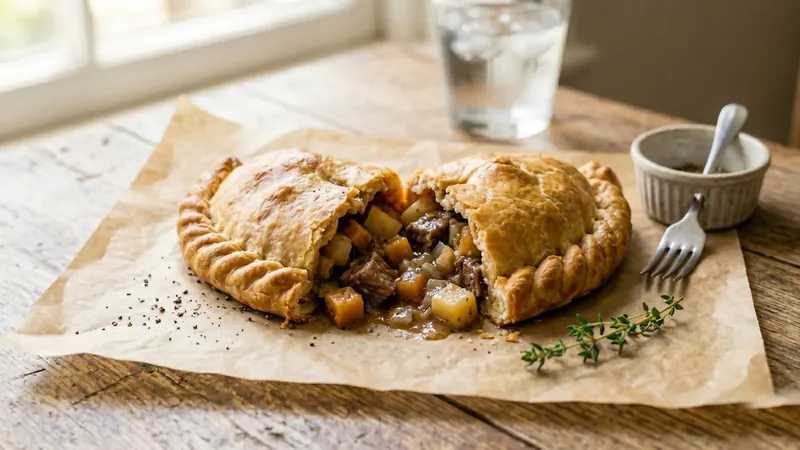
The filling is where samsa are won or lost, and the mistake is always the same: too little onion, and meat that is minced too fine. Cut the lamb by hand into small dice, the size of peas, so it keeps texture and juice. Then match it with roughly its own volume of finely diced onion. That sounds like a lot of onion and it is meant to. As the samsa bake, the onion collapses into sweet liquid that keeps the lamb moist and bastes it from inside the sealed parcel. Skimp on the onion and you get a dry, dense filling.
Season simply: cumin, black pepper, salt, a whisper of ground coriander. Do not add water, and do not build the filling wet. The onion provides all the moisture you need, and adding more will make the pastry soggy and the seams burst. A little diced lamb fat mixed through the lean meat is traditional and worth doing if your butcher will oblige, because it renders during the bake and enriches everything around it. Mix the filling well and, if you have time, let it sit for half an hour so the salt draws the onion’s juices out and the seasoning penetrates the meat.
Shaping and sealing
Roll each spiral piece into a circle about the width of your palm, keeping the centre very slightly thicker than the edges so the base can hold the juices. Heap the filling in the middle, then fold up three sides to meet in a point, making a triangle, and pinch each seam firmly closed. The triangle is the traditional Uzbek shape, though square and round versions exist. Set them seam-side down on the tray so the weight of the filling helps keep them sealed, and space them well apart so the hot air can crisp all their sides.
Glaze the tops with egg yolk for colour and shine, then scatter with sesame or nigella seeds. Nigella (kalonji) is the more traditional choice and gives a lovely oniony, faintly peppery note; sesame is easier to find and toasts beautifully. A mix of the two looks and tastes even better.
The bake
You want a genuinely hot oven, 220C, to mimic the tandoor’s blast. The high heat sets and crisps the pastry fast while the filling steams inside. Thirty to thirty-five minutes gets you a deep golden, glassy-crisp shell. If your oven runs cool, give them the full time and do not open the door for the first twenty minutes, because you want to trap the steam that lifts the layers. A pizza stone or heavy steel baking sheet, preheated with the oven, helps enormously: it throws fierce bottom heat into the pastry the moment the tray lands, crisping the base before the juices can soak in, which is the nearest a domestic oven comes to the wall of a tandoor.
Then, and this is the hard part, wait. The filling comes out molten and will burn your mouth for a good five minutes. Rest them, then eat them warm, ideally with a pile of thinly sliced raw onion dressed in a splash of vinegar and a pinch of chilli, which is how they come at the bazaar and which cuts the richness perfectly.
Serving, and the wider samsa family
At a bazaar a samsa is a meal in the hand, eaten hot with nothing more than the sliced-onion-and-vinegar salad and perhaps a bowl of green tea, which the Uzbeks drink through the day and which cuts the richness of the lamb better than any cold drink. At home they make a fine part of a larger spread: put out a plate of them alongside a rice dish and a sharp salad and you have the makings of a proper Central Asian table. A dab of a garlicky yoghurt sauce or a spoon of tomato-and-chilli relish on the side is a modern touch that suits them well without straying far from home.
It is worth knowing how much regional variation hides under the single word samsa. In Bukhara and Samarkand you find the classic triangular lamb ones; elsewhere they are round, or square, or made in miniature for a plate of little bites. The pumpkin version, sweet and softly spiced, is a genuine seasonal treat in autumn, and a chicken or beef filling is common where lamb is dear. The dough and the method stay constant; only the parcel inside changes, which is exactly what makes this such a useful thing to have in your hands.
Make-ahead, storage and troubleshooting
Samsa are excellent to make ahead. You can shape them and freeze them raw on a tray, then bag them; bake straight from frozen, adding about eight minutes and glazing just before they go in. Baked samsa keep two days and re-crisp well in a hot oven for five minutes, though the microwave will make them sad and soft.
Common problems and their causes: soggy bottoms mean too much moisture in the filling or too cool an oven; burst seams mean the parcels were under-pinched or overfilled; a tough rather than flaky pastry means the lamination fat was too cold and tore, or the dough was rolled too thick; pale tops mean the oven was not hot enough, or they came out too early. Almost every fault traces back to one of three things, so think about the fat, the heat and the seal, and you can diagnose a disappointing batch in seconds.
Make a full batch of twelve. Some will get eaten straight off the tray by whoever is in the kitchen, and the rest will vanish over the next day. They are the kind of thing that justifies an afternoon of rolling, and once you have the spiral-lamination trick in your hands you will find yourself using it for all sorts of savoury pastries. If you want to keep going down the Silk Road, the tandoor-adjacent rice of plov is the natural companion dish.
Related Content