Saltimbocca alla Romana: The Veal, Sage and Prosciutto
Three ingredients, one pan, eight minutes, and a splash of dry Marsala
Contents
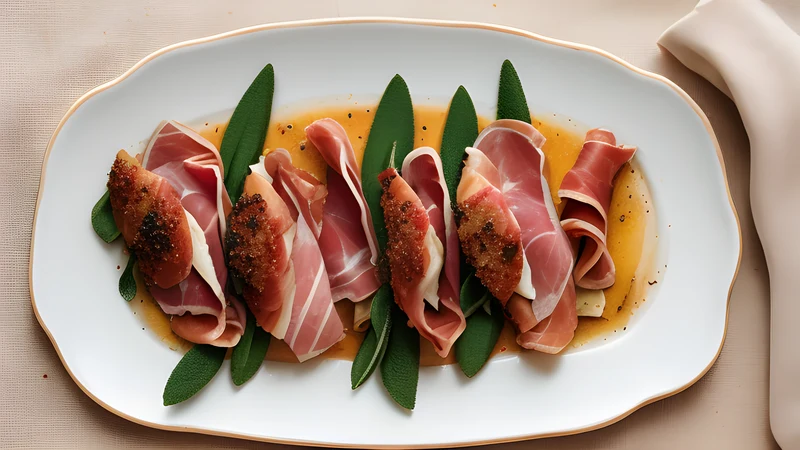
↓ Jump to recipeSaltimbocca means it jumps in the mouth, and the name is a boast about speed as much as flavour. Beat the veal, lay on the ham, pin the sage, fry it, deglaze the pan, eat. The whole thing takes eight minutes at the stove and it is the best argument in Roman cooking that difficulty and quality are unrelated.
The way people ruin it is by treating it as a schnitzel. It is closer to a sandwich that has been fried.
Saltimbocca alla Romana: The Veal, Sage and Prosciutto
Ingredients
- 8 veal escalopes from the topside or rump, about 60g each
- 8 slices prosciutto di Parma, thin but not shaved
- 16 fresh sage leaves
- 2 tbsp plain flour
- 50g unsalted butter
- 2 tbsp extra-virgin olive oil
- 80ml dry Marsala
- 60ml chicken stock
- Freshly ground black pepper
- Fine sea salt, a small pinch only
- 1 tsp lemon juice
Method
- Put each escalope between two sheets of baking parchment and beat with the flat of a heavy pan or a rolling pin, working from the centre outwards, until it is an even 4mm thick. Do not pound; push.
- Lay a slice of prosciutto over each escalope so it covers the surface with a small overhang. Place a sage leaf in the centre and secure through all three layers with a cocktail stick, or press firmly with your palm and skip the stick.
- Dust the veal side only with flour, tapping off all excess. Leave the prosciutto side bare.
- Fry 8 spare sage leaves: heat the olive oil in a large frying pan over medium heat, add the leaves and fry for 30 seconds until they stop bubbling and go translucent and crisp. Lift onto kitchen paper.
- Raise the heat to medium-high and add 25g of the butter to the pan. When it foams, lay in the saltimbocca veal-side down, in two batches if needed. Cook for 2 minutes until golden.
- Flip and cook prosciutto-side down for 60 to 90 seconds only, until the ham has tightened and turned a deeper pink. Lift onto a warm plate. Remove the cocktail sticks.
- Pour the Marsala into the hot pan and let it bubble hard for 60 seconds, scraping the base. Add the stock and reduce for 1 minute more.
- Take the pan off the heat, add the remaining 25g of cold butter and the lemon juice, and swirl continuously for 30 seconds until the sauce turns glossy and thickens slightly. Season with pepper and taste before adding any salt. Pour over the saltimbocca, top with the crisp sage leaves, and serve immediately.
Rome claims it, Brescia complains
Pellegrino Artusi put saltimbocca in La scienza in cucina e l’arte di mangiar bene in 1891 and noted, in passing, that he first ate it in Rome. He also wrote that the dish came from Brescia, in Lombardy, several hundred kilometres north, which is a sentence Roman restaurateurs have been quietly ignoring for a hundred and thirty years.
The claim is plausible. Lombardy is veal country — the calves, the butter, the dairy tradition — and Rome historically cooked lamb and pork and the fifth quarter. What Rome had was a specific kind of restaurant: the trattorie around the centre serving lawyers, clerics and, from the 1950s, film people from Cinecittà, all of whom wanted something excellent that arrived in ten minutes. Saltimbocca fits that room perfectly and Rome adopted it wholesale.
The alla Romana qualifier marks a real difference. The Brescian original apparently rolled the veal around the filling, which most of Italy still does under the name involtini. Rome flattened it out and left it open, so the prosciutto forms a lid and the sage sits on top of it visibly. That change is why the Roman version cooks in three minutes instead of ten, and why the ham crisps at the edges.
The white wine in most modern versions is a twentieth-century addition. Older recipes deglaze with nothing at all and finish with butter alone.
The veal, and the beating
Buy escalopes cut from the topside or rump — leg muscles that are lean, fine-grained and almost free of connective tissue. Ask for them cut across the grain, which the butcher will do without being asked if the butcher is any good, because veal cut with the grain curls into a tube in the pan.
Rose veal from British or Dutch farms is the sensible ethical choice and it tastes better than the pale stuff: the animals are older, fed on a proper diet and the meat has actual flavour rather than just texture.
Then beat it, and beat it correctly. The mistake is hammering straight down, which shatters the muscle fibres and leaves you with holes and a ragged edge. Put the escalope between parchment, use the flat base of a heavy pan, and push — press down and outwards from the centre in a smearing motion. The meat spreads rather than tears.
Four millimetres is the target and it is thinner than instinct suggests. At 4mm the veal cooks through in the two minutes it takes the flour side to go golden, which is the entire design of the dish. At 8mm you have to choose between raw veal and burnt flour, and there is no third option.
Parchment rather than clingfilm. Clingfilm tears and welds itself into the meat and you will find pieces of it later.
Prosciutto is the seasoning
Salt is the thing to get right here, and the ham does nearly all of it.
Prosciutto di Parma is cured with salt alone for at least twelve months and carries around 5% salt by weight. Eight slices deliver roughly 4 grams of sodium across the dish, which is plenty. Season the veal and you have made something inedible. The recipe lists a small pinch and it goes in the sauce at the very end, after tasting, and most of the time it never goes in at all.
Ask for it sliced thin, and stop the deli slicer before it reaches transparency. Paper-thin shaved prosciutto disintegrates the moment it touches the pan and welds itself to the base. You want a slice with enough body to stay a slice: roughly the thickness of a beer mat, which is about as unhelpful as that sounds until you have seen both.
Let it overhang the veal a little. The edges curl and crisp in the pan and they are the best part.
Prosciutto di San Daniele is sweeter and slightly softer and works well. Speck is smoked and takes over the dish. Serrano is drier and saltier and needs a lighter hand.
Sage, and the pan, and flour on one side
Sage is the only aromatic and it is doing real work. Its dominant compound is thujone, along with camphor and cineole — a resinous, faintly medicinal set of molecules that cuts pork fat in a way almost nothing else does. Dried sage is a different plant for these purposes: the volatiles are largely gone and what remains tastes of dusty carpet.
One leaf per escalope, pinned under the cocktail stick, and it perfumes the meat from underneath the ham as it cooks. Then the twist, which is the second batch: eight extra leaves fried for thirty seconds in olive oil before the veal goes in, until they stop bubbling and turn crisp and translucent. Frying at around 160C dehydrates the leaf and concentrates the oils, and the texture goes from soft and slightly furry to a shattering crisp. Scattered over the finished dish they add a top note and a crunch that the pinned leaves cannot, because the pinned leaves steam under the ham.
The flour goes on the veal side alone. This is deliberate and it is the detail almost every recipe gets wrong. Flour on the veal gives you a golden crust and, more usefully, thickens the pan sauce when you deglaze. Flour on the prosciutto turns to paste — the ham’s fat and salt hold moisture at the surface, so the flour never dries out and never browns, and it makes the ham slide off.
Cooking, and the ninety-second rule
Veal side down first, in foaming butter and oil, for two minutes. Then flip.
The prosciutto side gets sixty to ninety seconds and no more. Prosciutto is already a finished food: it has been cured for a year and it is safe, seasoned and delicious exactly as it is. What heat does to it is drive water out and contract the muscle fibres, and past about ninety seconds it goes from silky to leathery and starts tasting harshly salty as its water leaves. Watch for the colour deepening from pale rose to a proper pink and get it out.
Butter and oil together, because butter alone burns. Butter’s milk solids brown at around 150C and blacken shortly after; a couple of tablespoons of olive oil raises the effective smoke point and buys you the margin you need at medium-high heat.
Do not crowd. Two batches in a 28cm pan for eight escalopes. Crowded meat steams and the flour goes grey.
The Marsala, and the swirl
Most recipes say dry white wine. I use dry Marsala and it is the better answer.
Marsala is a fortified wine from western Sicily, and the dry style — secco, around 18% alcohol — is barrel-aged and slightly oxidised, which gives it nutty, caramelised notes that white wine does not have. Eighty millilitres hitting a pan holding butter, veal fond and rendered prosciutto fat produces a sauce with genuine depth in sixty seconds, which is all the time this dish allows. White wine in the same sixty seconds is still tasting of raw wine.
Buy dry Marsala rather than sweet, and buy the drinkable kind rather than the “cooking Marsala” that comes salted. If you have none, dry sherry or dry vermouth are both closer to Marsala than white wine is.
Then the montare: pan off the heat, cold butter in, swirl continuously for thirty seconds. The butter emulsifies into the reduced liquid and the sauce turns opaque and glossy and thickens without flour. Off the heat is essential — above about 80C the emulsion breaks and you get a puddle of oil with a pale ring around it. If it breaks, a teaspoon of cold stock and hard swirling brings it back.
The order of operations
This dish punishes disorganisation more than almost anything else I cook, because the entire active phase lasts eight minutes and there is no point in it where you can stop and think.
Have everything on the counter before the pan goes on. The escalopes beaten, assembled and floured. The sage leaves separated into two piles. The Marsala measured into a glass, the stock measured into another, the cold butter cubed on a saucer, the lemon halved. Warm plates in a low oven. Once the butter foams you have no hands free and no time to open a bottle.
Work backwards from the plate. The saltimbocca come out of the pan and rest for the ninety seconds it takes to make the sauce, and that rest is enough — a 4mm escalope needs no more, and any longer and it goes cold. So the sides must be finished and waiting. Spinach wilted, chicory fried, bread on the table, everyone sitting down. Roman waiters bring saltimbocca out at a jog for exactly this reason.
The one thing you can afford to be slow about is the beating, and it is the one thing people rush. Ten minutes with parchment and a heavy pan, working each escalope from the centre outwards until it is genuinely even, decides whether the dish works. An escalope that is 3mm at one end and 7mm at the other cooks to two different dishes in the same pan, and no amount of good Marsala fixes the thick end.
Tips, swaps and what to serve with it
Chicken or turkey. Both work, both are cheaper, and both need the same 4mm treatment. Chicken breast wants an extra 30 seconds on the flour side. Pork loin is excellent and slightly sweeter.
Cocktail sticks. Optional if you are careful. Press the sandwich firmly with your palm for ten seconds before flouring and the prosciutto’s fat will hold it in place. If you use sticks, count them out and count them back.
Make ahead. Assemble up to 4 hours ahead and keep covered in the fridge; flour only at the last moment or it goes damp and gluey. The cooking itself cannot be done in advance under any circumstances.
Sides. Rome serves this with sautéed spinach or cicoria ripassata — chicory boiled then fried with garlic and chilli. Anything starchy competes with the sauce. Bread to wipe the plate is compulsory.
No Marsala reduction sticking? The pan needs to be genuinely hot when the wine goes in, and it needs a good fond. If the base is clean and pale after frying, the heat was too low.
For the other great flattened-veal argument, Wiener schnitzel takes the opposite approach with breadcrumbs and a loose coat, and milanesa a la napolitana shows where the idea went in Argentina. If you want veal cooked slowly instead of in eight minutes, osso buco is four hours in the other direction.
Related Content