Salted Caramel Sauce (That Sets Properly)
glossy, thick, and never grainy
Contents
↓ Jump to recipeEveryone has a salted caramel sauce that let them down. Mine was a grainy, seized disaster I made for a dinner party years ago, served apologetically over ice cream with the texture of wet sand. I have made it dozens of times since, and somewhere along the way it stopped being frightening and started being the thing I make when I want to look like a much better cook than I am. This is the version that sets properly — thick and glossy and spoonable straight from the fridge — without ever turning grainy.
The whole thing takes about fifteen minutes and four ingredients. The catch is that caramel is unforgiving of hesitation, so the real recipe is half technique. Get the technique right and it is genuinely easy. Get it wrong and you get either burnt bitterness or a sandy mess. Let me save you both.
Salted Caramel Sauce (That Sets Properly)
Ingredients
- 200g (1 cup) caster sugar
- 90g (6 tbsp) unsalted butter, cubed and at room temperature
- 120ml (1/2 cup) double cream, warmed
- 1 to 1.5 tsp flaky sea salt, to taste
- 1/2 tsp vanilla extract (optional)
Method
- Have the butter cubed and the cream warmed and ready beside the hob before you start.
- Spread the sugar in an even layer in a heavy-based pan and melt over a medium heat, swirling but not stirring, until it becomes a deep amber liquid.
- Add the butter all at once and whisk hard; it will bubble up furiously, so stand back.
- Once the butter is incorporated, slowly pour in the warm cream while whisking, then let it bubble for 1 minute.
- Remove from the heat and stir in the flaky salt and vanilla.
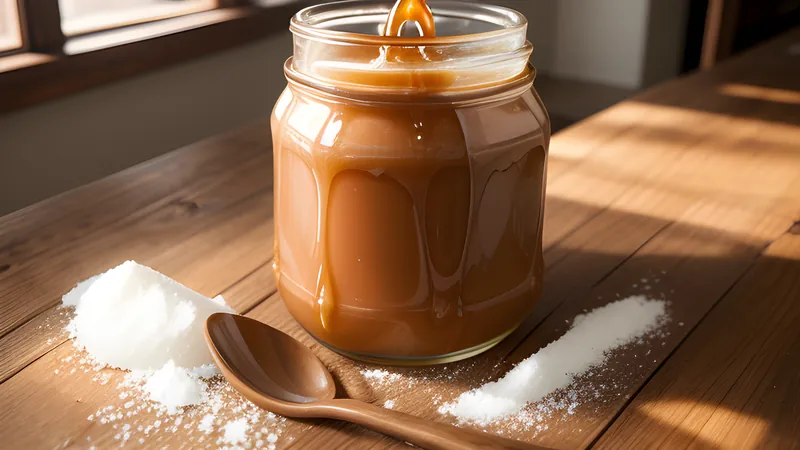
- Cool for a few minutes, then pour into a jar; it thickens as it cools and sets to a thick, scoopable sauce once chilled.
A short history of a modern classic
Salted caramel feels timeless, but as a deliberate pairing it is surprisingly recent. It is usually traced to the Breton chocolatier Henri Le Roux, who in 1977 in Quiberon created a salted-butter caramel — caramel au beurre salé — using the famous salted butter of Brittany, a region that has salted its butter since the Middle Ages to avoid a historic tax on salt. His caramel won a prize at a Paris salon in 1980 and the idea spread. The pastry chef Pierre Hermé and, later, the chocolatier and chef Éric Landreau helped push salted caramel into fine patisserie, and by the 2000s it had crossed the Atlantic and gone thoroughly mainstream, turning up in everything from ice cream to lattes. What began as a regional speciality built on Breton butter is now the flavour a whole generation reaches for by default.
The principle underneath it is simple and worth understanding: salt suppresses our perception of bitterness and sharpens our perception of sweetness, so a caramel taken to a deep, almost-bitter amber and then seasoned tastes rounder, more complex and less cloying than a plain one. That is why the salt is not a garnish here but a structural part of the flavour.
Why caramel goes wrong
There are two classic failures. The first is graininess, caused by sugar crystals seeding the whole batch and turning it from smooth liquid back into solid crystals. The second is a thin, watery sauce that never sets, usually because it was not cooked far enough or used too much cream.
The crystallisation problem is the one that catches people out, and the usual culprit is stirring. When you stir melting sugar, you fling crystals up the sides of the pan and back into the mix, and one stray crystal can chain-react the lot. So the rule for the melting stage is simple: swirl the pan, never stir it. Use a heavy-based pan so the heat is even, and resist the urge to poke at it.
The one clever twist: dry caramel, with the butter cold
Most home recipes start by dissolving the sugar in water. I have stopped doing this. The dry caramel method — melting the sugar straight in the pan with no water — is faster, gives a deeper, more toasty flavour, and removes the stage where water-based caramels are most likely to crystallise. The twist that makes it foolproof is adding cold, cubed butter the instant the sugar hits a deep amber, then whisking like you mean it. The butter drops the temperature and stops the sugar cooking further, while the vigorous whisking emulsifies everything into a smooth, glossy base. It bubbles up dramatically, so stand back, but it works every single time.
Making it, step by step
Get organised first, because once the sugar melts there is no time to go hunting for ingredients. Cube the butter, warm the cream gently (cold cream into hot caramel causes violent spluttering and can seize it), and have a whisk ready.
Spread the sugar in an even layer in your pan and set it over a medium heat. It will start to melt at the edges and turn to liquid. Swirl the pan occasionally to even it out, but do not stir. Watch the colour: it goes from clear to pale gold to a deep amber. You want a proper amber, the colour of an old penny — too pale and it tastes only of sugar; too dark and it turns bitter. This is the moment that matters.
The second it reaches that deep amber, tip in all the butter and whisk hard. It will foam and bubble furiously. Keep whisking until the butter is fully combined, then pour in the warm cream in a slow stream, whisking constantly. Let it bubble for a minute to thicken, then take it off the heat. Stir in the flaky salt and the vanilla if using.
Salt, and getting the set right
Add the salt at the end, off the heat, and taste as you go. Salted caramel lives or dies on this balance: too little and it is just caramel, too much and it is unpleasant. I start with a teaspoon of flaky sea salt and usually end up around one and a half. Flaky salt rather than fine, because it dissolves slowly and gives little bursts of saltiness.
The sauce will look quite loose and pourable while hot — that is correct. It thickens dramatically as it cools and sets to a thick, scoopable consistency in the fridge. If you want a thinner pouring sauce, gently warm it. It keeps in a sealed jar in the fridge for about two weeks, though it never lasts that long in my house.
Getting the set you want
The finished sauce should be loose and pourable while hot; do not be tempted to cook it longer to thicken it, because it firms dramatically as it cools. Judge the set once a spoonful has been in the fridge for ten minutes: it should be thick and scoopable, holding its shape on a spoon. If it comes out too thin, it usually means the caramel did not reach a deep enough amber or the cream was over-measured; return it to the pan and simmer for another minute or two. If it sets too hard to spoon, you have taken the sugar a shade too far or reduced it too long — loosen it with a tablespoon of warm cream over a low heat. The vanilla is optional but rounds off the edges; add it off the heat so its fragrance is not driven off.
The ingredients, and why each one matters
Four ingredients, and each earns its place. Caster sugar is best because its fine grains melt evenly; granulated works but takes longer and is more prone to hot spots. The butter should be unsalted so that you control the seasoning entirely with the flaky salt at the end — salted butter varies too much between brands to judge accurately. Cold, cubed butter is the whole trick, as it drops the caramel’s temperature the instant it goes in and halts the cooking before the sugar can burn. Double cream, not single, gives the sauce its richness and its set; single cream has too little fat and will leave you with a thin, pourable sauce that never firms in the fridge. Warm the cream first, because cold cream hitting hot caramel spits violently and can shock the sugar into seizing.
As for the salt, a flaky sea salt such as Maldon is what you want. Its brittle pyramid flakes dissolve slowly and unevenly, giving little sparks of saltiness through the sauce rather than a flat, all-over saltiness. Fine table salt dissolves instantly and completely, which makes the sauce taste merely seasoned rather than properly salted, and it is far easier to overdo. Add it gradually and taste as you go.
Scaling and troubleshooting
The recipe doubles cleanly if you use a wide, heavy pan so the larger volume of sugar still melts in an even layer; a crowded, deep pan cooks unevenly and the edges scorch before the middle melts. If, despite everything, your caramel does seize into a lump when the cream goes in — usually from cold cream or a stray crystal — do not throw it out. Return the pan to a low heat and keep whisking; more often than not the seized sugar will remelt into the cream and come back smooth. If a few stubborn lumps remain, pass the finished sauce through a sieve.
What to do with a jar of it
Spoon it warm over vanilla ice cream, swirl it through brownie batter, sandwich it in cookies, or drizzle it over apple cake. It is the caramel I reach for when I make a salted-caramel apple crumble, poured straight over the Bramleys before the topping goes on. For something more grown-up, it plays beautifully against roast fruit, or alongside the port-and-cherry richness of a pan-seared duck breast if you like a sweet-savoury dessert to follow. Stir a spoonful into hot milk for a nightcap.
It also makes a quietly excellent gift in a small jar with a ribbon, which is to say it is the kind of thing that makes people think you have your life together. It keeps in a sealed jar in the fridge for about two weeks, though it never lasts that long in my house. Once you have made it set properly once, you will never trust a grainy shop jar again.
Related Content