Salted-Caramel Apple Crumble with an Oat-Almond Topping
Bubbling fruit under a crunchy lid
Contents
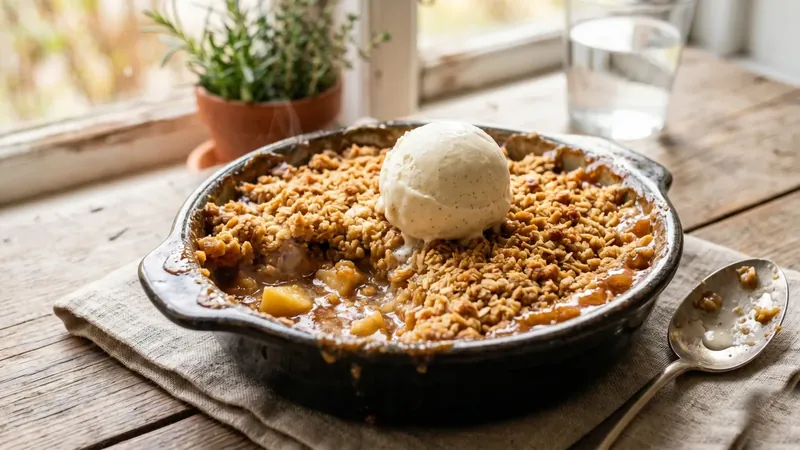
↓ Jump to recipeA proper apple crumble is hard to beat, but a layer of salted caramel poured over the fruit takes it somewhere special. The caramel melts into the apples as they soften, turning the juices glossy and rich, while the flaky sea salt keeps it from cloying. Up top, oats and flaked almonds give the crumble a deeper crunch than flour and butter alone. Serve it hot with cold custard or vanilla ice cream.
You can make the caramel from scratch below in a few minutes, or use a jar of my salted caramel sauce that sets properly if you keep one in the fridge — a couple of generous spoonfuls, loosened with a splash of cream, does the job. And if it is the oat-almond topping that appeals, the same toasty, buttery-crisp idea turns up in these salted honey and oat biscuits.
Salted-Caramel Apple Crumble with an Oat-Almond Topping
Ingredients
- 900g Bramley apples, peeled, cored and chopped
- 1 tbsp lemon juice
- 100g caster sugar (for the caramel)
- 50g unsalted butter (for the caramel)
- 75ml double cream
- 0.5 tsp flaky sea salt
- 150g plain flour
- 100g cold unsalted butter, cubed (for the topping)
- 75g soft light brown sugar
- 75g rolled oats
- 50g flaked almonds
Method
- Heat the oven to 180C fan. Toss the chopped apples with the lemon juice in a baking dish.
- For the caramel, melt the caster sugar in a dry pan until amber, then stir in the butter.
- Carefully pour in the double cream, whisk smooth, then stir in the flaky sea salt.
- Pour the salted caramel over the apples and turn to coat.
- Rub the cold cubed butter into the flour until it resembles breadcrumbs.
- Stir the brown sugar, oats and flaked almonds through the rubbed-in mixture.
- Scatter the topping evenly over the apples without pressing it down.
- Bake for 40 to 45 minutes until the topping is golden and the caramel bubbles at the edges. Rest for 10 minutes before serving.
The Story
The crumble is a thoroughly British pudding, and a relatively young one. It rose to popularity in the United Kingdom during the Second World War, when rationing made the pastry for a traditional pie a luxury few could justify. A rubbed-in topping of flour, fat and sugar stretched scarce ingredients much further than a full crust, and required neither the skill nor the butter that pastry demanded. The result was so good that it long outlived the shortages that created it, becoming a fixture of school dinners, Sunday lunches and pub menus.
The apple is the natural partner for a crumble, and Bramley apples in particular are the British baker’s standby. Bred in the early nineteenth century from a tree grown from a pip in Nottinghamshire, the Bramley is a true cooking apple: sharp, high in acid, and prone to collapsing into a fluffy purée when heated. That breakdown is exactly what a crumble wants, giving a soft, tart cushion of fruit beneath the crisp lid rather than firm slices that stay separate.
The salted caramel layer is a modern flourish. Caramel and apple have always been close companions, from toffee apples to tarte Tatin, where apples are cooked directly in a caramel in the pan. Pouring a soft caramel over the fruit before baking borrows that affinity and threads it through the whole dish. The salt is not just for seasoning; it sharpens and lengthens the caramel flavour, tempering the sweetness so the pudding tastes balanced rather than sugary.
The topping has been given more texture than the classic version too. Rolled oats add a chewy, toasted bite as they crisp in the oven, while flaked almonds turn golden and brittle, scenting the whole dish as it bakes. Both are common additions to crumbles across the country, where every household seems to have its own preferred ratio.
The key to a good crumble lies in restraint with the topping. Scattering it loosely, rather than packing it down, lets steam escape and keeps the surface crunchy. Pressed too firmly, it bakes into a solid cap. Left airy, it shatters under the spoon into the bubbling, caramel-rich fruit below, which is exactly where this pudding earns its keep.
Making the caramel without fear
The caramel is the one step that makes people nervous, and it need not. Melt the sugar in a dry, heavy-based pan over a medium heat and resist the urge to stir; stirring flicks sugar crystals up the sides and can seed the whole batch into a grainy mess. Swirl the pan gently instead, and let the sugar melt to a deep amber the colour of an old penny. Too pale and it tastes only sweet; too dark and it turns bitter. The moment it reaches that colour, take it off the heat before adding the butter, because a caramel left on the flame keeps cooking and tips into burnt in seconds. It will bubble up violently when the butter and then the cream go in, so use a pan with room to spare and keep your hands clear of the steam.
Choosing and preparing the apples
Bramleys are ideal because they collapse to a fluffy purée, but if you can only find eating apples such as Braeburn or Cox, use them and cut back the caramel sugar slightly, since dessert apples are sweeter and hold their shape more. A mix of the two — some Bramley for softness, some eating apple for bite — gives a pleasingly varied texture. Toss the peeled, chopped fruit with the lemon juice as you go; the acid stops the apples browning while you work and brightens the finished pudding. Cut the pieces to a roughly even 2 to 3cm so they cook at the same rate.
Substitutions, make-ahead and storage
The flaked almonds can be swapped for chopped hazelnuts, pecans or walnuts, or left out entirely for a nut-free version — bump the oats up by 50g to keep the topping generous. For a gluten-free crumble, use a plain gluten-free flour blend and check your oats are certified gluten-free. A pinch of ground cinnamon or mixed spice in the topping suits the autumnal mood, though I like the almond and caramel to lead.
You can get ahead in stages. The rubbed-in topping keeps in the fridge for three days or the freezer for a month, ready to scatter over fruit straight from frozen. The caramel can be made days in advance and kept in a jar. Assemble and bake on the day for the crispest top. Leftovers keep, covered, in the fridge for three days; reheat portions in a moderate oven for ten minutes rather than the microwave, which softens the topping. Serve hot, with cold custard, pouring cream or vanilla ice cream to melt into the caramel.
The topping: rubbing in and getting the ratio right
The topping is where a crumble is won or lost, and the technique is worth doing properly even though it takes only a couple of minutes. Use butter straight from the fridge, cut into small cubes, and rub it into the flour with your fingertips, lifting the mixture and letting it fall so it stays cool and aerated. You are looking for a mixture that clumps in places into pea-sized nuggets rather than a uniform sand; those larger clumps bake into the craggy, crunchy bits everyone fights over. If your kitchen is warm and the butter starts to soften and grease up, put the bowl in the fridge for ten minutes before carrying on, because over-worked, warm topping bakes flat and greasy rather than crisp.
I keep the flour-to-fat ratio at roughly three parts flour to two parts butter by weight, then fold the oats, sugar and almonds through last so they stay loose. Too much butter and the topping melts into a dense, cakey layer; too little and it stays powdery and never crisps. Brown sugar rather than white is deliberate: its molasses content deepens the flavour and helps the topping colour and crisp, echoing the caramel below. Scatter it on straight from the bowl, and do not be tempted to smooth or press it — an uneven, rubbly surface is exactly what you want.
Why the fruit needs a little help
Bramleys throw out a lot of liquid as they collapse, and combined with the caramel that can leave the base of the dish swimming. Toss the apples with the lemon juice, which not only stops browning but adds acidity to balance the sweetness, and give them room in a wide dish rather than a deep one so the juices reduce and thicken as they bake. If your apples are especially juicy, a tablespoon of cornflour tossed through the fruit before the caramel goes on will thicken the juices into a glossy sauce rather than a watery one. Resting the finished crumble for ten minutes out of the oven lets the molten caramel and fruit settle and thicken, so it holds together on the spoon rather than sliding across the plate.
Related Content