Saltah: Yemen's Bubbling National Stew
A volcanic stone bowl, a fenugreek froth, and the smell of hilbeh
Contents
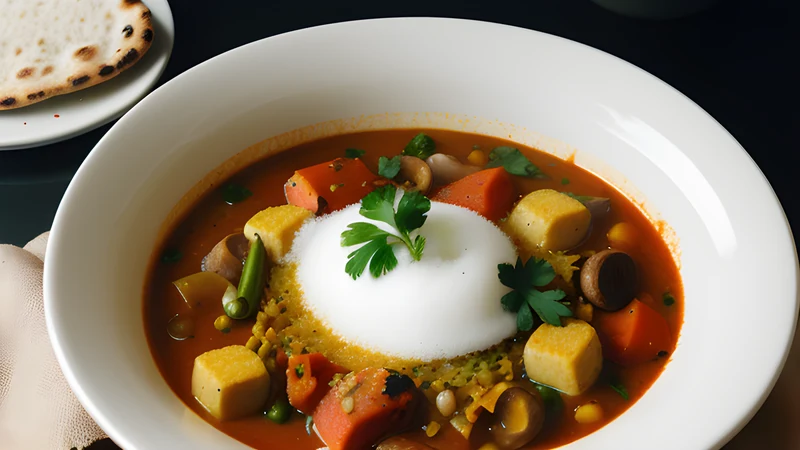
↓ Jump to recipeSaltah does not arrive quietly. It comes to the table in a blackened stone bowl called a madara, so hot it is still bubbling and spitting, capped with a pale foam that quivers on top of the molten stew beneath. You tear off a piece of flatbread, scoop down through the froth into the meat and vegetables below, and eat it before it stops boiling. It is theatre and lunch at the same time, and it is the closest thing Yemen has to a single national dish.
Saltah: Yemen's Bubbling National Stew
Ingredients
- 3 tbsp whole fenugreek seeds (for the hulba froth)
- 500g lamb or beef, cut into small cubes (or use cooked shredded meat)
- 2 onions, chopped
- 3 tomatoes, chopped
- 3 garlic cloves, crushed
- 1 potato, diced small
- 1 courgette, diced
- 2 tbsp tomato puree
- 1 tsp ground cumin
- 1/2 tsp ground turmeric
- 1 tsp salt, plus more to taste
- 700ml beef or lamb stock
- 3 tbsp vegetable oil
- 1 egg (optional, stirred in at the end)
- For the sahawiq relish: 2 tomatoes, 2 green chillies, 2 garlic cloves, small bunch coriander, juice of 1/2 lemon, 1/2 tsp salt
- Yemeni or other flatbread, to serve
Method
- Make the hulba first: grind the fenugreek seeds to a powder, cover with cold water and soak 8 hours or overnight. Drain off the bitter water, add 4 tbsp fresh cold water, and whisk hard (or blitz) for several minutes until it triples in volume into a pale, airy froth. Chill.
- Blitz the sahawiq ingredients to a coarse relish and set aside.
- Heat the oil in a pot and brown the meat with the onions. Add garlic, cumin and turmeric and stir 1 minute.
- Add tomatoes, tomato puree, potato, courgette, salt and stock. Simmer 30 minutes until the meat is tender and the vegetables soft, then stir in 2 tbsp of the sahawiq. The stew should be thick.
- Transfer the bubbling stew to a preheated stone bowl (or keep it fiercely bubbling in a heavy pan). If using, stir a beaten egg through the surface now.
- Spoon the whipped hulba froth over the top so it sits on the bubbling surface. Serve immediately, spitting hot, with flatbread and the rest of the sahawiq.
The dish everyone claims
Saltah is eaten across Yemen, but its spiritual home is the highland capital, Sana’a, where it is the standard midday meal — the thing men pour out of offices and workshops to eat at noon, sitting on the floor of small restaurants that make almost nothing else. The genius of it is partly practical: saltah is often a way of using up the morning’s leftovers, a base stew of meat and vegetables that can absorb whatever is around. But two elements lift it from leftovers into an institution, and both are non-negotiable. One is the stone bowl that keeps it violently hot. The other is the froth on top — hulba, whipped fenugreek — which is the soul of the dish.
There is a whole vocabulary here worth knowing. The base stew, thickened and simmered, is the maraq. Whip the fenugreek foam into it and you have saltah. Serve a similar dish topped generously with the fenugreek and scrambled egg or without the meat and you drift towards fahsa, its close relation. These names shift from region to region and cook to cook, but the froth is the constant. Yemenis judge a saltah first by its hulba: how high it stands, how pale, how airy.
Hulba: the fenugreek froth
Fenugreek is one of those ingredients that smells, in its raw state, faintly of curry powder and maple syrup, and tastes aggressively bitter. Turning it into hulba is a small act of kitchen alchemy that tames the bitterness and transforms the texture completely. You grind the seeds, soak them in cold water for a good eight hours, and then pour off the soaking water, which carries away most of the bitterness. What is left is a sticky, mucilaginous paste — fenugreek is full of soluble fibre — and when you whisk it hard with a little fresh cold water it aerates and expands, tripling in volume into a light, pale, mousse-like froth.
This is where people go wrong. You cannot rush the soak; undersoaked fenugreek stays bitter and refuses to whip. And you must whisk it properly — several minutes by hand, or a couple of minutes in a small blender or with electric beaters — until it genuinely lightens and holds soft peaks. Kept cold, it firms up further. Spooned onto the bubbling stew, it sits on top like a cloud, and its clean, slightly bitter, herbaceous flavour is the counterweight that makes the whole dish sing. Skip it and you have made a decent stew, but you have not made saltah.
Fenugreek carries a long medicinal reputation across the Arabian Peninsula and South Asia, credited with everything from settling the stomach to boosting a nursing mother’s milk, and that folk regard is part of why Yemenis eat so much of it. The whipped froth also does something textural that no other ingredient could: the same soluble fibre that makes raw fenugreek slippery and gluey is what lets it trap air and hold it, so a spoonful sits proud on the surface like meringue on a hot lemon stew, insulating the heat beneath and slowly melting into it as you eat. Get the froth right and the last mouthful is as scalding as the first.
Sahawiq: the relish that runs through everything
The other Yemeni constant is sahawiq (also spelled zhug in its Israeli-adopted form), a raw relish of tomatoes, green chilli, garlic, coriander and lemon blitzed to a rough salsa. Some goes into the stew near the end for freshness and heat; more is served alongside so each person can push their saltah as fiery as they like. It takes two minutes in a blender and it wakes up everything it touches, so make plenty. A red version built on dried chillies exists too, but the fresh green one is the everyday partner to saltah.
Bread, and how saltah is eaten
Saltah is scooping food, and the bread is half the pleasure. In Sana’a the usual partner is a torn round of khubz tannour, the blistered flatbread pulled hot off a clay oven, or the flaky, buttery layers of malawah on a more generous day. Sweet, honeyed bint al-sahn belongs to the celebratory end of the same table. Whatever you use, warm it, tear it, and use it as your only utensil: you pinch a piece, drive it down through the pale fenugreek froth into the molten stew, and lift up a load of meat, vegetable and hulba together. There are no spoons at a proper saltah lunch, and the communal bowl set in the middle of a low table, everyone reaching in, is as much the dish as the stew itself.
The meal has a rhythm to it. It comes fast and hot at midday, is eaten quickly while it bubbles, and is followed in many households by the long, slow afternoon of conversation the country is known for. That is why saltah is built for speed and heat rather than delicacy: it is the fuel that starts the second half of the day, and it wants to arrive at a rolling boil and be gone before it cools.
Building the base
The maraq itself is straightforward, forgiving cooking. Brown some cubed meat — lamb or beef, or use already-cooked shredded meat if you are working from leftovers, which is entirely traditional — with onions, then bloom cumin and turmeric, and add tomatoes, a little tomato puree for body, and quick-cooking vegetables like diced potato and courgette. Pour in stock and simmer until everything is tender and the stew has reduced to a thick, spoonable consistency. It needs to be thick, because a thin, watery base will not hold the froth and will not bubble dramatically. Season it well and stir in a couple of spoons of sahawiq at the end.
Some cooks crack an egg into the surface at the very end and stir it lightly so it sets in ribbons through the hot stew, adding richness. It is optional and regional, but I like it.
A common addition worth knowing is bastah, a mash of cooked potato and sometimes rice stirred into the base to thicken it and stretch it further. In the highlands, saltah frequently includes a spoon of saltah seasoning proper — a paste of the leftover Yemeni spice mixes — but a good cumin, turmeric and garlic base gets you most of the way there. What you are always aiming for is a stew stiff enough to stand a spoon in, because a loose base collapses the froth and cannot hold its heat.
The stone bowl, and how to fake it
The madara or harradh is a bowl carved from a heat-retaining volcanic stone. Preheated in the oven or over a flame until it is scorching, then filled with the hot stew, it keeps saltah boiling at the table for several minutes — which is the whole point, because saltah is meant to be eaten actively bubbling. If you have a lidded cast-iron dish or a small stone or clay pot you can heat safely, use it: get it as hot as you dare, transfer the bubbling stew in, and serve at once. Without one, keep the stew at a hard simmer on the hob until the moment you spoon the froth on and carry it straight to the table. It will put on a slightly quieter show, though it will taste every bit as good.
Method, step by step
Start the hulba the night before, or first thing in the morning — it needs its long soak. Grind and soak the fenugreek, then later drain, add fresh water, and whip it to a pale froth; keep it cold. Blitz the sahawiq and set it aside.
When you are ready to eat, brown the meat with the onions, bloom the cumin and turmeric, then add tomatoes, puree, potato, courgette, salt and stock. Simmer for about half an hour until thick and tender, stirring in a couple of spoons of sahawiq at the end and, if you like, an egg swirled through the surface. Get your serving vessel screaming hot, ladle the bubbling stew in, spoon the whipped hulba over the top, and rush it to the table with warm flatbread and the rest of the sahawiq.
Tips, storage and variations
The most common problem is flat hulba that will not whip. It is almost always down to a soak that was too short, or seeds that were old and stale — fenugreek loses its whipping power with age, so buy it fresh from a shop with turnover. Grinding the seeds first, rather than soaking them whole, gives a much more reliable froth.
The base stew keeps three days in the fridge and reheats perfectly, which is fitting for a dish born of leftovers. Whip fresh hulba each time, though; it does not keep well once made. For a vegetarian saltah, drop the meat and lean on potato, courgette, tomato and plenty of the fenugreek and sahawiq — it is genuinely good.
Saltah belongs to a wider Yemeni table worth exploring. It sits naturally beside the saffron lamb rice of zurbian and shares its love of long, warm spicing with the wheat porridge harees. If you enjoy the Peninsula’s one-pot rice cooking more broadly, the Bahraini machboos makes a good next project.
Make it, get your bowl properly hot, and serve it the second the froth goes on. Saltah eaten lukewarm is a different, lesser thing — the heat, the bubbling and the bread are as much the dish as the stew itself.
Related Content