Saka Saka: Pounded Cassava Leaves with Palm Oil
Deep green, slow-stewed and built for fufu
Contents
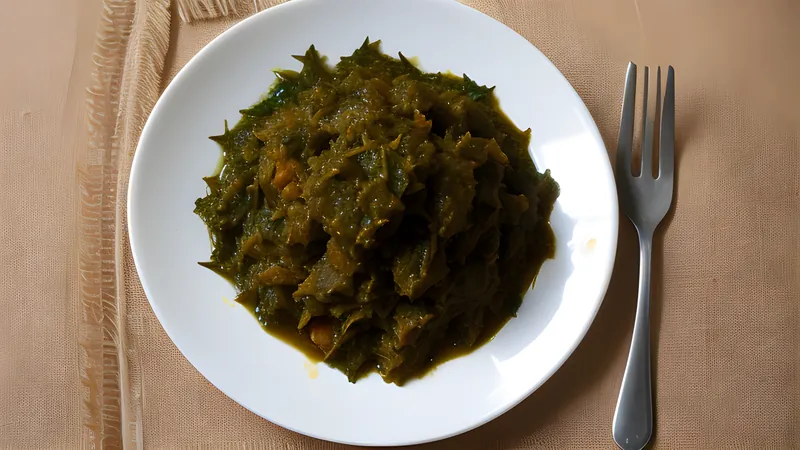
↓ Jump to recipeSaka saka, also called pondu or matembele in different Congo Basin communities, is cassava leaves pounded fine and stewed low and slow in red palm oil until they turn deep green, glossy and rich enough to eat almost as a main dish rather than a side. It is built the way most great greens dishes are, with time rather than speed as the main technique, and it is finished with peanut and smoked fish for a savoury depth that plain leaves alone cannot reach. It is the everyday partner to fufu and rice across huge parts of Central Africa, eaten daily in households the way spinach or cabbage might be eaten elsewhere, just cooked with far more patience and far more flavour. My addition, diced aubergine stirred in for the final stretch of cooking, adds a soft, silky texture that plays beautifully against the leaves.
Saka Saka: Pounded Cassava Leaves with Palm Oil
Ingredients
- 500g frozen or tinned pounded cassava leaves, thawed and drained
- 3 tbsp red palm oil
- 1 large onion, finely chopped
- 4 garlic cloves, crushed
- 1 red pepper, chopped
- 100g smoked mackerel or smoked whiting, flaked and bones removed
- 100g smooth peanut butter
- 400ml vegetable or fish stock
- 1 scotch bonnet chilli, whole and pierced
- 1 tsp fine salt, plus more to taste
- 1 tbsp tomato puree
- 1 aubergine, diced small, to finish (the twist)
Method
- Heat the palm oil in a heavy pot over medium heat and fry the onion for 8 minutes until soft.
- Add the garlic and red pepper and fry for 3 minutes until softened.
- Stir in the tomato puree and cook for 2 minutes.
- Add the cassava leaves, flaked smoked fish, peanut butter, stock, whole chilli and salt, and stir until well combined.
- Bring to a gentle simmer, cover, and cook on low heat for 40 minutes, stirring occasionally to prevent catching.
- Stir in the diced aubergine and simmer, uncovered, for a further 15 minutes until the aubergine is tender and the sauce has thickened.
- Remove the whole chilli, taste and adjust the salt, and serve hot.
Why the technique works
The long, slow simmer is not optional here, and it is doing more than one job at once. First, it completes the detoxification of the pounded leaves that pounding alone only starts, which is a genuine food-safety requirement rather than a style choice; do not shorten the 40-minute covered simmer even if the leaves look done sooner. Second, that same slow cooking is what develops the dish’s characteristic deep, savoury flavour, softening the leaves’ slightly bitter, grassy edge into something rounder and more complex, closer to well-cooked spinach or collards than to a quick-wilted green.
Peanut butter and smoked fish both do specific, deliberate work in the pot rather than sitting there as flavour additions. The peanut butter thickens the sauce and adds fat and protein, binding the whole dish together into something substantial enough to eat as a main course; the smoked fish contributes a deep umami note that is difficult to replicate any other way, since smoking concentrates and transforms the fish’s flavour into something closer to a seasoning than a protein in its own right. Skip either and the dish still works, but it loses real character in the process.
Method
- Heat the palm oil in a heavy pot over medium heat and fry the chopped onion for 8 minutes, until soft and translucent.
- Add the garlic and red pepper and fry for 3 minutes, until softened and fragrant.
- Stir in the tomato puree and cook for 2 minutes, letting it darken slightly.
- Add the thawed and drained cassava leaves, flaked smoked fish, peanut butter, stock, whole scotch bonnet and salt. Stir well until everything is evenly combined.
- Bring to a gentle simmer, cover, and cook on low heat for 40 minutes, stirring every 10 minutes or so to stop the mixture catching on the base of the pot.
- Stir in the diced aubergine and simmer, uncovered, for a further 15 minutes, until the aubergine is tender and the sauce has thickened to a rich, coating consistency.
- Remove the whole chilli. Taste and adjust the salt, and serve hot.
Tips and Substitutions
Pre-pounded frozen cassava leaves, sold in African grocers under names like saka saka, pondu or feuilles de manioc, are the easiest and safest option outside Central Africa, and they are already prepared for cooking, needing only thawing and draining. If you can only find whole cassava leaves, they must be very finely chopped or pounded and cooked for the full simmer time given here; do not shorten the cooking time under any circumstances, since the safety of the finished dish depends on it.
Smoked mackerel is a widely available and close substitute for the smoked catfish or bonga fish traditionally used; smoked whiting is another good option if your supermarket stocks it. For a vegetarian version, omit the fish and add an extra tablespoon of peanut butter along with a splash of soy sauce or a spoonful of miso for umami depth; the result holds its own even though the flavour shifts.
If your saka saka tastes flat, the most likely cause is under-salting, since cassava leaves themselves are fairly mild and need proper seasoning to shine through the fat and peanut. If the sauce looks split or oily rather than glossy and cohesive, it was probably cooked at too high a heat; drop it to a genuine low simmer and stir it back together gently over a few minutes.
Variations
Some households add cubed beef or goat, browned first, for a heartier version served as a standalone main rather than a side; add the browned meat along with the leaves at the start of the 40-minute simmer, allowing extra time if the meat is a tougher cut. A version with baby spinach or amaranth leaves stirred through the pounded cassava in the final 10 minutes adds a fresher, less dense texture and is a common way to stretch the dish further. Some coastal variations replace the smoked fish with fresh prawns, added only in the last 5 minutes to avoid overcooking them.
Red palm oil itself is worth choosing carefully, since quality varies enormously between brands and much of what is sold in the West has been refined to the point of losing its colour and characteristic flavour. Look for unrefined or “traditional” red palm oil, thick and deep orange-red with a distinct, slightly smoky aroma; the pale, nearly clear versions sold as general cooking oil are a different product and will leave the dish looking and tasting flat. A little goes a long way in terms of both flavour and colour, so resist the urge to add more than the recipe calls for even if the sauce looks pale at the frying stage, since the colour deepens considerably as the dish simmers.
A final note on texture: saka saka should end up somewhere between a wilted green and a thick, spoonable stew, never watery. If yours looks thin after the full simmer time, uncover it and let it reduce for a further 5-10 minutes over a gentle heat rather than adding thickener, which the peanut butter should already be providing if the ratios above are followed.
Storage and Serving
Saka saka keeps very well and, like most slow-cooked greens dishes, improves after a day in the fridge as the flavours settle further. Store in an airtight container for up to 4 days, and reheat gently on the hob with a splash of water or stock to loosen it. It freezes well for up to 3 months in a sealed container; thaw fully before reheating over a low heat.
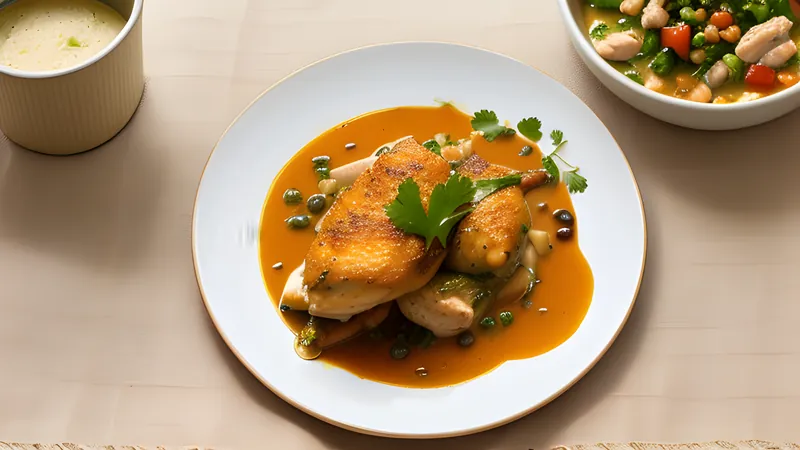
Serve it over plain steamed rice or alongside fufu for scooping, or pair it directly with moambe chicken for the classic Congolese combination of rich orange stew and deep green leaves on the same plate. It also sits well next to ndole if you want to build a wider Central African spread around the same peanut-and-greens tradition.
Related Content