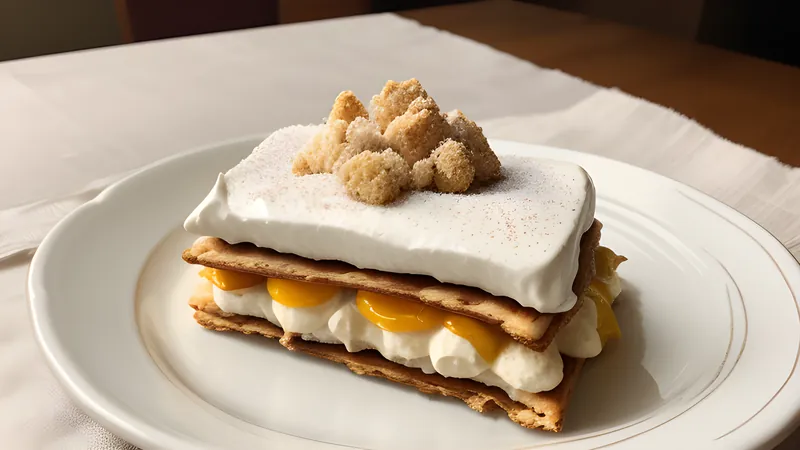
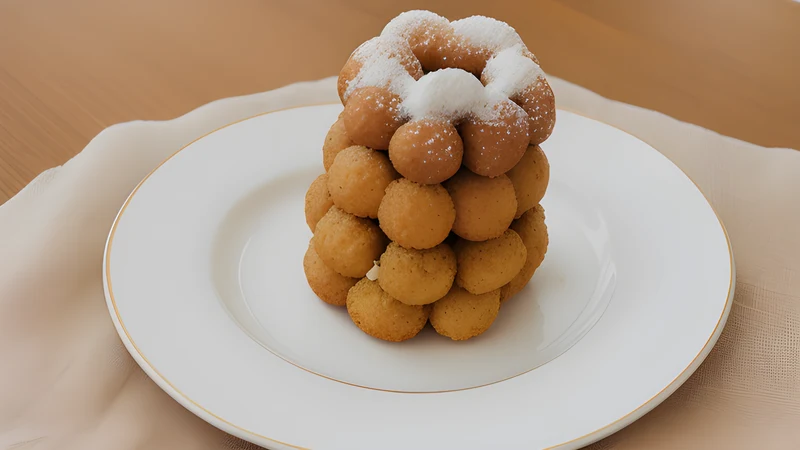
Saint-Honoré: The Choux and Caramel Crown
Puff pastry base, caramel-dipped buns, and a chiboust piped in waves
Contents
↓ Jump to recipeThe Saint-Honoré is the pastry that tells you whether you can actually make pastry. There is nowhere to hide in it. A disc of puff, a ring of choux buns, caramel, and a cream that is half custard and half meringue — four separate disciplines, each one visible on the plate, assembled into a crown. Any one of them going wrong is obvious to anyone eating it.
That sounds like a warning. It is closer to a recommendation. Every component is straightforward on its own, they can be spread across two days, and the finished thing is the most impressive object a domestic oven will produce.
Saint-Honoré: The Choux and Caramel Crown
Ingredients
- 300g all-butter puff pastry (or one batch rough puff)
- For the choux: 100ml water
- 100ml whole milk
- 85g unsalted butter, cubed
- 4g fine salt
- 6g caster sugar
- 110g strong white bread flour
- 3 to 4 medium eggs, beaten (about 190g)
- For the crème chiboust: 400ml whole milk
- 1 vanilla pod, split and scraped
- 5 egg yolks
- 70g caster sugar
- 40g cornflour
- 5g leaf gelatine (about 2.5 sheets), softened in cold water
- 4 egg whites (about 130g)
- 90g caster sugar, for the meringue
- 40ml water, for the meringue
- For the miso caramel: 250g caster sugar
- 60ml water
- 20g white miso paste
- 1 tbsp liquid glucose or golden syrup
Method
- Roll the puff pastry to 3mm and cut a 20cm disc. Lay it on a lined tray, prick it all over with a fork, cover with baking paper and chill 30 minutes. Heat the oven to 190C fan and bake the disc under a second tray for 18 minutes, then uncovered for 5 to 8 minutes until deep golden and dry underneath. Cool on a rack.
- Make the choux. Bring the water, milk, butter, salt and sugar to a full rolling boil in a saucepan. Tip in all the flour at once and beat hard with a wooden spoon until it forms a smooth ball. Keep beating over medium heat for 90 seconds to dry the paste; a film will form on the pan base.
- Transfer to a mixer bowl and beat on low for 2 minutes to cool to about 60C. Add the beaten egg a little at a time until the paste falls from the beater in a slow V and a piped line holds its shape with a soft tip. You may not need all the egg.
- Pipe 24 buns of about 3cm onto a lined tray using a 10mm plain nozzle, spaced 4cm apart. Flatten any peaks with a wet fingertip. Bake at 180C fan for 22 to 25 minutes until deep golden and light, then pierce each base with a skewer and return to the switched-off oven for 10 minutes to dry. Cool completely.
- Make the pastry cream base for the chiboust. Heat the milk with the vanilla until steaming. Whisk the yolks, 70g sugar and cornflour to a paste, pour on the hot milk while whisking, return to the pan and cook, whisking hard, until thick and boiling for a full minute. Off the heat, squeeze the gelatine and stir it in until dissolved. Cover and keep warm.
- Make the Italian meringue. Boil the 90g sugar with the 40ml water to 118C. Meanwhile whisk the egg whites to soft peaks. With the mixer running, pour the syrup down the side of the bowl in a thin stream, then whisk until the bowl is barely warm and the meringue is thick and glossy.
- Fold one third of the meringue into the warm pastry cream to slacken it, then fold in the rest in two additions, working quickly and lightly. Use the chiboust within 30 minutes, while the gelatine is still soft.
- Fill the buns. Fit a piping bag with a 5mm nozzle, fill with chiboust, and pipe into the base of each bun until it feels heavy. Set aside 16 filled buns; reserve the rest of the chiboust in the fridge.
- Make the caramel. Warm the sugar, water and glucose in a heavy pan over medium heat without stirring until it turns a mid-amber, about 8 minutes and roughly 175C. Take it off the heat and whisk in the miso paste; it will hiss and bubble hard. Sit the pan in a bowl of warm water to slow the setting.
- Dip the top of each filled bun into the caramel and set it caramel-up on an oiled tray to set. Then dip the base of each bun in caramel and glue it to the outer edge of the puff disc, in a tight ring of 12 to 14 buns.
- Pipe the remaining chiboust into the centre of the crown in overlapping waves using a Saint-Honoré nozzle, or in fat teardrops with a 12mm plain nozzle. Set any spare buns in the middle. Chill 1 hour and serve the same day.
The saint, the street, and the nozzle
Honoratus was bishop of Amiens in the sixth century. The legend attached to him involves his old nurse, who refused to believe he had been made bishop and declared that she would sooner believe it if the wooden peel she was baking with took root — at which point, obligingly, it did, and grew into a mulberry tree. Bread, oven, miracle: he became the patron saint of bakers, and 16 May is his feast day.
The cake came much later, and from a specific address. Chiboust’s patisserie on the rue Saint-Honoré in Paris produced it around 1846, and the street took the credit for the name as much as the saint did. The pastry cook Auguste Julien is generally credited with the version that stuck, and the crème chiboust — pastry cream folded into Italian meringue — carries the shop’s name to this day. The original was built on a brioche base. Puff pastry replaced it later and is now standard, because puff shatters and brioche sogs.
The Saint-Honoré nozzle, that odd slanted tip with a slot cut down one side, was invented for this cake and named after it. It produces a wave with a thin leading edge and a fat body. You do not need one. A plain 12mm nozzle piping overlapping teardrops gets you most of the way there, and nobody has ever complained about the wrong nozzle with their mouth full.
Why puff, and why blind
The base carries everything: a ring of caramel-glued buns, a mound of chiboust, and its own weight in a slice being cut with a fork. It has to be crisp and it has to stay crisp for several hours under a wet cream, which is asking a great deal of a laminated dough.
Two habits make the difference. Prick the disc all over and bake it under a second tray, so it puffs a little and then stops — a fully risen puff base is unstable and tips the buns off. And bake it longer than looks necessary. Underbaked puff is pale, slightly bendy, and full of unevaporated water, and that water migrates into the pastry within an hour of assembly. You want the underside deep golden and audibly dry when tapped. A brush of the caramel across the disc before the buns go on adds a thin sugar seal, which buys another hour of crispness.
The miso
My change is in the caramel. Twenty grams of white miso whisked into the hot sugar at the end. It is a small quantity and it does not make the cake taste Japanese; what it does is make the caramel taste of more.
The reasoning is the same one that puts salt in salted caramel, only doing more of the work. Caramelised sugar is a huge stack of bitter and roasted aromatic compounds sitting on top of pure sweetness, and the sweetness swamps the rest. Salt suppresses the perception of bitterness and lets the roasted notes through. White miso brings the sodium, plus free glutamates and the amino acids left behind by fermenting soy and rice — savoury depth of exactly the kind that caramel lacks. It also brings its own gentle funk, which reads as butterscotch rather than as soy.
Use shiro (white) miso, the pale sweet young one. Red miso is far too assertive and will taste like a mistake. Whisk it in off the heat and stand back: miso is around 40 per cent water, and dropping it into 175C sugar produces a genuinely violent burst of steam. Use a long whisk, a deep pan, and keep your face away.
Caramel, honestly
Caramel is the only genuinely dangerous thing in this recipe. Molten sugar sits at 175C, sticks to skin, and keeps burning after contact. Have a bowl of iced water on the counter before you start, and if you catch yourself, plunge your hand straight in. Never taste caramel from a spoon and never let a child near the pan.
The technique is undramatic. Sugar, water and a spoonful of glucose in a heavy pan; medium heat; no stirring. Stirring crystallising sugar is what turns caramel into grit, because a single seed crystal cascades through the whole pan. The glucose is insurance against exactly that — it is a different sugar, and it physically gets in the way of sucrose crystals lining up. Golden syrup does the same job.
Wash the sugar crystals down from the sides of the pan with a wet pastry brush in the first minute, before the syrup gets hot. Crystals stranded above the waterline dry out, fall back in later, and seed the whole pan. This is thirty seconds of work that prevents the one caramel failure you cannot repair.
Swirl the pan rather than stirring. Watch the colour, and take it off the heat a shade lighter than you want, because the residual heat in the pan drives it two shades darker in the twenty seconds after. Pale caramel is cloying. Dark caramel is bitter and superb. The window between them is about forty seconds.
Sitting the pan in warm water keeps the caramel dippable for the ten minutes it takes to glaze and glue two dozen buns. If it stiffens anyway, put it back on a low heat for thirty seconds.
Choux that stays up
Choux fails in one direction: it rises, looks glorious, and collapses into a leathery pouch as it cools. Three causes, all fixable.
The paste was too wet. The drying stage after the flour goes in is where you drive off water and gelatinise the starch, and 90 seconds of real beating over heat is the minimum. A visible film on the pan base is the signal.
The egg went in by recipe instead of by eye. Egg quantity depends on how much water you drove off, which varies with your pan and your hob. Stop when a lifted beater drops the paste in a slow V and a piped line holds a soft peak. A stiff paste gives squat buns; a slack one spreads and cannot support a crust.
The oven was opened early. The buns are a steam-raised shell, and the structure only sets once the crust is dry. Do not open the door for the first 18 minutes. The skewer-and-dry step at the end lets the trapped steam escape so the walls stay crisp rather than steaming themselves soft from the inside.
The chiboust, and its clock
Crème chiboust is pastry cream lightened with Italian meringue and set with a little gelatine, and it is the best cream in French patisserie by some distance — it eats like a mousse and holds a piped edge for hours. It is also the most time-sensitive thing here. The gelatine begins setting the moment the mixture cools, so the folding, filling and piping all have to happen inside about half an hour. Have the buns baked, the piping bags ready and the caramel pan to hand before you fold the meringue in.
The pastry cream must be warm when the meringue goes in — around 50C — or the gelatine seizes into strings. The meringue must be barely warm, or it deflates. Fold a third in roughly, to slacken; fold the rest in gently, to keep the air.
If the clock beats you, make crème diplomate instead: the same pastry cream, no meringue, folded with 200ml of whipped double cream. It sets softer and pipes almost as well, and nobody will know.
Building the crown
Assembly rewards a plan. Glaze all the tops first, in one pass, while the caramel is at its most fluid, and stand them on an oiled tray to set — a hard caramel dome forms in about two minutes and is what gives the finished cake its glassy crest. Only then dip the bases and glue them down. Doing it in the other order means fighting caramel that has thickened while you fiddled.
Space the buns so they touch. Twelve to fourteen at 3cm around a 20cm circumference is tight, which is the point: the ring is structural, and a gap lets the chiboust escape sideways. If a bun sits crooked, hold it for five seconds; caramel grabs fast.
Pipe the centre last and pipe it generously. The classic profile is a low dome, taller in the middle than the buns, so a slice gives you cream, custard-filled choux, caramel and pastry in one forkful. Piping shy leaves a sunken middle and makes the crown look like a tyre.
Make-ahead and storage
Spread it over two days. Day one: bake the puff disc and the choux buns, and make the pastry cream base without the gelatine. Day two: warm the cream, add softened gelatine, make the meringue, fold, fill, caramelise, assemble.
One genuinely useful shortcut: the puff disc and the buns both keep in an airtight tin overnight and refresh in a 160C oven for 5 minutes, which drives off any absorbed moisture and gets you back to day-one crispness. This is worth doing even if you baked them that morning.
The assembled gateau is at its best two to four hours after building and is finished by the next morning — caramel is hygroscopic and pulls water out of the fridge air, so the glaze goes tacky and then weeps. This is a cake to make on the day people are coming. Unfilled choux buns freeze well for a month and refresh in a 160C oven for 5 minutes.
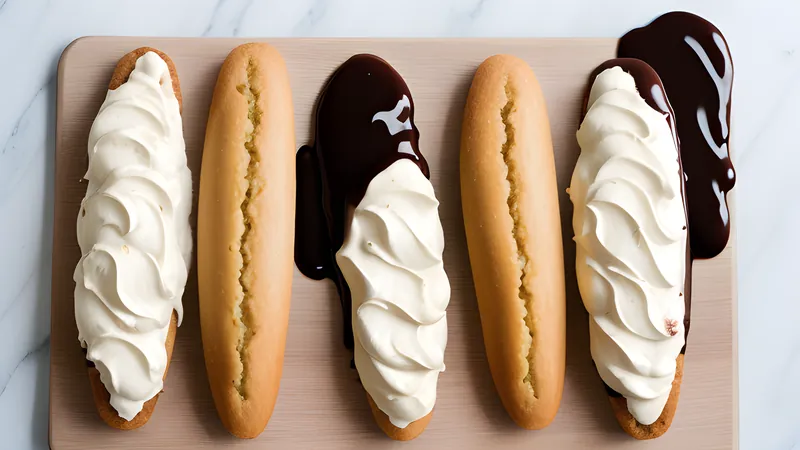
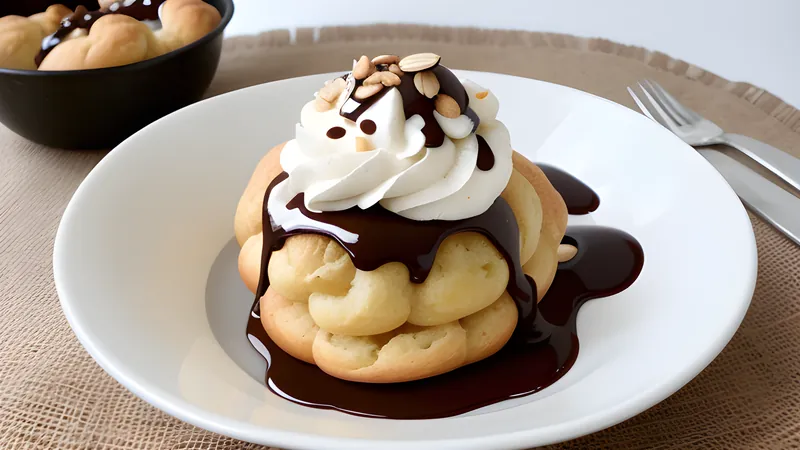
If you want the components in gentler company first, profiteroles with warm chocolate sauce is the same choux with none of the pressure, and éclairs with coffee crème pâtissière drills the piping. The base is worth making yourself once — rough puff pastry is a 40-minute job that beats most shop-bought — and for the caramel thinking, salted caramel sauce is where the same seasoning logic starts.
Related Content