Sabich: The Iraqi-Israeli Aubergine Sandwich
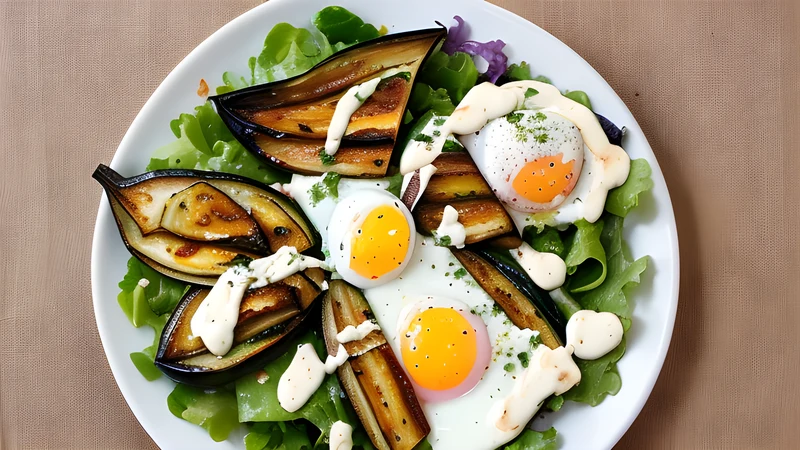
Fried aubergine, egg, salad and amba packed into a warm pita
Contents
↓ Jump to recipeA sabich is one of those sandwiches that seems like too many things at once until you eat it, and then every element turns out to be load-bearing. Silky fried aubergine, jammy egg, sharp chopped salad, nutty tahini, and over the top the strange, sour, almost medicinal hit of amba, the fermented mango sauce that is the whole reason a sabich tastes like a sabich. Pull any one of them out and it collapses into something ordinary. Together they make what is, for my money, the best filled bread in the entire Middle Eastern repertoire.
Sabich: The Iraqi-Israeli Aubergine Sandwich
Ingredients
- 2 large aubergines, sliced 1cm thick lengthways
- Salt, for salting the aubergine
- Neutral oil, for frying
- 4 eggs
- 4 pita breads
- For the salad: 3 tomatoes, finely diced
- 1 cucumber, finely diced
- 1/4 red onion, finely diced
- Small handful parsley, chopped
- Juice of 1/2 lemon (for the salad)
- For the tahini sauce: 4 tbsp tahini
- Juice of 1/2 lemon (for the tahini)
- 1 small garlic clove, crushed
- 4-6 tbsp cold water
- To finish: 4-6 tbsp amba (fermented mango sauce)
- Pinch of salt and pepper
- Pickles and chilli sauce, to taste
Method
- Salt the aubergine slices on both sides and lay them in a colander for 20 minutes to draw out moisture. Pat thoroughly dry with kitchen paper.
- Soft-boil the eggs: lower them into boiling water and cook 8-9 minutes for a set-but-creamy yolk (or up to 10 for firm). Cool under cold water, peel and slice. For a traditional deep flavour, some cooks slow-cook the eggs longer, but 9 minutes is the everyday version.
- Make the tahini sauce: whisk tahini, lemon juice and garlic, then add cold water a spoonful at a time. It will seize and thicken before it loosens, keep whisking until it becomes a smooth, pourable cream. Season with salt.
- Make the salad: combine tomato, cucumber, red onion and parsley, dress with lemon juice and a pinch of salt just before serving so it stays crisp.
- Fry the aubergine: heat 1cm of oil in a frying pan over medium-high heat. Fry the dried slices in batches until deep golden and completely soft, about 2-3 minutes a side. Drain on kitchen paper and season lightly.
- Warm the pitas and split open to make a pocket. Smear the inside with a little tahini.
- Build each sandwich: layer in fried aubergine, sliced egg, a generous spoon of salad, more tahini and a drizzle of amba. Add pickles and chilli to taste.
- Eat immediately, over a plate, while the aubergine is still hot.
An Iraqi Shabbat breakfast, reborn on the Israeli street
Sabich began as a home dish among Iraqi Jews, eaten on Shabbat morning. The rules of the Sabbath forbid cooking on the day itself, so the components were all prepared in advance: aubergine fried the day before, eggs cooked slowly overnight (the same long, low cooking that gives huevos haminados their brown yolks and deep flavour), salad chopped, tahini mixed. On Saturday morning the family assembled it cold or at room temperature into a sandwich. The name is often said to come from the Arabic sabah, morning, or to be an acronym of the components, though the etymology is argued over and no one version has won.
When Iraqi Jews emigrated to Israel in the mid-twentieth century they brought the dish with them, and at some point in the town of Ramat Gan, just east of Tel Aviv, it jumped from the home kitchen to the street. The stall usually credited with the move, run by an Iraqi immigrant, began selling it stuffed into pita, hot, made to order, and neighbouring vendors followed until the sandwich became one of Israel’s great street foods, standing alongside falafel and shawarma. The version most people eat now is the street version: warm aubergine, freshly boiled egg, everything built into the bread in front of you. What has never changed is the amba, which is the Iraqi-Jewish community’s own contribution and the flavour that ties the sandwich back to Baghdad.
It sits in the same family as the region’s other great chickpea-and-tahini plates. If you love the tahini and pickle here you will find the same pleasures in msabbaha and in fattet hummus.
The aubergine: the one part you must not rush
The heart of a sabich is the aubergine, and it has to be cooked properly, which means cooked all the way to silky, collapsing softness, never left with a squeaky, spongy centre. Two things get you there. First, salt the slices and let them sit in a colander for twenty minutes. This draws out moisture and a little bitterness and, more importantly, collapses the sponge-like structure so the aubergine absorbs less oil and cooks to a creamier texture. Pat them bone dry afterwards, because water and hot oil make a dangerous, spitting combination.
Second, fry in enough oil at a proper heat. This is shallow frying, about a centimetre deep, hot enough that the slices sizzle on contact. Fry them until they are deep golden brown on both sides and completely tender when you press them, two or three minutes a side. Underdone aubergine is the single most common way a home sabich falls short. If you would rather not fry, you can brush the slices generously with oil and roast them at 220C until soft and browned, twenty-five minutes or so, which gives a lighter, less traditional result that is genuinely good.
Choose your aubergines well, too. You want them firm and glossy, heavy for their size, with taut skin and a green rather than a brown, dried-out stem; those are young and have fewer of the seeds that carry bitterness. Slice them lengthways rather than into rounds, because long planks stack neatly into a pita and give you a proper layer of aubergine in every bite instead of a scatter of coins.
Amba: the sauce that makes it
Amba is a tangy, fermented green-mango sauce, brilliant yellow with turmeric, sharp with vinegar and fenugreek, and it is the defining flavour of sabich. It arrived in Iraq via the Jewish trade routes to India, where the mango pickle aam is its ancestor (the very word amba comes from the Marathi and Hindi for mango), and it is unlike anything else in Levantine cooking: funky, sour, faintly bitter, a little like a very savoury mango chutney gone to the dark side. The fenugreek is what gives it that curry-house, almost sulphurous back note that people either adore or need a bite or two to come around to. You can buy it in jars from Middle Eastern grocers and online, and I would strongly encourage you to, because there is no true substitute. In a real pinch, a mix of mango chutney loosened with lemon juice, a pinch of ground fenugreek and a little turmeric gets you into the right postcode, but track down the real thing when you can. The same amba is wonderful spooned over falafel, grilled fish or a plain rice bowl, so a jar rarely goes to waste.
Tahini, salad and the art of the layer
The tahini sauce follows the standard method that trips people up every time: whisk the tahini with lemon and garlic and it will seize into a stiff paste, looking ruined, then keep adding cold water a spoonful at a time and whisking, and it suddenly loosens into a silky, pourable cream. Cold water, not warm, and add it slowly. You want it thin enough to drizzle. Season it with salt and taste; good tahini sauce should be nutty and a little sharp, savoury enough to stand up to the amba.
The salad is the Israeli chopped salad, finely diced tomato, cucumber and onion with parsley and lemon, and its job is to bring acidity and crunch against the soft aubergine and rich egg. The finer you dice it the better it packs into the bread. Dress it only at the last moment so it does not go watery, because a wet salad is the fastest route to a soggy sandwich.
Building order matters. Warm the pita, open the pocket, and smear tahini inside first so the bread does not go soggy from the outside in. Then aubergine, then egg, then salad, then more tahini, then the amba over everything, then any chilli or pickle. Layering the wet elements between the dry keeps the structure from turning to mush. Eat it immediately, over a plate, and accept that a properly full sabich is a slightly messy thing. Warm, fresh pita is worth the small effort of heating: a stale or cold pocket tears and cannot hold the load, so give it thirty seconds in a dry pan or a few in the oven until it puffs and softens.
Why the combination works
There is a logic under the apparent jumble, and it is the logic of every great composed sandwich: each element answers the one before it. The aubergine is soft, rich and a little sweet, so it needs the acid of the salad and the sourness of the amba to keep it from being cloying. The egg is mild and fatty, so it wants the sharp tahini and the salt of the pickles. The bread is neutral and holds it all. Take away the amba and the whole thing skews rich and one-note; take away the salad and it turns heavy; take away the tahini and it dries out. Once you have eaten a balanced one you can taste exactly what is missing in an unbalanced one, and you start to build each sandwich like a small equation of soft against sharp, rich against sour, hot against cold.
It is worth saying that a full sabich is also a genuinely good meal rather than a snack: aubergine, egg, chickpea-paste tahini, raw vegetables and bread add up to real protein and fibre, which is part of why it worked as a Shabbat breakfast meant to carry a family through a long morning. Meat-free by design, it satisfies in a way that has nothing to do with restraint, and it converts sceptics who assume a vegetable sandwich must be a compromise.
The egg question
The traditional Shabbat egg is a beid hamine, slow-cooked for hours until the white turns tan and the yolk goes chalky and deep. The long simmer, often with onion skins and coffee grounds in the water, gives it a mellow, almost caramelised flavour, and if you have the oven on low overnight for something else it is worth doing. For everyday sabich, a nine-minute egg with a just-set, creamy yolk is what I make, sliced so a little yolk runs into the sandwich. Anywhere between eight and ten minutes is fine depending on whether you want it soft or firm.
Make-ahead and variations
Everything but the frying can be done in advance, which is exactly how the dish was designed. Make the tahini and amba, boil the eggs, chop the salad components (dress at the end), and fry the aubergine to order, or fry it ahead and serve at room temperature in the true Shabbat style. Leftover fried aubergine keeps two days and is good in almost anything.
For a heartier version, add a few chips (yes, chips, it is traditional in some stalls) or a spoon of hummus. For a lighter one, skip the egg and double the salad. A handful of pickled cucumber or pickled mango, and a spoon of harissa or a Yemeni-style chilli relish, push it in different directions without breaking it. However you build it, the amba and the properly cooked aubergine are the two things you cannot compromise on. Get those right and you will understand why people who grew up with sabich get a faraway look when they talk about it. For more of the same tahini-and-pickle world, msabbaha makes a fine companion plate.
Related Content