Saba Shioyaki: Salt-Grilled Mackerel
The simplest fish preparation in Japanese cooking, and the one with the least room to hide a mistake
Contents
↓ Jump to recipeSaba Shioyaki: Salt-Grilled Mackerel
Ingredients
- 2 mackerel fillets (about 150g each), pin-boned, skin on
- 1 1/2 tsp flaky sea salt, plus more for the daikon
- 1 tbsp sake
- 100g daikon, finely grated and lightly squeezed of excess water
- 1 lemon, cut into wedges
- 1 tbsp soy sauce, for serving
- cooking oil, for the grill rack or pan
Method
- Pat the mackerel fillets completely dry, then score the skin twice, shallowly, at an angle, without cutting into the flesh — this helps the skin render evenly and stops it curling under heat.
- Salt both sides generously, about 3/4 tsp per fillet, and leave uncovered on a rack in the fridge for 20–30 minutes.
- After salting, pat the fillets dry again — a surprising amount of moisture will have been drawn out, and any left on the surface will steam the fish rather than let it crisp.
- Brush the fillets lightly with sake, which rounds off any residual fishy edge and helps the skin colour evenly.
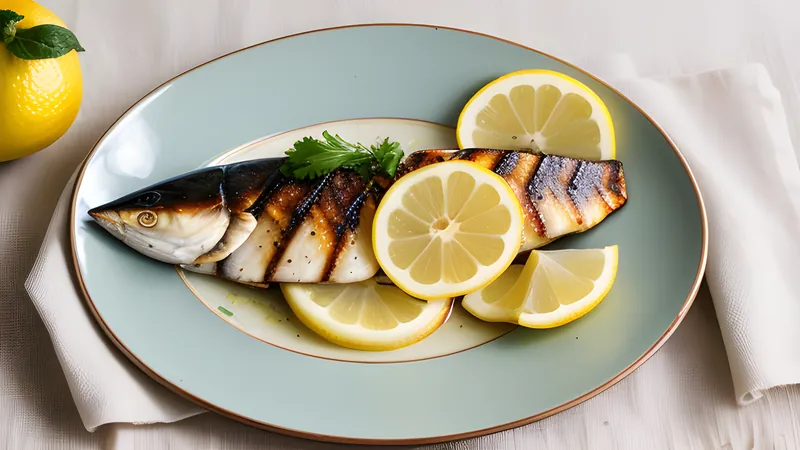
- Heat a grill, grill pan or fish grate to high, direct heat and oil it lightly. Cook the fillets skin-side down first for 4–5 minutes without moving them, until the skin is deeply browned and releases cleanly from the surface.
- Turn once and cook the flesh side for 2–3 minutes more, until just cooked through and starting to flake.
- Rest for a minute off the heat, then serve immediately with grated daikon, a wedge of lemon and a small dish of soy sauce.
The plainest fish dish that still demands respect
Shioyaki — literally “salt-grilled” — is Japanese cooking at its most reductive: fish, salt, high heat, nothing else. It’s the technique used for whole small fish and fillets across the country and the one every home cook learns before anything more elaborate, precisely because the fish is the entire dish rather than a component carrying a sauce or a marinade. Mackerel is one of the most common fish cooked this way, oily enough that high, direct heat renders the fat under the skin into something crackling and savoury rather than drying the fillet out, which is exactly the failure mode that shioyaki exposes ruthlessly in a leaner fish.
There is genuinely nowhere to hide in this dish. No marinade masks underseasoning, no sauce rescues fish that’s gone dry, no batter protects the surface from overcooking. What looks like the easiest recipe in this whole desk is, in practice, one of the least forgiving, and almost every mistake traces back to one of three things: not salting properly, not drying the fish before it hits the heat, or cooking it over heat that isn’t hot or direct enough to crisp the skin before the flesh overcooks.
Salting for two reasons, not one
The salt in shioyaki does two jobs that look the same on paper but aren’t. It seasons the fish, and separately, through basic osmosis, it draws moisture out of the flesh over the twenty to thirty minutes it sits — moisture that would otherwise turn to steam the instant the fish hits a hot pan and prevent the skin from ever crisping properly. This is the same logic that underpins a good dry brine on chicken skin or duck breast, applied here over a much shorter window because fish flesh is delicate enough that a longer salting time would start to cure and firm the texture past the point you want.
Salt generously and leave the fish uncovered on a rack rather than sitting flat in a dish, which lets air circulate around it and helps the drawn-out moisture actually evaporate rather than pooling underneath the fillet and being reabsorbed. Pat the fish dry again once the salting time is up — this second drying step is the one people skip most often, and it’s arguably more important than the salting itself, since a wet surface simply cannot crisp under any amount of heat until all that water has first boiled away, by which point the fish underneath is usually overcooked.
Heat: high, direct, and mostly left alone
Mackerel skin crisps through rendered fat contacting hot metal directly, which means the grill, pan or grate needs to be properly hot before the fish goes anywhere near it, and the fish needs to be left alone once it’s down rather than nudged or turned early to check progress. Every time you lift a fillet before the skin has released cleanly, you tear away whatever crust has started to form, and the fish sticks worse the second time you try. A well-oiled, sufficiently hot surface releases the fish on its own once the skin’s properly seared — if it’s still sticking hard after four minutes, the pan wasn’t hot enough to begin with, not that you haven’t waited long enough.
A traditional Japanese fish grill — a narrow, high-heat broiler built into many home stoves specifically for this kind of cooking — delivers fierce, close, mostly top-down heat that chars and crisps skin fast while the fish’s own thickness insulates the flesh from overcooking in the same short window. A hot cast-iron pan or a grill pan on the highest heat your hob manages is the closest home substitute most kitchens outside Japan will have, and it works well provided you resist the urge to turn the heat down out of nervousness about smoke — some smoke here is simply part of searing fish skin properly and isn’t a sign anything’s gone wrong. An overhead domestic grill (broiler) works too, skin-side up rather than down, positioned close enough to the element that the skin chars within the first few minutes; just watch it more closely than a pan, since overhead grills vary hugely in intensity from one oven to the next and the margin between crisp and burnt is narrower under fierce top-down heat than it is in a pan you can pull straight off the hob.
Why scoring the skin matters
The two shallow diagonal cuts across the skin in step one do more work than they look like on the page. Mackerel skin, left unscored, tends to contract unevenly under high heat and curl the fillet up at the edges, lifting parts of it away from direct contact with the pan and leaving those spots pale and unrendered next to patches that have crisped properly. A shallow score releases that tension evenly along the fillet, keeping it flatter against the heat, and it has the secondary benefit of letting a little more of the rendered fat escape through the cut rather than pooling under an intact layer of skin. Cut only through the skin and the thin layer of fat beneath it, not into the flesh itself — too deep a cut and the fillet can start to fall apart as it cooks, especially once it’s flipped.
Reading doneness without a thermometer
Mackerel is forgiving on flavour but not on timing — oily fish still overcooks and turns dry and stringy past a certain point, just at a slightly wider window than a leaner white fish gives you. The skin side, cooked first and for the longer of the two stages, should look deeply browned and almost lacquered, releasing from the pan on its own when it’s ready rather than needing to be prised free. Once flipped, the flesh side needs only a couple of minutes — press gently with a finger or the back of a spatula, and it should give slightly and just begin to flake rather than feeling firm and springy, which signals it’s gone past the point you want.
Resting briefly off the heat before serving lets the residual heat finish the very centre of a thicker fillet gently, without extra time directly over heat that would overcook the rest of the fish waiting for that last few degrees.
Serving it the way it’s meant to be eaten
Grated daikon, lightly squeezed of its excess liquid, is the traditional accompaniment and does real work rather than sitting there decoratively — its clean, faintly peppery bite cuts through the oiliness of the fish in a way that a starchier side dish wouldn’t manage as well. Mound it beside the fish rather than on top of it, so it stays crisp and cold against the hot fillet, and add a few drops of soy sauce directly to the daikon itself rather than only to the fish if you want a little more seasoning in each bite. A wedge of lemon and a small dish of soy sauce for dipping round out the plate; neither is meant to drown the fish, just brighten or season a bite here and there. Steamed short-grain rice and a bowl of miso soup complete what’s traditionally a very simple, very balanced small meal rather than a single showcase dish with elaborate sides.
Choosing and preparing the mackerel
Fresh mackerel deteriorates faster than most fish, both in texture and in the strength of its fishy flavour, so buying it as close to cooking day as possible matters more here than with a firmer white fish that holds a few extra days more gracefully. Look for clear, bright eyes if buying whole, skin with a tight, almost metallic sheen rather than anything dull or slack, and a clean, faintly briny smell rather than anything sharp or ammonia-like, which signals fish well past its best.
If you’re filleting a whole mackerel yourself, take care to run your fingers along the centre line of each fillet afterwards to check for the row of pin bones that runs partway down — mackerel’s pin bones are fairly easy to feel and pull with tweezers or fingertips, and skipping this step is the kind of thing that goes unnoticed until someone’s already eating. Buying pre-filleted, pin-boned fillets from a good fishmonger is a completely reasonable shortcut and doesn’t compromise the dish at all, since none of what makes shioyaki work depends on preparing the fish yourself from whole.
Storage, variations and using up leftovers
Shioyaki mackerel doesn’t reheat especially well — the crisp skin softens and the flesh tends to dry out further under a second application of heat — so it’s best cooked to order rather than made ahead. If you do have leftovers, flake the cold fish and use it the way you would any other cooked oily fish: folded through rice, or scattered warm over a bowl of ochazuke, where the fish’s saltiness and richness suit the mild broth well. A little of the same fish flaked into an onigiri filling also works nicely, alongside or instead of the salmon in that recipe.
Other fish take well to the same technique with only minor timing adjustments — salmon, sea bream and horse mackerel all shioyaki successfully, though a fattier fish like mackerel is the most forgiving to start with given how much rendered fat it’s carrying to protect the flesh underneath. Yuzu shioyaki, a common variation, adds a light dusting of yuzu kosho or a squeeze of yuzu juice just after cooking rather than at any earlier stage, a fresher, more citrus-forward finish than plain lemon, and worth trying once you’ve got the base technique down with confidence. A kombu-jime version, where the fish is pressed between sheets of kombu for an hour or two before salting, draws out extra moisture and lays down a subtle umami note through the flesh before it ever reaches the heat, a technique borrowed from sashimi preparation and worth the extra step if you happen to have kombu on hand and a little more time.
If it’s the same fish prepared entirely differently you’re after, my aji no nanbanzuke takes small oily fish in the opposite direction entirely, fried hard and then steeped for hours in a sweet vinegar marinade rather than left plain and salted.
Related Content