Rye Chocolate Chip Cookies with Smoked Salt
Dark, malty, and properly grown-up
Contents
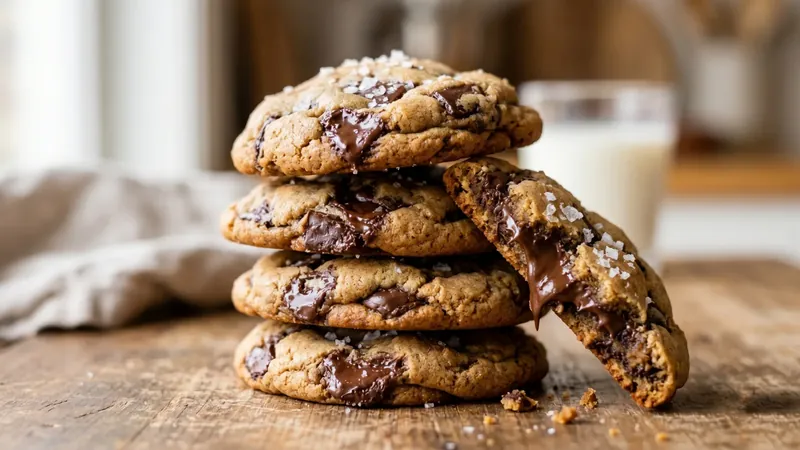
↓ Jump to recipeThere is a moment, somewhere around your fortieth chocolate chip cookie of adult life, when the standard version starts to taste like a memory of itself: sweet, fine, perfectly nice, and completely forgettable. This is the cookie that snapped me out of that. Swapping most of the plain flour for dark rye does something almost unfair to a recipe this familiar. It deepens everything, dragging in malt and a faint sour edge that makes the brown sugar taste browner and the chocolate taste darker. Then a pinch of smoked salt at the end turns up the contrast until the whole thing hums.
Rye Chocolate Chip Cookies with Smoked Salt
Ingredients
- 150g dark rye flour
- 100g plain flour
- 0.75 tsp bicarbonate of soda
- 0.5 tsp fine salt
- 170g unsalted butter, softened
- 150g light brown muscovado sugar
- 100g caster sugar
- 1 large egg plus 1 yolk
- 1 tsp vanilla extract
- 200g dark chocolate (70%), chopped into shards
- Flaky smoked sea salt, to finish
Method
- Whisk the rye flour, plain flour, bicarbonate of soda and fine salt together in a bowl.
- Beat the softened butter with both sugars until pale and creamy, about three minutes.
- Beat in the egg, the extra yolk and the vanilla until smooth.
- Fold in the dry ingredients until just combined, then fold through the chopped chocolate.
- Chill the dough, covered, for at least one hour or up to two days.
- Heat the oven to 180C fan and line two trays with baking paper.
- Scoop 50g balls of dough, spacing them well apart, and bake for 11 to 12 minutes until the edges are set but the middles still look soft.
- Pinch a little smoked sea salt over each cookie while hot, then cool on the tray for ten minutes before moving to a rack.
Why rye belongs in a cookie
Rye is a baking flour we mostly file under bread, where its low gluten and assertive flavour earn it a permanent home in sourdough and pumpernickel. But that same low-gluten character is a quiet gift in cookies. Less gluten means less chew-for-chew’s-sake elasticity and more tenderness, so a rye cookie spreads into thin, lacy edges while keeping a soft, almost fudgy centre. The flavour is the headline act, though. Rye carries earthy, slightly bitter, toffee-ish notes that read as caramel once they meet brown sugar and a hot oven.
For years rye cookies were a baker’s in-joke, the sort of thing that turned up at Scandinavian and Nordic bakeries where rye is a national staple rather than a novelty. The idea reached a wider audience through Kim Boyce, whose 2010 book Good to the Grain built a whole chapter around rye chocolate chip cookies and did more than anything to convince home bakers that wholegrain flours belonged in the sweet cupboard, not just the bread bin. It took that book and the wave of craft bakeries in the 2010s, hunting for ways to make the most photographed cookie on earth taste like something again, to push rye properly into home kitchens. The combination here, dark rye and a coarse finishing salt, is the descendant of that movement: a classic given just enough grit to feel like it earned its place.
The original chocolate chip cookie, for the record, is an American accident. Ruth Wakefield created it at her Toll House Inn in Whitman, Massachusetts, in 1938, when she chopped a bar of Nestlé chocolate into a butter dough expecting it to melt and spread; it held its shape instead, and the chocolate chip cookie was born. Almost every version since, this one included, is a variation on her template. Swapping in rye is simply the latest way of asking what else that famous dough can do.
Building flavour before you bake
Two small habits do most of the heavy lifting. The first is the dough rest. Chilling for an hour, and ideally overnight, lets the rye hydrate fully and gives the sugars time to draw moisture from the flour, which deepens colour and flavour during baking. A rested dough also spreads less frantically, so you get those thick, craggy middles instead of a tray of puddles. If you can stand the wait, two days in the fridge is genuinely better.
The second is the chocolate. Skip the uniform chips and chop a good dark bar into uneven shards. The big pieces give you molten pools, the dust melts into the dough and tints it darker, and the ragged edges mean every cookie is slightly different. I use a 70 percent bar because the rye is already sweet-leaning, and a milkier chocolate tips the whole thing into cloying. If you only have chips to hand, throw in a handful of cocoa nibs alongside for some bitterness. Chips, worth knowing, are formulated with less cocoa butter and a stabiliser so they hold their shape; a chopped bar has more fat and melts into proper pools, which is exactly what you want here.
Why brown sugar and two sugars
The sugar mix is not arbitrary. Muscovado and other brown sugars are slightly acidic and hold molasses, which brings moisture and a toffee note and, being mildly acidic, helps the cookie stay soft and chewy while browning deeply. Caster sugar, being neutral and quick to dissolve, promotes spread and gives the crisp edge. Using both, in the roughly three-to-two ratio here, buys you a cookie that is thin and lacy at the rim but soft and dense in the middle. Push it all the way towards brown sugar and you get a cakier, puffier cookie; all the way towards white and you get a flat, crisp, brittle one. The extra egg yolk is part of the same calculation: yolk is rich in fat and emulsifiers and light on water, so it adds tenderness and chew without the cakey lift that a second whole egg would bring.
The role of the rest, in more detail
Resting the dough is doing more than firming the butter. As the dough sits, the flour continues to absorb liquid, and enzymes begin breaking starches down into simpler sugars while proteins partially break down too. Both processes give more browning and a rounder, more complex flavour when the cookies finally bake, the same reason a rested cookie dough tastes noticeably deeper than one baked straight away. With rye in the mix this matters even more, because rye’s coarser particles and higher bran content are slow to hydrate; give them an overnight soak in the fridge and the finished cookie loses any raw, dusty edge and reads purely as malt and caramel.
The smoked salt question
Salt on cookies is no longer controversial, but smoked salt still raises eyebrows, and fairly. Done badly it tastes like a bonfire got into your pudding. Done well, the smoke sits underneath the sweetness as a savoury whisper, the way a touch of bacon does in a maple breakfast. The trick is restraint: a small pinch of flakes pressed onto the top of each hot cookie, never stirred through the dough where it would dissolve and turn aggressive. Cold-smoked flaky salts such as a good oak-smoked Maldon-style flake are ideal because the crystals stay crunchy and dissolve slowly on the tongue, releasing the smoke in stages. Avoid fine smoked table salt, which vanishes into the crumb and loses the textural contrast entirely. If smoke genuinely is not your thing, plain flaky sea salt still makes these sing.
Method notes and getting the bake right
Pull the cookies when the edges are set and lightly browned but the centres still look underdone and glossy. They firm up as they cool, and a cookie baked until the middle looks done is a cookie baked too far. Leaving them on the hot tray for ten minutes finishes the centres gently with residual heat, which is how you land that contrast between crisp rim and soft, almost gooey heart. A trick I borrowed from a baker friend: bang the tray on the worktop once, halfway through baking, to knock the rising cookies back down and force those rippled, professional-looking edges.
Weigh the dough balls rather than eyeballing them, because 50g is a deliberate size: big enough that the centre stays underbaked and fudgy while the edge crisps, and small enough to bake through in eleven or twelve minutes. Space them well apart, six to a tray at most, since these spread generously and will merge into one continental cookie sheet if crowded. Bake one tray at a time in the middle of the oven for the most even result; two trays on different shelves brown unevenly unless you swap and rotate them halfway. If your oven runs hot, drop to 170C fan and add a minute, because rye scorches slightly faster than plain flour and a burnt rye cookie tastes acrid rather than nutty.
If you like a taller, softer cookie, chill the scooped dough balls solid before baking; if you prefer them thin and lacy, bake them straight from cool. Both are correct, and it is worth baking a test cookie or two from any batch to see how your particular oven and flour behave before committing the whole tray.
Make them your own
Brown the butter first if you have ten extra minutes; it doubles down on the nutty, malty register and is never a mistake. If you want to explore that route on its own, the brown butter chocolate chip cookies make it the headline rather than a variation. A teaspoon of instant espresso powder beaten in with the sugar pushes the chocolate even darker without tasting of coffee. For a festive version, swap a third of the chocolate for chopped candied orange and add a scrape of orange zest. And if you want maximum drama, reserve a few shards of chocolate to press into the tops of the dough balls just before baking, so each finished cookie wears its own molten pool right on the surface.
If the rye-and-smoked-salt pairing here is the part that grabs you, the savoury seeded rye crackers with smoked salt run the same two ingredients in the opposite direction, crisp and sharp rather than soft and sweet. Stored in a tin these cookies keep for four or five days, but they will not last that long.
Related Content