Rye and Caraway Soda Bread
No yeast, no waiting, deep dark flavour
Contents
↓ Jump to recipeThere is a particular tyranny to yeast bread, lovely as it is: the proving, the timing, the way it ties you to the kitchen for half a day. Soda bread laughs at all of that. From the moment you decide you want it to the moment it is cooling on the rack is under an hour, with maybe ten minutes of actual work. No yeast, no kneading, no waiting for anything to rise on the counter. It is the bread you make when someone is coming round and you forgot, or when toast simply will not do, and it never lets me down.
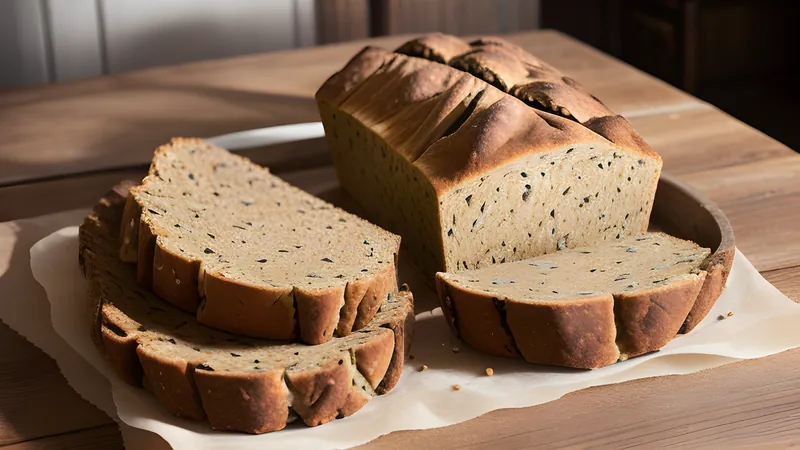
This version takes the honest Irish classic and pushes it somewhere darker and more interesting. The twist is a double act: nutty, earthy rye flour in place of some of the usual wheat, and a good spoonful of caraway seeds running through it. That combination is borrowed shamelessly from Central European rye loaves, and it turns a plain soda bread into something with real depth — savoury, faintly aniseed, gorgeous with cheese or smoked fish. A little dark treacle deepens both the colour and the flavour, lending a whisper of bitter-sweetness underneath.
Rye and Caraway Soda Bread
Ingredients
- 250g wholemeal rye flour
- 200g plain flour, plus extra for dusting
- 1 tsp fine salt
- 1 tsp bicarbonate of soda
- 2 tsp caraway seeds, plus a few for the top
- 1 tbsp dark treacle or molasses
- 400ml buttermilk
- 1 tbsp porridge oats, for the top (optional)
Method
- Heat the oven to 200C and dust a baking tray with flour.
- In a large bowl, whisk together the rye flour, plain flour, salt, bicarbonate of soda and caraway seeds.
- Warm the treacle slightly so it loosens, then whisk it into the buttermilk until evenly combined.
- Pour the wet into the dry and stir quickly with a knife or your hand just until it comes together into a soft, slightly sticky dough. Do not knead or overwork it.
- Tip onto a floured surface and shape gently into a round about 18cm across, working fast and lightly.
- Lift onto the tray, cut a deep cross into the top with a floured knife, and scatter with oats and extra caraway.
- Bake for 40-45 minutes until dark, risen and hollow-sounding when tapped underneath.
- Cool on a wire rack, wrapped loosely in a clean tea towel for a softer crust, for at least 30 minutes before cutting.
A bread born of necessity
Soda bread is younger than most people assume. Bicarbonate of soda only became widely available as a leavening agent in the 1830s, and it was in Ireland that the cheap, fast, yeast-free loaf took firmest hold. There was a practical reason: much of Ireland grew soft wheat, low in the gluten-forming proteins that yeast bread relies on for structure, and most rural kitchens baked not in an oven but in a bastible, a heavy cast-iron pot set over or beside a turf fire. A quick chemical rise suited both the flour and the equipment perfectly, and the round loaf slashed with a cross became a fixture of the Irish table.
That cross, incidentally, is where folklore and physics agree. The old country belief that it “lets the fairies out” or wards off the Devil sits comfortably alongside the plain fact that scoring a dense, quick loaf opens it up so the heat can drive into the centre before the crust sets hard. Pairing the loaf with rye and caraway takes it out of Ireland and towards the dark, dense breads of Germany, Poland and the Baltic, where caraway’s warm, slightly medicinal, aniseed note is the defining seasoning of everyday rye. The marriage is not traditional, but it is a natural one: both traditions prize a bread that stands up to strong, salty, fatty things on top.
How soda bread rises without yeast
The whole thing hinges on a simple bit of kitchen chemistry. Instead of yeast slowly producing gas over hours, soda bread relies on an instant chemical reaction. Bicarbonate of soda is an alkali; buttermilk is acidic. The moment they meet in the bowl, they react and release carbon dioxide, which lifts the dough almost immediately.
This is why speed matters so much. That reaction starts the second the wet hits the dry and it does not wait around. You want to get the dough mixed, shaped and into a hot oven while it is still fizzing with gas, before all that lift escapes. Mix quickly, shape gently, and bake straight away. A soda bread that has sat on the counter while you tidied up will be flat and dense, all its rise wasted into the air.
If you have no buttermilk, do not let that stop you. Stir a tablespoon of lemon juice or vinegar into ordinary milk and leave it for ten minutes; it will curdle and turn acidic enough to do the job, and the bread will be none the wiser. Plain live yogurt loosened with a splash of milk works equally well, and some bakers swear it gives an even more tender crumb.
There is a good reason bicarbonate needs an acid at all. On its own, heated bicarbonate of soda does release some carbon dioxide, but it also leaves behind sodium carbonate, which tastes soapy and metallic and turns the crumb an unpleasant yellow. The acid in buttermilk neutralises that residue, so you get clean flavour and a proper lift rather than a faintly bitter loaf. This is also why you should measure the bicarbonate carefully rather than eyeballing it: too much and no amount of buttermilk will mask the soapy edge; too little and the loaf bakes dense and heavy. One level teaspoon to this quantity of flour is the sweet spot.
Working with rye
Rye is a different beast from wheat, and it is worth understanding why. It has very little of the gluten that gives wheat dough its stretch and structure, so a pure rye dough is dense, sticky and heavy. That is wonderful in a proper dark European rye loaf, but here we want something a little lighter, which is why this recipe pairs rye with plain wheat flour. The wheat gives just enough structure to keep the crumb from being a brick, while the rye brings all its deep, malty, slightly sour character.
Rye also drinks up liquid more thirstily than wheat, so the dough will feel softer and stickier than a plain white soda bread. That is exactly right. Flour your hands and your surface well, handle it lightly, and resist any urge to add more flour to firm it up — a slightly wet dough bakes into a moister, longer-keeping loaf. The reason rye keeps so well, incidentally, is those same water-loving pentosans: they hold on to moisture in the baked crumb, which is why a good rye loaf stays edible for days while a white loaf staling overnight.
The caraway wants a moment’s thought too. Whole seeds scattered through the dough give bursts of flavour, which is the traditional approach, but if you find caraway assertive, toast the seeds gently in a dry pan for a minute until fragrant and then crush half of them lightly in a mortar. The crushed portion perfumes the whole loaf evenly while the whole seeds still give the occasional aromatic pop. Caraway is not the same as cumin or fennel, though they are often confused; it is the warm, slightly bitter, distinctly rye-bread note, and it is what makes this loaf taste unmistakably of Central Europe rather than of Ireland alone.
Why you must not knead it
Cut the cross deep and confident, right down towards the base, so the loaf can open fully as it bakes.
Do not cut into the loaf while it is hot, either; a fresh soda bread needs at least half an hour to finish setting, and slicing early tears the tender crumb and lets its moisture steam away.
The cardinal rule, the one I will repeat until you believe me, is this: do not knead. Soda bread has no gluten network to develop and no need of one. Working the dough only makes it tough and rubbery. Bring it together with the lightest possible hand, just until there are no dry patches, shape it loosely, and let it be. The reward for restraint is a tender, crumbly, open texture.
How to eat it
Soda bread is at its absolute best on the day it is baked, ideally still faintly warm, cut thick and spread with cold salted butter that melts into it. The rye and caraway make it a natural partner for strong things: a wedge of mature cheddar, a slice of smoked salmon, a bowl of soup, or simply good butter and a little honey. It has a particular affinity with oily fish and pickles, the sort of Scandinavian and Baltic pairings that the caraway seems to reach for; a slice topped with soured cream, dill and a curl of cured herring is a small revelation.
One practical tip for the bake itself: if you want to be sure the loaf is done, an instant-read thermometer pushed into the centre should read at least 96C. The tap-and-listen test for a hollow sound works, but a dense rye loaf can fool you, sounding hollow while the middle is still slightly gummy. If in doubt, give it another five minutes; rye is forgiving of a longer bake and unforgiving of an under-bake, which leaves a claggy, damp centre no amount of toasting quite rescues.
It does not keep as long as yeasted bread, but it does not need to — it rarely survives the day in my house. What is left over toasts beautifully the next morning, the caraway coming through even more strongly under the grill. For ten minutes of effort and no waiting at all, it remains, to me, one of the most generous things you can pull out of an oven.
If caraway has won you over, the same warm, aniseed note lifts a crisp apple and caraway coleslaw, a natural side for a wedge of this bread and some cheese. And for a very different but equally malty rye bake, the sweet, tender miso banana bread shows how far that dark, savoury depth can travel across the sweet-savoury line.
Related Content