Rye and Honey Oat Flapjacks
Chewy, malty traybake squares with a deep honeyed edge
Contents
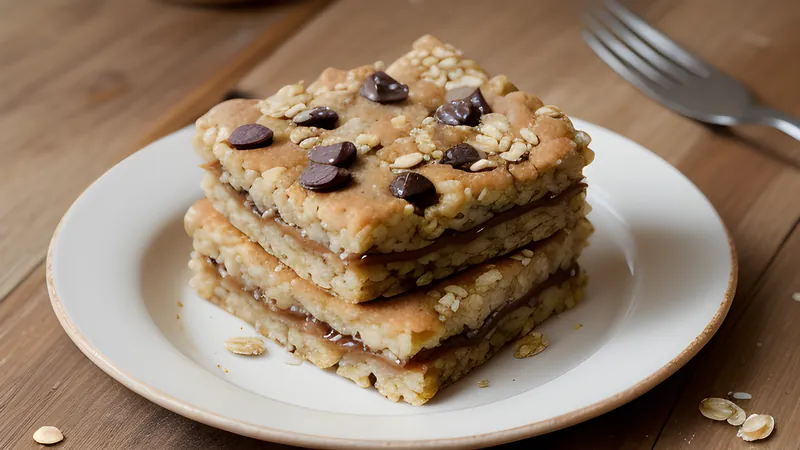
↓ Jump to recipeA good flapjack is one of the great democratic bakes: no creaming, no folding, no fear. You melt, you stir, you press, you bake. This version keeps all of that ease but trades a little of the usual one-note sweetness for something with more backbone. A handful of wholegrain rye flour brings a dark, malty, faintly sour note, and proper honey replaces some of the golden syrup, so the squares taste deep and almost gingerbread-ish rather than simply sugary. They are chewy in the middle, crisp at the edges, and exactly the thing to wrap in paper for a cold walk.
Rye and Honey Oat Flapjacks
Ingredients
- 200g unsalted butter
- 150g honey
- 80g soft light brown sugar
- 0.5 tsp fine salt
- 300g rolled oats
- 80g wholegrain rye flour
- 50g chopped walnuts or pecans (optional)
- 1 tbsp mixed seeds, to finish (optional)
Method
- Heat the oven to 160C fan and line a 20cm square tin with baking paper.
- Melt the butter, honey, brown sugar and salt together in a large pan over a low heat, stirring until smooth; do not let it boil hard.
- Take the pan off the heat and stir in the oats, rye flour and nuts until everything is evenly coated.
- Tip the mixture into the lined tin and press down very firmly with the back of a spoon to compact it.
- Scatter over the mixed seeds and press them in lightly.
- Bake for 28 to 32 minutes until deep golden at the edges and just set in the middle; it will still feel soft.
- Cool completely in the tin, then lift out and cut into 12 squares with a sharp knife.
A British teatime staple with Northern roots
The flapjack as Britain knows it, a baked slab of oats bound with butter, sugar and golden syrup, is a relatively modern thing, but its ancestry runs deep into the oat-eating traditions of the north of England and Scotland. Oats grow happily where wheat struggles, in cool, damp uplands, so from the medieval period onward they were the everyday grain of the north, eaten as porridge, oatcakes and parkin. Dr Johnson famously sniffed in his 1755 dictionary that oats were “a grain, which in England is generally given to horses, but in Scotland supports the people” — a jibe the Scots have enjoyed throwing back ever since. The flapjack is essentially a sweetened, portable cousin of all that oaten tradition, and the word itself is gloriously confusing: in America a flapjack is a pancake, and the term crops up as far back as Shakespeare’s Pericles for a flat cake. Only in modern Britain did it settle onto the chewy oat traybake we mean today, popularised through wartime and post-war home baking when oats and syrup were affordable staples.
Adding rye nods to a different but neighbouring tradition. Rye is the grain of cooler, poorer soils across northern and eastern Europe, the backbone of dark breads and Scandinavian baking, and it carries a distinctive malty, almost cocoa-like depth. A modest amount folded into an oaty flapjack gives the same comforting, hearty quality without making the squares heavy. It is a small twist that makes a familiar bake taste like it has a bit more to say.
The melt-and-stir method
This could not be simpler, but two things matter. First, melt the butter, honey, sugar and salt gently and do not boil the mixture hard. A rolling boil starts to caramelise the sugars and sets up a flapjack that turns rock-hard and toffee-like once cool, which is fine if that is what you want but is not the chewy texture here. A gentle melt until smooth is all you need.
Second, press the mixture into the tin really firmly. This is the secret to flapjacks that hold together rather than crumble into oaty rubble. Use the back of a spoon, or the base of a glass, and compact it hard and evenly. The more tightly packed it is, the cleaner your squares will cut. The rye flour helps here too, giving the mixture a touch more cohesion than oats alone.
It is worth understanding what binds a flapjack at all, because it is not gluten and it is not egg. The structure comes almost entirely from sugar. As the butter, honey and sugar melt together and then bake, the sugars dissolve, coat every oat, and set on cooling into a kind of soft toffee that glues the whole slab into one piece. That is why the ratio of syrup to oats matters so much, and why pressing hard is not optional: you are forcing the oats close enough together that the sugar bridges can actually hold them. Too little syrup, or a loosely packed tin, and there is nothing to stop the squares shedding oats the moment you pick one up. Honey behaves slightly differently from golden syrup here, as it contains fructose that browns and caramelises a little faster, which is exactly where that deep, almost gingerbread edge comes from.
Getting the bake right
Bake at a moderate 160C fan until the edges are deep golden and the centre is just set but still soft to the touch. The single most common flapjack mistake is overbaking, because the mixture looks alarmingly soft when it should come out. It firms up dramatically as it cools, so trust the timing rather than the wobble. Cool it completely in the tin before cutting; warm flapjack will fall apart, but a fully cooled slab cuts into neat, chewy squares.
Tips, variations and keeping
The honey here is doing real flavour work, so use something with character if you can, a heather or wildflower honey rather than the blandest squeezy sort. Darker, stronger honeys such as chestnut or buckwheat push the malty, almost bitter edge even further, which suits the rye beautifully. If you only have golden syrup, it will work, but you will lose some of the floral depth, so a spoonful of black treacle stirred in alongside helps make up the difference.
These are endlessly adaptable. Stir in 60g of chopped dried apricots, sour cherries or stem ginger for pockets of chew and tang. A teaspoon of ground cinnamon or mixed spice leans them towards the festive, which is where they belong in November and December. For a more substantial breakfast bar, fold in a heaped tablespoon of crunchy peanut butter with the wet ingredients, or scatter 75g of dark chocolate over the warm tray and spread it once it melts for a more indulgent finish.
If you want to adjust the texture, the balance of fat to syrup is your lever. More butter gives a richer, more crumbly, shortbread-like square; more honey gives a chewier, denser, chewier-to-the-tooth result that leans towards toffee. The recipe as written sits deliberately in the middle. Do not be tempted to cut the sugar heavily to make them “healthier”, because the sugar is structural, not just sweetening; drop it too far and the squares will not hold together at all. If you want them less sweet, swapping some of the brown sugar for an extra splash of honey and adding the salt generously does more for balance than simply removing sugar, because salt sharpens and lengthens the flavour rather than muting it.
A note on the tin size, too: this recipe is calibrated for a 20cm square. A larger tin gives thinner, crisper, more biscuit-like flapjacks that need a couple of minutes less in the oven, while a smaller or narrower tin gives thick, soft, cakey bars that need a few minutes more. Adjust the timing by eye using the same cue every time, deep golden edges and a centre that is set but still soft.
A note on the oats themselves: stick to old-fashioned rolled oats rather than the larger jumbo oats or the powdery instant kind. Rolled oats give the ideal balance of chew and structure, soaking up enough of the buttery syrup to bind without turning to porridge. Jumbo oats make a looser, more rugged flapjack that can crumble; instant oats absorb too much and go pasty. The walnuts or pecans are optional but worth including for the gentle crunch they bring against all that softness, and toasting them for five minutes in the oven first, until fragrant, deepens their flavour considerably and drives off any staleness.
They keep brilliantly, staying chewy in an airtight tin for up to a week, and they freeze well too, so a double batch is rarely a mistake. If you have packed and pressed the mixture firmly, the squares travel without crumbling, which makes them ideal for lunchboxes, long walks and the back pocket of a coat on a cold day.
If you like this oats-and-honey register, the crisper, thinner salted honey oat biscuits work the same flavours into a snappier bake, while the rye chocolate chip cookies with smoked salt push the malty side of rye in a richer, chocolatey direction. Both are worth a look if this one wins you over.
Related Content