Rupjmaize: Latvian Dark Rye Loaf
Scalded rye, caraway, and a loaf that improves for a week
Contents
↓ Jump to recipeThere is a loaf in Latvia that people are sentimental about in a way the British are not sentimental about bread. Ask a Latvian abroad what they miss and rupjmaize comes up before anything else. There are Latvian bakeries in Dublin and London that exist substantially to serve it to people who could buy perfectly good sourdough three doors down and want this instead.
It is worth understanding why, because rupjmaize is a genuinely unusual piece of engineering. It is nearly all wholegrain rye, it is sweet without added sugar doing the work, it is dark without much colouring, and it keeps for a fortnight and gets better for the first week of that. Almost every one of those properties comes from one step that most bread recipes have never heard of.
Rupjmaize: Latvian Dark Rye Loaf
Ingredients
- 150 g wholegrain rye flour, for the scald
- 20 g caraway seeds, lightly crushed
- 350 ml boiling water, for the scald
- 30 g rye malt flour (or 25 g dark malt extract)
- 200 g active rye sourdough starter, 100% hydration, fed 8 hours earlier
- 450 g wholegrain rye flour
- 100 g strong white bread flour
- 60 g dark treacle or black molasses
- 14 g fine sea salt
- 180 ml warm water, at 35°C, plus a little more if needed
- 1 tbsp caraway seeds, whole, for the top
- 1 tbsp rye flour, for dusting the tin
- 2 tbsp boiling water mixed with 1 tsp potato starch, for the glaze
Method
- Make the scald: put the 150 g rye flour, the crushed caraway and the malt flour in a heatproof bowl. Pour over the 350 ml boiling water and stir hard to a stiff, lump-free paste.
- Cover tightly and hold the scald warm — 63-65°C — for 3 hours. An oven at its lowest setting with the door ajar, a switched-off oven with the light on, or a wide-mouthed flask all work. It will darken visibly and taste distinctly sweet when ready.
- Cool the scald to 30°C. Stir in the sourdough starter, cover, and ferment at room temperature for 8-12 hours, until domed, bubbly and sharply sour.
- Add the 450 g rye flour, the white flour, the treacle, the salt and the 180 ml warm water. Mix with a wet spatula or a wet hand for 4-5 minutes to a thick, sticky, batter-like dough. Rye has almost no gluten, so kneading achieves nothing — mix only until uniform.
- Oil a 900 g (2 lb) loaf tin well and dust it with rye flour. Scrape the dough in with a wet spatula and smooth the top with a wet hand.
- Scatter the whole caraway over the top and press it in lightly. Cover and prove at 28-30°C for 2-4 hours, until the dough has risen by about half and the surface is covered in small cracks and bubbles.
- Heat the oven to 240°C fan / 260°C conventional. Bake for 15 minutes, then drop to 150°C fan / 170°C conventional and bake for a further 2 hours 15 minutes.
- The loaf is done at 96-98°C in the centre. Brush the hot crust with the potato-starch glaze while it is still in the tin, then turn out onto a rack.
- Cool completely, then wrap in a clean tea towel and leave 24 hours before cutting. Cutting it warm will give you a gummy crumb — this is not optional.
Bread with a national anthem’s worth of feeling behind it
Rye is the crop that made northern European settlement viable. It germinates at 1-2°C, survives frozen ground that kills wheat, tolerates acidic sandy soil, and ripens in a short season. On the Latvian plain, for something like a thousand years, rye was the difference between a village and an empty field.
That produced a bread culture with genuine rules attached. Latvian farmhouses baked in a masonry oven roughly once a fortnight, in loaves of three or four kilos, because firing an oven that size for one small loaf was a waste of wood. A loaf had to keep for two weeks by design. Bread was cut against the chest with the loaf held in the crook of the arm, and the sign of the cross was made over the base before the first slice — a gesture that survived the switch from paganism to Christianity by being reassigned rather than dropped. Dropping bread on the floor meant picking it up and kissing it. These are not quaint details; people who have lived through famine treat calories with ceremony.
The Soviet period did rupjmaize a strange favour. State bakeries standardised the recipe and kept producing it throughout, so unlike a lot of regional European baking it never went through a phase of being forgotten and rediscovered. Latvians alive today have eaten it continuously their whole lives, which is exactly why the emigrant response to it is so strong. Lāči, the bakery outside Rīga that most Latvians will name if you ask, still bakes in wood-fired ovens and sells its loaves across Europe.
The name itself is plain: rupjš means coarse, maize means bread. Coarse bread. The finer white loaf is baltmaize, white bread, and for most of Latvian history it was what you had at a wedding.
The scald is the whole loaf
The step is called plaucējums in Latvian — the scald. You mix a portion of the rye flour with boiling water and hold the resulting paste at around 63-65°C for several hours.
Here is what happens in that bowl. Rye flour is loaded with amylase enzymes, which cut starch molecules into simple sugars. Amylase works fastest at about 60-70°C and is destroyed above roughly 75°C. Meanwhile, starch granules gelatinise — they burst and become accessible — at around 55-65°C. Hold the mash in that narrow window and you have gelatinised starch sitting in a bath of active amylase, which proceeds to convert it into maltose for three hours.
The paste goes in tasting of raw flour and comes out tasting sweet. Genuinely, obviously sweet, like malt. Nothing was added. The enzymes made sugar out of the flour’s own starch.
That sugar then does three jobs. It feeds the sourdough, giving a vigorous ferment in a dough that would otherwise struggle. It provides the reducing sugars for the Maillard browning that makes the crust and crumb so dark. And what survives into the finished loaf gives rupjmaize its characteristic sweetness. This is the same process as mashing barley for beer, run in a mixing bowl.
Miss the temperature window and you get nothing. Too cool and the starch never gelatinises so the amylase has nothing to work on. Too hot — and boiling water straight onto flour will be too hot briefly, which is fine, it equilibrates — held too long, and you kill the enzymes before they work. Use a probe thermometer. This is the one step where guessing costs you the loaf.
Rye behaves nothing like wheat
If you have baked wheat bread, unlearn most of it.
Rye contains gluten-forming proteins but also large quantities of pentosans — branched arabinoxylan chains that absorb up to ten times their weight in water and physically get in the way of the gluten network forming. You cannot develop rye dough. Kneading it for twenty minutes gives you exactly what mixing it for four minutes gives you, plus a sore arm.
So the structure of rye bread comes from the pentosan gel and from gelatinised starch, rather than from gluten. This has consequences:
The dough is a batter. It will not form a ball. It will not pass a windowpane test. It sticks to everything. Wet your hands and your spatula and stop expecting it to behave.
It must be baked in a tin. With no gluten network there is nothing to hold a free-standing shape.
Acidity is structural. Rye’s amylase carries on working during the bake, and if it is allowed to run unchecked it will degrade the gelatinising starch faster than the starch can set, producing the sticky, unsliceable crumb that bakers call starch attack. Acid inhibits amylase. This is why rye bread is fermented sour and wheat bread does not have to be — the sourdough is a technical necessity before it is a flavour choice. Any attempt to make rupjmaize with commercial yeast and no acidity will give you a gummy brick.
The prove is short and the tells are different. No dramatic doubling. Look for a rise of about half, and for small cracks and craters opening across the surface. When those appear, bake immediately — rye overproves fast and collapses without much warning.
Caraway, and the argument about it
Caraway in rupjmaize is standard and I will not hear otherwise. Latvians who claim to dislike caraway are usually thinking of the whole seeds catching between the teeth.
Crush most of it. Lightly bruised caraway in the scald releases carvone, its dominant aromatic, into the whole loaf and disappears into the crumb. Keep a tablespoon whole for the top, where it toasts in the oven and gives the crust its smell.
If you genuinely hate caraway, coriander seed is the Borodinsky move and gives a warmer, more citric loaf — that is the road to a Borodinsky rye, and it is an excellent loaf in its own right.
The long bake, and the wait
Two and a half hours seems absurd for one loaf. It is correct.
The initial fifteen minutes at high heat sets the crust and drives the oven spring. Then the long, slow phase does two things: it carries the heat all the way into the centre of a very dense, very wet loaf, and it continues browning the crust slowly enough that the sugars caramelise rather than burn. Rush this and the outside is black while the middle is raw batter.
The potato-starch glaze is a Latvian touch worth doing. Brushed onto the hot crust it gelatinises instantly and dries to a hard, dark shine that also seals moisture in for the long keep.
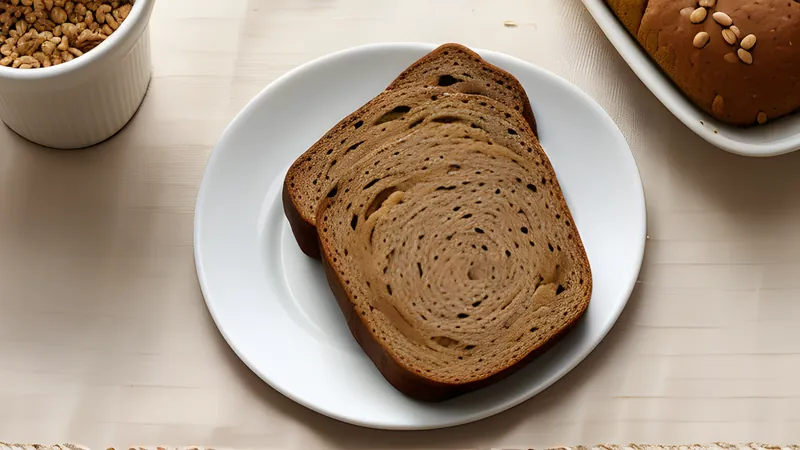
Then you wait a day. This is the instruction people ignore and the one that matters most. A rye loaf out of the oven is still setting: the starch is retrograding, the pentosan gel is firming, and the moisture is redistributing from the wet centre outward. Cut it at four hours and the knife will drag through a sticky paste, and you will conclude you failed. Cut it at twenty-four hours, wrapped in a tea towel on the counter, and the crumb slices cleanly into thin, dense, moist slices that taste of malt and sour and caraway.
Rupjmaize peaks around day three and is still excellent at day ten. Keep it wrapped in cloth in a bread bin, cut-side down. A plastic bag softens the crust; the fridge is the fastest way to ruin it.
Ingredients, and what you can substitute
Rye malt flour is diastatic malted rye, ground. It brings extra amylase to the scald and a strong malt flavour, and it is the single ingredient hardest to find outside a Baltic or Eastern European shop or an online mill. Dark malt extract at 25 g is a decent stand-in for flavour and colour, though it contributes no enzyme activity, so give the scald the full three hours. Skipping it entirely gives a paler, less malty loaf that is still good.
The starter must be rye. A white wheat starter will work in the sense that the loaf will rise, but rye starters carry a different microbial population — more heterofermentative lactobacilli, producing more acetic acid alongside the lactic — and the sourness of rupjmaize depends on it. If you only have a white starter, feed it on wholegrain rye for three days and it will convert.
Treacle is for colour and a background bitterness. Black molasses is darker and more assertive; golden syrup is useless here.
Salt at 14 g on roughly 900 g of flour is about 1.5%, on the low side deliberately. Salt slows fermentation, and rye dough that ferments slowly at this hydration risks the starch attack described above.
What to do with it
Thin slices, hard butter, and nothing else is the Latvian default and hard to improve on.
Beyond that: it is the base for open sandwiches in the same way a Danish sourdough rye is, and it stands up to anything oily or salty — herring, smoked fish, cured meat, a hard sheep’s cheese. Latvians make a dessert called rupjmaizes kārtojums by layering toasted rye breadcrumbs with whipped cream and cranberry jam, which sounds unlikely and is one of the best things in the Baltic. Toasted and ground, it thickens soups. Stale, it goes into maizes zupa, a sweet bread soup with dried fruit and cream.
If this is your first rye and the scald and the sourdough feel like a lot, a rye caraway soda bread will give you the flavour in ninety minutes with none of the engineering, and a Finnish ruisleipä is a gentler entry into fermented rye. But rupjmaize is worth building up to. Very few loaves reward this much attention this reliably, and none of them keep for two weeks.
Related Content