Rundown: The Coconut Fish Stew
Coconut milk cooked down to oil, then fish poached in the custard it leaves
Contents
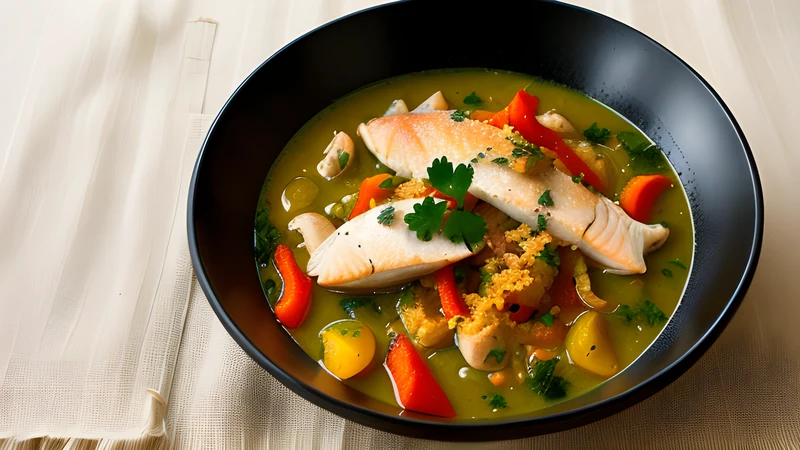
↓ Jump to recipeRundown is a dish named after the exact thing that makes it work: you run the coconut milk down. You put it in a wide pan and cook it, and keep cooking it, well past the point where a nervous cook would stop, until it thickens, turns the colour of clotted cream and finally splits, releasing a slick of fragrant coconut oil. That broken, custardy, half-oily base is the entire flavour of the dish, the thing everything else is built on, and once you have tasted fish poached in it you will understand why Jamaicans and their neighbours across the Caribbean have been cooking coconut milk to death on purpose for generations.
Rundown: The Coconut Fish Stew
Ingredients
- 600 g firm white fish fillets (snapper, mackerel or cod), in large chunks
- Juice of 1 lime
- 800 ml full-fat coconut milk (2 tins), or fresh coconut milk if you have it
- 1 onion, sliced
- 3 garlic cloves, sliced
- 1 thumb ginger, julienned
- 3 spring onions, chopped
- 1 Scotch bonnet, whole
- 4 sprigs thyme
- 6 whole allspice berries (pimento)
- 1 red pepper, sliced
- 1 tomato, chopped
- 1 tsp fine salt, plus more to taste
- 1 tsp coarsely ground black pepper
Method
- Toss the fish chunks with the lime juice and a pinch of salt; set aside while you start the sauce.
- Pour the coconut milk into a wide, heavy pan. Bring to a lively simmer and cook, stirring often, for 12 to 18 minutes until it thickens, turns pale gold and the oil begins to separate out at the edges. This is the 'rundown', or custard.
- Add the onion, garlic, ginger, spring onions, whole Scotch bonnet, thyme and allspice. Cook in the coconut oil for 4 to 5 minutes until fragrant and softened.
- Stir in the red pepper and tomato and cook 3 minutes until the tomato collapses.
- Slide in the fish and any lime juice, spoon the sauce over, and simmer gently for 6 to 8 minutes until the fish is just cooked and opaque. Do not stir hard or the fish will break up.
- Taste, adjust the salt, remove the Scotch bonnet, and serve over boiled green bananas, yam or rice.
Coconut, salt fish and the logic of the coast
Rundown (also spelled run down or rondon, and known as rondón along the Caribbean coast of Nicaragua, Costa Rica and Panama) is a coastal dish born of two things those coasts had in abundance: coconuts and fish. Before refrigeration, the classic version used salted mackerel or pickled shad, cheap preserved fish that a slow coconut braise could soften and transform. The coconut palm gave both the milk and the cooking fat, rendered right there in the pan, which meant a cook needed almost nothing bought-in to make something rich and sustaining.
You find close relatives all along the old Caribbean trade routes, wherever African, Indigenous and later South Asian cooking met coconut groves. The Nicaraguan and Costa Rican rondón of the Miskito and Afro-Caribbean communities is a bigger, brothier affair, often a whole seafood-and-tuber stew with cassava, plantain and whatever the day’s catch turned up. The Jamaican version is tighter and more concentrated, the sauce clinging to the fish rather than swimming around it. What unites them is that first act of reducing the coconut milk, which the Jamaican name captures so precisely. On the Jamaican side, the dish belongs to the same repertoire of coconut-and-thyme cooking that gives the island its rice and peas and its many one-pot fish dinners, and it carries the unmistakable fingerprint of the place: Scotch bonnet, thyme, allspice and spring onion, the quartet that seasons almost everything Jamaican.
The technique: running the milk down
Everything about rundown rests on one skill, and it is worth taking slowly the first time. Pour full-fat coconut milk into a wide pan, the width matters because you want surface area for evaporation, and bring it to an active simmer. Stir it often and watch it change. First it just reduces and thickens. Then it takes on a pale golden colour. Then, somewhere around the fifteen-minute mark, it begins to break: little beads of clear oil appear at the edges and the mass turns grainy and custard-like. That is the rundown. The emulsion of the coconut milk has split into solids and oil, exactly the way it is supposed to.
Two things ruin this stage. Low-fat or watery tinned coconut milk will never split properly because there is too little fat to release; buy the richest full-fat tins you can, or better, use fresh coconut milk. And walking away lets the bottom catch and scorch, which throws a bitter note through the whole dish. Stay with it, stir, and trust the process even when it looks curdled, because curdled is the goal.
Once the milk has run down you have a pan of intensely coconutty custard sitting in its own aromatic oil. Now the aromatics go in and fry gently in that oil: onion, garlic, ginger, spring onion, thyme, allspice and a whole Scotch bonnet for perfume. Then pepper and tomato for sweetness and body. Only at the very end does the fish slip in, to poach gently in the thick sauce for a few minutes until just opaque.
Handling the fish
Firm white fish holds together best: snapper, cod, pollock, or the traditional mackerel if you like an oilier, more assertive fish. Cut it into large chunks so it survives the cooking, salt it lightly with lime juice while the sauce comes together (the acid firms the flesh a little and freshens it), and add it late. Once the fish is in the pan, treat it gently. Spoon sauce over the top rather than stirring, and resist poking it, because overworked fish falls apart and clouds the sauce. Six to eight minutes at a bare simmer is plenty; the fish keeps cooking in the residual heat once you take it off.
If you want to honour the original, seek out salted mackerel or saltfish, soak it overnight in several changes of water to draw out the salt, then flake it in. It brings a deep, savoury funk that fresh fish cannot, and it is how many Jamaican grandmothers still make it. Whole fish works beautifully too: a scored snapper or two, lowered into the sauce and basted, turns rundown into a centrepiece, though you then need to warn people about the bones. Whatever you use, buy it as fresh as you can and keep the pieces generous, because small thin scraps overcook in seconds and vanish into the sauce.
Faults, fixes and reading the pan
The single most common failure is a sauce that stays white and thin and never breaks. Almost always the coconut milk was too dilute, or the heat too gentle and given up on too early; push the heat a little and give it the full quarter of an hour, and keep the pan wide so steam can escape. A sauce that turns bitter has caught on the base, so lower the flame the moment the milk thickens and stir more insistently. If the finished stew tastes flat, it wants salt and a squeeze of lime rather than more spice, because coconut is sweet and needs the correction. And if the fish has collapsed into shreds, it went in too early or was stirred: next time add it late, keep the simmer bare, and move the pieces only by spooning sauce over them.
Why splitting the milk tastes better
The reason a reduced, broken coconut sauce beats one made by simply warming the milk comes down to what heat does to fat. Coconut milk is an emulsion, tiny droplets of coconut oil suspended in water and held there by the coconut’s own proteins. When you cook it hard, the water evaporates and the proteins can no longer keep the oil in suspension, so the emulsion breaks and the oil is freed. That liberated oil is where a lot of coconut flavour lives, and frying the aromatics directly in it extracts and carries flavour in a way that simmering them in intact milk never manages. It is the same reason a curry base is fried in oil rather than just boiled: fat is a flavour solvent.
There is a browning bonus too. As the milk solids concentrate and start to catch very lightly on the pan, they undergo a touch of the Maillard browning that gives roasted foods their depth, adding a faint caramel-nutty note under the coconut. This is the knife-edge you are walking: a little colour is good, a scorched bottom is ruinous, which is exactly why the stirring matters. Keep the heat at a lively simmer rather than a hard boil once the milk starts to thicken, and drag your spoon across the base of the pan regularly to feel for anything sticking.
If your household is nervous about a sauce that looks curdled, remember that it comes back together into something glossy and cohesive the moment the tomato and aromatics go in and start giving off their own moisture. The alarming grainy stage lasts only a minute or two before the dish pulls itself into a thick, unified sauce. The transformation is one of the small dependable magic tricks of the kitchen, and after you have watched it happen once you stop worrying and start trusting your eyes.
Tips, swaps and storage
Coconut milk quality. This is the one ingredient you cannot skimp on. Look for tins listing coconut extract at 60 per cent or higher and no thickeners; guar gum and stabilisers actively prevent the milk from splitting. If your milk simply refuses to break, it is almost always because it was too dilute. Cracking a fresh coconut and pressing your own milk is the gold standard, and worth doing once so you know the flavour you are chasing, but a good full-fat tin gets you nearly all the way.
Heat. Keeping the Scotch bonnet whole gives you its fruity aroma without unleashing full heat into the sauce. For more fire, pierce it once; for serious heat, slice it. Fish out the whole pepper before serving so nobody bites into it by accident. Handle the bonnet with respect, though: wash your hands and your board straight after, because the oils linger and will find your eyes hours later.
Vegetables and extras. Some cooks add okra for body, or a handful of small dumplings (spinners) rolled from flour and water and dropped in with the aromatics to cook in the sauce. Diced pumpkin melts in nicely and sweetens the pot, and a squeeze of lime at the table lifts the whole bowl. A handful of callaloo or spinach stirred in at the end adds colour and turns it into a fuller meal.
Storage. Rundown keeps two days in the fridge and reheats gently, though the fish softens further. Reheat over low heat and add a splash of water or coconut milk to loosen the sauce, which thickens as it sits. It freezes poorly because of the fish, so make what you will eat.
The traditional accompaniments are the starchy backbone of Jamaican cooking: boiled green bananas, yam, dumplings or plain rice, all there to carry the rich sauce. On a bigger table rundown is the gentle, mellow foil to sharper island dishes; serve it alongside vinegary escovitch fish for contrast, after a plate of smoky jerk chicken, or as a coconut companion to a pot of pelau. It is humble food with a deceptively clever technique at its heart, the sort of cooking that turns two tins of coconut milk and a piece of cheap fish into something that tastes like the coast.
Related Content