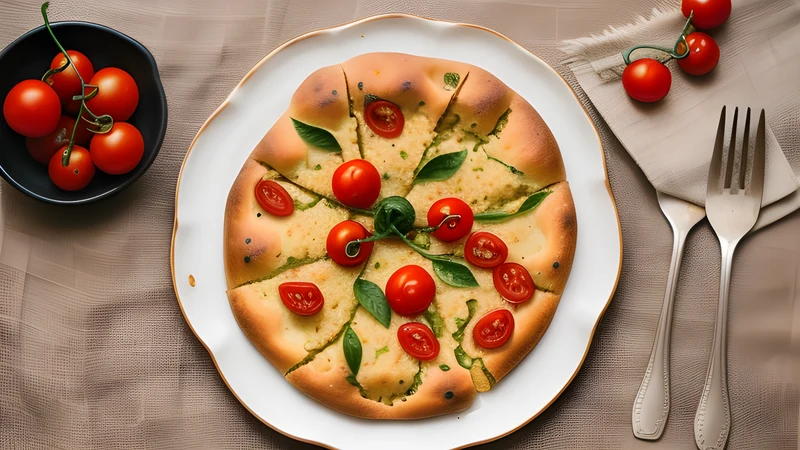
Ruisleipä: Finnish Sour Rye Rounds
A hundred-per-cent rye dough, a hole in the middle, and a starter that wants no wheat at all
Contents
↓ Jump to recipeRye dough behaves like wet clay, and every bread technique you own is going to work against you. There is no gluten network to build, so kneading achieves nothing. There is no windowpane test. The dough refuses to double, it slumps out of any shape you stretch it into, and flouring your hands enough to stop the sticking will ruin the hydration. The first four times I made ruisleipä I fought it. The fifth time I treated it as clay and it worked immediately.
That is the honest headline. Ruisleipä is easy once you stop expecting it to behave, and it is impossible while you still do.
Ruisleipä: Finnish Sour Rye Rounds
Ingredients
- 100 g active rye sourdough starter (100% hydration, fed 8 hours earlier)
- 400 g lukewarm water (30°C), for the sponge
- 300 g wholegrain rye flour, for the sponge
- 350 g wholegrain rye flour, for the final dough
- 150 g lukewarm water (30°C), for the final dough
- 14 g fine sea salt
- 1 tbsp black treacle or dark malt extract (optional, for colour)
- 50 g wholegrain rye flour, for dusting and shaping
Method
- Make the sponge: whisk the 100 g starter into the 400 g lukewarm water until dispersed, then stir in the 300 g rye flour. It will be a thick batter. Cover and leave at 24–26°C for 12–16 hours, until domed, bubbly and smelling sharply sour.
- Reserve 100 g of the ripe sponge in a clean jar — that is your starter for the next bake. Feed it 50 g rye flour and 50 g water and refrigerate.
- To the remaining sponge, add the 350 g rye flour, the 150 g water, the salt and the treacle if using. Mix with a wooden spoon or a stand mixer on low for 4 minutes. The dough will be sticky and paste-like, closer to thick porridge than bread dough. Do not knead it and do not add extra flour to fix the stickiness.
- Cover and leave to rise at 26°C for 2.5–3 hours. It will not double. It is ready when the surface is riddled with small holes and a fingertip pressed in leaves a mark that fills back only halfway.
- Dust the worktop heavily with rye flour. Scrape the dough out and divide into 4 pieces of about 320 g each.
- With well-floured hands, pat each piece into a flat round about 18 cm across and 1.5 cm thick. Handle it like clay rather than dough — patting and pressing, never stretching.
- Cut a 3 cm hole in the centre of each round with a small glass or cutter. Prick the surface all over with a fork, right through to the tray.
- Transfer to baking trays lined with parchment. Cover with a cloth and prove for 45–60 minutes, until the surface cracks show fine lines.
- Meanwhile heat the oven to 250°C (230°C fan, gas mark 9) with a heavy tray on the bottom shelf.
- Slide the rounds in and throw 100 ml of boiling water into the hot bottom tray to make steam. Bake for 10 minutes at 250°C, then drop to 200°C (180°C fan) and bake for a further 22–25 minutes, until the rounds sound hollow and register 96°C at the centre.
- Cool on a wire rack for at least 4 hours before cutting. Rye bread cut warm is gummy and cannot be rescued.
Finland’s national loaf, and the hole in the middle
Rye reached Finland around two thousand years ago, and it took over because it did what wheat could not: it survives on thin, acid, poorly drained soil and it ripens far enough north to matter. By the medieval period, rye was the calorie base of the entire country. In 2017, in a national vote run to mark Finland’s centenary, ruisleipä was chosen as the national food, beating every other candidate by a wide margin.
The hole is the most interesting part. Traditional ruisleipä was baked in batches two or three times a year, in a masonry oven, and then threaded onto a long pole — riihi or leipäorsi — suspended from the ceiling of the cottage. The rounds dried out over months and were eaten hard, softened in soup or broth or milk. A household might bake eighty rounds at midsummer and eat them until Christmas. The hole exists so the loaf can hang.
That storage regime shaped the loaf itself. Flat, so it dries evenly. Thin, so it dries fast. Fiercely sour, because acidity is antimicrobial and a sour loaf keeps for months where a sweet one moulds in a fortnight. Pricked all over, because trapped steam would puff it and a puffed loaf will not dry properly. Every quirk of this bread is a solution to a storage problem nobody has any more, and the bread survives anyway because it happens to be delicious.
Western Finland baked the flat holed rounds. Eastern Finland — Karelia — baked softer, taller loaves and ate them fresh. The western version is the one that got photographed, and it is the one people mean by ruisleipä.
Why rye behaves the way it does
Two facts explain everything.
Rye has gluten proteins, but they cannot form a network. Rye contains gliadin and glutenin, the same proteins as wheat, in reasonable quantity. What it also contains is pentosans — branched arabinoxylan chains that make up around 8% of rye flour against 2–3% in wheat. Pentosans absorb up to ten times their own weight in water and they physically get in the way, blocking the protein strands from linking into an elastic web. So rye dough gets its structure from a starch-and-pentosan gel instead. That gel is what holds the gas, and it is why the dough feels like putty and why kneading does nothing at all.
Rye is full of active amylase. Amylase is the enzyme that chops starch into sugars, and rye flour has a lot of it. Left alone in a warm, neutral dough, rye amylase will digest the starch gel that is holding the loaf together, and you will pull a wet, sticky brick out of the oven — bakers call this a starch attack. Acidity stops it. Rye amylase is largely inactivated below about pH 4.5, which a proper sour sponge achieves comfortably.
That is why ruisleipä must be sour. The sourness is the structural mechanism that lets the loaf exist, and the flavour is a side effect of the engineering. This is also why you cannot make good rye bread with commercial yeast and a splash of vinegar in three hours; you need the long acid build.
The starter, and keeping it pure rye
Keep a dedicated rye starter, fed only on wholegrain rye flour and water at equal weights. A wheat starter will work in a pinch, but rye’s own microflora — dominated by Lactobacillus species that thrive on its higher mineral and pentosan content — is more acid-productive, and a pure rye culture reaches the pH you need faster and more reliably.
Feeding it is easy. The 100 g you reserve from each bake is the next bake’s starter — this is the traditional Finnish method and it is why some family cultures are genuinely a century old. Store it in the fridge, feed it once a week if you are not baking, and take it out and feed it eight hours before you build a sponge.
If you are starting from nothing: mix 50 g wholegrain rye flour with 50 g water at 28°C, leave covered for 24 hours, then discard half and refeed daily. A rye starter usually gets active in five to seven days, which is faster than wheat. It should smell of apple skins and vinegar with a faint acetone edge. Anything that smells of nail varnish remover alone is underfed and hungry.
Temperature is the lever. Sponge at 24–26°C for lactic sourness — round, yoghurt-like. Sponge cooler, at 20°C, and you push the culture towards acetic acid and get a sharper, more vinegary loaf. Both are correct ruisleipä; the warm version is the everyday one.
Shaping, baking and what goes wrong
Wet hands or floured hands? Floured, for this. Wet hands work for high-hydration wheat doughs where you want to avoid adding flour; rye is so sticky that water alone gives up after ten seconds. Use a generous bed of rye flour on the bench and keep dusting your palms. The flour that clings to the outside becomes the pale bloom on the finished round, which is exactly what you want.
Do not stretch, only pat. There is no gluten to align, so stretching just tears the starch gel and the round will crack open unevenly in the oven. Pat down from the centre outwards with flat palms.
Prick right through. Fork holes all over the surface, going all the way to the tray. This vents steam and keeps the round flat. Skip it and you get a pitta.
The steam and the heat drop. Ten minutes at 250°C with steam sets the crust and gives the loaf its final oven spring, such as it is. Dropping to 200°C for the rest bakes the interior through without burning the sugars, which caramelise fast in a rye dough because amylase has already made plenty of them.
96°C, and a four-hour rest. Rye is done at 96°C internal, and it is genuinely not finished until it has cooled. The starch gel retrogrades — reorganises into a firm structure — over several hours after baking, and cutting into a warm rye loaf gives you a gummy, sticky crumb that will make you think you failed. You did not. Wait. Twenty-four hours is better than four.
Hydration, and the number that actually matters
The dough here runs at about 85% hydration by baker’s percentage, which in a wheat loaf would be an alarming ciabatta and in rye is ordinary. Pentosans are the reason: they lock up water that would otherwise be free to make the dough slack, so a rye dough at 85% feels stiffer than a wheat dough at 70%.
The practical consequence is that you cannot judge rye by feel if your instincts were trained on wheat. Weigh everything. A rye dough that feels “about right” to a wheat baker is usually 10% under-hydrated, and it will bake into something with the density of a paving slab and a crumb that crumbles into dust under a knife.
The other consequence is that adding flour to fix stickiness is always wrong. Stickiness in rye is a permanent property of the dough, present at every hydration, and it never goes away no matter how much flour you work in. All you achieve is a dry loaf. Accept the stickiness, use a dough scraper, and keep the bench floured.
Water temperature is worth measuring. Thirty degrees for both the sponge and the final dough. Rye ferments fast and the culture is temperature-sensitive: at 35°C you shift the balance towards heterofermentative bacteria and the loaf turns harsh; at 20°C the sponge takes twenty hours instead of fourteen and may not reach the pH you need before the amylase starts winning. A cheap probe thermometer settles it.
The loaf came out short and dense with a dark, wet streak near the base. That is the starch attack described above, and it means your sponge never got sour enough. Either the starter was sluggish, or the sponge fermented too cold, or you cut the 12–16 hours short. Give the next sponge a full sixteen hours somewhere genuinely warm — the airing cupboard, or an oven with only the light on — and it will not happen again.
The rounds spread into flatbreads on the tray. Over-fermented final dough. Rye’s structure is fragile and it degrades once the acid has done its job; three hours is the outer limit at 26°C, and in a hot kitchen two hours may be plenty. Trust the fingertip test rather than the clock.
Storage, eating and variations
Wrapped in a linen cloth on the worktop it keeps for a week and improves for the first three days. Never refrigerate it — the fridge is the fastest possible staling temperature for any bread. It freezes well sliced.
Eat it with butter, thickly, and salted. That is the Finnish default and it is hard to beat. Beyond that, this loaf is the plate for lohikeitto and for karjalanpaisti, and its sourness is doing real work against the cream and the fat in both.
For a crisper, thinner version, roll the rounds to 5 mm and bake for 18 minutes — you arrive somewhere close to knäckebröd, the Swedish crispbread, which is the same dough logic taken to its conclusion. For the softer, taller, sweeter version of Nordic rye, Danish rugbrød uses cracked grains and seeds in a tin and is a different bread entirely despite the shared surname.
And if you have a round going stale, punch it into pieces and drop them into hot milk with a knob of butter. That is leipävelli, deeply unfashionable, and the best thing that can happen to a stale round.
Related Content