Rosemary Sea-Salt Focaccia
Dimpled, golden and drenched in good olive oil
Contents
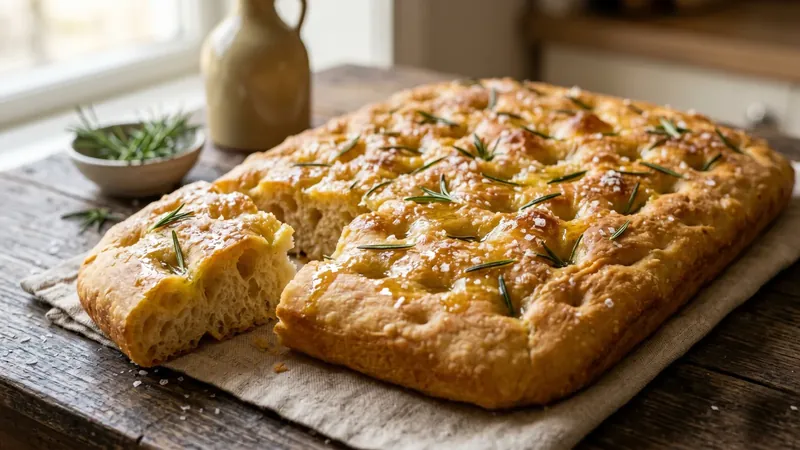
↓ Jump to recipeFew breads reward patience like focaccia. The twist here is time: a long, cold overnight rise that develops a deep, almost savoury flavour and a wonderfully open, bubbly crumb, finished with a fragrant rosemary and flaky-salt top. The result is golden and crisp where it meets the oiled tin, soft and airy within, and unapologetically rich with good olive oil. It is best eaten warm, torn straight from the tray, and it asks nothing of you beyond a bowl, a spoon and a fridge with a shelf free overnight.
The Story
Focaccia is one of Italy’s oldest breads, a flat, oil-rich loaf whose roots reach back to the ovens of antiquity. Its very name points to that age: it derives from the Latin panis focacius, from focus, meaning hearth, and describes a bread baked in the heat of the fire. Long before domestic ovens were common, simple flatbreads of this kind were cooked on hot stones or under the ashes, and focaccia is one of their direct descendants. The Romans ate a version of it, and the type survived across the Mediterranean in dozens of regional forms.
The dish is most closely tied to Liguria, the coastal region in north-west Italy around the port city of Genoa, where focaccia is woven into daily life. The Ligurian style, sold as fugassa in the local dialect, is generously oiled, dimpled and often eaten plain or simply with rosemary, sometimes at breakfast dipped into a cappuccino, more often through the day as a snack or alongside a meal. The region’s prized olive oil, pressed from the small, sweet Taggiasca olive, is central to its character, and a good focaccia is unashamedly rich with it; the oil is not a garnish but a defining ingredient. Just along the coast in Recco, a cheese-filled version, focaccia col formaggio, is protected by a European PGI designation, which tells you how seriously the region takes its flatbread.
What makes focaccia so forgiving for the home baker is its very wet dough. A high proportion of water relative to flour, around 80 per cent hydration here, produces a slack, sticky mass that needs no real kneading, only gentle folding and time. That high hydration is what gives the finished bread its characteristic open, irregular crumb, full of large and small holes. The long, cold rise in the refrigerator is the quiet hero of the method: the slow, cool fermentation lets enzymes and yeast develop flavour and aroma compounds that a quick warm proof simply cannot, while keeping the dough easy to handle, and it can be stretched conveniently across an evening and the following day.
Rosemary Sea-Salt Focaccia
Ingredients
- 500g strong white bread flour
- 7g (1 sachet) fast-action dried yeast
- 10g fine salt
- 400ml lukewarm water
- 6 tbsp extra-virgin olive oil, plus extra for the tin
- Leaves from 3-4 sprigs of fresh rosemary
- Flaky sea salt, for the top
Method
- Whisk the flour, yeast and fine salt together in a large bowl.
- Add the lukewarm water and 2 tablespoons of the olive oil, and mix to a wet, shaggy dough with no dry flour remaining.
- Cover the bowl and leave at room temperature for 1 hour, giving the dough a few folds in the bowl every 20 minutes if you can.
- Cover and refrigerate overnight, or for at least 8 hours, for a slow rise and better flavour.
- Generously oil a large rectangular baking tin. Tip in the dough and gently stretch it towards the corners, then leave to rise for 1.5 to 2 hours until puffy.
- Heat the oven to 220C (fan 200C). Drizzle the dough with 2 tablespoons of olive oil.
- Oil your fingers and press them firmly all over the dough to make deep dimples right down to the base.
- Scatter over the rosemary leaves and flaky sea salt, and drizzle with the last of the olive oil.
- Bake for 22-25 minutes until deep golden and crisp at the edges.
- Drizzle with a little more oil if you like, cool slightly in the tin, then lift out and cut into squares.
Why the dimples matter
The dimpling is more than decoration. Pressing deep wells into the dough before baking holds pools of olive oil and salt, which season the bread from the surface down and help create that signature texture, soft beneath a lightly crisped top. Press with oiled fingertips right down to the base of the tin, hard enough to leave craters that do not spring back; timid dimples smooth themselves out in the oven and you lose the effect. The wells also anchor the rosemary and salt so they stay put rather than sliding off.
Two things quietly decide whether your focaccia sings or sulks. The first is the tin: use metal, not glass or ceramic, and oil it generously, at least two tablespoons pooled across the base. That oil fries the underside of the dough into a shell that is somewhere between a crust and a crisp, and it is the best part of the whole bread. The second is not rushing the final proof. The dough should look visibly puffed and jiggly, the surface pocked with small bubbles, before it goes in. Underproofed focaccia bakes dense and tight; give it the full two hours in a warm kitchen if it needs them.
What can go wrong
If your crumb comes out tight and cakey rather than open and holey, the usual culprit is too little water or too much flour worked in during shaping. Resist the urge to add flour when the dough feels sticky; oiled hands, not floured ones, are how you handle wet dough. If the top browns before the base crisps, your oven is running hot at the top, so move the tin to a lower shelf for the last five minutes. And if the whole thing tastes flat, it almost always wants more salt, both the fine salt in the dough and a confident scatter of flakes on top.
A word on the water temperature, because it quietly decides your timings. Lukewarm means blood temperature, around 30 to 35C: warm to the fingertip but never hot. Water above about 50C starts to kill the yeast, which is the commonest reason a dough “won’t rise”. If your kitchen is cold, the overnight fridge stage may need the full twelve hours rather than eight; if it is a warm summer kitchen, keep an eye on the room-temperature hour so the dough does not over-ferment and collapse. The dough is ready to bake when it has grown noticeably and wobbles like a set custard when you nudge the tin.
One more note on the olive oil, since it is doing most of the flavour work. This is not the place for a delicate finishing oil, nor for a flavourless light one; a robust, peppery everyday extra-virgin is ideal, because heat mutes its finer notes and you want something with enough character to survive the oven. The oil in the tin and the oil drizzled on top play different roles: the base oil fries and crisps, while the top oil bastes the surface and carries the salt and rosemary into the crumb.
Rosemary and coarse sea salt are the classic Ligurian topping, the resinous, piney herb playing beautifully against the richness of the oil. Strip the leaves from woody stems and, if you like, bruise them lightly between your fingers first to release the oils. Scatter them just before baking rather than earlier, or they scorch and turn bitter in the heat.
Substitutions, storage and variations
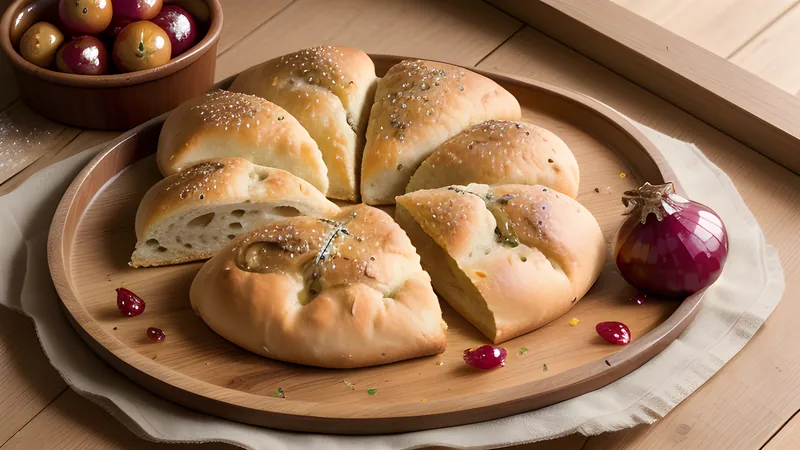
From the plain rosemary version the possibilities open up. Halved cherry tomatoes pressed into the dimples burst and caramelise; thinly sliced red onion softens and sweetens; olives, halved and stoned, add salt and bite; and in autumn a scatter of small grapes turns it into schiacciata all’uva, the Tuscan harvest bread. A handful of thyme or oregano can stand in for the rosemary. If you cannot get strong bread flour, plain flour works but gives a slightly less chewy, less open crumb.
Focaccia is at its best on the day, still faintly warm, but it keeps for two days wrapped once fully cool. Do not refrigerate it, which turns bread stale faster; a bread bin or a paper bag is better. Day-old slabs toast beautifully or split and grill into a base for a sandwich. It also freezes well cut into squares, wrapped tight, then reheated for a few minutes in a hot oven to bring back the crisp edge.
If you enjoy this slow, oily, dimpled style of bread, try the sweeter, jammier caramelised onion and thyme focaccia, which uses the same dough as its base, or the salt-and-butter route of pretzel knots with brown butter and mustard salt for another savoury bake built around a proper hit of seasoning. However it is served, the same simple pleasures define focaccia: good oil, good salt, and a fragrant herb scattered over a soft, golden crumb.
Related Content