Romazava: Madagascar's Beef and Bitter Greens
A ginger-scented beef broth thickened with greens that bite back

Contents
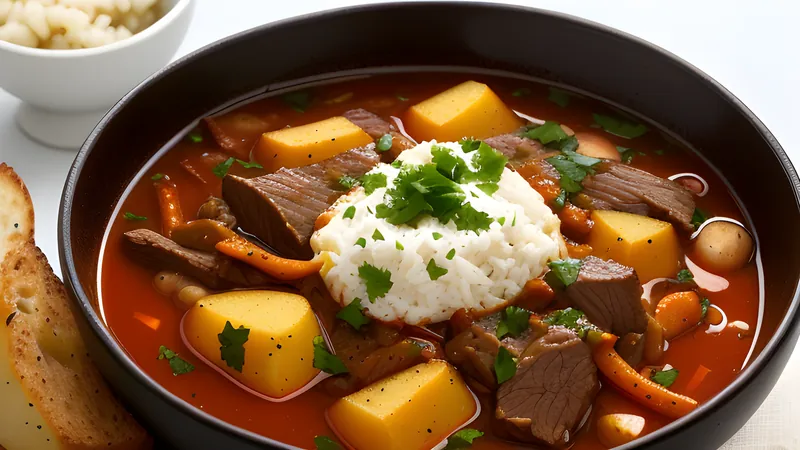
↓ Jump to recipeRomazava is the dish most Malagasy people mean when they say home cooking: chunks of beef simmered down until they surrender, in a broth built on ginger, tomato and garlic, thickened at the end with a heap of dark, slightly bitter greens. It is often described as Madagascar’s national dish, though nobody legislated the title; it earned it the ordinary way, by being the meal that turns up at the family table more often than any other, cooked in slightly different versions in every household on the island. My version leans on watercress and spinach, which are far easier to find than the traditional anamalaho, but keeps the peppery bite that makes romazava taste unmistakably of itself rather than of generic beef stew.
That bite is the whole point of the dish, and it comes from anamalaho, also called brède mafana or “hot leaf,” a small serrated green related to the Acmella plant family that grows wild across Madagascar’s central highlands. Chewing it produces a strange, tingling, faintly numbing sensation on the tongue, similar to the buzz of Sichuan peppercorns, and traditional romazava depends on that sensation as much as on any spice in the pot. Outside Madagascar it is close to impossible to buy fresh, so cooks abroad substitute watercress for its peppery snap, sometimes alongside a pinch of ground Sichuan pepper to chase some of that tingle back into the dish; I have kept the substitution straightforward here, letting watercress carry the bitterness on its own.
Romazava: Madagascar's Beef and Bitter Greens
Ingredients
- 1kg beef shin or chuck, cut into 3cm chunks
- 2 tbsp sunflower or groundnut oil
- 2 large onions, finely chopped
- 6 garlic cloves, finely chopped
- 5cm piece fresh ginger, finely grated
- 4 ripe tomatoes, roughly chopped (or 400g tinned)
- 1.2 litres beef stock or water
- 2 tsp fine salt, plus more to taste
- 1/2 tsp freshly ground black pepper
- 300g watercress, thick stems trimmed, roughly chopped
- 300g spinach, roughly chopped
- 150g spring greens or collard greens, shredded
- 3 spring onions, sliced
- 1 tbsp rice bran oil or extra sunflower oil, to finish
- Cooked white rice, to serve
Method
- Season the beef chunks generously with 1 tsp of the salt. Heat the oil in a heavy-based pot over a medium-high heat and brown the beef in batches, turning to colour all sides, about 8 minutes per batch. Remove and set aside; do not crowd the pot or the meat will steam rather than brown.
- Lower the heat to medium and add the onions to the same pot, scraping up any browned bits from the base. Cook for 6 to 7 minutes until soft and translucent, then stir in the garlic and ginger and cook for 1 minute until fragrant.
- Add the chopped tomatoes and cook for 5 minutes, mashing them into the onions with the back of a spoon, until they break down into a thick, jammy base and the oil starts to separate at the edges.
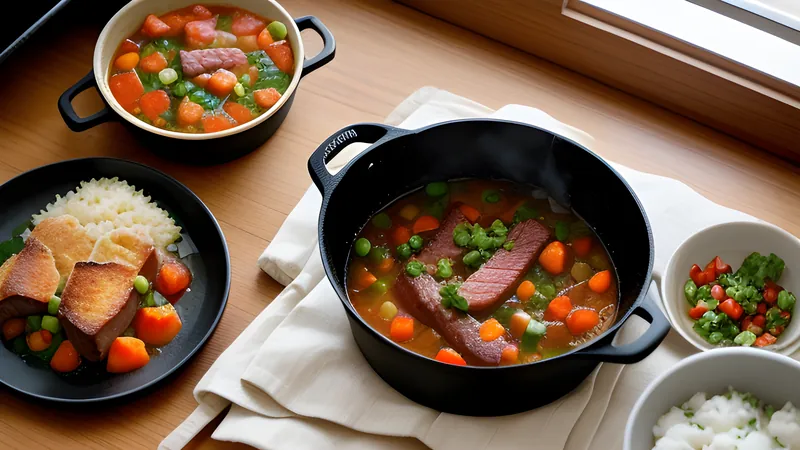
- Return the beef to the pot along with any resting juices. Pour in the stock, add the remaining 1 tsp salt and the pepper, and bring to the boil. Reduce to a gentle simmer, cover, and cook for 1 hour to 1 hour 15 minutes, until the beef is tender enough to break apart with a spoon.
- Stir in the watercress, spinach and shredded greens in stages, letting each batch wilt down for a minute or two before adding the next, since raw greens take up far more room than cooked. Simmer uncovered for a further 10 minutes until the greens are fully tender and the broth has thickened slightly.
- Taste and adjust the seasoning; the broth should be savoury and gently peppery rather than salty. Stir through the spring onions and the rice bran oil off the heat for a glossy finish.
- Ladle into bowls with plenty of the broth and greens over each portion of beef, and serve with a mound of plain white rice alongside, the rice there to soak up the broth rather than sit under it.
A broth built for stretching one animal across a village
Romazava’s structure, a small amount of beef stretched through a large pot of broth and greens, reflects a real economic history rather than a stylistic choice. Cattle, zebu, hump-backed and central to Malagasy life, culture and ceremony, are valuable animals, more likely to be slaughtered for a wedding, a funeral or a market day than for an ordinary Tuesday dinner. Romazava is what a household does with a modest cut of beef and whatever greens are growing nearby: it turns a small quantity of meat into a full pot that feeds a family, with the broth itself, saturated with beef flavour and ginger, doing as much of the eating as the meat chunks do.
The dish sits at the centre of the highland Merina cooking tradition, where rice, “vary” in Malagasy, is the base of nearly every meal and romazava is the “laoka,” the accompaniment that makes the rice worth eating. Malagasy meals are built around that pairing: a large mound of rice per person, and a smaller, intensely flavoured laoka spooned over or alongside it. Romazava, with its abundant broth, is particularly suited to that structure, since the liquid seeps into the rice and carries the ginger and beef flavour through every mouthful, which is worth remembering when you serve it; a shallow puddle of broth under too little rice wastes half the dish’s purpose.
Ginger and garlic, cooked down slowly with onion until they nearly dissolve into the broth, are non-negotiable here, giving romazava its warm, slightly sharp backbone. Tomato adds body and a mild acidity that balances the greens’ bitterness, and salt is really the only other seasoning that traditional versions call for; the dish relies on the beef, the aromatics and the greens doing the flavour work rather than on a long spice list, which is part of what makes it feel so genuinely like everyday cooking rather than an occasion dish.
Zebu, Ceremony and Everyday Meat
Zebu cattle carry weight in Malagasy life well beyond the dinner table. They are slaughtered at famadihana, the reburial ceremony in which a family exhumes and rewraps the bones of ancestors before returning them to the tomb, and at weddings and funerals, where the number of animals killed signals the standing of the family doing the hosting. That context is worth holding onto when you cook romazava with a supermarket cut of beef shin, because the dish’s entire structure, a small amount of meat stretched through a huge pot of broth and greens, was built by people for whom beef was never an everyday extravagance to begin with. Chicken and pork appear far more often in ordinary Malagasy cooking than beef does, which is part of why romazava, built specifically around beef, carries a slightly special-occasion charge even in its most everyday, weeknight form.
Choosing your greens and getting the bitterness right
Since anamalaho rarely travels beyond Madagascar, the substitution question matters more here than in most recipes. Watercress is the closest widely available match: it carries real peppery heat and a slight bitterness that survives cooking, unlike milder greens that fade into blandness once wilted. Spinach adds bulk and a silkier texture once cooked down, while a shredded firmer green, spring greens or collard greens, holds a little more structure in the finished bowl so every spoonful is not entirely soft leaves. Using all three in combination gets closer to the layered texture of a proper anamalaho-based romazava than any single green would on its own.
If you can find Chinese watercress or a Sichuan-pepper-adjacent bitter green through an Asian grocer, using it in place of some of the spinach pushes the dish closer to the tingling original; a small pinch of ground Sichuan pepper stirred in with the ginger does something similar without needing to track down an unfamiliar leaf at all. Whatever greens you settle on, add them in stages rather than all at once. Raw greens are deceptively bulky and will not fit in the pot in one go, and staggering the additions means each batch wilts evenly instead of the bottom layer overcooking while the top layer is still raw and floating above the broth line.
Anamalaho itself does turn up outside Madagascar in a few specialist and Asian grocers, sometimes under its English nickname “toothache plant” or its Acmella oleracea botanical name, usually dried or as a paste rather than fresh; if you find it, use it sparingly alongside the watercress rather than in place of it, since it’s potent enough that a little completely changes the bowl.
Rice: The Vary Side of the Plate
Malagasy households eat more rice per person than almost anywhere else in the world, and the word for rice, vary, doubles as the word for food itself in everyday speech; a meal without rice on the table barely counts as a meal at all. That context shapes how romazava should be served: the rice mound comes first and is generous, easily two-thirds of the plate, with the beef and greens spooned over as the laoka rather than served as an equal-sized portion alongside it. Plain, well-rinsed white rice, cooked until the grains hold together but aren’t sticky, is the right base; a rice cooker set to a slightly looser water ratio than usual gives the softer, broth-absorbing texture a Malagasy table expects, rather than the firmer grains suited to a stir-fry.
Method notes, storage and what tends to go wrong
Beef shin or chuck are the right cuts because their connective tissue breaks down into gelatine over the hour-plus simmer, thickening the broth naturally and leaving the meat properly tender rather than merely cooked through. A leaner cut like sirloin will turn dry and stringy over that same simmer time and gains you nothing in return; save it for a quick-fried dish instead. Browning the beef properly before it goes anywhere near the liquid matters more than it looks like it should, since that caramelisation on the surface of the meat is where a good share of the finished broth’s depth comes from; a pot of beef simmered straight from raw tastes noticeably flatter.
The most common misstep is adding the greens too early, before the beef is properly tender, which leaves you either with mushy, grey greens by the time the meat is finally done, or with beef still tough because you pulled the pot off the heat to save the greens. Wait until the meat genuinely yields to a spoon before wilting anything in. The second misstep is under-seasoning the broth itself; because so much of romazava’s volume is water and greens, it needs a firmer hand with salt than a drier stew would, tasted and adjusted right at the end once everything has had time to meld.
Romazava also adapts well to a pressure cooker if you want to shortcut the simmer: brown and build the base as written, then pressure-cook the beef in the stock for 35 minutes at high pressure before releasing, adding the greens afterward in the same open pot as normal, since they only need the last ten minutes and don’t want to be under pressure at all. A slow cooker works too, six hours on low for the beef and broth stage, with the greens still added at the very end on the hob, or in the slow cooker’s last half hour with the lid off so they wilt rather than steam into mush.
Romazava keeps well for up to three days in the fridge, and like most beef-and-broth dishes it improves on the second day as the ginger and garlic settle further into the liquid; reheat gently on the hob rather than in a rush, since the greens turn stringy if boiled hard a second time. It also freezes reasonably well for up to two months, though the texture of the greens softens further on thawing, so many Malagasy cooks freeze just the beef and broth and wilt fresh greens in only when reheating, which keeps the peppery bite intact.
Regional and Household Variations
Coastal households sometimes swap some or all of the beef for pork, a dish usually called romazava an-kisoa, cooked the same way but with a shorter simmer since pork shoulder tenderises faster than beef shin. Others fold in a handful of dried shrimp or a spoonful of fish sauce alongside the tomatoes for a savoury undertow that isn’t traditional in the highland version but has crept in along the coast where seafood flavourings are closer to hand. In leaner households the beef is sometimes reduced to almost a garnish, a few chunks stretched through a very large pot of greens and broth, closer in spirit to a vegetable soup with meat in it than a beef stew with vegetables added, which is its own honest version of the dish rather than a lesser one.
The idea of a broth-heavy stew built to stretch meat through bitter or leafy greens is not unique to Madagascar; it echoes across the continent in dishes like ndole, Cameroon’s bitterleaf and groundnut stew, which leans on peanuts rather than tomato for body, and in the quick, weeknight logic of sukuma wiki, the collard-green stew that stretches a Kenyan week. Romazava sits comfortably alongside both: a pot built from patience and a handful of ordinary ingredients, asked to feed more people than the shopping list would suggest, and doing it with genuine, peppery character rather than by padding itself out with filler.
Related Content