Risotto al Barolo: The Wine-Stained Rice of the Langhe
A whole bottle of tannic red, reduced until it stops fighting
Contents
↓ Jump to recipeCooking with a bottle of Barolo is an act of faith. The wine costs more than everything else in the pan combined, it is tannic enough to strip enamel when young, and the received wisdom says never to cook with anything you would not drink — which cuts both ways, because a good Barolo is something you would rather drink.
Do it anyway. Risotto al Barolo is one of the few dishes where the wine’s structure survives cooking and becomes the point. What lands in the bowl is purple-black, slightly astringent, deeply savoury, and unmistakably of one place. It is also, if you get the method wrong, an angry, drying, bitter thing that ruins a bottle. The difference is one step.
Risotto al Barolo: The Wine-Stained Rice of the Langhe
Ingredients
- 750 ml Barolo, Barbaresco or a serious Nebbiolo (one bottle)
- 1.2 litres beef or chicken stock, well seasoned
- 320 g Carnaroli rice
- 1 small onion, very finely chopped
- 80 g unsalted butter, cold and cubed
- 2 tbsp olive oil
- 80 g Parmigiano Reggiano, finely grated, plus more to serve
- 30 g beef bone marrow, finely chopped (optional)
- 1 sprig rosemary
- 1 tsp caster sugar
- 1 pinch fine sea salt
- 1 grind black pepper
Method
- Pour 500 ml of the wine into a wide saucepan with the rosemary sprig and the sugar. Boil hard over high heat for 12-15 minutes until reduced to about 150 ml and syrupy enough to coat a spoon. Discard the rosemary. Set aside.
- Bring the stock to a simmer in a separate pan and keep it there. Cold stock stops the cooking dead every time you ladle.
- Heat the olive oil and 20 g of the butter in a wide, heavy pan over medium-low heat. Add the onion and the bone marrow, if using, and cook for 8-10 minutes until the onion is completely soft and translucent, with no colour at all.
- Turn the heat to medium, add the rice and stir for 3 minutes until every grain is coated and the edges turn glassy while the centres stay chalky white.
- Pour in the remaining 250 ml of unreduced wine. Stir constantly until it has almost entirely evaporated, about 4 minutes. The pan will smell sharp - this is correct.
- Add a ladle of hot stock, enough to just cover the rice. Stir, and keep stirring until it is nearly absorbed, then add the next ladle. Continue for 16-18 minutes.
- At 14 minutes, stir in the reduced wine syrup. The rice will turn deep purple-black. Continue with the stock.
- Test at 17 minutes: the grain should be tender with a firm, distinct core and no chalkiness. Add stock until the risotto is loose and spreads slowly when you tilt the pan.
- Take the pan off the heat. Add the remaining 60 g of cold butter and the Parmigiano and beat hard with a wooden spoon for 45 seconds, then shake the pan side to side until it ripples like a wave.
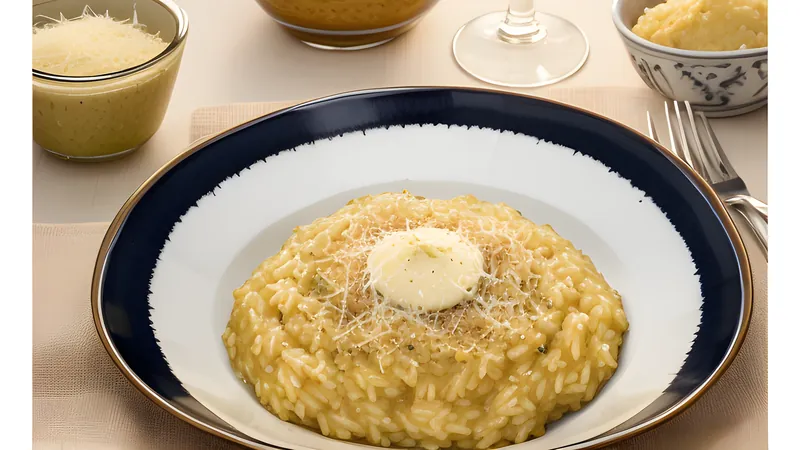
- Season, rest for 1 minute, and serve immediately in warm shallow bowls with more Parmigiano and a grind of pepper.
Nebbiolo, fog and the Langhe
Barolo is Nebbiolo grown on eleven communes’ worth of hills south-west of Alba. The grape takes its name from nebbia, the fog that fills the valleys of the Langhe from late September, and it ripens so late that harvest often happens in it. It is a difficult grape: high acid, high tannin, pale in the glass despite tasting like it should be black, and slow to become drinkable.
The wine’s modern shape dates to the mid-nineteenth century, when the Marchesa Giulia Falletti of Barolo and the French oenologist Louis Oudart worked out how to ferment the sugars fully and produce a dry wine instead of the sweetish, partly fermented Nebbiolo the region had been making. Cavour, who owned nearby Grinzane, took up the same techniques. The result got called il vino dei re, il re dei vini — the wine of kings, the king of wines — which is exactly the kind of thing nineteenth-century marketing produced, and which stuck.
Risotto al Barolo comes out of that landscape and it comes out of the same logic as every wine-country dish: the wine is what you have. Rice arrived in Piedmont in the fifteenth century and the paddies of Vercelli and Novara, an hour north-east, are still the largest rice-growing area in Europe. Piedmont therefore has world-class rice and world-class red wine within a short cart ride of each other, and someone was always going to put them in a pan together.
It is a restaurant staple in Alba now, usually served in autumn during truffle season. Locals will tell you, correctly, that nobody in the Langhe cooks with a good bottle of Barolo — they cook with the young, hard, unsellable one, or with Nebbiolo d’Alba, which is the same grape with less ambition and a third of the price. Take their advice. A young, cheap, aggressive Nebbiolo makes a better risotto than a mature Barolo, whose subtleties evaporate.
The twist: reduce two-thirds of it separately
Here is the whole recipe in one idea. Most versions of this dish tip the wine into the rice and let it cook off there. That is how you get a bitter, drying risotto.
Barolo’s tannins are polyphenols, and they bind to proteins — that is what makes your mouth feel dry, as they grab the lubricating proteins in your saliva. Cook them into a pan of rice over 18 minutes with constant agitation and they do the same thing to everything in reach, and there is no fat or protein in the pan yet to absorb them. Worse, an extended low simmer with rice does nothing to soften them; tannins polymerise into gentler, larger molecules with time and heat, and the risotto window is too short.
So: boil 500 ml of the wine hard and fast in a separate wide pan, on its own, for 12-15 minutes, until you have 150 ml of syrup. Hard boiling drives the alcohol off in the first three minutes and then concentrates everything left. Crucially, the tannins polymerise and drop out — you will see a fine sediment — and what remains is colour, acidity, fruit and the savoury, tarry, dried-rose character that makes Nebbiolo Nebbiolo. A teaspoon of sugar counteracts the acidity’s concentration. A rosemary sprig, which is my own addition, picks up the resinous note that Nebbiolo already carries and doubles it.
Then that syrup goes in at 14 minutes, near the end, when there is butter, starch and cheese in the pan to buffer it. The remaining 250 ml goes in raw at the start, in the classic sfumatura position, where the acid does its usual job of firming the grain’s exterior and where four minutes of hard evaporation removes the alcohol before it can turn harsh.
Two additions, two jobs. The colour is startling — genuine purple-black rather than the sad mauve most Barolo risottos manage.
Which bottle, honestly
The wine is 80% of the cost of this dish, so the choice deserves a paragraph of its own.
Nebbiolo d’Alba or Langhe Nebbiolo is the answer for most people. Same grape, same hills, often the same vineyards’ younger vines or declassified fruit, £12-18 a bottle. Young, hard, tannic, purple — everything the reduction wants.
Barbaresco works identically and costs less than Barolo. Barolo itself, if you are going to, should be a recent vintage from a large producer, three or four years old. What you are paying for in an aged single-vineyard Barolo is tertiary complexity — leather, tar, dried rose, mushroom — developed over a decade in bottle, and fifteen minutes at a rolling boil destroys all of it. You would be boiling money.
What does not work: Barbera, which has the acid but almost no tannin and reduces to something thin and sour. Dolcetto, which is the opposite problem. Any oaked New World red, whose vanillin concentrates into something that tastes of a cheap cake. And cooking wine, which is salted and will make the risotto inedible once you have reduced it five-fold.
If you are opening a bottle to drink alongside, the Piedmontese pairing is the same wine, which is convenient and also correct.
Rice, and why Carnaroli
Carnaroli. Arborio at a push. Vialone Nano if you are in the Veneto and stubborn.
The relevant chemistry is two starches. Amylopectin sits on the outside of the grain, dissolves readily into the cooking liquid and is what makes a risotto creamy. Amylose lives in the core, is far more tightly packed and resists — it is what keeps the all’onda bite. Carnaroli has a high proportion of both and, more usefully, a tough protein sheath around the grain that holds it together through twenty minutes of stirring. Arborio releases starch faster and goes claggy more easily; it is more forgiving of underconfidence and less forgiving of overcooking.
Never rinse it. You are washing off the exact thing you are trying to extract.
The tostatura — three minutes of stirring the dry rice in fat — is doing more than it looks. It coats each grain in a film of fat that slows water penetration, so the outside cannot dissolve before the inside has hydrated. Skip it and you get soup with hard bits in it. The visual cue is real: the edges of the grain turn translucent and glassy while a white chalky dot remains dead centre.
Stirring, stock and the mantecatura
Hot stock, always. Every ladle of cold stock drops the pan temperature and stops the starch releasing, and the cumulative effect of six cold ladles is a risotto that takes 25 minutes and never comes together.
Stir, but stop believing it must be constant. What stirring does is knock the grains against each other so the softened outer starch abrades off into the liquid. Vigorous attention for the first few minutes after each ladle, then let it be. Nonstop frantic stirring for eighteen minutes breaks the grains and makes porridge.
The mantecatura is the finish and it is where risotto is won. Off the heat — this matters — beat in cold butter and Parmigiano hard for 45 seconds. Off the heat and cold means the butterfat emulsifies into the starchy liquid instead of melting out into a slick. Then the all’onda test: shake the pan and the surface should ripple like a wave and settle flat. If it holds a shape, it is too tight; loosen with a splash of stock. Italians would rather it were too loose than too stiff, and so would I.
Serve immediately in warm bowls. Risotto sets in about four minutes.
Bone marrow. Optional and traditional — it goes in with the onion and melts entirely, adding a beefy richness the wine can lean on. Ask a butcher to split the bones.
The rest of the bottle. There isn’t any; the recipe uses all 750 ml. Open a second one for the table, which is the correct Piedmontese solution to most problems.
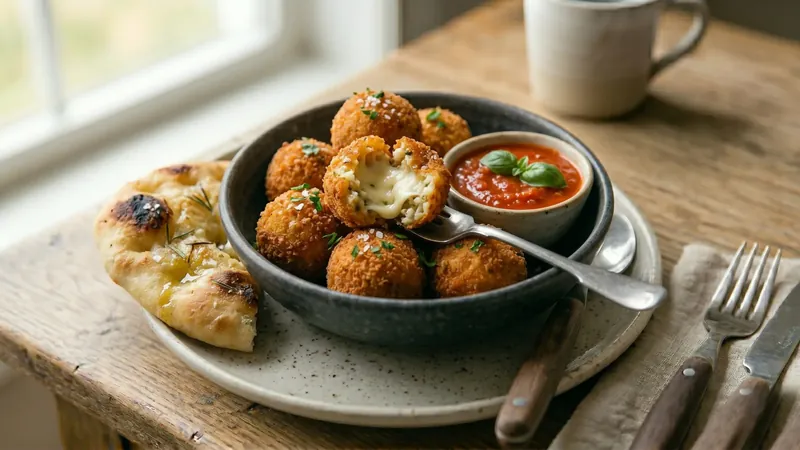
Leftovers. Spread cold risotto on a tray, chill, then roll into balls, crumb them and fry at 180C for 3 minutes for the best arancini you will ever make.
The stock. Beef is traditional and it is the better choice — the wine is assertive enough to flatten a chicken stock. A well-made stock from bollito misto is ideal, which is why the two dishes turn up in the same Piedmontese week. Whatever you use, season it properly before you start: risotto concentrates whatever is in the stock, and an underseasoned stock produces a bland risotto that no amount of salt at the end can rescue, because the seasoning needs to be inside the grain.
Timing. Reduce the wine the day before if that suits; the syrup keeps a fortnight in a jar in the fridge and it is a good thing to have around — a spoonful lifts a beef braise or a pan sauce. Everything else is a single 25-minute stretch at the hob with no interruptions, and the risotto decides when it is ready.
What can go wrong. A bitter, mouth-drying result means the wine went in raw and long — reduce it separately next time. Mauve rather than purple-black means the reduction did not go far enough; 150 ml from 500 ml is the target and it should coat a spoon like a thin syrup. A greasy slick on the surface means the butter went in while the pan was still hot. Chalky centres at 18 minutes mean the heat was too low throughout, and the fix is more stock, hotter, for another three minutes. Porridge means overstirring, overcooking, or Arborio pushed past its limit.
Serving. Warm bowls, shallow and wide. A cold bowl takes the risotto below serving temperature in under a minute and tightens it into a disc. Shave more Parmigiano over at the table, grind pepper, and if it is autumn and you have one, this is what a white truffle is for.
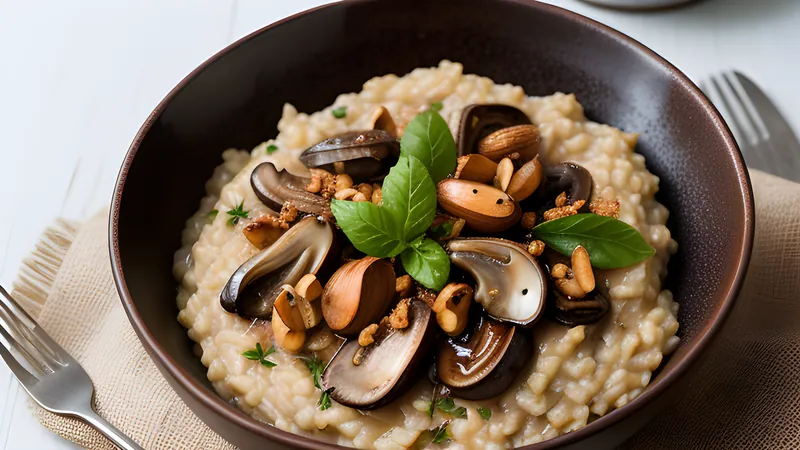
For more from the same pan, risotto alla milanese with saffron and bone marrow is the Lombard cousin and the technique benchmark, mushroom and taleggio risotto is the weeknight version, and the Croatian crni rižot gets to the same colour by an entirely different route.
Related Content