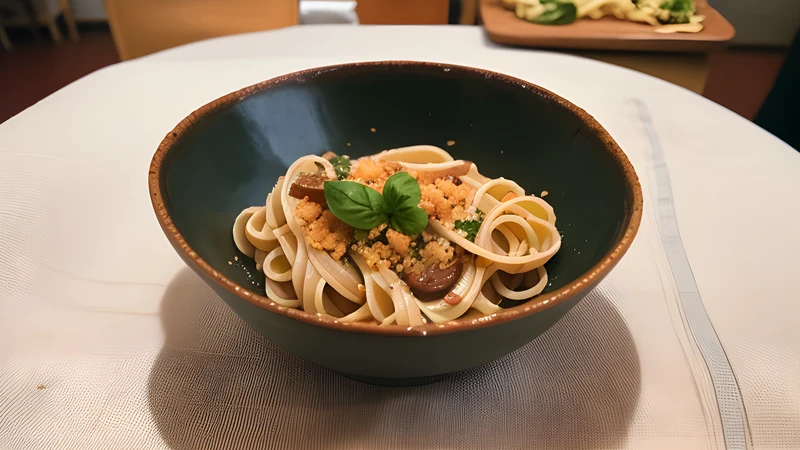
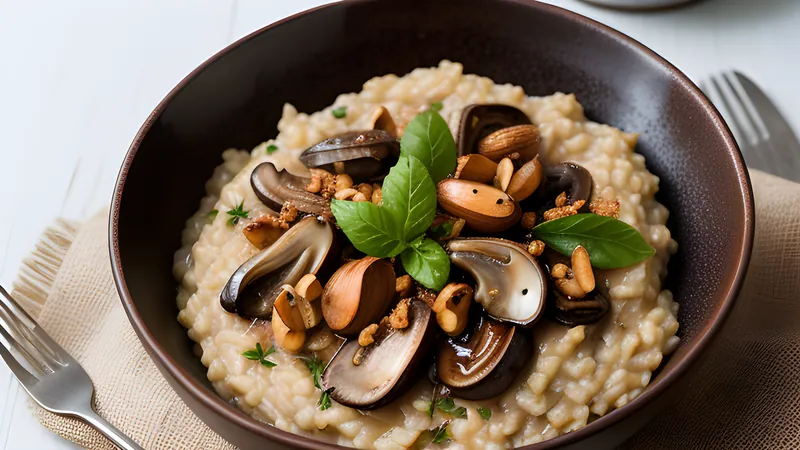
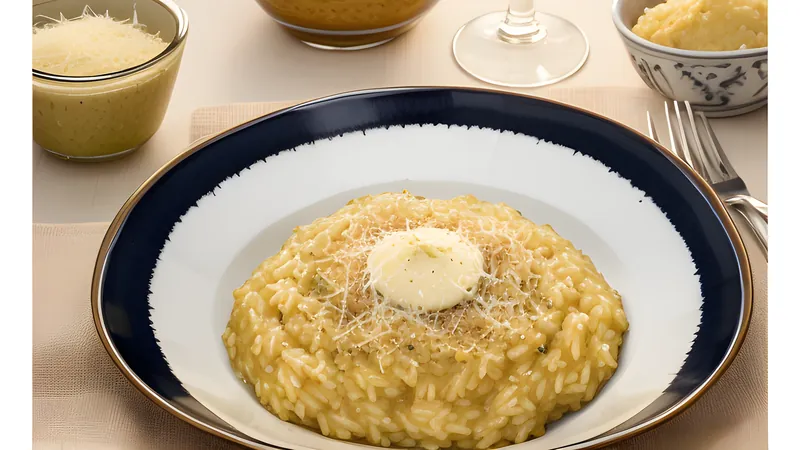
Risi e Bisi: The Rice and Peas of the Doge's Feast
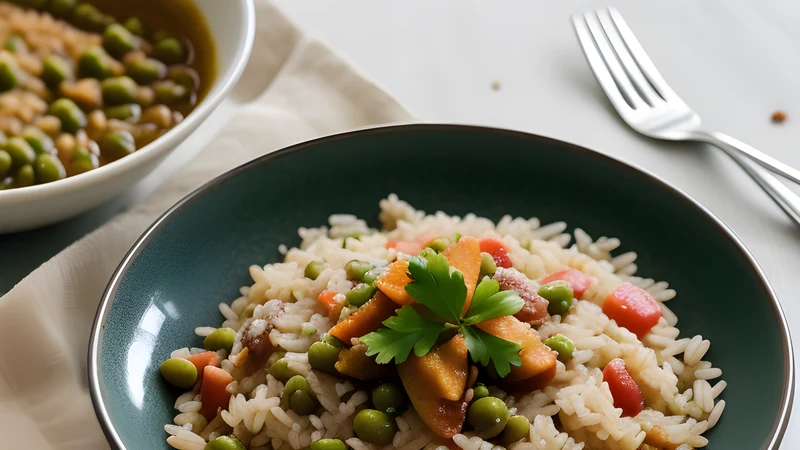
Loose, spoonable spring rice with peas, pancetta and a stock made from pods
Contents
↓ Jump to recipeEvery 25 April, the Doge of Venice was served a bowl of rice and peas. This was protocol, written into the feast of St Mark, the city’s patron, and the first peas of the year came in from the market gardens on the lagoon islands to make it happen.
The dish that arrived at the Doge’s table was loose enough to eat with a spoon. That single fact is the whole argument about risi e bisi, and it is still going.
Risi e Bisi: The Rice and Peas of the Doge's Feast
Ingredients
- 1.2kg fresh peas in the pod, podded (about 400g podded weight), pods reserved
- 1.2 litres light chicken or vegetable stock
- 300g vialone nano rice, or carnaroli
- 80g pancetta, cut into 5mm dice
- 1 small white onion, finely chopped
- 40g unsalted butter
- 2 tbsp extra-virgin olive oil
- 60g parmesan, finely grated, plus more to serve
- 3 tbsp flat-leaf parsley, finely chopped
- 8 mint leaves, finely shredded
- 1 tsp fine sea salt, plus more to taste
- Freshly ground black pepper
Method
- Wash the reserved pea pods, discarding any that are yellow or blemished. Put them in a pan with the stock, bring to a simmer and cook for 25 minutes. Strain through a sieve, pressing hard on the pods with a ladle to extract every drop, then discard the pods. Keep the stock at a bare simmer.
- In a wide, heavy pan, warm the olive oil and half the butter over medium-low heat. Add the pancetta and cook for 5 minutes until the fat has rendered and the edges are just golden.
- Add the chopped onion and the teaspoon of salt. Cook gently for 8 minutes until soft and translucent with no colour.
- Add half the peas and the parsley, stir, and cook for 2 minutes. Add the rice and stir for 2 minutes until every grain is coated and glossy and the edges have turned translucent.
- Add a ladleful of the hot pod stock and stir until absorbed. Continue adding stock a ladle at a time, stirring often but without violence, for about 15 minutes.
- Add the remaining peas and continue with the stock for 3 to 5 minutes more, until the rice is tender with a slight bite and the whole thing is distinctly loose — it should ripple when you shake the pan and run slowly off a tilted spoon. Use all the stock; add hot water if you run short.
- Take off the heat. Beat in the remaining butter and the parmesan hard for 30 seconds, then stir through the mint. Rest for 2 minutes, taste for salt, and serve in shallow bowls with black pepper and more parmesan.
A dish with a calendar entry
St Mark’s Day sits at the exact point in the Venetian year when the first proper peas come off the islands — Sant’Erasmo, Vignole, Mazzorbo — where sandy soil and lagoon humidity produce a pea that Venetians will tell you at some length is unlike any other. The Republic’s ceremony placed the bowl in front of the Doge in the Palazzo Ducale, and the gardeners of Sant’Erasmo delivered the peas as a formal tribute.
The choreography mattered because it was propaganda about self-sufficiency. Venice imported almost everything — grain from the Black Sea, spices from Alexandria, salt from its own pans and everyone else’s — and a dish made entirely from things grown within sight of the campanile said something useful about a city that was, in reality, one bad shipping season from hunger.
Rice arrived in the Veneto in the fifteenth century, spreading from the Po valley where the flooded plains suited it. By the time risi e bisi was codified it was a local crop, and vialone nano — grown around Verona and given protected status in 1996 — became the Veneto’s own grain. It is shorter and rounder than the Piedmontese carnaroli, absorbs more liquid relative to its size, and releases starch more readily, which is exactly what you want in a dish that has to stay soupy.
The name itself is dialect. Risi and bisi, rather than riso and piselli, which is a small piece of civic insistence that survives on menus to this day.
The pods make the stock
Podding 1.2 kilograms of peas gets you about 400 grams of peas and 800 grams of pods, and throwing those pods away is throwing away most of what you paid for.
Pea pods are full of the same sugars and the same green, grassy aroma compounds as the peas themselves, concentrated in the inner membrane. Simmered for twenty-five minutes in stock and pressed hard through a sieve, they turn a perfectly ordinary chicken stock into something that tastes emphatically of peas before a single pea has gone in the pan.
The technique is old and completely reliable. Simmer them for twenty-five minutes and no longer: past about half an hour the pods start giving up bitter compounds from the outer skin and the stock turns green in a way that reads as vegetable water. Press with a ladle rather than blending, since blended pod fibre makes the stock cloudy and slightly gritty.
Discard any pod that is yellowing or spotted. One bad pod will make the whole batch taste of the compost heap, and the pods you are working with have been sitting in a crate for longer than the peas have.
Use the stock hot. Cold liquid hitting the pan drops the temperature and stalls the starch release, and you end up stirring for twenty-five minutes instead of eighteen wondering why nothing is happening.
Loose, and how loose
This is the fight. Risi e bisi is all’onda — on the wave — and the test is physical: shake the pan and the surface should ripple like a shallow puddle, and a spoonful tipped sideways should run off slowly rather than sitting in a mound.
It is wetter than any risotto you have made. Considerably wetter. The first time you make it you will look at the pan at the fifteen-minute mark, decide it is too sloppy, and cook off another ladle of liquid, and you will produce a very nice risotto that Venetians would not recognise. Trust the wave.
The reason for the looseness is historical and practical at once. Risi e bisi was eaten with a spoon at a ceremonial table where a fork would have been fussy, and the extra liquid means the pea flavour arrives as broth as well as grain. The rice is thickening the pod stock rather than absorbing it entirely.
Getting there is mostly about the ratio. Twelve hundred millilitres of stock to three hundred grams of rice is four to one; standard risotto runs closer to three to one. Add all of it, and add hot water if the pan tightens early.
Stir often and gently. Vialone nano gives up its starch readily and does not need the aggressive beating that carnaroli tolerates. Over-stirred, the grains break and the dish goes gluey, which is a different problem from being loose and a much harder one to fix.
Peas in two goes, and the mint
Peas added at the start dissolve. Peas added at the end stay round and squeaky. Both are useful and the recipe wants both.
Half the peas go in with the parsley before the rice, and over twenty minutes they collapse and disappear, colouring the whole thing pale green and sweetening it from the inside. The other half go in for the last four minutes and stay whole, so that every spoonful still contains something to bite.
Fresh peas turn from sweet to starchy fast — their sugars begin converting the moment they leave the plant, and a pea podded three days after picking has lost a meaningful share of its sweetness. Buy them in the pod, buy them from somewhere that turns stock over quickly, and pod them the day you cook. If a raw pea tastes of nothing, no amount of stock will rescue it, and good frozen peas will beat tired fresh ones every time.
The mint at the end is my addition and it is a small one. Venetian versions rely on parsley, and parsley gives a clean grassy edge that suits the pancetta. Eight shredded mint leaves stirred in off the heat add a cooling top note that lifts the whole bowl and lasts about as long as the plate does — mint’s menthol is volatile and vanishes if you cook it, which is precisely why it goes in last.
The rice, and why the grain is a real choice
Italians argue about rice varieties with the energy other nations reserve for football, and in this dish the argument has an actual answer.
Risotto rices are all short or medium grain, and what distinguishes them is the ratio of two starches. Amylopectin is the branched one that swells and turns creamy and does the binding. Amylose is the straight-chain one that stays firm and holds the grain’s shape. A rice heavy in amylopectin goes soft and creamy fast; a rice with more amylose keeps its bite for longer and forgives a distracted cook.
Vialone nano is a semifino grain, shorter and fatter than the others, with a high amylopectin content and an unusual capacity to absorb liquid — it can take up nearly three times its weight. That combination is why the Veneto adopted it and why it suits risi e bisi specifically. It releases starch generously into all that pod stock, thickening the broth to the consistency of single cream while the grains themselves stay distinct. Carnaroli, which most British shops stock, has more amylose and a tougher outer layer; it makes a superb tight risotto and is slightly reluctant to give the loose dish its body. Compensate by stirring a little more actively and holding back around 100ml of stock.
Arborio is the one to avoid. It is the largest grain of the three and the most fragile, with a soft core that blows out into mush while the outside is still firm. In a tight risotto you can hide that. In a bowl of broth, every blown grain is visible.
Never rinse risotto rice. The dusty starch on the outside of the grains is precisely what you are trying to get into the pan, and washing it down the sink is the single most effective way to guarantee a thin, watery dish that no amount of butter will rescue at the end.
And toast the rice properly. Two full minutes of stirring in the fat, until the grains turn glassy at the edges and the pan smells faintly of biscuit, sets the outer layer so it holds together through twenty minutes of liquid. Skip it and the grains start dissolving at minute ten.
Tips, swaps and getting it right
Rice. Vialone nano is the correct grain and is sold by most Italian delis. Carnaroli is the best substitute and will need slightly less liquid. Arborio breaks down too readily and makes the loose texture stodgy rather than fluid. Long-grain rice makes an entirely different dish.
Frozen peas. Perfectly good out of season, and better than bad fresh ones. Use 400g, add them in two goes as above but give the first batch only 8 minutes, and make the pod stock from a handful of chopped mangetout or simply use a good vegetable stock with a bay leaf.
Vegetarian. Drop the pancetta, use vegetable stock, and add a strip of dried porcini to the pod simmer for the savoury weight the pork was providing. Increase the butter at the end to 60g.
Pancetta. Guanciale works and is sweeter. Smoked bacon overwhelms the peas and should be avoided; the point is a background of pork fat rather than a smoked flavour.
Storage. It does not keep. The rice drinks the broth in the fridge overnight and you wake up to a solid block. Eat it the day you make it, and if you must, thin the leftovers with hot stock and accept a lesser dish.
Salt. The pancetta and the parmesan both bring salt, and the pod stock brings almost none. Season the onion stage with the teaspoon listed, then leave it alone until the very end. Salting during the stock additions is how you end up with something inedible at minute eighteen and no way back, because the liquid keeps reducing and concentrating whatever you put in.
Butter. The final beating of cold butter and parmesan into the pan off the heat is the mantecatura, and it is doing chemistry rather than adding richness for its own sake. Cold butter emulsifies into the hot starchy broth and gives it a sheen and a body that melted butter stirred in earlier simply cannot produce. Take the pan off the heat first: above about 80C the emulsion breaks and you get an oil slick.
Timing. Rest it two minutes off the heat before serving so the butter and parmesan set into the broth. Longer than five and it tightens past the wave.
For a bowl that goes the opposite way, risotto alla Milanese with saffron and bone marrow is the Lombard cousin that does everything this one refuses to. If you want a risotto that goes the other way entirely, crni rizot is across the Adriatic and made of ink, while mushroom and taleggio risotto is the autumn answer to this spring bowl.
Related Content