Quick Pan Pizza with Whipped Ricotta
Crisp-bottomed, no-oven pizza
Contents
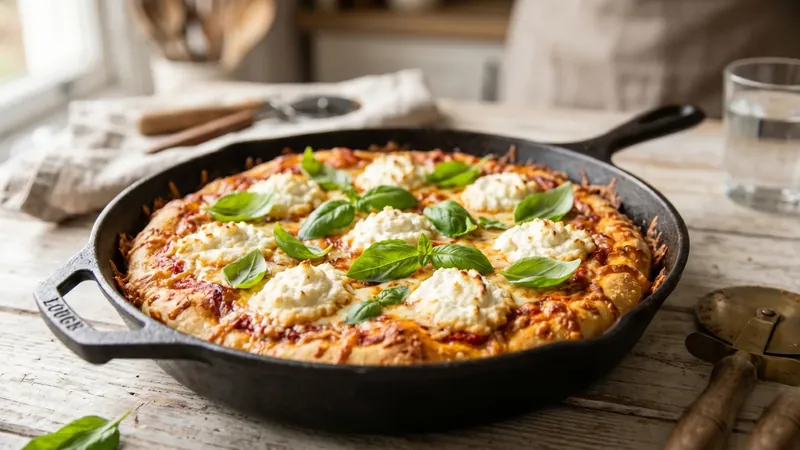
↓ Jump to recipeNo oven, no pizza stone, no problem. Cooking pizza in a heavy frying pan on the hob gives a crisp, fried base in minutes with a chewy crumb above it, and it uses a burner most kitchens already own. The clever twist is to finish each one off the heat with dollops of whipped ricotta, loosened with olive oil and lifted with garlic and lemon, so it stays cool and creamy against the hot, bubbling cheese. Two pizzas, on the table faster than a delivery driver could reach your door.
Why the frying pan works
The pizza most people picture, the thin, blistered Neapolitan, is really the product of one tool: a wood-fired oven roaring past 450C. Under Naples’ own rules, published by the Associazione Verace Pizza Napoletana and recognised in a 2010 EU Traditional Speciality Guaranteed listing, the oven floor sits around 430C and a true pizza napoletana bakes in 60 to 90 seconds. That fierce, brief heat is what gives it char and lift. No home oven comes close, which is why cooks have spent decades chasing workarounds with stones, steels and ferociously preheated trays.
The frying pan answers a different way. Cooking the base directly on a hot, oiled pan fries the underside to a crisp, golden crust while the dough above puffs and cooks through. It borrows from the logic of Detroit and Sicilian pan pizzas, where a generous slick of oil in the tin almost shallow-fries the bottom of the dough. A lid at the end traps heat to melt the cheese, standing in for the top-down blast you would get from an oven grill.
The pan matters. Reach for a heavy, thick-based frying pan, ideally cast iron or a substantial steel one, because it holds and spreads heat evenly and will not warp or develop hot spots that scorch the base in patches while leaving the rest pale. A flimsy non-stick pan struggles: it cannot take the sustained high heat you need, and the coating degrades. Twenty-four centimetres is a good size for a single-serving pizza that still fits on a plate. Start the dough in a cold, oiled pan and bring it up to heat together, rather than dropping raw dough into a screaming-hot pan, which sets the outside before the crumb has a chance to relax and stretch.
Quick Pan Pizza with Whipped Ricotta
Ingredients
- 300g strong white bread flour, plus extra to dust
- 1 tsp fast-action dried yeast
- 1/2 tsp fine salt
- 200ml warm water (about 30C)
- 1 tbsp olive oil, plus 2 tbsp more for the pans
- 250g ricotta
- 1 tbsp olive oil (for the ricotta)
- 1 small garlic clove, crushed
- Zest of 1/2 lemon
- 1/4 tsp fine salt (for the ricotta)
- 200ml passata
- 1 tsp dried oregano
- 125g mozzarella, torn
- 8 fresh basil leaves and black pepper, to finish
Method
- Mix 300g bread flour, 1 tsp yeast and 1/2 tsp salt, then add 200ml warm water and 1 tbsp olive oil to form a soft dough.
- Knead for 5 minutes until smooth, then cover and leave to rise in a warm spot for about 1 hour, until doubled.
- Whip 250g ricotta with 1 tbsp olive oil, the crushed garlic, lemon zest and 1/4 tsp salt until light and smooth. Set aside.
- Stir 1 tsp oregano into 200ml passata with a pinch each of salt and pepper.
- Divide the risen dough in two. On a floured surface, stretch each piece to about 24cm across.
- Add 1 tbsp olive oil to a cold 24cm heavy frying pan, lay in one dough round and ease it to the edges. Spread over half the passata, leaving a 1cm border, and scatter over half the mozzarella.
- Set the pan over medium-high heat and cook for 8 to 10 minutes, until the base is crisp and deeply golden underneath.
- Cover with a lid for the final 2 to 3 minutes to melt the cheese, then slide onto a board and dot with half the whipped ricotta, 4 basil leaves and black pepper. Repeat with the second pizza.
The dough
The dough is a straightforward bread dough given a single rise. Strong bread flour, with its higher protein content of around 12 to 14 per cent, develops the gluten a pizza base needs: enough structure to stretch thin without tearing, and enough elasticity to bake into a chewy, open crumb. Bread flour is not interchangeable with plain flour here; plain flour tears as you stretch it and bakes flat and cracker-like. An hour of proving is plenty for a light result. This is a quick weeknight pizza, not a slow-fermented project, so do not chase a 48-hour cold ferment you do not have time for.
If you want to build a longer-fermented base into your routine, the same principles carry across to my easy pizza dough, which stretches the rise for more flavour.
Keep the topping restrained. This base is thin and cooks fast, so a heavy, wet layer of toppings weighs it down and leaves the middle steamed rather than crisp. A thin scrape of passata seasoned with oregano is all the sauce it needs; drowning the base in sauce is the most common way to end up with a soggy centre. Use passata, the smooth sieved tomato, rather than chopped tinned tomatoes, which carry too much water and leave puddles. Tear the mozzarella and pat it dry on kitchen paper first, especially if you are using the fresh, ball-in-brine kind, which is delicious but wet enough to flood a pizza if you skip that step. Firmer block mozzarella, sold for cooking, melts more predictably and browns better.
The whipped ricotta
The ricotta is the finishing flourish and the real point of difference. It is a fresh, soft Italian cheese made from the whey left over from other cheesemaking; the name means “recooked”, because the whey is heated a second time to coax out the last of the curds. It is mild, milky and faintly grainy. Whipping it with olive oil smooths that graininess into something spoonable and luxurious, while garlic and lemon zest wake it up.
Whipping is worth doing properly. Beat the ricotta with the oil for a good minute, either in a small food processor or with a fork and a bit of elbow grease, until it turns glossy and holds soft peaks rather than sitting in stiff, grainy clumps. Season it before it goes on: ricotta is bland on its own, so it needs salt, and the garlic and lemon are there to give it edges. A little grated Parmesan folded through is not traditional but adds welcome savoury depth if you have some.
Adding it off the heat is the habit to keep. Bake ricotta into a pizza and it dries out and disappears into the background; spoon it on at the end and it holds its richness, softening only slightly against the warm topping. The contrast of a hob-crisped base, a simple tomato sauce and cool pillows of bright, whipped cheese is the whole appeal.
Tips, swaps and troubleshooting
Get the pan properly hot before you judge the base. If you flip too early the bottom is pale and floppy; you want it crisp enough to lift in one piece. If the top is still doughy when the base is done, leave the lid on for another minute or two rather than raising the heat, which would only scorch the underside.
If the base browns too fast before the dough has cooked through, drop the heat to medium and give it longer under the lid; the residual heat of a heavy pan will finish the crumb without burning the bottom. If, the other way round, the base is stubbornly pale after ten minutes, your pan was not hot enough to start with, so nudge the heat up and be patient. A metal spatula is your friend here for lifting an edge to check colour without tearing the base.
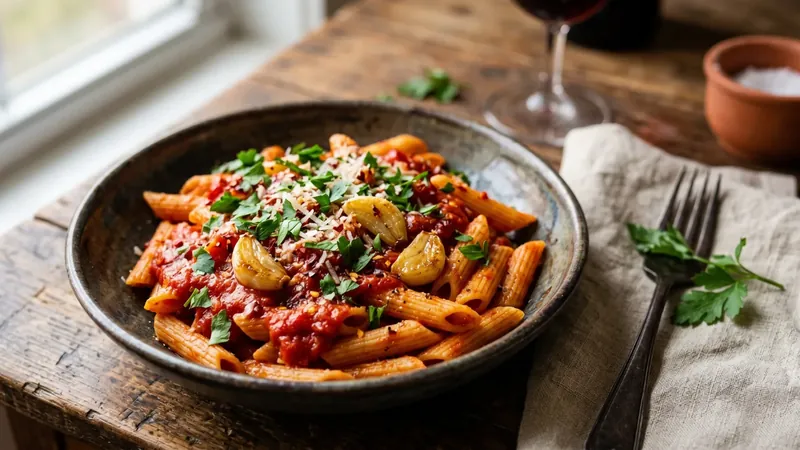
For the topping, swap the passata for a scrape of tomato purée loosened with a little oil if you want a drier, more focaccia-like result. A few anchovies, some sliced chilli, or a handful of rocket thrown on at the very end all suit it. Leftover roasted vegetables, a scatter of olives, or a spoon of pesto swirled through the ricotta are all fair game, but keep the total load light so the base stays crisp. The whipped ricotta keeps for three days in the fridge and is worth making in a double batch, since it is excellent on toast or stirred through pasta. For another quick, no-fuss supper built on good store-cupboard staples, my penne arrabbiata leans on the same principle: a handful of ingredients, treated with respect, on the table fast.
Related Content