Rfissa: The Msemen and Fenugreek Chicken of Moroccan Childbirth
torn flatbread under a saffron broth built for recovery
Contents
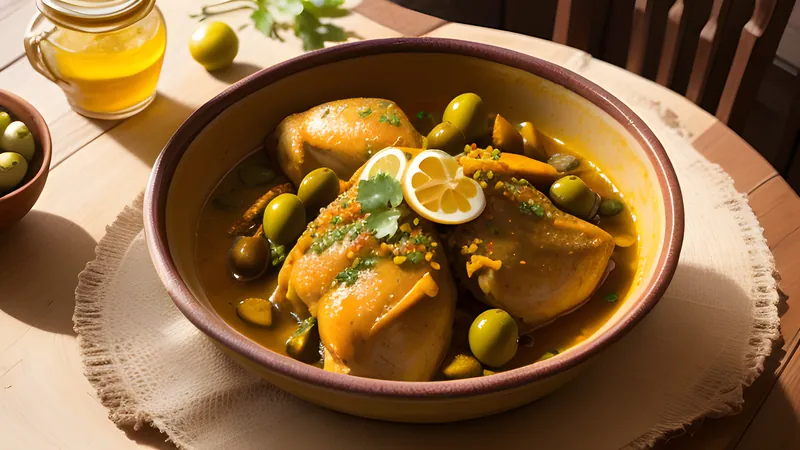
↓ Jump to recipeRfissa is the dish a Moroccan household makes when someone in the family has just given birth, because fenugreek is believed to help milk supply and recovery, and because a new mother needs something that tastes like being looked after. It also turns up on the third day of Eid al-Kebir, when the household has run out of appetite for grilled meat and wants something soft, saffron-scented and eaten with a spoon instead of a knife. I first had it from a friend’s mother in Rabat, brought round in a covered tagine dish two days after her granddaughter was born, and I have thought about the smell of that broth — fenugreek, saffron, caramelised onion — more or less constantly since.
Rfissa: The Msemen and Fenugreek Chicken of Moroccan Childbirth
Ingredients
- 1.6kg whole chicken, jointed into 8 pieces
- 3 large onions, sliced into half-moons
- 4 tbsp fenugreek seeds, soaked overnight in 200ml water
- 100g brown or green lentils, rinsed
- 6 tbsp olive oil
- 1 large pinch saffron threads, crumbled
- 1 tsp ground ginger
- 1 tsp ground turmeric
- 1/2 tsp ground black pepper
- 1 cinnamon stick
- 3 garlic cloves, crushed
- 1.5 litres chicken stock or water
- 2 tbsp smen or salted butter
- 6-8 shop-bought or home-made msemen, torn into rough strips
- 2 tsp salt, plus more to taste
- small bunch coriander, tied with string
- small bunch parsley, tied with string
Method
- Drain the soaked fenugreek seeds, keeping the soaking liquid aside, and set the seeds in a small pan of fresh water; simmer for 20 minutes until softened, then drain again.
- Heat the olive oil in a wide, heavy pot and brown the chicken pieces on all sides over medium-high heat, about 8 minutes, then lift out onto a plate.
- Add the onions to the same pot with a pinch of salt and cook over medium-low heat for 20 minutes, stirring occasionally, until deeply softened and beginning to caramelise.
- Stir in the garlic, ginger, turmeric, black pepper, saffron and cinnamon stick, and cook for 1 minute until fragrant.
- Return the chicken to the pot along with the cooked fenugreek, the lentils, the herb bundles, 2 tsp salt and the stock.
- Bring to a simmer, cover, and cook gently for 45 minutes, until the chicken is falling-tender and the lentils are soft.
- Lift out the chicken and herb bundles; stir the smen or butter into the remaining broth and simmer uncovered for 10 minutes to concentrate the flavour, then taste and adjust the salt.
- Layer the torn msemen in the base of a wide serving dish, ladle over about two-thirds of the hot broth and lentils, and let it stand for 5 minutes to soak.
- Arrange the chicken pieces on top, spoon over the remaining broth, and serve immediately while the bread is still warm and softened.
A dish with a job to do
Most of the recipes I write about here exist to impress guests or to use up a Sunday afternoon. Rfissa exists for a much more specific reason: it is a recovery food, cooked and delivered to a household in the days after a birth, the way a British neighbour might bring round a lasagne. The tradition runs deep enough that in many Moroccan families it is unthinkable not to send rfissa to new parents, and grandmothers keep a private ranking of whose version is richest. It also has a second life at the end of Eid al-Kebir, the festival of the sacrifice, when a household that has been eating grilled and roasted lamb for two days switches to something soft, spooned rather than carved, using up the same pantry of onions, saffron and warming spice that runs through the rest of the festival’s cooking. Both occasions share a logic: this is food for people whose bodies need looking after, not food built to show off technique.
That practical origin explains why the spicing is gentler than a tagine’s. There is no chilli, no preserved lemon in the base version, nothing that fights with a sensitive stomach. What there is instead is fenugreek, in a quantity most Western kitchens never use it in, and that is the whole personality of the dish.
Why fenugreek is the whole point
Most Moroccan chicken dishes lean on ras el hanout or a simple ginger-turmeric base. Rfissa does something different: it builds the entire broth around fenugreek seeds, which are bitter and slightly maple-scented raw, and which soften into something nutty and almost gelatinous once simmered. Fenugreek has a long history as a postpartum food across North Africa and the Middle East — it is used to support milk supply, and it has a mild anti-inflammatory reputation in traditional Moroccan medicine. Whether or not you buy the folk pharmacology, the seeds do something genuinely useful in the pot: as they cook they release a natural thickening quality, giving the broth body without flour or cream. Soak them overnight first — dry fenugreek seeds are hard as gravel and need the full twelve hours to soften enough to simmer down properly. Even after soaking, they need their own twenty-minute simmer in fresh water before they go anywhere near the chicken, both to finish softening and to wash away some of their raw bitterness, which the soaking liquid concentrates rather than removes.
Buy fenugreek seeds whole from a South Asian or Middle Eastern grocer rather than a small jar from the spice aisle — you need four tablespoons for this recipe, which a supermarket jar will not stretch to, and whole seeds bought loose are a fraction of the price.
The other non-negotiable is the onions. Rfissa asks for three large onions cooked low and slow until they collapse into a sweet, jammy base, and this step cannot be rushed. Twenty minutes over medium-low heat, stirred occasionally, turns raw onion sharpness into the backbone of the broth. If you turn the heat up to save time, the onions catch and turn bitter before they turn sweet, and you taste the shortcut in every spoonful.
Msemen as the plate
Traditionally, rfissa is built on trid — impossibly thin sheets of dough, torn into ribbons and layered into a wide dish before the broth goes over. Trid takes real skill and a very specific technique to stretch by hand, and most home cooks in Morocco today, myself included when I’m not being precious about it, use torn msemen instead. The layered, flaky texture of msemen holds up better against a hot broth than plain bread would — it soaks without turning to mush, and the folded layers trap little pockets of broth as you tear into it. If you have day-old msemen sitting in the freezer from a previous batch, this is exactly what to do with it: warm the squares briefly, tear them into rough two-inch strips, and let the broth do the rest.
You can substitute torn, slightly stale khobz (Moroccan flatbread) or even a good sourdough if msemen genuinely is not an option, but the texture changes — plain bread turns soft and a little slack rather than staying pleasantly chewy, so I would treat it as a stand-in rather than an equal swap.
Building the broth
Brown the chicken first, properly, in batches if your pot is not wide enough to avoid crowding — crowded chicken steams instead of browning, and you lose the base of flavour that fond gives the finished broth. Once the chicken is out, the onions go into the same fat, picking up everything left in the pot. The spicing here is restrained compared to a tagine: ginger, turmeric, black pepper, a cinnamon stick and a generous pinch of saffron, no paprika or chilli. This is a broth meant to be gentle on a recovering stomach, not a fiery one.
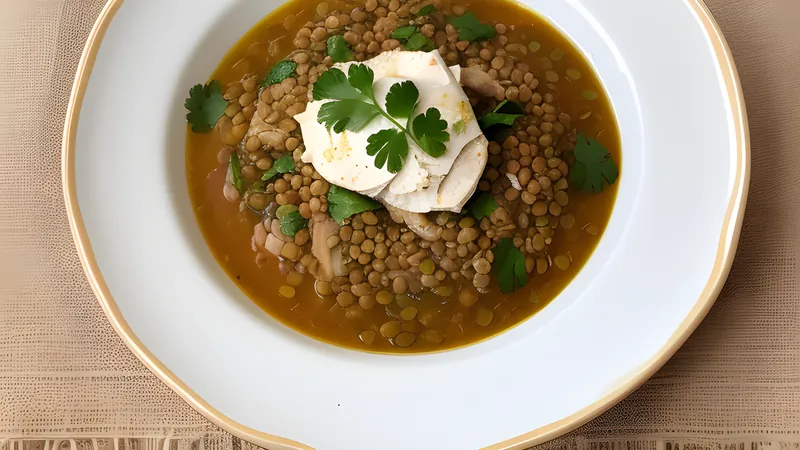
The lentils go in raw alongside the softened fenugreek, the herb bundles, and the returned chicken, and everything simmers together, covered, for the best part of an hour. This is the point where the dish stops needing you. Check it once or twice to make sure the liquid hasn’t dropped too far — top up with a splash of hot water if it looks tight — but otherwise leave it alone.
The final step that separates a good rfissa from a great one is finishing the broth with smen, Morocco’s aged, slightly funky clarified butter. It adds a savoury, almost cheese-like depth that fresh butter cannot replicate. If you don’t have smen, salted butter stirred in at the end still rounds the broth out considerably, though you lose that particular tang. Smen keeps for months in a cool cupboard once opened, so it is worth seeking out from a North African grocer if you plan to cook Moroccan food more than once — it turns up again in mrouzia and in plenty of tagines. Simmer the finished broth uncovered for ten minutes after the butter goes in — this thickens it slightly and concentrates the saffron colour into something genuinely golden.
Assembling and serving
This dish rewards patience at the very last step, which is the one most people rush. Tear the msemen into rough strips and lay them in the base of your serving dish first. Then ladle over most — not all — of the hot broth and lentils, and let it sit for a full five minutes before you do anything else. This resting time is what lets the bread absorb the broth without collapsing into paste; skip it and you’ll have dry bread under wet broth instead of bread that has actually taken on the flavour. Arrange the chicken on top, pour over what’s left of the broth, and bring it to the table while it’s still steaming. Rfissa is eaten communally, everyone working in from the edges of the dish with bread or a spoon, which is worth telling guests in advance if this is their first encounter with it — there is no polite way to do it with a knife and fork.
Storage and make-ahead
The broth and chicken keep beautifully in the fridge for up to 3 days and the flavour, if anything, improves as the spices settle overnight. Store the broth and chicken separately from the bread — assembling in advance turns the msemen to sludge. Reheat the broth gently on the hob until it’s properly hot, then build the dish fresh with freshly torn or briefly warmed bread. You can also freeze the broth and chicken for up to 2 months; thaw overnight in the fridge before reheating, and expect to loosen the broth with a splash of water or stock once it comes back to temperature, since it thickens further in the freezer.
Variations
Some households add preserved lemon rind to the broth for a brighter, more acidic edge — a small handful of finely sliced preserved lemon stirred in during the last ten minutes works well if you want that lift, though it moves the dish away from its gentle, postpartum-friendly roots. Others skip the lentils entirely and rely on the fenugreek alone for body; I like the lentils because they add substance and turn the dish into more of a complete meal on their own. A handful of blanched almonds fried in butter until golden and scattered over the top just before serving is a common festive touch, echoing the almonds you see finishing mrouzia and other celebration dishes. If you’re cooking for a crowd, this scales up easily — just use a stockpot wide enough to brown the chicken without crowding, and increase the simmering liquid proportionally so the broth doesn’t reduce too far before the chicken is done.
A note on saffron
The recipe asks for a large pinch, which sounds vague until you understand why. Saffron threads vary enormously in strength depending on age and origin, and a “pinch” from a fresh jar of Moroccan or Spanish saffron will colour and flavour a broth far more aggressively than the same pinch from a jar that has been sitting in a cupboard for two years. Crumble the threads between your fingers before adding them — this releases far more colour and aroma than dropping whole threads into the pot — and taste the broth after the first twenty minutes of simmering. If the colour looks pale and the flavour is more onion than saffron, add another small pinch rather than assuming the dish is finished. Real saffron should leave the broth a warm, egg-yolk gold, not a washed-out yellow; if you’re only getting yellow, either the saffron is old or you weren’t generous enough with it, and turmeric will not rescue the flavour even if it helps the colour.
Buy saffron in small quantities from a shop with reasonable turnover rather than a large jar that will sit half-used for years — it is one of the few spices that genuinely does lose potency with time, and there is no fix for tired saffron except using more of it.
Serving it properly
Rfissa is normally the centrepiece of its own meal rather than one dish among several — it doesn’t really share a table well with other mains, because the bread underneath is meant to be the only starch and the broth is rich enough on its own. What it does sit alongside happily is a pot of Moroccan mint tea, poured strong and sweet at the end of the meal, which cuts through the richness of the smen-finished broth better than anything else I’ve tried. If you’re serving a mixed table where not everyone eats meat, the broth and lentils alone, ladled over the torn bread without the chicken, make a genuinely satisfying vegetarian version — just increase the lentils to 150g to make up the substance the chicken would otherwise provide.
Rfissa is a slow dish, built for the kind of day when someone in the house needs feeding properly, with something that tastes like it was made with them specifically in mind. That is, I think, the entire point of it.
Related Content